GEO Strategy

Why AI Overviews Are Stealing Your Traffic (And How to Get It Back in 2025)
January 16, 20267 min read
Why AI Overviews Are Stealing Your Traffic (And How to Get It Back in 2025)

Why AI Overviews Are Stealing Your Traffic (And How to Get It Back in 2025)

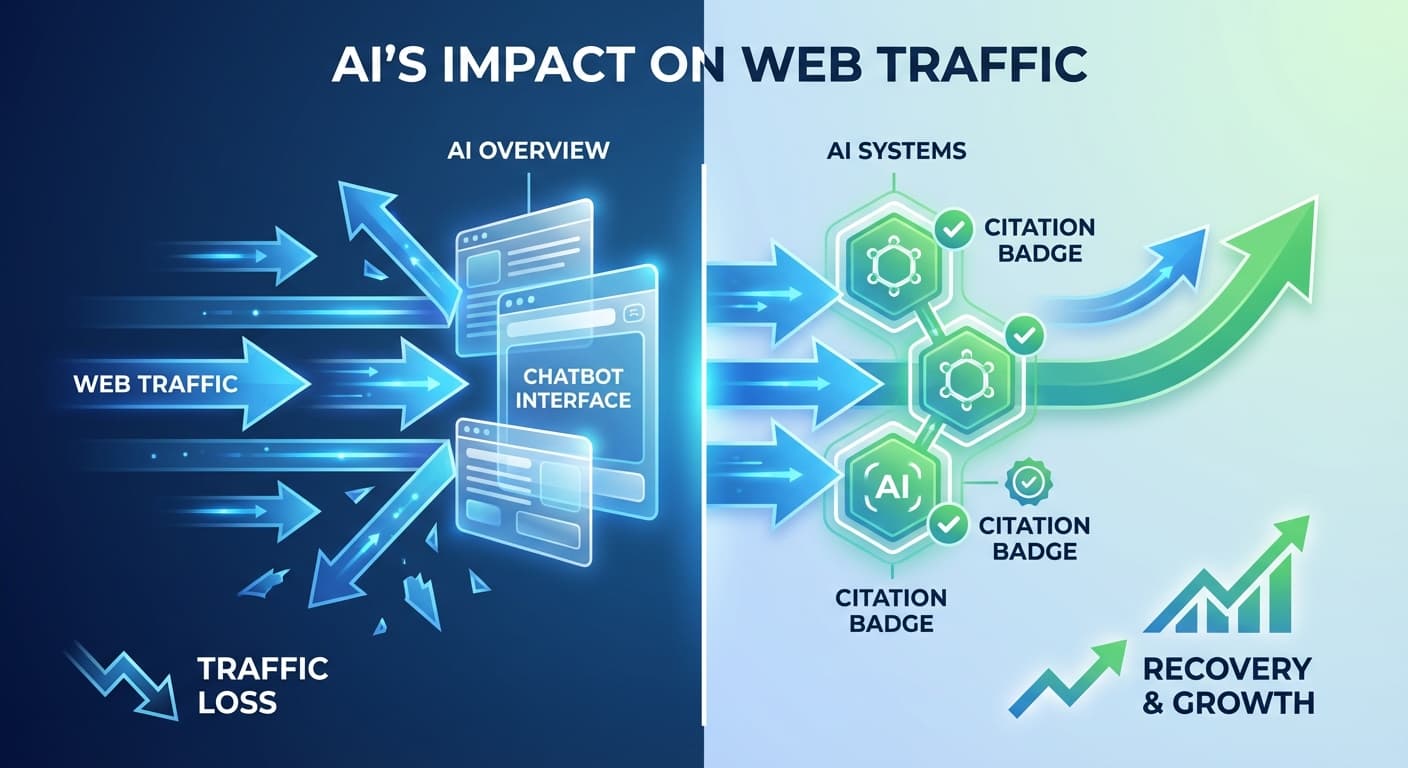
Here's a sobering reality check: 34% of all web clicks are now intercepted by AI-generated summaries before users ever reach your website. If you're seeing mysterious drops in organic traffic despite maintaining your search rankings, you're not alone—and you're not imagining it.

The rise of AI overviews in Google Search, combined with the explosive growth of ChatGPT (now processing over 500 million weekly queries), Perplexity, and Claude, has fundamentally changed how people consume information online. The question isn't whether this trend will continue—it's how quickly you can adapt to stay relevant.

The Great Traffic Migration: Understanding What's Happening

Remember when getting to the #1 spot on Google guaranteed traffic? Those days are rapidly becoming history. Today's search landscape looks drastically different:

  • Google's AI Overviews now appear for 15% of all search queries, providing instant answers without requiring clicks

  • 70% of Gen Z users prefer AI tools over traditional search engines for research

  • AI search engines like Perplexity have grown 500% year-over-year in 2025

  • Zero-click searches now account for over 65% of all Google queries
  • The result? Even well-optimized content is losing visibility as AI systems synthesize information from multiple sources into single, comprehensive answers.

    The Citation Economy: Your New Competitive Advantage

    While traditional backlinks still matter, we're entering what experts call the "citation economy." When AI tools reference your content in their responses, you gain:

  • Brand credibility through authoritative source attribution

  • Qualified traffic from users who click through to verify information

  • Compound visibility as AI tools remember and re-reference reliable sources
  • But here's the catch: AI systems don't cite content randomly. They follow specific patterns in how they evaluate, process, and reference information.

    Why Your Content Isn't Getting Cited (The Hidden Problems)

    1. Structural Invisibility

    Most content is optimized for human readers and Google's algorithms, not AI interpretation. Common issues include:

  • Buried key information in lengthy paragraphs

  • Unclear hierarchy that confuses AI parsing systems

  • Missing context clues that help AI understand content relationships

  • Weak definitional clarity that makes content less quotable
  • 2. Conversational Disconnect

    AI search tools are trained to have conversations, not serve web pages. Content that performs well in AI systems:

  • Answers questions directly and concisely

  • Uses natural, conversational language patterns

  • Provides context for complex topics

  • Anticipates follow-up questions
  • 3. Authority Gaps

    AI systems prioritize sources they perceive as authoritative. This goes beyond domain authority to include:

  • Expert credentials clearly stated

  • Recent publication dates and updated statistics

  • Comprehensive coverage of topics

  • Cross-referenced information that aligns with other authoritative sources
  • The AI Optimization Framework: Getting Your Traffic Back

    Phase 1: Audit Your AI Visibility

    Before optimizing, you need to understand where you stand:

  • Test your content in ChatGPT, Perplexity, and Claude with relevant queries

  • Track citation patterns to see which competitors are being referenced

  • Identify content gaps where AI tools cite competitors instead of you

  • Analyze your existing high-performing content for patterns that work
  • Phase 2: Implement AI-First Content Structure

    #### The CLEAR Framework

    C - Concise Answers First

  • Lead with direct, actionable answers

  • Use the "inverted pyramid" structure

  • Include key statistics in the opening paragraph
  • L - Logical Information Hierarchy

  • Use descriptive H2 and H3 headings

  • Create scannable bullet points and numbered lists

  • Group related concepts together
  • E - Expert Context

  • Include author credentials and expertise indicators

  • Reference recent studies and data (2025-2026)

  • Provide comparative analysis when relevant
  • A - Authoritative References

  • Link to primary sources and recent research

  • Include relevant statistics and data points

  • Cross-reference claims with multiple sources
  • R - Rich Semantic Content

  • Use natural language variations of key terms

  • Include related concepts and synonyms

  • Provide comprehensive topic coverage
  • Phase 3: Optimize for Conversational Queries

    AI tools excel at answering questions the way humans naturally ask them. Optimize your content by:

  • Including FAQ sections that mirror real user queries

  • Using question-based headings ("How to...", "What is...", "Why does...")

  • Providing step-by-step instructions for process-oriented content

  • Adding context for industry jargon and technical terms
  • Phase 4: Monitor and Measure Success

    Track these key metrics to measure your AI optimization success:

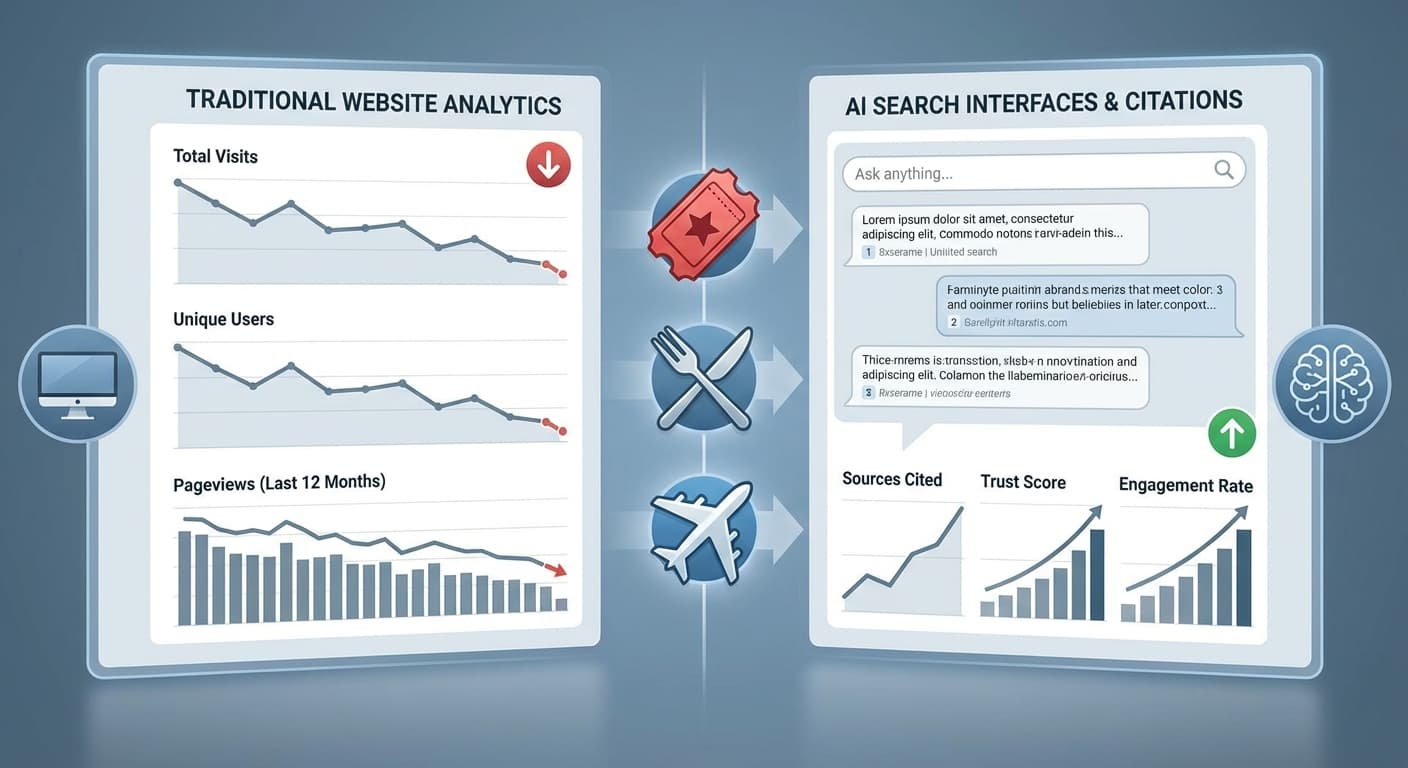
  • Citation frequency across different AI platforms

  • Click-through rates from AI-generated responses

  • Brand mention sentiment in AI tool outputs

  • Comparative visibility against competitors
  • Advanced Strategies for Maximum AI Visibility

    Content Clustering for Topic Authority

    AI systems favor comprehensive topic coverage. Create content clusters that:

  • Cover all aspects of your core topics

  • Link related articles strategically

  • Update older content with recent information

  • Fill content gaps your competitors miss
  • Semantic Optimization Beyond Keywords

    Move beyond traditional keyword optimization to include:

  • Entity-based content that clearly defines key concepts

  • Relationship mapping between different topics

  • Intent-matching content that aligns with user goals

  • Context-rich descriptions that help AI understand nuance
  • Real-Time Content Updates

    AI systems prioritize fresh, accurate information. Implement:

  • Regular content audits to update statistics

  • Breaking news coverage in your industry

  • Seasonal content updates

  • Factual corrections and improvements
  • Case Study: How One SaaS Company Recovered Lost Traffic

    A B2B software company saw their organic traffic drop 28% in early 2025 despite maintaining search rankings. After implementing AI optimization strategies:

  • Month 1: Restructured their top 20 blog posts using AI-first formatting

  • Month 2: Created FAQ sections addressing conversational queries

  • Month 3: Began tracking citations across AI platforms
  • Results after 6 months:

  • 45% increase in AI tool citations

  • 23% recovery in organic traffic

  • 67% improvement in qualified lead generation

  • 12% increase in average session duration
  • The key was shifting from "ranking content" to "citable content" that AI systems naturally want to reference.

    How Citescope Helps You Master AI Optimization

    While understanding these strategies is crucial, implementing them consistently across your content library can be overwhelming. This is where specialized tools become essential.

    Citescope addresses each phase of AI optimization with purpose-built features:

  • GEO Score Analysis: Get a comprehensive 0-100 score across five critical dimensions that determine AI citability: AI Interpretability, Semantic Richness, Conversational Relevance, Structure, and Authority

  • AI Rewriter Tool: Transform existing content with one-click optimization that restructures for maximum AI visibility while maintaining your brand voice

  • Citation Tracking: Monitor when your content gets referenced by ChatGPT, Perplexity, Claude, and Gemini to measure real-world performance

  • Multi-format Export: Download optimized content as Markdown, HTML, or WordPress blocks for seamless publishing
  • The Future of Search: What's Coming in 2025

    As we move deeper into 2025, expect these trends to accelerate:

  • Voice-first AI interactions becoming mainstream

  • Visual AI search expanding beyond text

  • Personalized AI summaries based on user behavior

  • Real-time fact-checking integrated into AI responses
  • Businesses that adapt now will have a significant advantage over those waiting for the dust to settle.

    Ready to Optimize for AI Search?

    The traffic you're losing to AI overviews doesn't have to be gone forever. With the right strategy and tools, you can turn AI systems from traffic thieves into powerful allies that amplify your content's reach.

    Citescope makes AI optimization accessible for teams of any size. Start with our free tier (3 optimizations per month) to test the waters, or jump into our Pro plan ($39/mo) for comprehensive optimization capabilities.

    Ready to reclaim your traffic? Start your free Citescope trial today and see how AI-optimized content performs in real-time across all major AI platforms.

    AI SEOContent OptimizationAI SearchTraffic RecoveryCitation Strategy

    Track your AI visibility

    See how your content appears across ChatGPT, Perplexity, Claude, and more.

    Start for Free