How to Track and Prove ROI From AI Citations When Your CFO Demands Revenue Attribution
How to Track and Prove ROI From AI Citations When Your CFO Demands Revenue Attribution
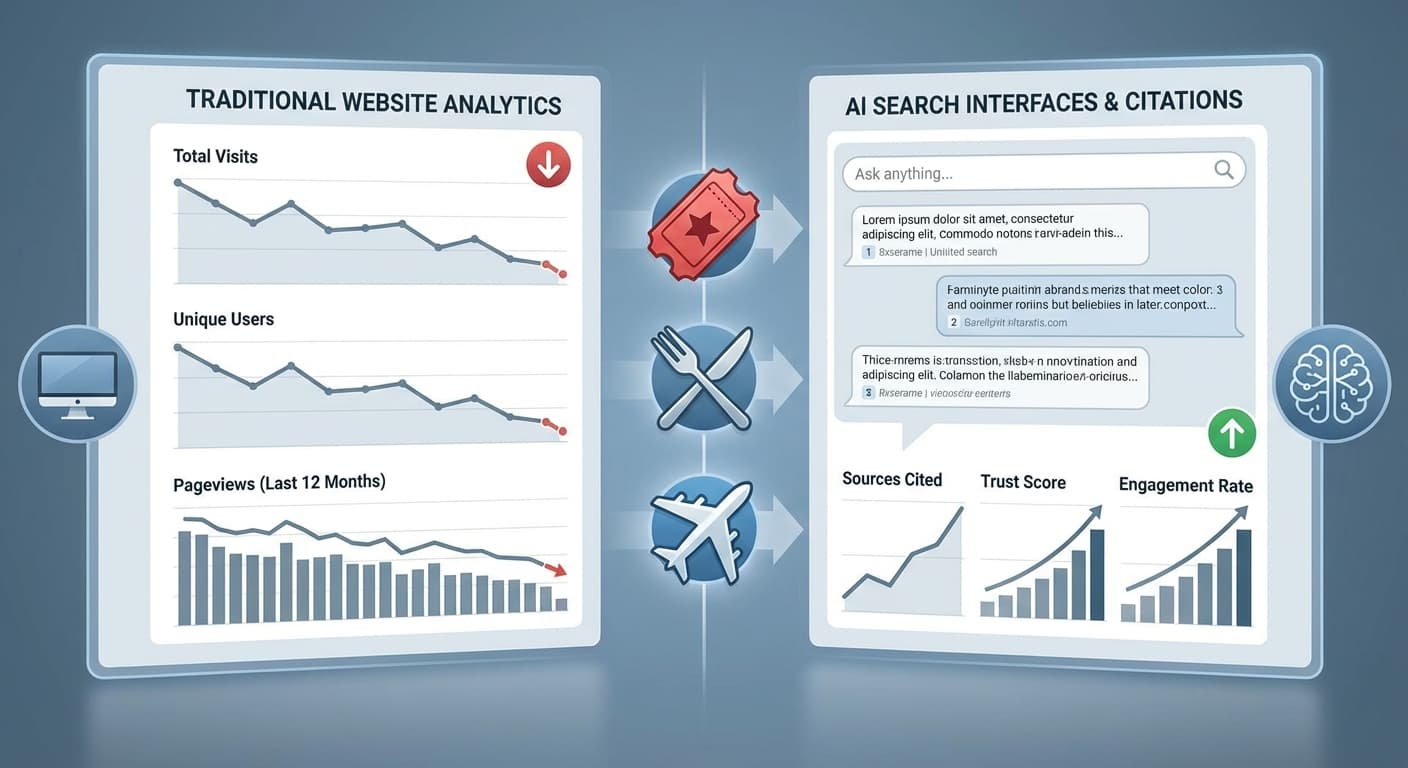
"Show me the money." If you're a content marketer in 2026, you've probably heard this from your CFO more times than you can count—especially when it comes to your AI search optimization efforts. Here's the problem: while AI search now accounts for over 35% of all search queries, with ChatGPT processing 2 billion queries monthly and Perplexity hitting 500 million monthly users, these platforms don't send traditional click-through data like Google Search Console.
Your CFO sees the budget line item for "AI search optimization" but struggles to connect it to actual revenue. Meanwhile, you know your content is being cited by AI engines and driving awareness, but proving that value feels like trying to measure the wind.
The Attribution Black Box Problem
Traditional SEO attribution was straightforward: Google Search Console showed clicks, you tracked those clicks through Google Analytics, and you could map them to conversions. AI search engines have fundamentally broken this model.
Here's what's happening behind the scenes:
The result? Your best-performing content might be getting cited thousands of times daily, but you have no idea which citations are driving actual business results.
The New ROI Framework for AI Citations
Since direct attribution isn't possible, we need to build a comprehensive measurement framework that combines multiple data points to prove value.
1. Brand Mention Tracking
Start by monitoring when your brand gets mentioned across AI platforms. This isn't just vanity—it's leading indicator data.
What to track:
Tools to use:
2. Direct Traffic Correlation Analysis
While AI engines don't send referral data, they do drive awareness that leads to direct traffic spikes.
How to measure this:
3. Content Performance Lift Metrics
Content that gets cited by AI engines often sees performance improvements across other channels.
Key metrics to monitor:
Building Your AI Citation ROI Dashboard
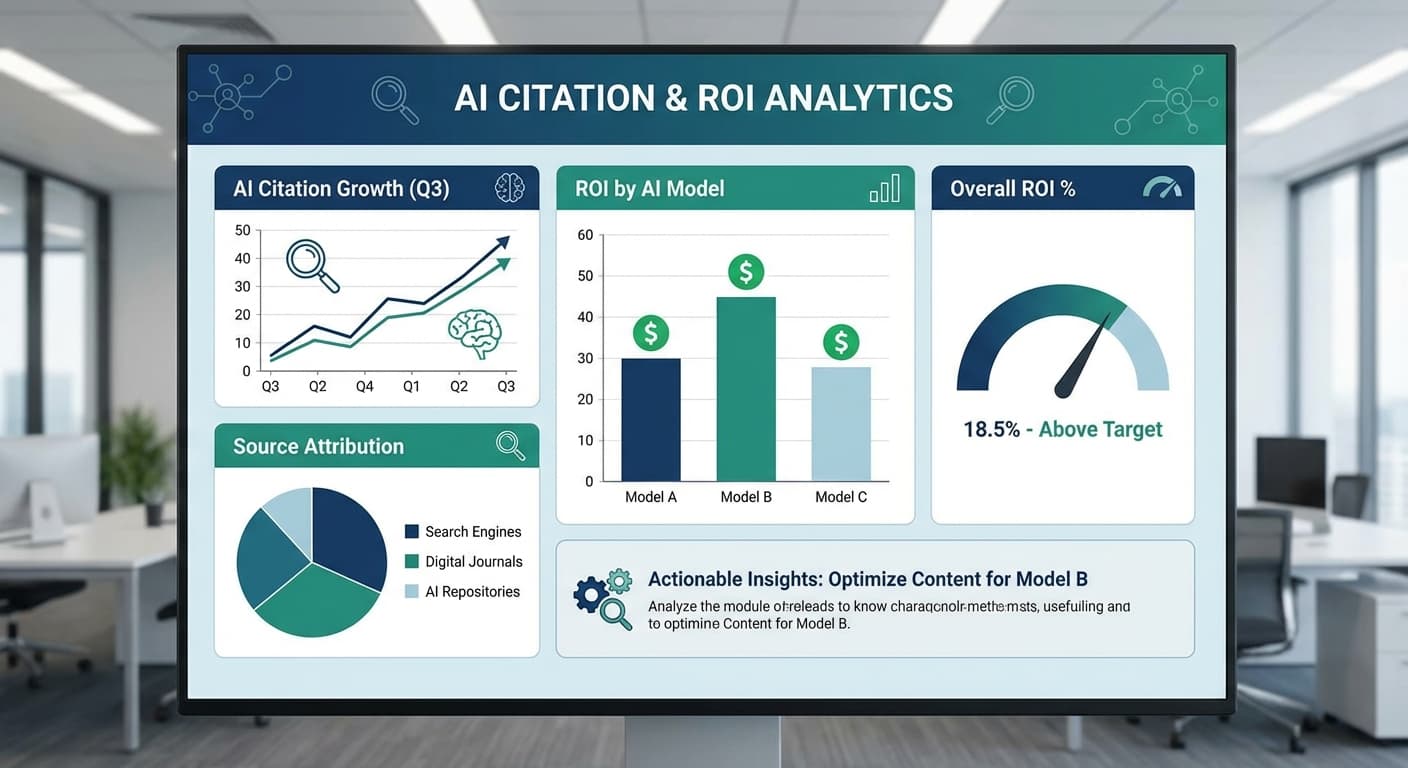
Create a executive-friendly dashboard that tells the complete story of your AI search impact.
Essential KPIs to Include:
Monthly Reporting Structure:
Executive Summary Section:
Detailed Analytics:
Proving Value Through Triangulation
Since you can't rely on direct attribution, use triangulation to build a compelling case:
Method 1: Time-Series Analysis
Compare periods of high AI citation activity with business metrics:
Method 2: Control Group Testing
Create content specifically for AI optimization and compare performance:
Method 3: Customer Journey Attribution
Survey customers about their discovery journey:
Advanced Attribution Techniques
Probabilistic Attribution Modeling
Use statistical modeling to estimate AI citation impact:
Multi-Touch Attribution
Consider AI citations as part of the larger customer journey:
Brand Lift Studies
Run periodic brand awareness studies:
How Citescope Ai Helps
While proving AI citation ROI is complex, having the right data makes all the difference. Citescope Ai's Citation Tracker monitors when your content gets cited across ChatGPT, Perplexity, Claude, and Gemini, giving you the visibility you need to build attribution models.
The platform's GEO Score helps you understand which content performs best in AI environments, while the AI Rewriter optimizes your content for maximum citation potential. This combination of tracking and optimization helps you build the data foundation needed for ROI conversations with your CFO.
Sample ROI Presentation for Your CFO
Here's a framework for presenting AI citation value:
Slide 1: The Opportunity
Slide 2: Our Performance
Slide 3: Investment vs. Return
Slide 4: Next Steps
The Long-Term Value Play
Remember that AI citation value compounds over time. Unlike paid advertising that stops when you stop paying, content citations continue generating value for months or years. Position this as a long-term brand building investment rather than a short-term performance play.
Focus on metrics that matter to your business:
Ready to Optimize for AI Search?
Proving ROI from AI citations doesn't have to be guesswork. Citescope Ai provides the tracking and optimization tools you need to build compelling attribution models that satisfy even the most data-driven CFO.
Start with our free tier to track your first citations and see how AI engines are already referencing your content. Then use our GEO Score and AI Rewriter to optimize for maximum citation potential. Ready to turn AI search into a measurable revenue driver? Try Citescope Ai free today.