How to Track AI Share of Voice When Your Competitors Are Winning 43% More AI Citations But You Can't Benchmark Your Brand Mention Rates Across Platforms
How to Track AI Share of Voice When Your Competitors Are Winning 43% More AI Citations But You Can't Benchmark Your Brand Mention Rates Across Platforms
Your competitor just got cited in 73% more ChatGPT responses than your brand last month. Meanwhile, your Perplexity mention rate dropped 28%, and you have no idea why. Sound familiar?
Welcome to the wild west of AI share of voice tracking in 2026, where traditional brand monitoring tools are about as useful as a flip phone at a tech conference. While 68% of Gen Z now uses AI engines for product research and over 500 million users rely on ChatGPT weekly, most brands are flying blind when it comes to measuring their AI visibility.
The problem isn't just that AI search is exploding—it's that measuring success in this new landscape requires completely different metrics and tracking methodologies.
The AI Citation Gap: Why Traditional Metrics Don't Work
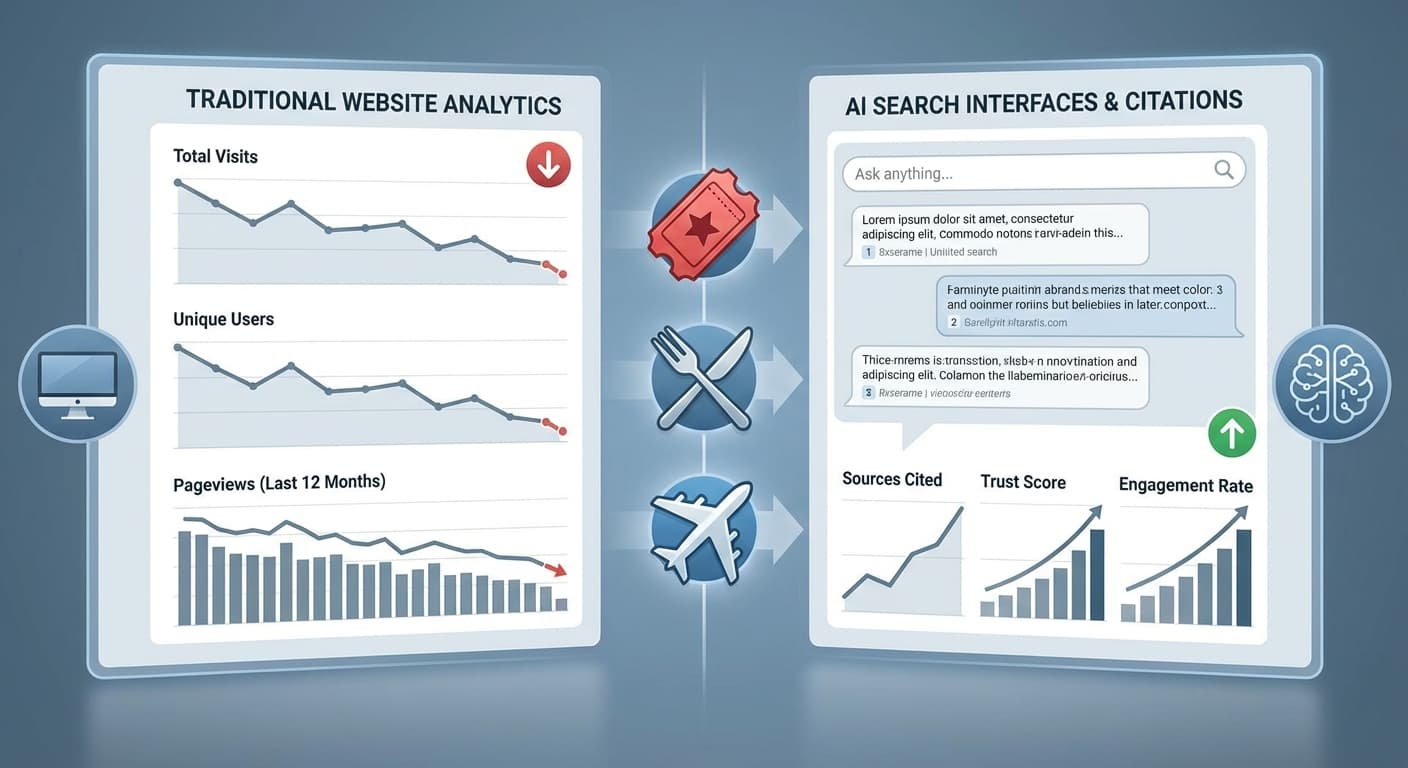
Traditional share of voice metrics were built for a Google-dominated world. You could track keyword rankings, monitor brand mentions, and benchmark against competitors using tools designed for web crawling and SERP analysis.
But AI engines don't work like search engines. They synthesize information from multiple sources, provide contextual answers, and cite content based on relevance, authority, and conversational fit—not just keyword matching.
Here's what's changed in 2026:
The 5-Step Framework for AI Share of Voice Tracking
1. Map Your AI Citation Landscape
Before you can track improvements, you need to understand where you currently stand across all major AI platforms.
Start by auditing these key areas:
Pro tip: Create a "citation map" that tracks which content pieces get cited most frequently. This reveals patterns in how AI engines interpret and value your content.
2. Establish Baseline Metrics That Actually Matter
Forget vanity metrics. In AI search, these KPIs drive real business impact:
3. Set Up Cross-Platform Monitoring
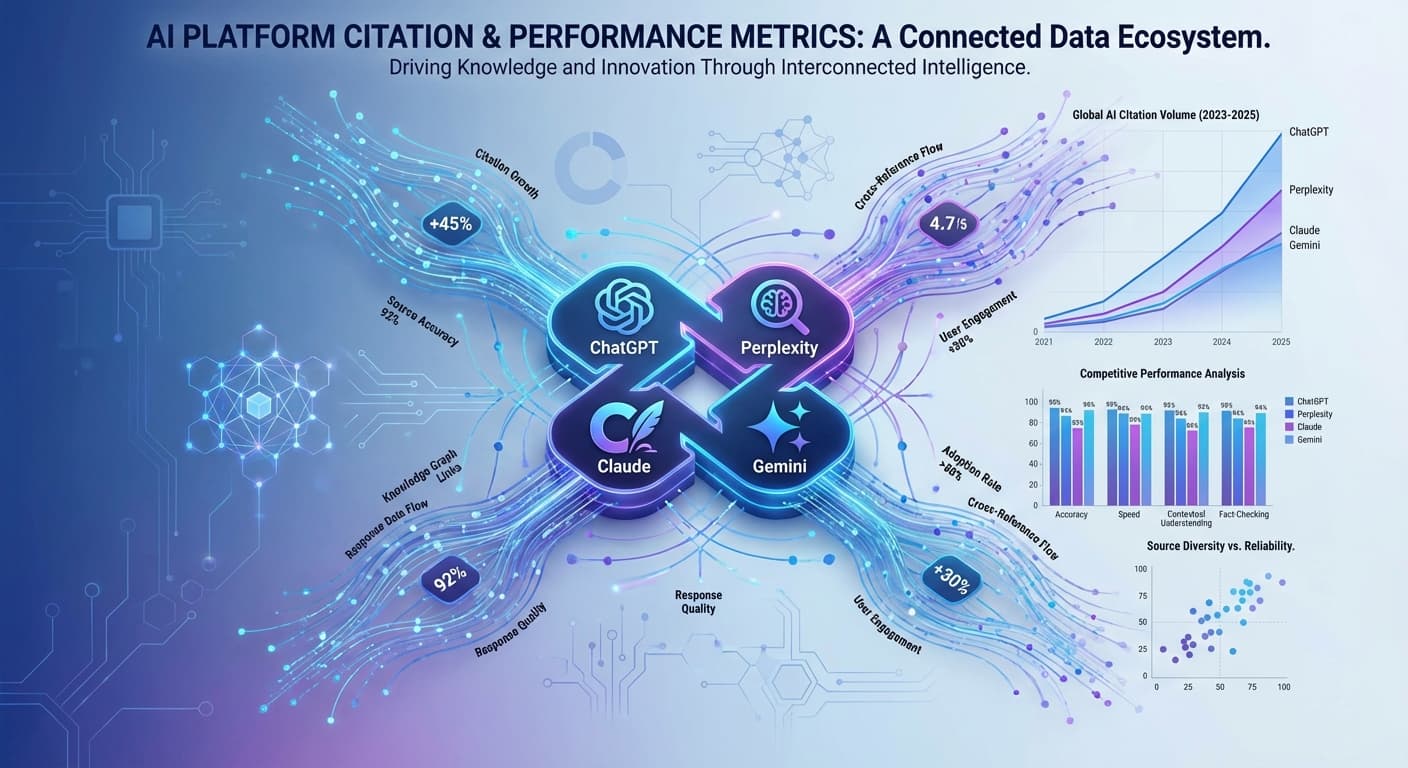
Each AI engine has different citation patterns and preferences:
ChatGPT tends to favor:
Perplexity prefers:
Claude values:
Gemini prioritizes:
4. Create Competitor Benchmarking Systems
Without proper benchmarking, you can't tell if you're winning or losing. Here's how to track competitive AI share of voice:
Query-based tracking: Monitor how often competitors appear in responses to key industry queries versus your brand.
Content gap analysis: Identify topics where competitors consistently get cited but you don't.
Response positioning: Track whether you're mentioned first, second, or buried in AI responses.
Citation source analysis: Understand which competitor content types (blogs, whitepapers, case studies) get the most AI traction.
5. Implement Continuous Optimization Loops
AI citation tracking isn't a set-it-and-forget-it process. The algorithms, training data, and citation preferences of AI engines evolve constantly.
Weekly reviews: Check citation performance across all tracked queries and platforms.
Monthly deep dives: Analyze trends, identify new opportunities, and adjust content strategy.
Quarterly benchmarking: Compare your AI share of voice growth against competitors and industry averages.
Common Tracking Pitfalls to Avoid
Mistake #1: Treating All AI Platforms the Same
Each AI engine has distinct citation patterns. A strategy that works for ChatGPT might fail completely on Claude. Track each platform separately and optimize accordingly.
Mistake #2: Focusing Only on Direct Brand Mentions
Indirect citations—where your expertise influences AI responses without explicit attribution—often matter more for building authority and driving traffic.
Mistake #3: Ignoring Negative Citations
When AI engines mention your brand negatively or in unfavorable comparisons, that's crucial data. Track negative sentiment and work to address the underlying content or perception issues.
Mistake #4: Not Measuring Citation Quality
A single mention in a comprehensive, authoritative AI response often drives more value than multiple mentions in surface-level answers.
Building Your AI Share of Voice Dashboard
Create a comprehensive tracking system that monitors:
Real-time metrics:
Trend analysis:
Strategic insights:
How Citescope Ai Solves the AI Share of Voice Challenge
While manual tracking provides insights, the complexity of monitoring AI citations across multiple platforms makes automation essential. Citescope Ai's Citation Tracker continuously monitors when your content gets cited by ChatGPT, Perplexity, Claude, and Gemini, providing the real-time visibility you need to track and improve your AI share of voice.
The platform's GEO Score analyzes your content across five dimensions that directly impact AI citation likelihood, while the AI Rewriter optimizes content structure and messaging to improve your chances of being cited across all major AI engines.
The Future of AI Share of Voice Tracking
As AI search continues to evolve in 2026 and beyond, expect citation tracking to become even more sophisticated. We're already seeing:
Ready to Optimize for AI Search?
Tracking AI share of voice doesn't have to be overwhelming. Citescope Ai provides the tools and insights you need to monitor your AI citations, benchmark against competitors, and optimize your content for better visibility across all major AI engines. Start with our free tier and get 3 content optimizations to see how your AI share of voice can improve. Try Citescope Ai today and stop letting competitors win 43% more citations than your brand.