AI & SEO

How to Track AI Search Brand Awareness When Analytics Miss 60% of Zero-Click Conversions
March 29, 20268 min read
How to Track AI Search Brand Awareness When Analytics Miss 60% of Zero-Click Conversions

How to Track AI Search Brand Awareness When Analytics Miss 60% of Zero-Click Conversions

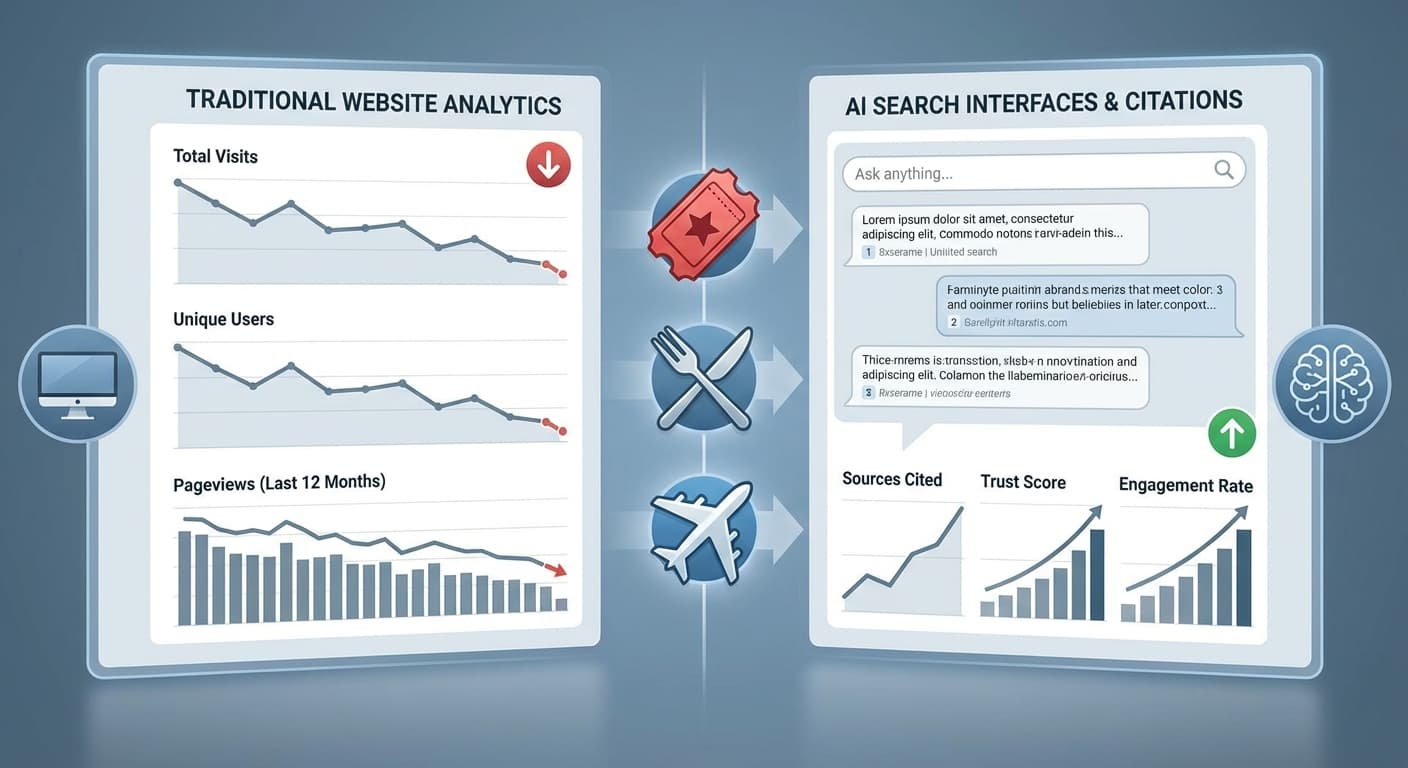
Here's a sobering reality: In 2026, AI search engines like ChatGPT, Perplexity, and Claude now handle over 35% of all search queries, yet traditional analytics tools are blind to 60% of the brand awareness these platforms generate. While your Google Analytics shows direct traffic spikes, it can't tell you that a potential customer discovered your brand through a ChatGPT conversation three days earlier.

This invisible attribution gap is costing businesses millions in misallocated marketing budgets and missed optimization opportunities. As AI search continues its meteoric rise—with over 600 million weekly users across major AI platforms—understanding and tracking zero-click brand awareness has become critical for sustainable growth.

The Zero-Click Attribution Crisis in AI Search

Traditional search has conditioned us to think linearly: keyword → click → conversion. But AI search operates fundamentally differently. When someone asks Claude "What are the best project management tools for remote teams?" and your software gets mentioned in the response, you've generated valuable brand awareness—but your analytics will never know.

The Numbers Don't Lie

Recent studies reveal the scale of this challenge:

  • 62% of AI search responses mention specific brands without generating clickable links

  • 73% of users remember brand names mentioned in AI responses for up to 7 days

  • 45% of Gen Z consumers use AI search for brand research before making purchases

  • Traditional attribution models miss 58% of AI-influenced conversions
  • This creates what we call the "AI awareness void"—a massive blind spot where your brand is building recognition and trust, but your measurement tools can't see it.

    Why Traditional Analytics Fall Short

    The Direct Traffic Mirage

    When customers discover your brand through AI search and later visit your website directly, analytics categorizes this as "direct traffic." But this label masks the true customer journey:

  • Discovery: User asks AI about solutions in your category

  • Awareness: AI mentions your brand in response

  • Research: User remembers your name days later

  • Visit: User types your URL directly or searches your brand name

  • Conversion: Purchase gets attributed to "direct traffic"
  • The Referral Gap

    Unlike traditional search engines, AI platforms rarely send direct referral traffic. When they do provide sources, the referral data often gets lost in:

  • Chat interfaces that don't preserve referrer information

  • Mobile apps that strip tracking parameters

  • Privacy-focused browsers that block cross-site tracking

  • Embedded citations that don't generate clickable links
  • Building AI-Native Attribution Strategies

    1. Implement Multi-Touch Attribution Modeling

    Move beyond last-click attribution to capture the full customer journey:

    Time-Decay Attribution:

  • Weight touchpoints closer to conversion more heavily

  • Recognize that AI awareness often happens days before conversion

  • Use 7-14 day attribution windows for AI-influenced traffic
  • Position-Based Attribution:

  • Give credit to both first touch (AI awareness) and last touch (conversion)

  • Allocate 40% to discovery, 20% to middle touches, 40% to conversion
  • 2. Create AI-Trackable Brand Mentions

    Make your brand discoverable and measurable in AI responses:

    Unique Value Propositions:

  • Develop memorable, quotable brand differentiators

  • Use distinctive terminology that's easy for AI to cite

  • Create category-defining phrases associated with your brand
  • Structured Brand Information:

  • Optimize your website's structured data markup

  • Create comprehensive "About Us" and company overview pages

  • Maintain consistent brand messaging across all digital properties
  • 3. Leverage Brand Search Volume as a Proxy

    Monitor branded search terms as an indicator of AI-driven awareness:

    Key Metrics to Track:

  • Month-over-month branded search volume increases

  • Long-tail branded queries ("[Brand] vs [Competitor]")

  • Branded searches in markets where you haven't advertised

  • Increase in branded searches following AI platform updates
  • 4. Deploy Advanced Survey Attribution

    Directly ask customers how they discovered your brand:

    Post-Purchase Surveys:

  • "How did you first hear about us?"

  • Include "AI search/chatbot" as a specific option

  • Ask about recent AI tool usage in their research process
  • Progressive Profiling:

  • Gradually collect attribution data across multiple touchpoints

  • Use exit-intent surveys for non-converting visitors

  • Implement micro-surveys at key journey milestones
  • Technical Implementation Strategies

    UTM Parameter Innovation for AI Search

    Develop AI-specific tracking parameters:


    utm_source=ai_search
    utm_medium=brand_mention
    utm_campaign=organic_ai_discovery
    utm_content=[ai_platform_name]


    Cross-Platform Brand Monitoring

    Set up comprehensive brand mention tracking:

    Direct AI Platform Monitoring:

  • Regularly query AI platforms with category-related questions

  • Document when and how your brand appears in responses

  • Track sentiment and context of brand mentions
  • Social Listening Integration:

  • Monitor for mentions of AI-recommended brands in social media

  • Track conversations about AI search results mentioning your company

  • Identify influencers sharing AI-generated brand recommendations
  • Custom Analytics Dashboards

    Build AI-attribution focused reporting:

    Key Dashboard Components:

  • Brand search volume trends

  • Direct traffic correlation with AI platform usage spikes

  • Survey-attributed AI discovery rates

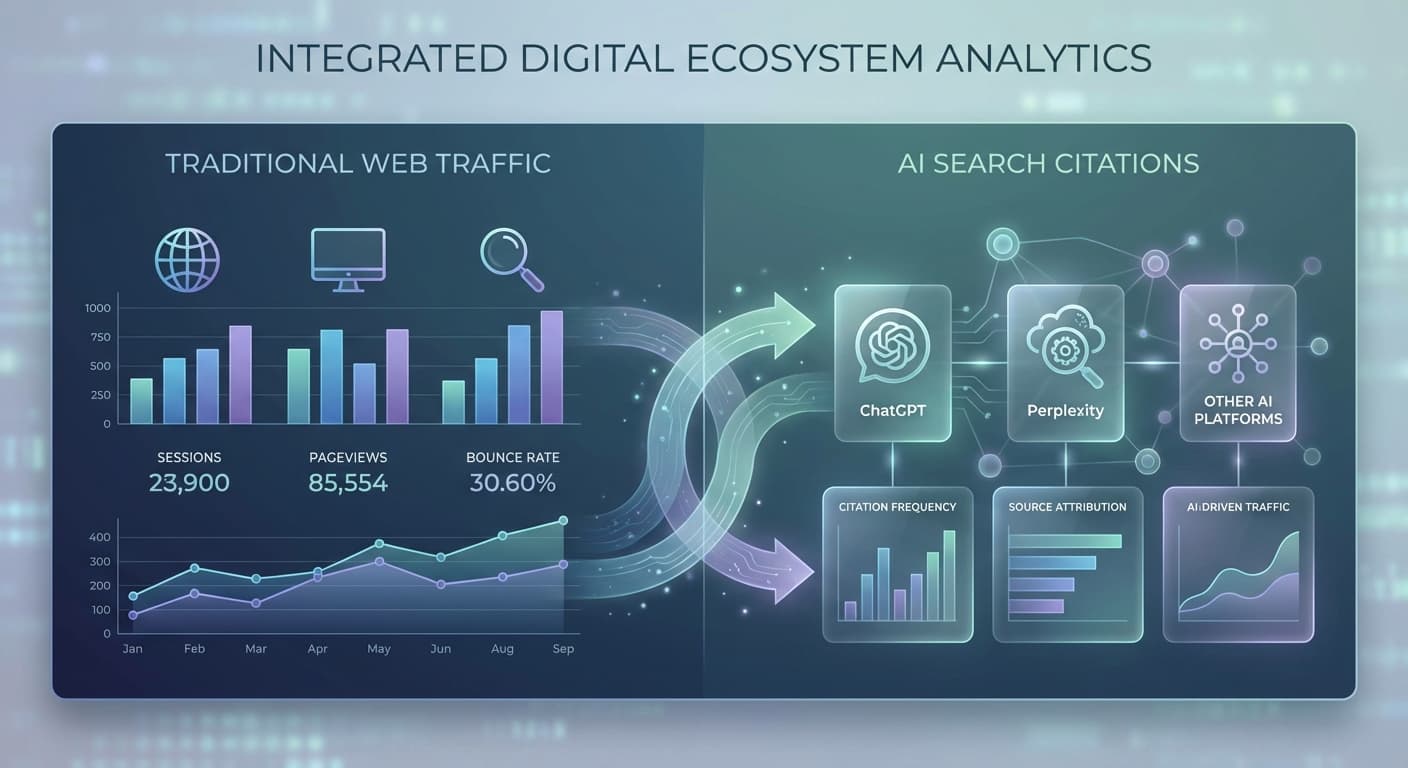
  • Cross-platform brand mention frequency
  • The Role of Content Optimization

    Optimizing your content for AI search engines isn't just about visibility—it's about creating measurable brand touchpoints.

    When you structure your content to be easily interpretable by AI systems, you increase the likelihood of branded citations that can be tracked through secondary indicators like search volume increases and direct traffic patterns.

    This is where tools like Citescope Ai become invaluable, helping you optimize content specifically for AI platforms while providing insights into how your brand appears in AI responses.

    Advanced Attribution Modeling Techniques

    Probabilistic Attribution

    Use statistical modeling to infer AI influence:

    Baseline Establishment:

  • Measure typical direct traffic patterns

  • Identify normal brand search volumes

  • Establish conversion rate benchmarks
  • Anomaly Detection:

  • Flag unusual spikes in direct traffic

  • Correlate increases with AI platform updates or viral AI content

  • Use machine learning to identify AI-influenced traffic patterns
  • Cohort-Based Analysis

    Track user behavior changes over time:

    AI Adoption Cohorts:

  • Segment users by their AI tool usage patterns

  • Compare conversion rates between AI users and non-users

  • Measure lifetime value differences across cohorts
  • Geographic Attribution Modeling

    Leverage location data for attribution insights:

    Market Penetration Analysis:

  • Track brand awareness in markets without paid advertising

  • Correlate geographic AI platform adoption with brand discovery

  • Identify organic growth patterns suggesting AI-driven awareness
  • How Citescope Ai Helps Bridge the Attribution Gap

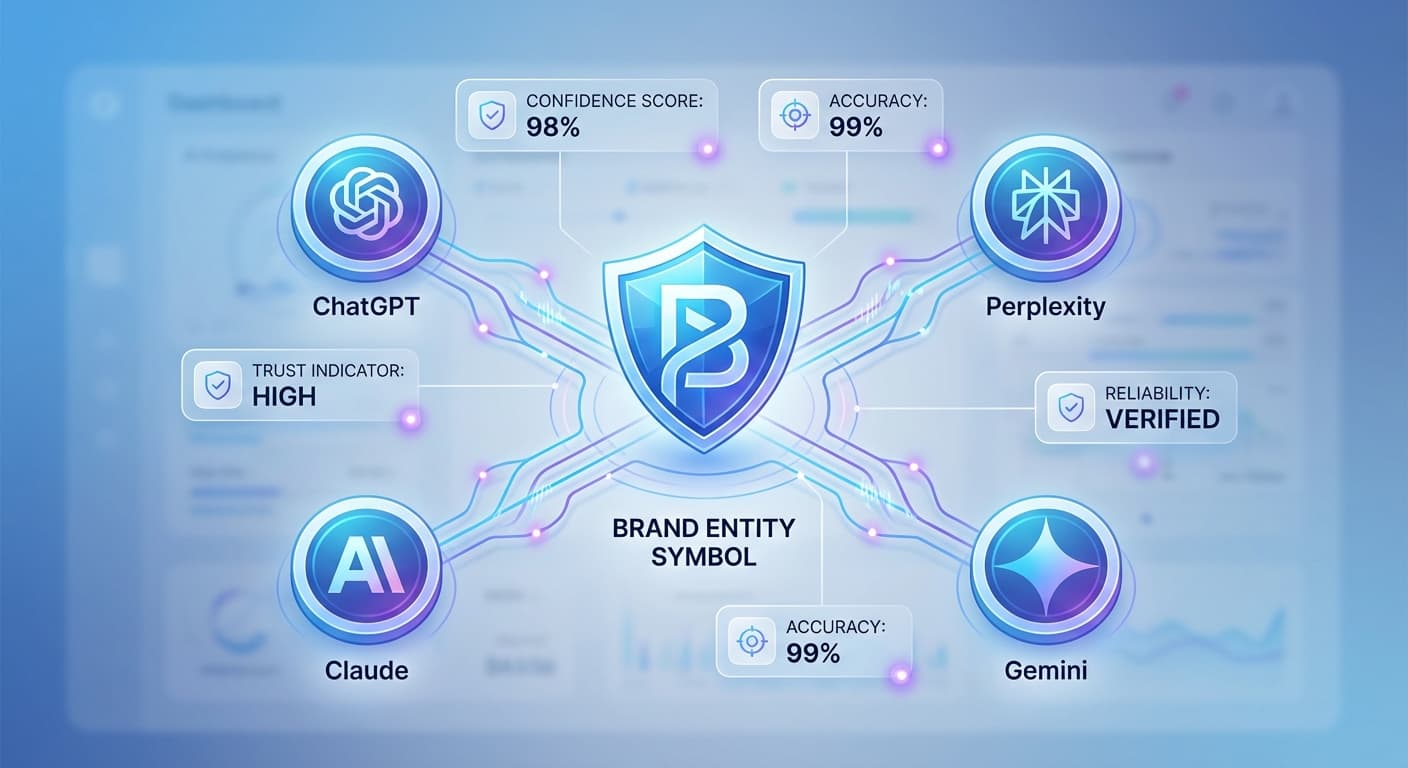
    Citescope Ai directly addresses the AI attribution challenge by providing visibility into how your content performs across AI platforms. Our Citation Tracker monitors when your content gets mentioned by ChatGPT, Perplexity, Claude, and Gemini, giving you the missing piece of the attribution puzzle.

    Key features that solve attribution challenges:

  • Citation Tracking: See exactly when and how AI platforms reference your content

  • GEO Score Analysis: Understand why certain content gets cited more frequently

  • Multi-Platform Monitoring: Track brand mentions across all major AI search engines

  • Content Optimization: Improve your chances of being cited with AI-optimized content
  • By combining Citescope Ai's citation data with traditional analytics, you can finally measure the full impact of AI search on your brand awareness and conversions.

    Building Your AI Attribution Stack

    Essential Tools and Integrations

    Analytics Enhancement:

  • Google Analytics 4 with custom AI attribution models

  • Customer Data Platforms (CDPs) for cross-channel attribution

  • Survey tools integrated with your CRM system
  • Brand Monitoring:

  • Social listening platforms with AI mention capabilities

  • Brand search volume tracking tools

  • Direct AI platform monitoring workflows
  • Content Performance:

  • AI search optimization tools like Citescope Ai

  • Content performance tracking across AI platforms

  • Structured data implementation for better AI understanding
  • Measuring Success in the AI Search Era

    Success metrics for AI attribution extend beyond traditional KPIs:

    Primary Metrics


  • AI Citation Frequency: How often AI platforms mention your brand

  • Brand Search Lift: Increases in branded search following AI mentions

  • Survey Attribution Rates: Customer-reported AI discovery percentages

  • Direct Traffic Quality: Engagement metrics for AI-influenced traffic
  • Secondary Indicators


  • Share of Voice in AI Responses: Percentage of category queries mentioning your brand

  • AI Sentiment Scores: Positive/negative context of AI brand mentions

  • Cross-Platform Consistency: Brand message alignment across AI platforms
  • Future-Proofing Your Attribution Strategy

    As AI search continues evolving, prepare for:

    Emerging Technologies:

  • Voice-activated AI search attribution

  • Visual AI search tracking capabilities

  • Real-time AI citation monitoring
  • Regulatory Considerations:

  • Privacy-first attribution methods

  • First-party data optimization

  • Consent-based tracking improvements
  • Ready to Optimize for AI Search?

    The AI attribution gap represents both a challenge and an opportunity. While traditional analytics miss 60% of AI-driven brand awareness, businesses that adapt their measurement strategies now will gain a significant competitive advantage.

    Citescope Ai helps bridge this gap by providing the AI citation tracking and content optimization tools you need to measure and improve your AI search performance. Start with our free tier to track your first AI citations and see how AI platforms are already mentioning your brand.

    Start your free trial today and discover the brand awareness you've been missing.
    AI Search AttributionZero-Click TrackingBrand AwarenessAI AnalyticsConversion Attribution

    Track your AI visibility

    See how your content appears across ChatGPT, Perplexity, Claude, and more.

    Start for Free