How to Stop Black Hat LLM SEO Tactics from Hijacking Your AI Search Citations in 2026
How to Stop Black Hat LLM SEO Tactics from Hijacking Your AI Search Citations in 2026
Did you know that 47% of businesses reported having their AI search citations stolen by competitors using black hat tactics in 2025? As AI search engines like ChatGPT, Perplexity, and Claude continue to dominate the search landscape—now handling over 35% of all search queries—a new breed of malicious SEO tactics has emerged that specifically targets AI citation theft.
While traditional SEO focused on keyword stuffing and link schemes, black hat LLM SEO operates in the shadows of AI training data, manipulating how language models perceive and cite content. The stakes are higher than ever: losing AI citations means losing visibility to the 750+ million users who rely on AI for search and research daily.
What Are Black Hat LLM SEO Tactics?
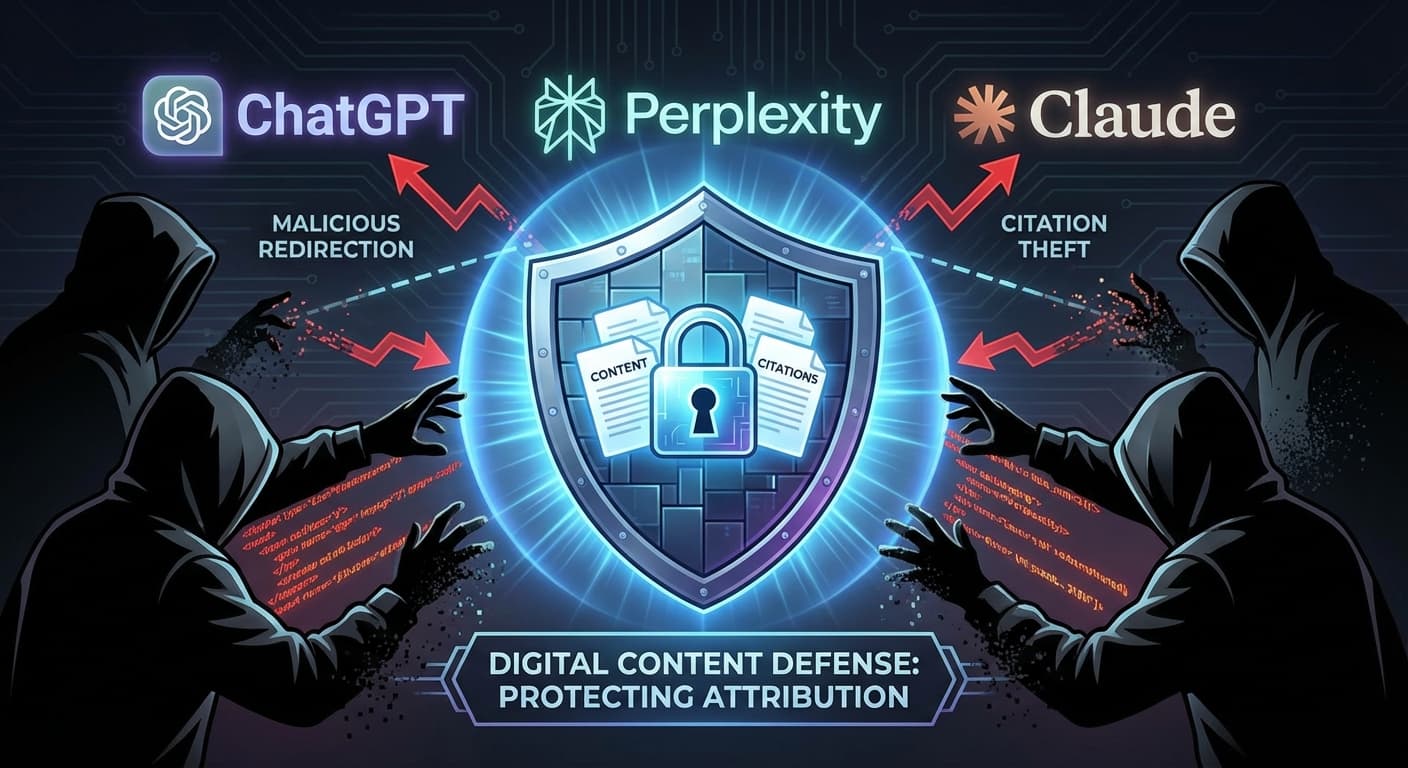
Black hat LLM SEO refers to unethical practices designed to manipulate AI search engines into citing false, stolen, or artificially boosted content over legitimate sources. These tactics exploit how large language models process, rank, and attribute information.
Common Black Hat LLM Tactics in 2026
1. Citation Hijacking
Competitors copy your high-performing content, make minor modifications, and flood the web with near-identical versions to confuse AI models about the original source.
2. AI Prompt Injection
Malicious actors embed hidden instructions within their content that attempt to manipulate AI responses, steering citations toward their content regardless of quality or accuracy.
3. Synthetic Authority Building
Using AI-generated content farms to create thousands of fake "authoritative" sources that cross-reference each other, creating artificial credibility signals that fool LLMs.
4. Semantic Cloaking
Presenting different content to AI crawlers versus human users, often using techniques that exploit how AI models parse structured data versus visual content.
5. Training Data Poisoning
Attempting to influence AI model updates by strategically placing manipulated content where it's likely to be included in future training datasets.
The Real Cost of AI Citation Theft
The impact goes far beyond vanity metrics. When competitors steal your AI citations:
How to Protect Your Content from Black Hat LLM Tactics
1. Implement Content Fingerprinting
Create unique identifiers within your content that make plagiarism detection easier:
2. Strengthen Your Authority Signals
AI models rely heavily on authority indicators when determining citation worthiness:
Author Credentials
Publication Quality
3. Optimize for AI Interpretability
Make your content easier for AI models to understand and properly attribute:
4. Monitor Your Citation Landscape
Regular monitoring is crucial for early detection of citation theft:
Track Your Mentions
Analyze Citation Patterns
Tools like Citescope Ai's Citation Tracker make this process automated and comprehensive, monitoring citations across ChatGPT, Perplexity, Claude, and Gemini in real-time.
5. Build Defensive Content Strategies
Create Citation-Worthy Assets
Establish Content Relationships
Advanced Protection Techniques
Legal and Technical Safeguards
Copyright Protection
Technical Barriers
Content Verification Systems
As AI citation theft becomes more sophisticated, verification becomes crucial:
Building Long-Term AI Citation Resilience
Focus on Unique Value Creation
The best defense against black hat tactics is creating content that's genuinely difficult to replicate:
Establish Direct AI Relationships
While you can't directly "submit" to AI search engines like traditional search, you can:
How Citescope Ai Helps Protect Your Citations
Citescope Ai provides comprehensive protection against black hat LLM tactics through several key features:
Real-Time Citation Monitoring: Track when your content gets cited across ChatGPT, Perplexity, Claude, and Gemini, with instant alerts when citation patterns change unexpectedly.
GEO Score Analysis: Our proprietary scoring system analyzes your content across five dimensions crucial for AI visibility, helping you identify vulnerabilities before competitors exploit them.
AI-Optimized Content Structure: The AI Rewriter tool ensures your content is structured for maximum AI interpretability and citation worthiness, making it harder for stolen versions to outperform the original.
Competitive Intelligence: Monitor competitor content for suspicious similarities to your work, with detailed analysis of citation performance across different AI platforms.
Red Flags: Spotting Black Hat Attacks
Watch for these warning signs that your citations may be under attack:
The Future of AI Citation Protection
As we move through 2026, expect AI search engines to become more sophisticated at detecting and penalizing black hat tactics:
Ready to Protect Your AI Search Citations?
Black hat LLM SEO tactics are evolving rapidly, but with the right strategy and tools, you can protect your content and maintain your rightful place in AI search results. Citescope Ai provides the comprehensive monitoring, optimization, and protection tools you need to stay ahead of malicious actors.
Start with our free tier to analyze your current AI citation vulnerability and see how your content performs across major AI platforms. With real-time monitoring and one-click optimization, you'll never have to worry about losing your hard-earned citations to black hat tactics again.