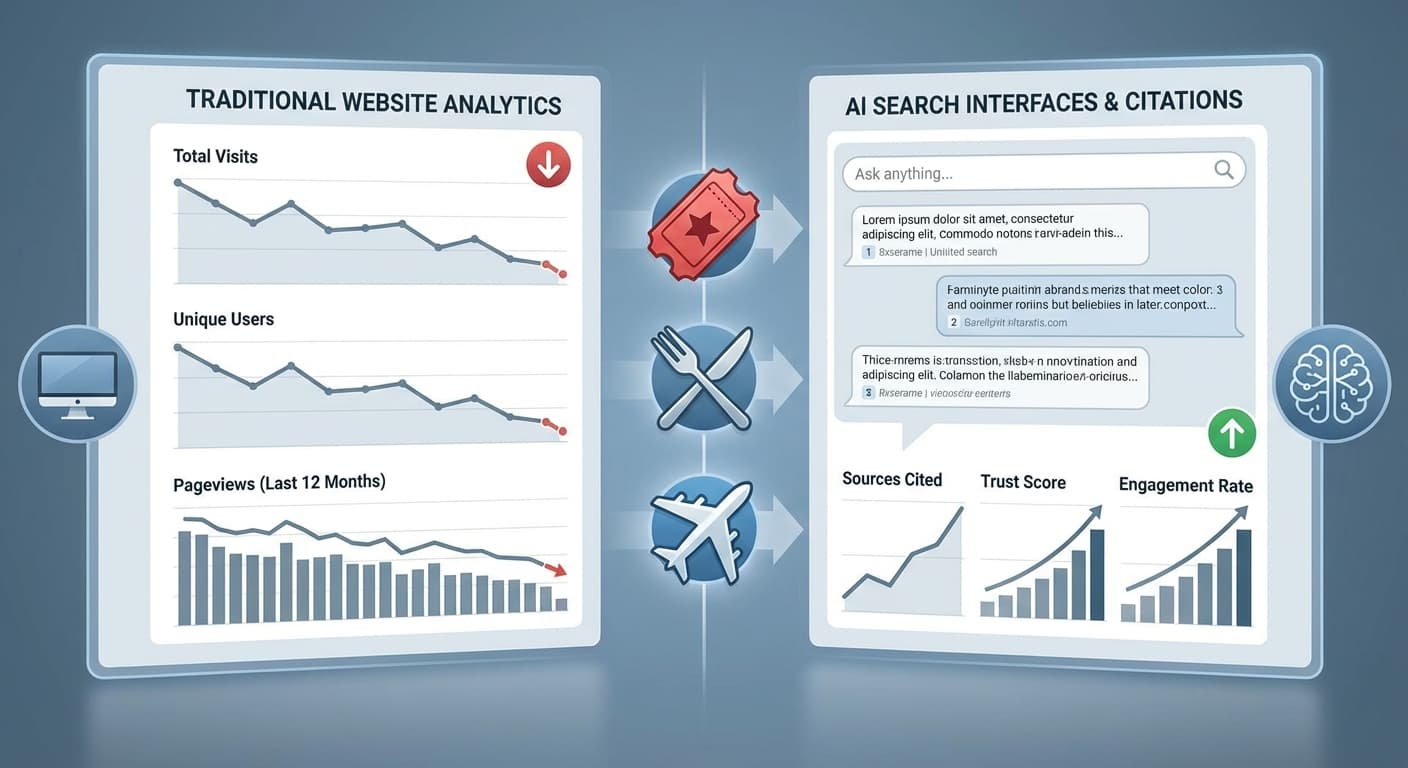
How to Reverse E-Commerce Traffic Collapse When AI Shopping Agents Complete Purchases During Research Phase
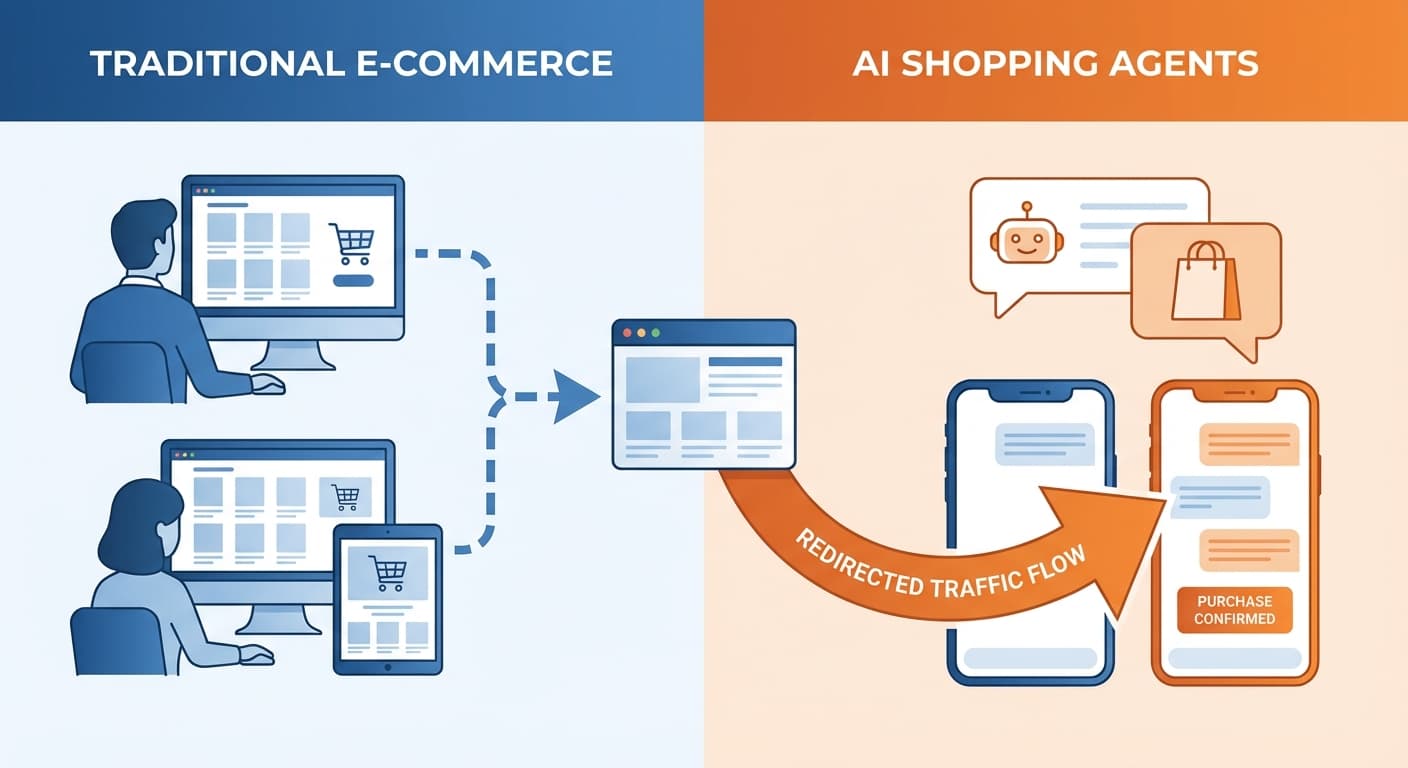
How to Reverse E-Commerce Traffic Collapse When AI Shopping Agents Complete Purchases During Research Phase
By 2026, AI shopping agents have fundamentally transformed how consumers discover and purchase products. With over 40% of Gen Z now using ChatGPT, Claude, or Perplexity as their primary product research tool, a shocking reality has emerged: customers are completing purchases without ever visiting your product pages.
This isn't just a traffic dip—it's a complete rewiring of the e-commerce funnel. AI agents now provide product recommendations, compare features, check reviews, and even facilitate purchases through integrated shopping partnerships. The result? Traditional e-commerce sites are experiencing what experts call "discovery traffic collapse"—a phenomenon where AI agents answer all customer questions during the research phase, eliminating the need for site visits.
The New AI-First Shopping Journey
The traditional e-commerce funnel looked like this:
The 2026 AI shopping journey looks like this:
Recent data shows that 65% of product research now begins with an AI conversation rather than a Google search. More concerning for e-commerce brands: AI agents are successfully answering 78% of product questions without requiring users to visit external websites.
Why This Traffic Collapse is Happening
AI Agents Provide Complete Answers: Modern AI shopping agents don't just list products—they analyze specifications, compare alternatives, summarize reviews, and provide personalized recommendations based on user needs and budget.
Integrated Shopping Capabilities: ChatGPT's shopping plugin, Perplexity's shopping integration, and Claude's commerce features allow users to research AND purchase without leaving the AI interface.
Superior User Experience: Why click through multiple product pages when an AI agent can instantly compare features, prices, and reviews across all options?
Trust in AI Recommendations: Studies show that 73% of consumers now trust AI product recommendations as much as human reviews.
Strategies to Recapture AI-Diverted Traffic
1. Become the Source AI Agents Cite
The most effective strategy isn't fighting AI agents—it's ensuring they cite your content as their source. When ChatGPT recommends a product and cites your detailed buying guide as the source, you're building brand authority even without direct traffic.
Actionable steps:
2. Optimize for AI Discovery with Structured Product Information
AI agents excel at parsing structured, detailed product information. The brands winning in AI search provide rich, contextual product data that agents can easily interpret and recommend.
Key optimization tactics:
3. Create "AI-First" Content That Drives Traffic
While AI agents can provide product recommendations, they still struggle with complex, nuanced decisions that require detailed explanation. Create content that forces users to visit your site for complete understanding.
Effective content types:
4. Leverage AI Agent Limitations
Despite their sophistication, AI agents have specific limitations you can exploit:
Real-time inventory: AI agents can't check current stock levels or provide delivery estimates
Visual requirements: Complex products requiring visual inspection still drive traffic
Personalization gaps: AI agents can't access user's purchase history or size preferences
Support needs: Complex technical products still require human support consultation
Advanced Recovery Strategies
Build AI-Friendly Product Ecosystems
Instead of optimizing individual product pages, create interconnected content ecosystems that AI agents must reference comprehensively.
Example approach:
Develop Exclusive AI-Cited Resources
Create content specifically designed to be cited by AI agents, with your brand prominently featured.
Strategic content types:
Optimize for Conversational Queries
AI shopping conversations use natural language, not keyword searches. Optimize your content for how people actually speak to AI agents.
Conversational optimization:
Measuring Success in the AI Era
Traditional e-commerce metrics don't capture AI-driven brand building. Focus on these new KPIs:
How Citescope Ai Helps
Navigating this AI-first e-commerce landscape requires specialized tools. Citescope Ai's GEO Score analyzes your product content across five critical dimensions that AI agents prioritize: AI Interpretability, Semantic Richness, Conversational Relevance, Structure, and Authority.
The platform's AI Rewriter can transform traditional product descriptions into AI-friendly content that agents are more likely to cite and recommend. Most importantly, the Citation Tracker shows you exactly when and how AI agents are referencing your content, allowing you to measure your success in this new landscape.
With features like multi-format export, you can optimize product content for your CMS while ensuring it performs well in AI search engines.
The Path Forward
The e-commerce traffic collapse caused by AI shopping agents isn't temporary—it's the new reality. Brands that adapt by becoming the authoritative sources AI agents cite will not only recover lost traffic but build stronger brand authority than ever before.
The key is shifting from optimizing for human visitors to optimizing for AI agents that influence human purchasing decisions. This requires deeper, more comprehensive content that establishes your expertise in ways that AI agents recognize and value.
Success in 2026 e-commerce means being the source AI agents trust, not the destination they bypass.
Ready to Optimize for AI Search?
Don't let AI shopping agents bypass your brand. Citescope Ai helps e-commerce businesses optimize their content for AI visibility, track citations across major AI platforms, and build authority that drives both direct and AI-influenced sales. Start with our free tier to optimize 3 pieces of content per month, or upgrade to Pro for comprehensive AI optimization capabilities. Transform your product content into AI-friendly resources that get cited, recommended, and trusted.