How to Recover from AI Retrieval Blindness: When Your Pages Are Indexed But Invisible in ChatGPT and Perplexity
How to Recover from AI Retrieval Blindness: When Your Pages Are Indexed But Invisible in ChatGPT and Perplexity
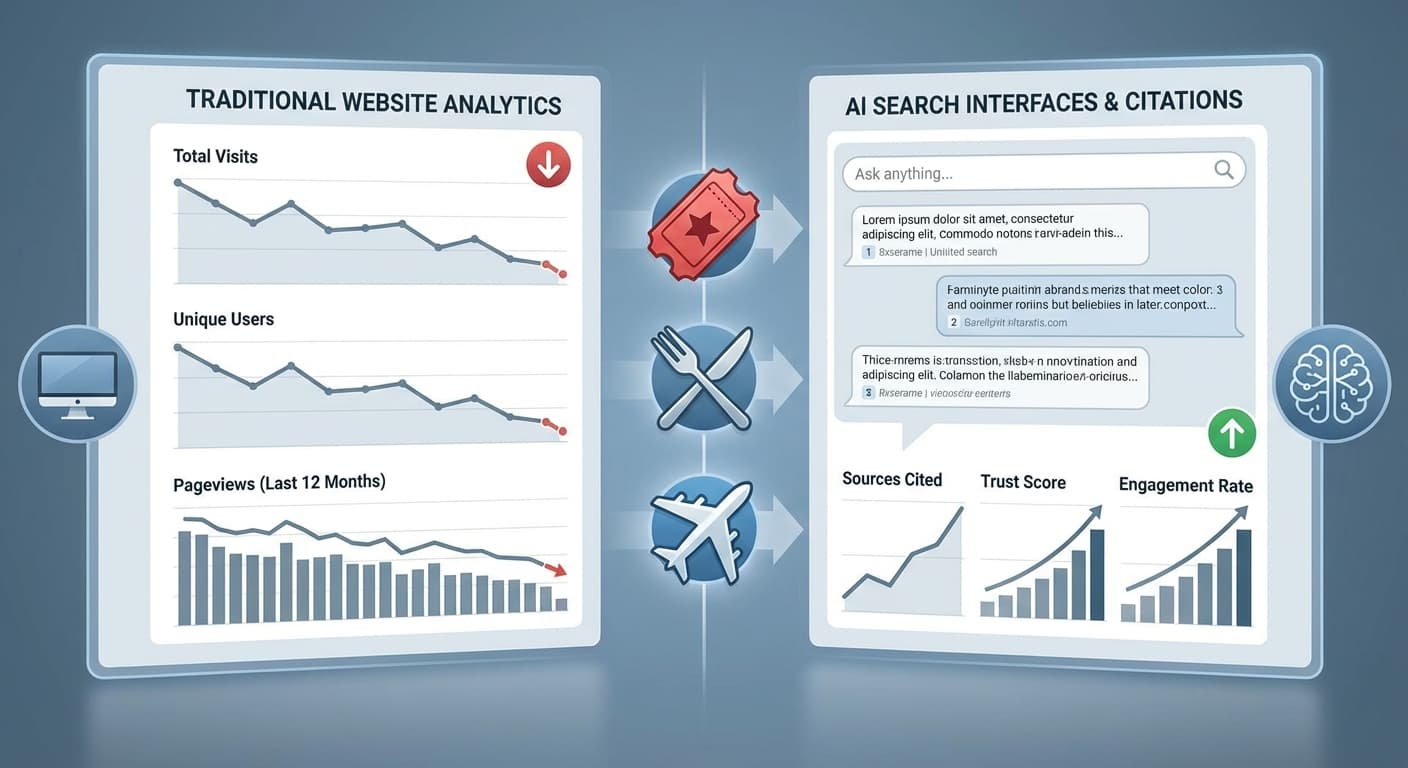
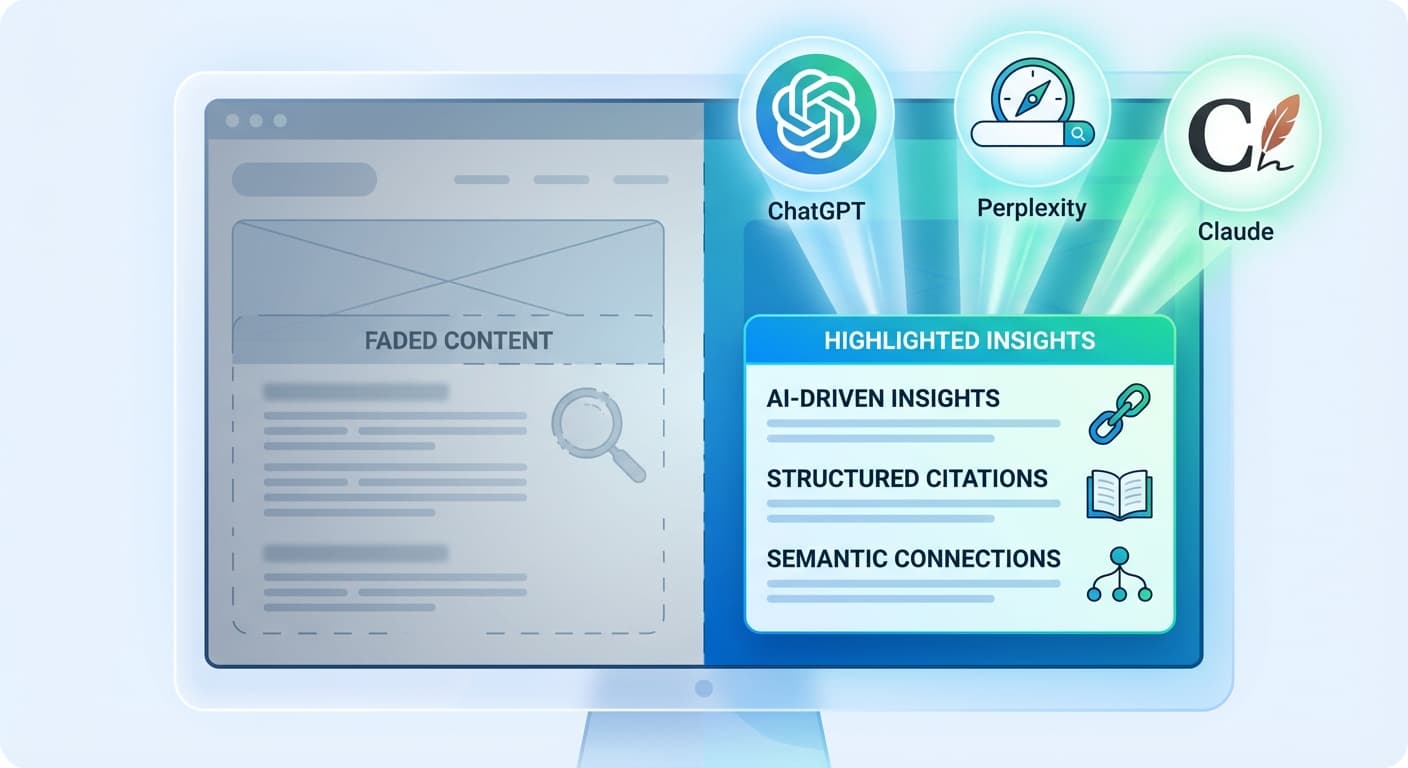
Your website is indexed by Google. Your content ranks well in traditional search. Yet when users ask ChatGPT, Perplexity, or Claude about topics you've covered extensively, your content is nowhere to be found in their responses. Welcome to AI retrieval blindness—the frustrating phenomenon where your content exists in search engines but remains invisible to AI systems when generating answers.
With AI search now accounting for over 35% of all queries in 2026 and 78% of Gen Z preferring AI-powered search tools, this invisibility can devastate your organic reach. Recent studies show that 60% of indexed web pages suffer from some degree of AI retrieval blindness, meaning billions of pages are essentially "dark" to the AI systems that increasingly drive discovery.
Understanding AI Retrieval Blindness
AI retrieval blindness occurs when search engines can crawl and index your content, but AI language models fail to retrieve or cite it during answer generation. Unlike traditional SEO where keyword matching dominated, AI systems evaluate content through complex semantic understanding, contextual relevance, and authority signals that differ significantly from conventional ranking factors.
The Root Causes
Semantic Disconnection: Your content may be optimized for traditional keywords but lacks the semantic richness that AI models need to understand context and relevance.
Structural Invisibility: AI systems prefer content with clear hierarchical structure, definitive statements, and direct answers to specific questions. Dense paragraphs without clear takeaways often get overlooked.
Authority Gaps: While Google considers backlinks heavily, AI models weigh different authority signals, including content freshness, expert attribution, and citation-worthiness of information.
Conversational Mismatch: Traditional SEO content often targets search queries, but AI models retrieve content that matches natural language patterns and conversational contexts.
Diagnosing Your AI Visibility Problem
Before fixing AI retrieval blindness, you need to identify which of your pages are affected and why.
Step 1: Audit Your Current AI Citations
Test your key content by asking direct questions to multiple AI systems:
Step 2: Analyze Competing Content
Study the sources that AI systems DO cite for your target topics:
Step 3: Content Quality Assessment
Evaluate your content against AI-friendly criteria:
Recovery Strategies for AI Retrieval Blindness
Semantic Optimization
Transform your content to match how AI systems understand and categorize information.
Use Definitive Language: Replace vague statements with clear, declarative sentences. Instead of "Many experts believe that..." write "Research from Stanford University shows that..."
Incorporate Question-Answer Patterns: Structure sections to directly answer common questions. Use H3 headings that mirror natural language queries.
Build Semantic Clusters: Connect related concepts explicitly. If discussing "content marketing," also mention related terms like "audience engagement," "brand storytelling," and "conversion optimization."
Structural Reformation
Create Scannable Hierarchies: Use clear H2 and H3 headings that follow logical progression. AI systems excel at extracting information from well-structured content.
Implement Answer Boxes: Create dedicated sections that directly address specific questions, formatted as:
What is [Topic]?
[Direct, comprehensive answer in 2-3 sentences]
Use Lists and Bullets: Break complex information into digestible, citation-friendly formats that AI systems can easily extract and reference.
Authority Building for AI
AI systems evaluate authority differently than traditional search engines.
Expert Attribution: Include author credentials, expert quotes, and source attribution prominently. AI models favor content with clear expertise signals.
Data Integration: Incorporate current statistics, research findings, and quantifiable claims. AI systems frequently cite content with specific, verifiable data points.
Cross-Referenced Information: Link to authoritative sources and create internal connections between related content pieces.
Content Freshness and Relevance
Regular Updates: Refresh existing content with current information, statistics, and examples. AI systems heavily favor recently updated content.
Trending Integration: Connect your evergreen content to current events and trending topics in your industry.
Seasonal Optimization: Update content to reflect current timeframes and seasonal relevance.
Advanced Recovery Techniques
The Question-First Approach
Rewrite existing content by starting with the questions your audience asks AI systems:
Citation-Worthy Formatting
Format information in ways that make it easy for AI systems to extract and cite:
Key Statistics Boxes: Present important data in clearly labeled, standalone sections
Process Summaries: Create step-by-step breakdowns that AI can easily reference
Definition Clarity: Provide clear, quotable definitions for industry terms and concepts
Multi-Format Optimization
Develop content in multiple formats to increase retrieval chances:
Monitoring Your Recovery Progress
Track your improvements across multiple dimensions:
Citation Frequency Tracking
Monitor how often AI systems cite your content across different topics and query types. Set up regular testing schedules to measure improvement over time.
Semantic Ranking Assessment
Evaluate whether your content appears for related concepts and synonymous queries, not just exact keyword matches.
Competitive Gap Analysis
Continuously compare your citation rates against competitors to identify ongoing optimization opportunities.
How Citescope Ai Helps
Recovering from AI retrieval blindness requires systematic analysis and optimization that's difficult to manage manually. Citescope Ai's comprehensive platform addresses each aspect of this challenge:
GEO Score Analysis evaluates your content across five critical dimensions that affect AI retrieval: AI Interpretability, Semantic Richness, Conversational Relevance, Structure, and Authority. This gives you a clear 0-100 score showing exactly where your content falls short of AI expectations.
AI Rewriter Technology automatically restructures your existing content using proven patterns that increase AI citation rates. Instead of guessing what changes to make, get one-click optimization that transforms dense paragraphs into citation-friendly formats.
Real-Time Citation Tracking monitors when ChatGPT, Perplexity, Claude, and Gemini cite your content, giving you concrete data on recovery progress. You'll know immediately when your optimization efforts start paying off.
Multi-Format Export ensures your optimized content works across all platforms, from WordPress blogs to markdown documentation, maintaining AI-friendly formatting wherever you publish.
Building Long-Term AI Visibility
Recovering from AI retrieval blindness isn't a one-time fix—it requires ongoing attention to how AI systems evolve and what they prioritize.
Stay Current with AI Development
AI search algorithms update frequently. What works today may need adjustment as systems become more sophisticated. Follow AI model updates and adjust your content strategy accordingly.
Develop AI-First Content Processes
Create editorial workflows that consider AI retrieval from the beginning, not as an afterthought. Train content creators to write with both human readers and AI systems in mind.
Build Citation-Worthy Authority
Focus on creating content that other authoritative sources want to reference. The more your content gets cited by other websites, the more likely AI systems will recognize its authority.
Ready to Recover from AI Retrieval Blindness?
AI retrieval blindness doesn't have to be permanent. With the right analysis, optimization, and tracking tools, you can transform invisible content into citation magnets that AI systems actively reference and recommend.
Citescope Ai makes this transformation systematic and measurable. Start with our free tier to analyze your content's GEO Score and see exactly where improvements are needed. Get three free optimizations to experience how AI Rewriter can restructure your content for maximum AI visibility.
Start your free GEO analysis today and discover which of your pages are suffering from AI retrieval blindness—and more importantly, how to fix them.