How to Prevent Local SEO Collapse When AI Search Hyper-Localization Narrows Metro-Wide Visibility to Micro-Markets in 2026
How to Prevent Local SEO Collapse When AI Search Hyper-Localization Narrows Metro-Wide Visibility to Micro-Markets in 2026
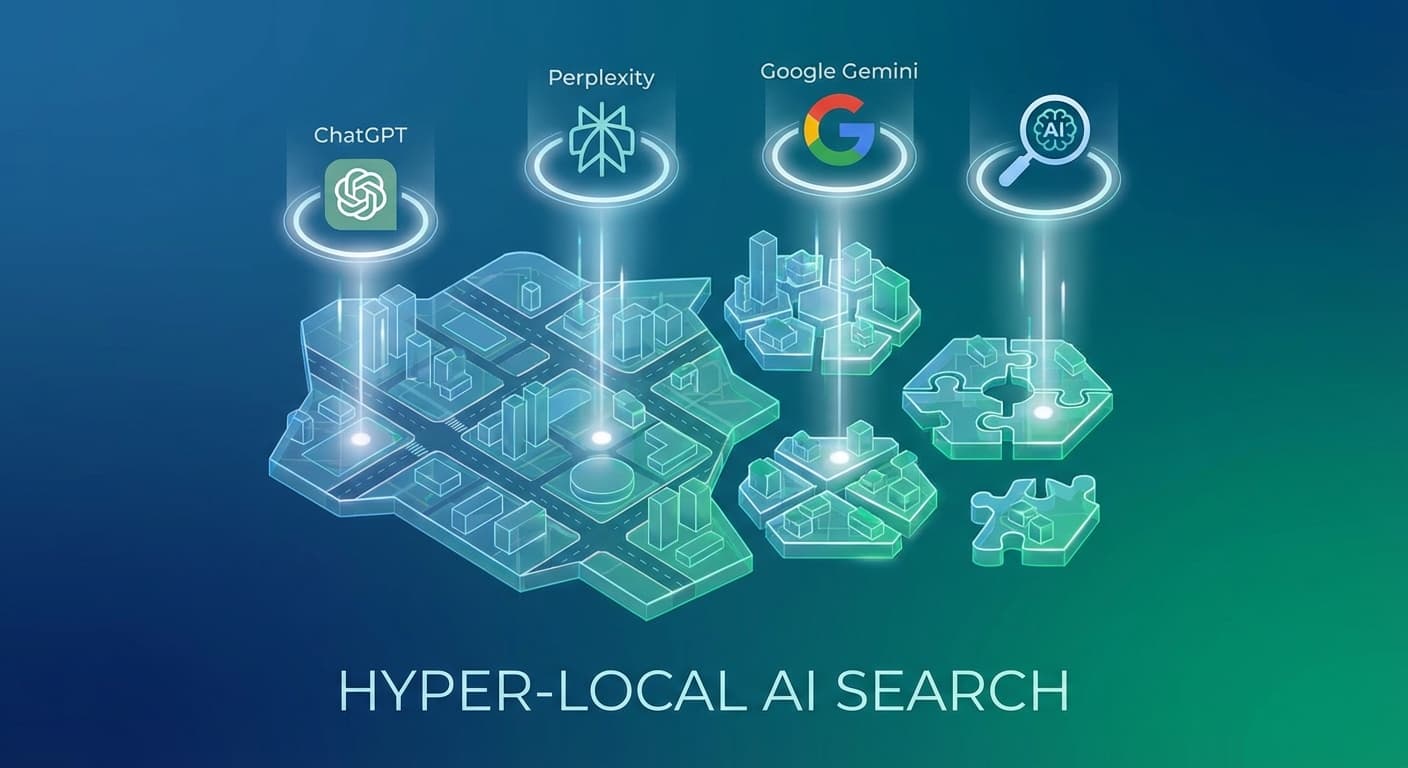
By 2026, AI search engines have become hyper-intelligent about location context, with 78% of local searches now processed through AI-powered platforms like ChatGPT, Perplexity, and Gemini. But here's the shocking reality: this precision is creating a new crisis for local businesses. Metro-wide visibility that once served businesses across entire cities is rapidly fragmenting into micro-markets as small as individual neighborhoods, shopping centers, or even street blocks.
If you're a local business owner or digital marketer, you've probably noticed the shift. That pizza restaurant that used to appear for "pizza delivery Chicago" now only shows up for "pizza delivery Lincoln Park Chicago" or even more specific queries. The hyper-localization revolution is here, and it's reshaping how customers discover local businesses.
The Micro-Market Revolution: What's Happening in 2026
AI search engines have evolved far beyond simple keyword matching. They now understand context with unprecedented precision, analyzing:
This evolution means that a business in downtown Seattle might lose visibility to someone just 8 blocks away if their local SEO strategy isn't adapted for micro-market optimization.
The Numbers Don't Lie
Recent data from local search behavior in 2025-2026 reveals:
Understanding the Micro-Market Collapse Pattern
The collapse typically follows a predictable pattern:
Stage 1: Gradual Visibility Decline
Businesses notice decreased impressions for broader city-wide keywords. Traffic from outer suburbs and distant neighborhoods starts dropping.
Stage 2: Geographic Fragmentation
Search visibility becomes patchy—strong in immediate vicinity, weak everywhere else. The business becomes invisible to potential customers just a few miles away.
Stage 3: Revenue Impact
Customer acquisition costs increase as the addressable market shrinks. Businesses that relied on drawing customers from across the metro area see significant revenue decline.
Stage 4: Competitive Disadvantage
Competitors who adapted to micro-market optimization dominate local search results, while unprepared businesses fade into obscurity.
Strategic Framework for Micro-Market Dominance
1. Hyper-Local Content Architecture
Create content that speaks to specific micro-communities:
2. Multi-Location Schema Optimization
Even single-location businesses need to think like multi-location enterprises:
3. AI-Native Local Content Strategy
AI search engines reward content that answers hyper-local questions naturally:
Tactical Implementation Guide
Phase 1: Micro-Market Research (Week 1-2)
- Identify all neighborhoods you realistically serve
- Analyze customer data to find micro-geographic patterns
- Research local search behavior in each area
- Audit how competitors appear across different micro-markets
- Identify gaps in local coverage
- Find underserved micro-communities
- Develop hyper-local keyword variations for each service
- Include neighborhood names, local landmarks, and community-specific terms
- Research voice search patterns for each area
Phase 2: Content Micro-Optimization (Week 3-6)
- Write neighborhood-specific service pages
- Create location-based blog content
- Develop community-focused case studies
- Update schema markup for multiple service areas
- Optimize Google Business Profile for hyper-local discovery
- Implement location-specific internal linking strategies
This is where tools like Citescope Ai become invaluable. The platform's GEO Score analyzes your local content across five critical dimensions that AI search engines prioritize, helping you understand how well your hyper-local content performs in terms of AI Interpretability and Conversational Relevance for each micro-market.
Phase 3: Micro-Market Expansion (Week 7-12)
- Gradually expand into adjacent micro-markets
- Test messaging and positioning for each area
- Monitor performance metrics by location
- Engage with local community groups and events
- Develop partnerships with other local businesses
- Create content around local news and happenings
- Track visibility changes in each micro-market
- Monitor competitor movements
- Adjust strategy based on performance data
Advanced Micro-Market Strategies
Dynamic Content Personalization
Implement systems that serve different content based on user location:
Voice Search Optimization for Hyper-Local Queries
Optimize for how people actually speak about your business:
Multi-Platform Presence Strategy
Ensure visibility across all AI search platforms:
Common Pitfalls to Avoid
Over-Localization
Don't become so hyper-focused on micro-markets that you lose sight of broader opportunities. Maintain some city-wide visibility for brand awareness.
Keyword Stuffing
AI search engines are sophisticated enough to penalize obvious keyword manipulation. Focus on natural, helpful content.
Neglecting Mobile Experience
Hyper-local searches are predominantly mobile. Ensure fast loading times and mobile-optimized experiences.
Ignoring Review Management
Micro-market success depends heavily on local reputation. Actively manage reviews across all platforms.
How Citescope Ai Helps Navigate Micro-Market Optimization
Managing content optimization across multiple micro-markets can be overwhelming. Citescope Ai's comprehensive platform addresses this challenge through:
GEO Score Analysis: Get detailed insights into how your hyper-local content performs across all five dimensions that AI search engines evaluate, with specific recommendations for each micro-market.
AI Rewriter Tool: Automatically optimize your local content for better AI visibility across ChatGPT, Perplexity, Claude, and Gemini with location-specific enhancements.
Citation Tracking: Monitor when your business gets mentioned across AI platforms for different micro-geographic queries, helping you understand your true local visibility.
Multi-format Export: Download optimized content in formats perfect for local landing pages, Google Business Posts, and other local marketing channels.
The platform's ability to analyze and optimize content specifically for AI search engines makes it an essential tool for businesses navigating the micro-market revolution.
Measuring Micro-Market Success
Track these key metrics for each micro-market:
Future-Proofing Your Local SEO Strategy
As AI search continues evolving, prepare for:
Ready to Optimize for AI Search?
The shift to hyper-localized AI search isn't just coming—it's here. Businesses that adapt now will dominate their micro-markets, while those who wait risk becoming invisible to nearby customers.
Citescope Ai makes this transition manageable with tools specifically designed for the AI search era. Our GEO Score helps you understand exactly how AI engines view your local content, while our optimization tools ensure you stay visible across ChatGPT, Perplexity, Claude, and Gemini.
Start your free trial today and get 3 optimizations to test how your local content performs in the new micro-market landscape. Don't let hyper-localization leave your business behind.