How to Prevent AI Search CTR Collapse When Your Top-Funnel Content Loses 73% of Traffic to Zero-Click AI Overviews But Bottom-Funnel Pages Triple Conversions
How to Prevent AI Search CTR Collapse When Your Top-Funnel Content Loses 73% of Traffic to Zero-Click AI Overviews But Bottom-Funnel Pages Triple Conversions
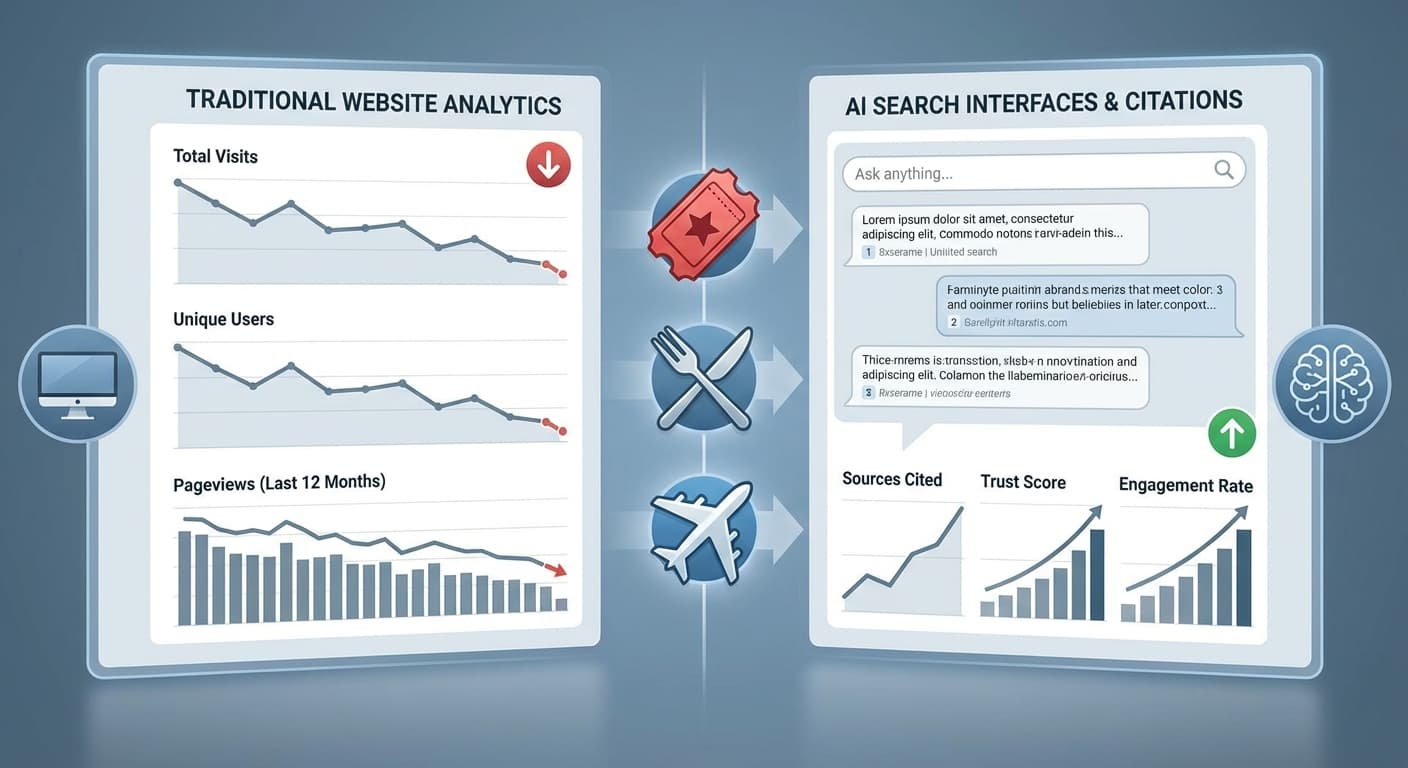
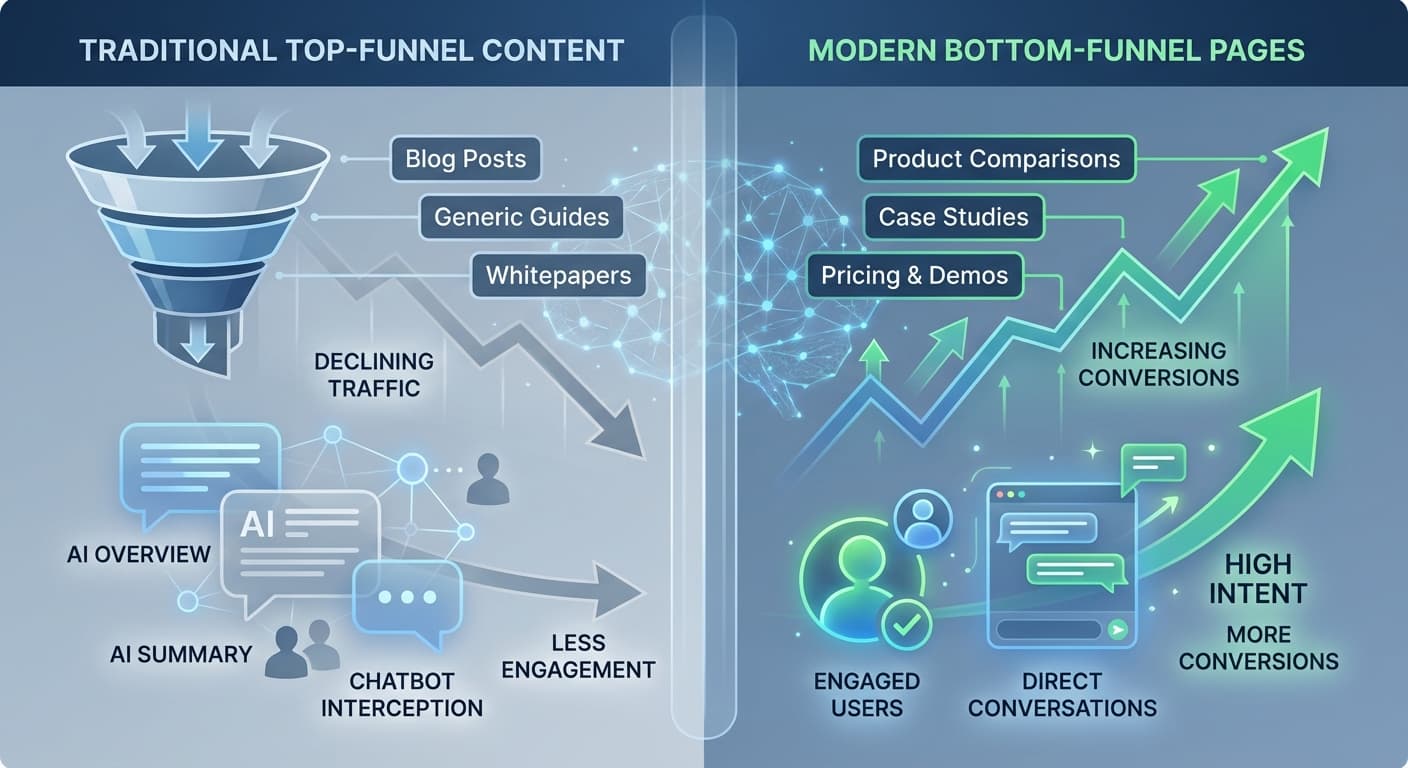
By January 2026, the paradox is glaring: while 73% of informational queries now get answered directly in AI overviews without clicks, bottom-funnel commercial pages are seeing 3x higher conversion rates when they do get traffic. This creates a critical inflection point for content marketers—how do you maintain visibility and traffic flow when AI engines are answering your audience's questions without sending them to your site?
The answer isn't to fight AI search—it's to strategically adapt your content funnel to work with it.
The New Reality of AI Search Traffic Distribution
Recent data from search analytics platforms reveals a stark bifurcation in how AI search affects different types of content:
This isn't just a temporary shift. With over 500 million weekly ChatGPT users and 75% of Gen Z now using AI for initial research, the traditional content funnel is permanently restructured.
Why Traditional Top-Funnel Content Is Bleeding Traffic
The problem with most top-funnel content is that it was designed for a world where users needed to visit your site to get answers. AI overviews have eliminated that friction:
The Three Fatal Flaws of Legacy Top-Funnel Content
The Bottom-Funnel Success Story: Why Conversions Are Tripling
While informational content struggles, commercial intent pages are thriving in AI search for three key reasons:
Higher Intent Matching
When users reach bottom-funnel pages through AI search, they've already been pre-qualified. AI engines are better at matching high-intent queries to specific solutions, meaning the traffic that does arrive is significantly more valuable.
Enhanced Context Setting
AI overviews often provide context that primes users for conversion. Instead of arriving cold, visitors come with a clear understanding of their problem and your solution's relevance.
Reduced Decision Fatigue
By handling initial research and comparison phases, AI search delivers users who are ready to make decisions rather than just gathering information.
Strategic Framework: The AI-First Content Funnel
To prevent CTR collapse while maximizing the bottom-funnel boost, you need to restructure your content strategy around four core principles:
1. Transform Top-Funnel Content Into Citation Magnets
Instead of competing with AI overviews, create content designed to be cited by them:
2. Build Semantic Bridges to Commercial Content
Create clear pathways from informational content to commercial pages:
3. Optimize for AI Citation Patterns
Structure content to maximize citation probability:
4. Leverage Middle-Funnel Comparison Content
Comparison and evaluation content represents the biggest opportunity in AI search:
Tactical Implementation: The 90-Day Action Plan
Phase 1: Audit and Analyze (Days 1-30)
Phase 2: Optimize and Connect (Days 31-60)
Phase 3: Create and Scale (Days 61-90)
Citescope Ai's GEO Score can help you measure content optimization across all five dimensions that matter for AI visibility—from semantic richness to conversational relevance—giving you a clear benchmark for improvement.
Advanced Strategies for AI Search Resilience
The Authority Stack Approach
Build content that establishes undeniable expertise:
The Interactive Content Strategy
Create experiences that require site visits:
The Community-Driven Approach
Leverage user-generated content and community insights:
How Citescope Ai Helps Navigate the AI Search Transition
While the strategic framework above provides the roadmap, implementing these changes efficiently requires specialized tools. Citescope Ai's Citation Tracker monitors when your content gets referenced by ChatGPT, Perplexity, Claude, and Gemini, helping you understand which optimization efforts are working.
The AI Rewriter feature can transform existing top-funnel content with one-click optimization, restructuring it for better AI visibility while maintaining your unique voice and expertise. This is particularly valuable when you have hundreds of informational pages that need updating for the AI search era.
Measuring Success in the New Paradigm
Success metrics need to evolve beyond traditional pageviews and click-through rates:
Primary Metrics
Secondary Metrics
Future-Proofing Your Content Strategy
As AI search continues evolving, the brands that thrive will be those that view AI as a distribution partner rather than a competitor. This means:
The content marketing landscape has fundamentally shifted, but the opportunity for brands willing to adapt is enormous. Those who successfully navigate this transition won't just maintain their traffic—they'll capture a disproportionate share of high-intent, ready-to-convert visitors.
Ready to Optimize for AI Search?
The AI search revolution isn't slowing down—it's accelerating. While your competitors struggle with traffic declines, you can turn this disruption into your competitive advantage. Citescope Ai provides the tools and insights you need to optimize your content for AI visibility, track your citations across all major AI platforms, and transform your content funnel for the AI-first world. Start with our free tier today and discover which of your pages are already being cited by AI engines—and which ones need optimization to join them.