How to Optimize Your Website Content for AI Search Engines (Before Losing 50% of Your Organic Traffic)

How to Optimize Your Website Content for AI Search Engines (Before Losing 50% of Your Organic Traffic)
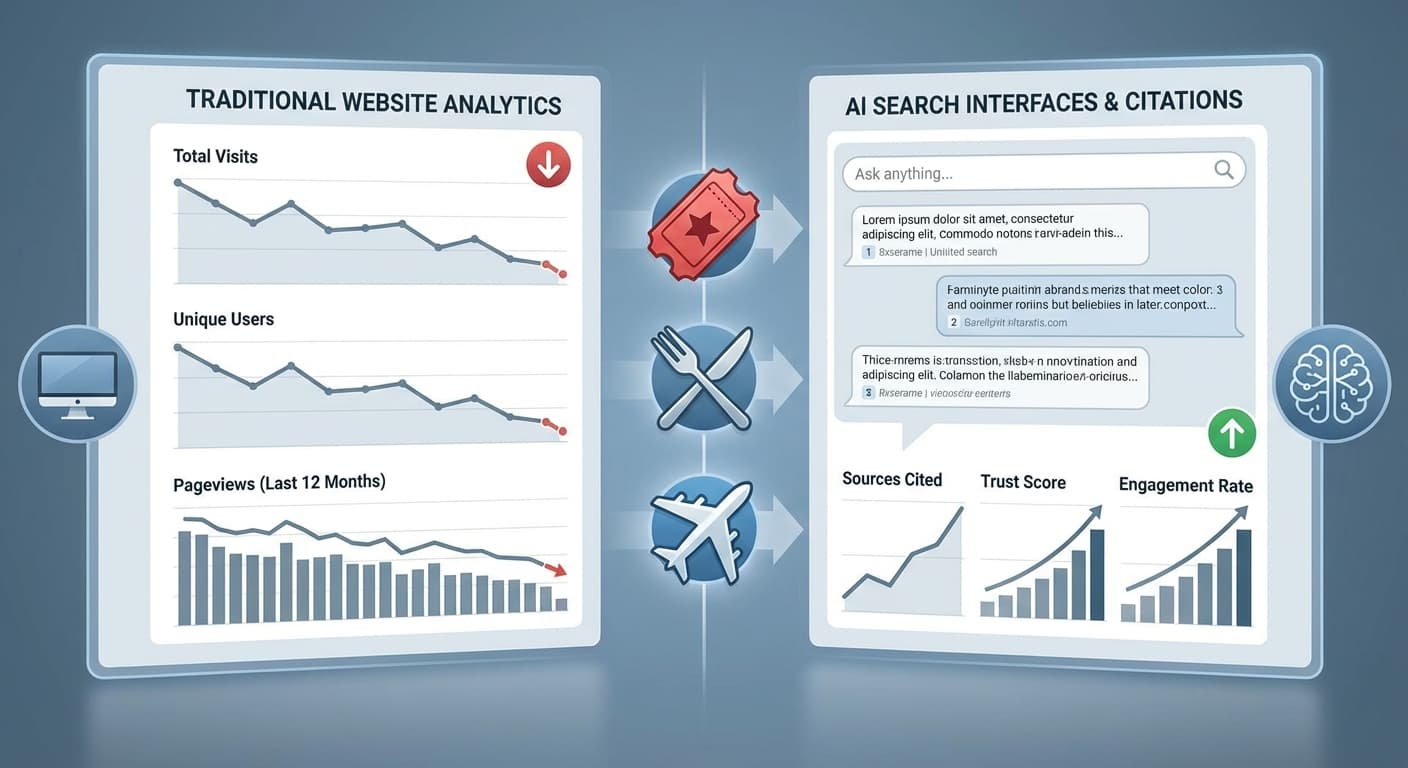
By January 2026, AI search engines process over 2 billion queries daily across platforms like ChatGPT, Perplexity, Claude, and Gemini. Yet 73% of websites remain completely invisible to these platforms. The result? Businesses are hemorrhaging organic traffic at an unprecedented rate, with some sectors already seeing 40-60% drops in traditional search referrals.
If your content strategy hasn't evolved beyond traditional SEO, you're not just missing opportunities—you're actively losing ground to competitors who've mastered AI visibility.
The AI Search Revolution is Here (And It's Moving Fast)
The numbers tell a stark story about how search behavior has fundamentally shifted:
The shift isn't just about volume—it's about intent. AI search users ask different questions, expect comprehensive answers, and rely heavily on cited sources for verification. When your content doesn't appear in AI responses, you're invisible to an increasingly dominant search channel.
Why Traditional SEO Falls Short in AI Search
Traditional SEO optimization techniques—keyword stuffing, meta descriptions, backlink building—were designed for algorithmic crawlers, not intelligent AI systems that understand context and nuance.
The Key Differences:
Traditional Search:
AI Search:
AI engines don't just crawl your content—they evaluate it for trustworthiness, comprehensiveness, and conversational relevance. A blog post optimized only for "best project management software" might rank well in Google but be completely overlooked by Claude when a user asks, "What project management tools help remote teams stay organized?"
The 5 Pillars of AI Search Optimization
1. AI Interpretability
Your content needs to be structured in a way that AI systems can easily parse and understand. This means:
Example: Instead of "Our platform offers innovative solutions," write "Our project management platform helps teams reduce meeting time by 40% through automated status updates and smart scheduling."
2. Semantic Richness
AI engines understand concepts, not just keywords. Enrich your content with:
Tools like Citescope's GEO Score analyze your content across these dimensions, identifying gaps in semantic coverage that might prevent AI citation.
3. Conversational Relevance
AI search is inherently conversational. Users ask questions like they're talking to a knowledgeable friend. Optimize by:
4. Structural Authority
AI engines favor content that demonstrates expertise through structure:
5. Citation-Worthy Content
The holy grail of AI search optimization is creating content so valuable that AI engines actively cite it. This requires:
Practical AI Optimization Strategies
Restructure Your Content Headers
Transform keyword-focused headers into question-based ones:
Before: "SEO Best Practices 2026"
After: "What SEO Strategies Actually Work in 2026?"
Create Comprehensive Answer Blocks
For each major topic, create a 2-3 sentence summary that directly answers the implied question. This becomes your "citation block" that AI engines can easily extract.
Implement Schema Markup for AI
While traditional schema helps search engines, AI-focused markup should emphasize:
Build Topic Clusters
Instead of standalone blog posts, create interconnected content clusters that comprehensively cover related topics. This signals topical authority to AI systems.
The Technical Side: Making Your Content AI-Readable
Clean, Semantic HTML
AI engines parse HTML structure to understand content hierarchy. Use:
Page Speed and Mobile Optimization
While AI engines don't directly measure page speed, they often prioritize content from sites that provide good user experiences. Ensure:
Content Freshness
AI engines favor up-to-date information. Regularly:
Measuring Your AI Search Performance
Traditional analytics won't show you AI search performance. You need specialized tools to track:
Citescope's Citation Tracker monitors when your content appears in responses from ChatGPT, Perplexity, Claude, and Gemini, giving you real-time visibility into your AI search performance.
Common AI Optimization Mistakes to Avoid
Over-Optimizing for Keywords
While keywords still matter, stuffing content with exact-match phrases can hurt AI visibility. Focus on natural language and comprehensive topic coverage instead.
Ignoring Content Depth
Shallow, thin content rarely gets cited by AI engines. Invest in comprehensive, authoritative pieces that thoroughly explore topics.
Forgetting About User Intent
AI search users have different intents than traditional search users. They want explanations, not just information. Structure your content to educate and guide, not just inform.
Neglecting Content Updates
Static content loses relevance in AI search faster than traditional search. Build content updating into your regular workflow.
The Future of AI Search (And What It Means for Your Strategy)
Looking ahead to late 2026 and beyond:
The websites that survive and thrive will be those that adapt their content strategies now, before AI search becomes completely dominant.
How Citescope Helps You Master AI Search Optimization
Optimizing for AI search requires new tools and approaches that traditional SEO platforms weren't designed to handle. Citescope provides:
With pricing starting at free for 3 optimizations per month, you can start improving your AI visibility today without a major budget commitment.
Ready to Optimize for AI Search?
The AI search revolution isn't coming—it's already here. Every day you wait to optimize your content is another day you're losing visibility to competitors who've embraced this new reality.
Start with Citescope's free tier to analyze your top-performing content and see exactly where you stand in the AI search landscape. With one-click optimization and real-time citation tracking, you'll quickly understand why forward-thinking content creators are making AI search optimization their top priority for 2026.
Try Citescope free today and discover how your content performs in the age of AI search.