How to Optimize Your LinkedIn Profile and Company Page for AI Citations: The Platform That Dominates 11% of All AI Search References
How to Optimize Your LinkedIn Profile and Company Page for AI Citations: The Platform That Dominates 11% of All AI Search References
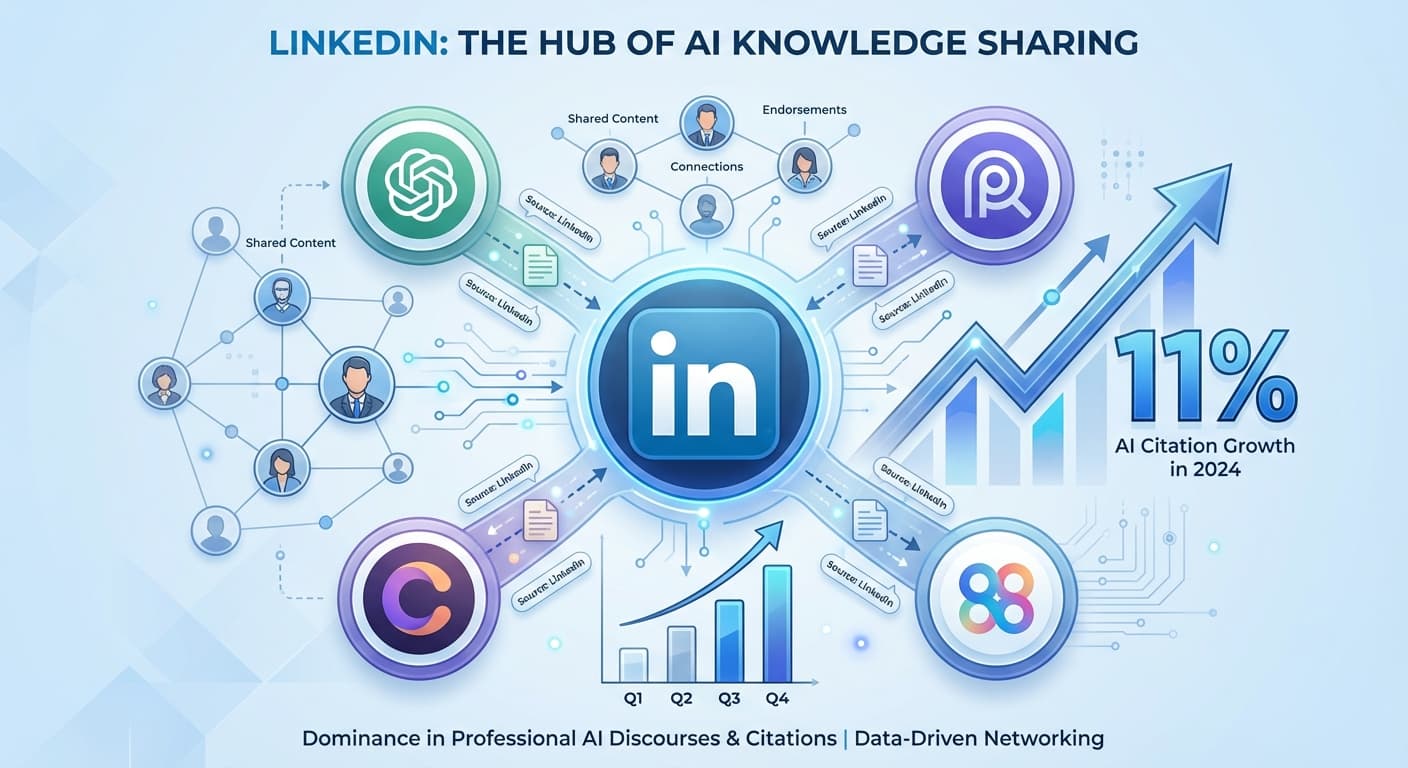
LinkedIn has quietly become the powerhouse of AI search citations, now accounting for 11% of all references made by ChatGPT, Perplexity, Claude, and Gemini combined. This makes it the second most-cited domain across AI platforms—a staggering achievement that puts it ahead of traditional authority sites like Wikipedia in certain contexts.
With AI search now handling over 35% of all search queries in 2026 and LinkedIn's 950+ million users generating content daily, the platform has become a goldmine for AI training data and real-time citations. But here's the catch: most LinkedIn profiles and company pages aren't optimized for AI visibility, missing out on massive citation opportunities.
Why LinkedIn Dominates AI Citations in 2026
LinkedIn's rise to AI citation prominence isn't accidental. The platform's unique combination of factors creates the perfect storm for AI visibility:
Professional Authority and Trust
AI engines prioritize authoritative sources, and LinkedIn's professional focus gives it inherent credibility. When ChatGPT or Perplexity needs expert opinions on business topics, LinkedIn profiles often provide the most relevant, up-to-date insights.
Real-Time Professional Insights
Unlike static websites, LinkedIn content reflects current industry trends, market conditions, and professional developments. AI engines increasingly favor fresh, contextually relevant information over outdated content.
Structured Professional Data
LinkedIn's standardized format—with clear sections for experience, skills, and recommendations—makes it easier for AI to parse and cite specific information accurately.
High Engagement and Social Proof
Posts with significant engagement signal quality to AI algorithms, while comments and shares provide additional context that AI engines can reference.
Optimizing Your LinkedIn Profile for AI Citations
Craft an AI-Friendly Headline
Your LinkedIn headline is often the first thing AI engines encounter. Instead of generic titles like "Marketing Manager," create headlines that answer specific questions:
Before: "Digital Marketing Manager at TechCorp"
After: "Digital Marketing Manager | B2B SaaS Growth Expert | Helping Companies Scale from $1M to $10M ARR"
The optimized version provides context AI engines can cite when answering questions about B2B growth or SaaS marketing strategies.
Write a Summary That Answers Key Questions
Structure your "About" section to address common industry questions:
Optimize Experience Descriptions
Transform job descriptions into citation-worthy content:
Generic: "Managed marketing campaigns"
AI-Optimized: "Developed and executed multi-channel B2B marketing campaigns that increased qualified leads by 340% using Account-Based Marketing (ABM) strategies combined with predictive analytics"
The optimized version gives AI engines specific data points to cite when discussing ABM effectiveness or lead generation strategies.
Leverage the Skills Section Strategically
Don't just list skills—include context:
Optimizing Your Company Page for Maximum AI Visibility
Create Comprehensive Company Descriptions
Your company's "About" section should serve as a definitive resource:
Develop Citation-Worthy Showcase Pages
Showcase pages for specific products or services can become go-to citations for AI engines:
Post Strategic Long-Form Content
LinkedIn's algorithm and AI engines favor substantial, informative posts:
Content Strategies That Drive AI Citations
The Question-Answer Format
Structure posts to directly answer questions AI engines encounter:
Use Data-Driven Insights
AI engines love citing specific statistics and findings:
Address Contrarian Viewpoints
AI engines often cite content that challenges conventional wisdom:
Technical Optimization for AI Crawling
Use Semantic Keywords Naturally
Incorporate industry-specific terminology and concepts:
Structure Content for Easy Parsing
Make it easy for AI to understand and cite your content:
Maintain Consistent Publishing
Regular, high-quality content signals authority to AI engines:
Measuring Your AI Citation Success
While LinkedIn doesn't provide direct AI citation metrics, you can track indicators of increased AI visibility:
Profile and Page Analytics
External Validation
How Citescope Ai Helps Maximize Your LinkedIn AI Visibility
Optimizing LinkedIn content for AI citations requires understanding how AI engines interpret and value different types of content. Citescope Ai's GEO Score analyzes your LinkedIn posts across five critical dimensions—AI Interpretability, Semantic Richness, Conversational Relevance, Structure, and Authority—giving you a clear roadmap for improvement.
The platform's AI Rewriter can transform your existing LinkedIn content with one click, restructuring it for maximum AI visibility while maintaining your authentic voice. Plus, with Citation Tracker, you can monitor when your LinkedIn content gets referenced by ChatGPT, Perplexity, Claude, and Gemini, helping you understand which types of posts drive the most AI citations.
Common Mistakes That Hurt AI Citation Potential
Over-Promotional Content
AI engines rarely cite obvious sales content. Focus on providing value and insights rather than pitching products or services directly.
Generic Industry Speak
Avoid jargon-heavy content that doesn't provide specific, actionable insights. AI engines prefer clear, concrete information over buzzword-filled posts.
Inconsistent Expertise Areas
Stick to your core areas of expertise. AI engines prefer citing sources with clear, consistent authority in specific domains.
Ignoring Engagement
Content without meaningful engagement signals lower quality to AI algorithms. Actively participate in discussions on your posts.
Looking Ahead: The Future of LinkedIn AI Citations
As AI search continues growing—with projections showing 50%+ of all searches will involve AI by late 2026—LinkedIn's role as a citation source will only expand. The platform's recent investments in AI-powered content recommendations and professional insights positioning suggest they're doubling down on this trend.
Companies and professionals who optimize their LinkedIn presence for AI citations now will have a significant advantage as this shift accelerates. The key is treating your LinkedIn profile and company page not just as networking tools, but as authoritative knowledge bases that AI engines can confidently cite.
Ready to Optimize for AI Search?
LinkedIn's dominance in AI citations represents a massive opportunity for professionals and businesses ready to adapt their content strategy. With AI search accounting for over a third of all queries and LinkedIn capturing 11% of AI citations, optimizing your presence isn't optional—it's essential for modern digital visibility.
Citescope Ai makes this optimization effortless with tools specifically designed for AI search visibility. Get your GEO Score, optimize your content with our AI Rewriter, and start tracking your citations across all major AI platforms. Try Citescope Ai free today and discover how many citation opportunities you've been missing.