How to Optimize Your E-Commerce Site for AI Discovery When 75% of AI Search Sessions Complete Purchases Without Users Clicking Through
How to Optimize Your E-Commerce Site for AI Discovery When 75% of AI Search Sessions Complete Purchases Without Users Clicking Through
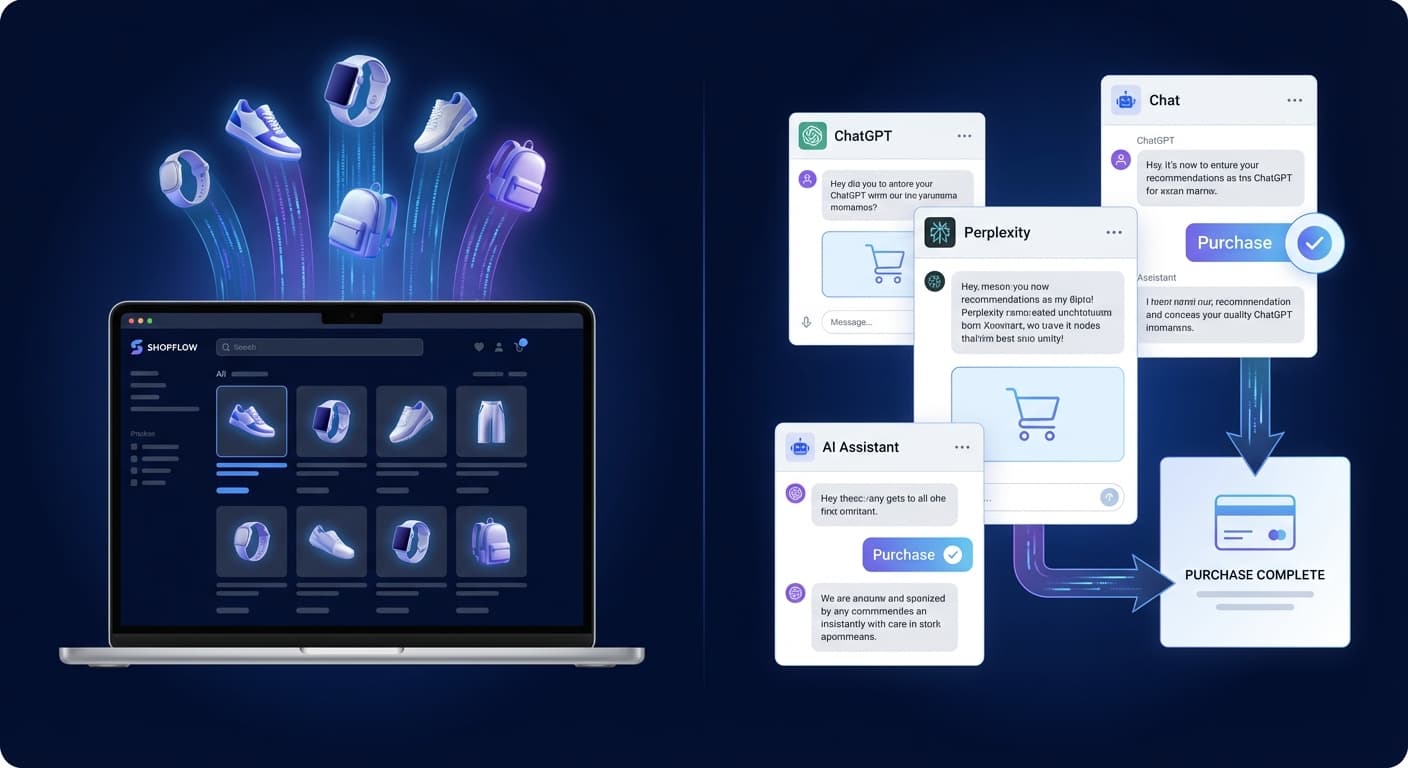
Imagine this: A potential customer asks ChatGPT "What's the best wireless headphones under $200 for working out?" The AI provides a detailed recommendation, complete with product specifications, pricing, and even suggests where to buy. The customer makes their purchase decision right there—without ever visiting your e-commerce site.
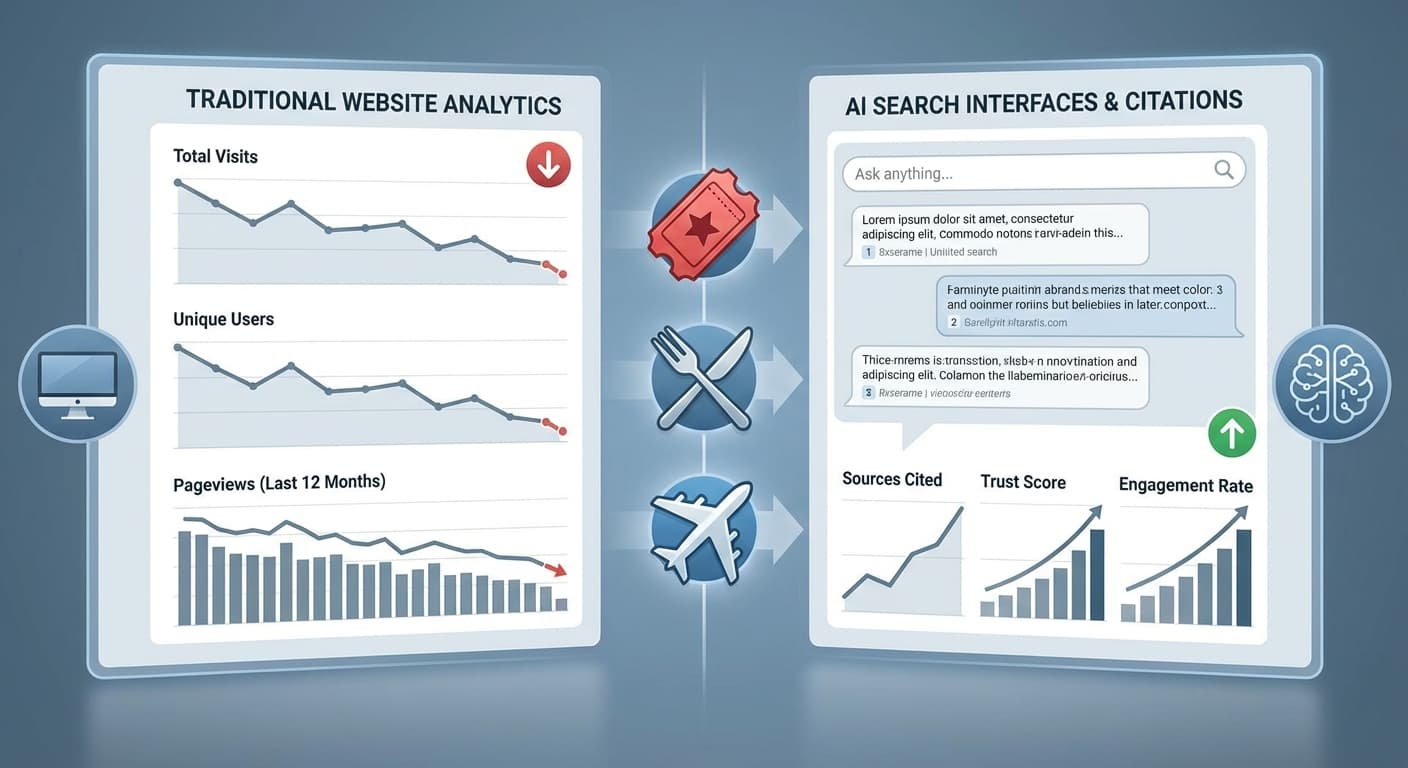
This scenario isn't hypothetical. It's happening millions of times daily across AI search platforms in 2026. Recent data shows that 75% of AI search sessions that result in purchases never involve a click-through to the original retailer's website. For e-commerce businesses, this represents both a massive threat and an unprecedented opportunity.
The New Reality of AI-Driven Commerce
The e-commerce landscape has fundamentally shifted. With over 500 million weekly ChatGPT users and 70% of Gen Z turning to AI for product research, traditional SEO strategies are becoming insufficient. AI search engines now account for over 30% of all product discovery queries, and this number is climbing rapidly.
The challenge? When AI engines provide comprehensive product information directly in their responses, consumers often feel equipped to make purchasing decisions without visiting your site. They might:
This shift means e-commerce businesses must rethink their entire digital strategy. The question isn't just "How do we rank on Google?" anymore—it's "How do we ensure AI engines recommend our products and drive conversions?"
Why Traditional E-Commerce SEO Falls Short in the AI Era
Traditional e-commerce SEO focused on:
While these remain important, they don't address how AI engines evaluate and present e-commerce content. AI search algorithms prioritize:
Comprehensive Product Context: AI engines favor detailed, contextual information over keyword-stuffed descriptions
Comparative Analysis: Content that helps AI engines understand how products stack against competitors
Real-World Applications: Information about actual use cases and customer experiences
Technical Specifications: Structured data that AI can easily parse and present
The Five Pillars of AI-Optimized E-Commerce Content
1. Create AI-Readable Product Narratives
Instead of basic product descriptions, develop comprehensive narratives that answer the questions AI engines are likely to encounter:
Example transformation:
Traditional description: "Wireless Bluetooth headphones with 30-hour battery life and noise cancellation."
AI-optimized narrative: "Professional-grade wireless headphones designed for remote workers and commuters who need all-day comfort and crystal-clear call quality. The 30-hour battery eliminates mid-day charging anxiety, while adaptive noise cancellation blocks open office distractions without isolating you from important conversations. Unlike competitor models that cause ear fatigue after 2-3 hours, the ergonomic design supports 8+ hour work sessions."
2. Implement Structured Comparison Content
AI engines excel at processing comparative information. Create dedicated comparison sections that help AI understand your product's positioning:
3. Optimize for Voice and Conversational Queries
AI search is inherently conversational. Optimize for how people actually ask questions:
Structure your content to answer these natural language queries directly.
4. Leverage Customer-Generated Content
AI engines value authentic user experiences. Integrate:
5. Create Topic Cluster Authority
Build comprehensive content ecosystems around your products:
This helps AI engines understand your authority in specific product areas.
Technical Implementation Strategies
Enhanced Schema Markup for AI
While traditional schema remains important, expand your structured data to include:
Content Architecture for AI Discoverability
Restructure your site architecture to support AI understanding:
Hub Pages: Create comprehensive category pages that serve as definitive resources
Spoke Content: Develop specific product pages that link back to hub pages
Cross-References: Include relevant internal links that help AI understand product relationships
API and Feed Optimization
Ensure your product data is easily accessible to AI crawlers:
Measuring Success in the AI-First World
Traditional e-commerce metrics like click-through rates and organic traffic become less relevant when AI provides direct answers. Focus on:
AI Citation Tracking: Monitor how often your products are mentioned in AI responses
Brand Mention Analysis: Track when AI engines recommend your brand
Conversion Attribution: Measure sales that originate from AI search sessions
Share of Voice: Monitor your presence in AI responses relative to competitors
Many e-commerce businesses struggle to track these metrics effectively because traditional analytics tools weren't built for AI search.
How Citescope Ai Helps E-Commerce Businesses Thrive
Citescope Ai addresses the unique challenges of e-commerce AI optimization through:
GEO Score Analysis: Our platform analyzes your product content across five dimensions specifically relevant to e-commerce - AI Interpretability, Semantic Richness, Conversational Relevance, Structure, and Authority. This helps you understand exactly how AI engines will perceive and present your products.
Citation Tracking: Monitor when ChatGPT, Perplexity, Claude, and Gemini mention your products in their responses. This visibility into AI-driven recommendations is crucial for understanding your true market position.
AI-Optimized Rewriting: Our one-click optimization tool restructures product descriptions and category content specifically for AI search engines, ensuring your products get recommended in relevant queries.
Multi-Format Export: Download optimized content as Markdown, HTML, or WordPress blocks, making it easy to implement across your e-commerce platform.
Advanced Tactics for Competitive Advantage
Create AI-First Content Series
Develop ongoing content that establishes your brand as an AI-recognized authority:
Implement Dynamic Content Optimization
Use data from AI citation tracking to continuously refine your content:
Build Strategic Content Partnerships
Collaborate with complementary brands to create comprehensive resources that AI engines can reference:
Preparing for the Future of AI Commerce
The trend toward AI-mediated commerce will only accelerate. E-commerce businesses that adapt now will maintain competitive advantages as traditional SEO becomes less effective.
Key areas to watch:
Ready to Optimize for AI Search?
The shift to AI-driven commerce isn't coming—it's here. With 75% of AI search sessions completing purchases without website visits, e-commerce businesses need specialized tools and strategies to remain competitive.
Citescope Ai provides the insights and optimization tools you need to ensure your products get recommended by ChatGPT, Perplexity, Claude, and Gemini. Our platform helps you track AI citations, optimize content for AI discovery, and measure your success in this new landscape.
Start with our free tier (3 optimizations per month) to see how AI engines currently perceive your products, then upgrade to Pro ($39/month) or Enterprise ($99/month) for comprehensive optimization and tracking.
Ready to ensure your products get discovered in the age of AI search? Try Citescope Ai free today and see how your e-commerce content performs across all major AI search engines.