How to Optimize Your Content for AI Search Visibility When Traditional SEO Traffic Is Declining
How to Optimize Your Content for AI Search Visibility When Traditional SEO Traffic Is Declining
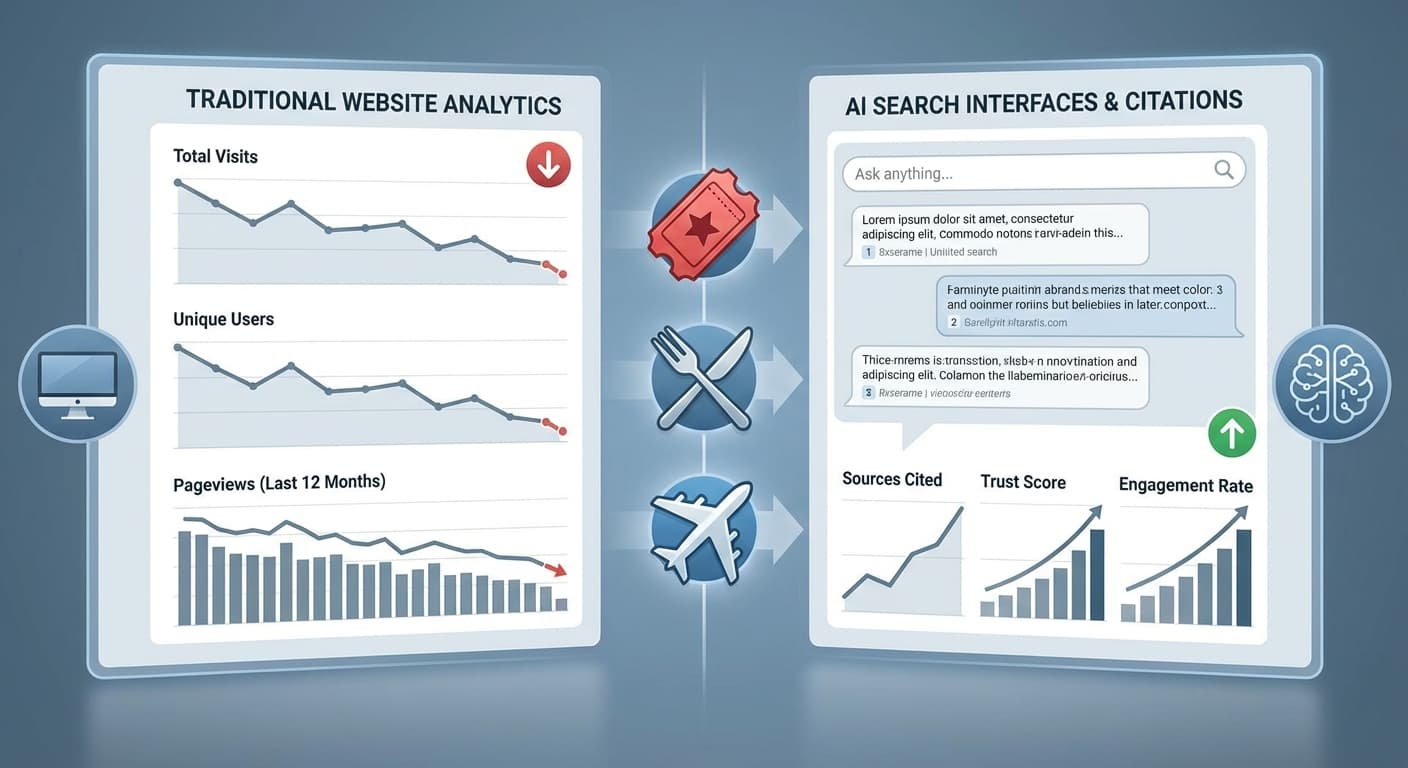
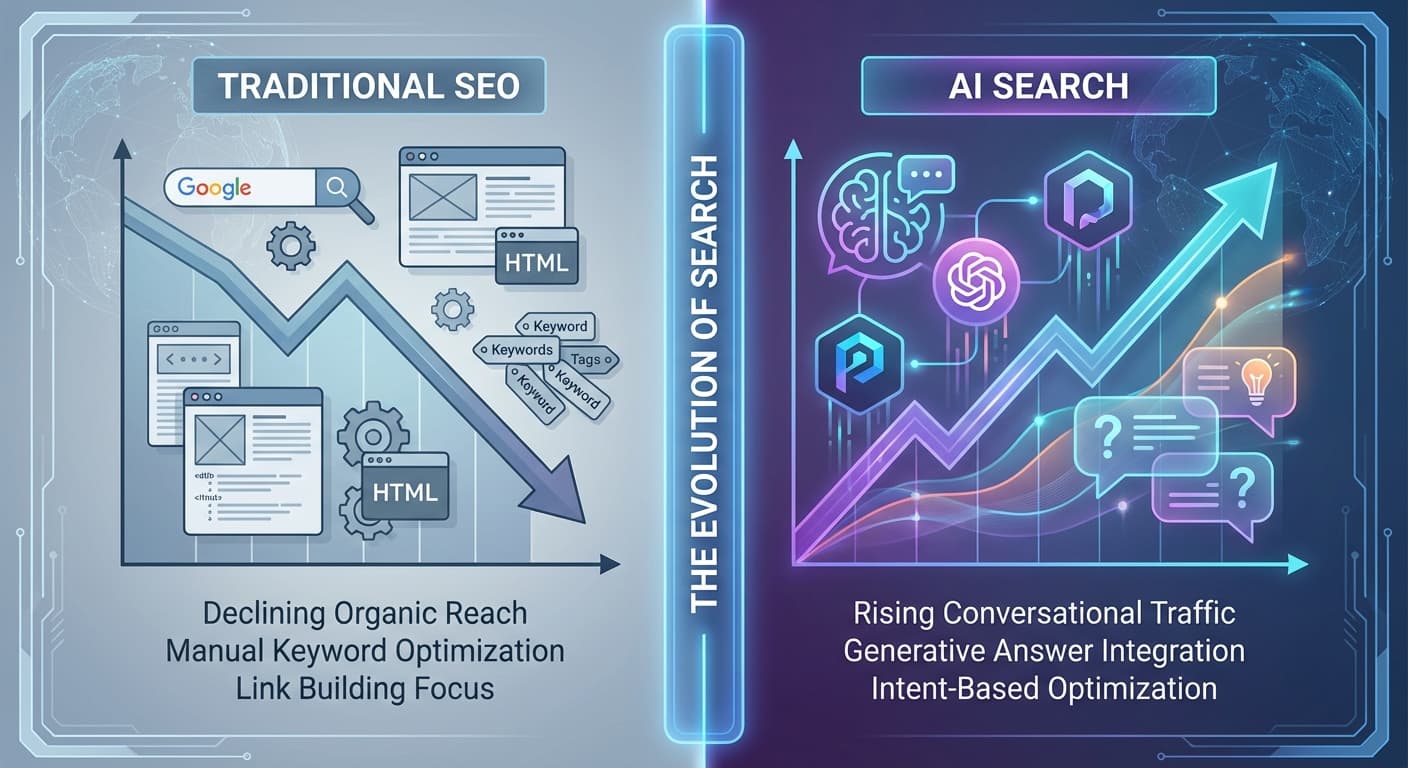
By 2026, traditional organic search traffic has dropped by 25% across most industries, while AI-powered search queries now represent over 35% of all information-seeking behavior. If you've noticed your carefully crafted SEO content getting fewer clicks despite strong rankings, you're not alone—and you're not powerless.
The shift isn't just coming; it's here. With over 600 million weekly active users on ChatGPT, 200 million on Perplexity, and AI search features integrated into Google and Bing, the way people discover and consume content has fundamentally changed. The question isn't whether to adapt, but how quickly you can pivot your content strategy.
The New Reality: Why Traditional SEO Is Losing Ground
Traditional SEO was built for a world where users clicked through to websites. But AI search engines provide direct answers, complete with synthesized information and citations. Users get what they need without ever leaving the AI interface.
Consider these 2025-2026 statistics:
The traffic isn't disappearing—it's being filtered through AI intermediaries. Your content can still reach audiences, but only if it's optimized for how AI systems discover, understand, and cite information.
Understanding AI Search Behavior vs. Traditional Search
How Traditional SEO Worked
Traditional SEO focused on keywords, backlinks, and user signals like click-through rates. Success meant ranking on page one and getting clicks.
How AI Search Works
AI search engines analyze content for:
7 Strategies to Optimize Content for AI Search Visibility
1. Write for Questions, Not Keywords
AI search queries are conversational. Instead of targeting "email marketing ROI," optimize for "How do I measure the ROI of my email marketing campaigns?" or "What's a good email marketing return on investment?"
Actionable tip: Use tools like AnswerThePublic or analyze ChatGPT conversations in your niche to identify common question patterns.
2. Create Comprehensive Topic Clusters
AI engines favor content that thoroughly covers a subject. Instead of multiple thin articles, create comprehensive guides that address all aspects of a topic.
Example structure:
3. Implement Structured Data and Clear Hierarchies
AI systems need to quickly understand your content structure. Use:
4. Include Expert Quotes and Data Sources
AI engines prioritize content with authoritative backing. Include:
5. Write Natural, Conversational Introductions
AI engines often pull introduction paragraphs for summaries. Write introductions that:
6. Optimize for Featured Snippets and Direct Answers
Structure content to directly answer common questions:
For "What is" questions:
[Term] is [definition]. It works by [explanation]. The main benefits include [list].
For "How to" questions:
To [achieve goal], follow these steps:
7. Create Citation-Worthy Original Research
AI engines love to cite unique insights. Develop:
Technical Optimizations for AI Discoverability
Content Structure Optimization
Use semantic HTML: Proper heading hierarchies, definition lists, and structured markup help AI systems understand content relationships.
Create content summaries: Include brief summaries at the beginning or end of long-form content.
Add context: Don't assume AI engines have background knowledge. Provide context for industry terms and concepts.
Authority and Trust Signals
Measuring AI Search Performance
Traditional SEO metrics don't capture AI search success. Track:
Common Mistakes to Avoid
Over-Optimizing for Keywords
AI engines understand context and synonyms. Focus on comprehensive coverage rather than keyword density.
Ignoring Conversational Context
Write for how people actually ask questions, not how they might search with keywords.
Neglecting Content Updates
AI engines favor fresh, current information. Regular updates signal authority and relevance.
Focusing Only on Text
While text remains crucial, AI systems increasingly process images, videos, and other media formats.
How Citescope Helps Bridge the AI Optimization Gap
Optimizing for AI search requires understanding how AI systems interpret and evaluate content—something that's difficult to assess manually. Citescope addresses this challenge with its comprehensive GEO Score system, which analyzes your content across five critical dimensions: AI Interpretability, Semantic Richness, Conversational Relevance, Structure, and Authority.
The platform's AI Rewriter tool takes the guesswork out of optimization, automatically restructuring your content for better AI visibility while maintaining your voice and message. Plus, the Citation Tracker monitors when your content gets cited by major AI search engines, giving you concrete data on your AI search performance.
With multi-format export capabilities, you can seamlessly integrate optimized content into your existing workflows, whether you're publishing to WordPress, managing markdown files, or working with HTML.
The Future of Content in an AI-First World
By 2027, experts predict that AI-mediated search will account for over 50% of all information discovery. The content creators who adapt now—focusing on depth, authority, and AI-friendly structure—will maintain their competitive advantage.
The shift from traditional SEO to AI optimization isn't about abandoning everything you know. It's about evolving your approach to meet audiences where they are increasingly going: AI-powered search experiences that prioritize comprehensive, authoritative, and conversational content.
Successful content in this new landscape serves dual purposes: providing immediate value to AI systems for citation and synthesis, while building long-term brand authority that drives direct traffic and conversions.
Ready to Optimize for AI Search?
The decline in traditional SEO traffic isn't a death sentence—it's an opportunity to get ahead of the curve. As more content creators scramble to understand AI search optimization, early adopters are already building sustainable competitive advantages.
Citescope makes this transition seamless with tools designed specifically for the AI search era. Start with our free tier to analyze and optimize up to 3 pieces of content per month, or explore our Pro and Enterprise plans for comprehensive AI search optimization.
Try Citescope free today and transform your content strategy for the AI-first future that's already here.