How to Optimize Your Content for AI Search Hyper-Personalization: Adapting to Context-Driven Results
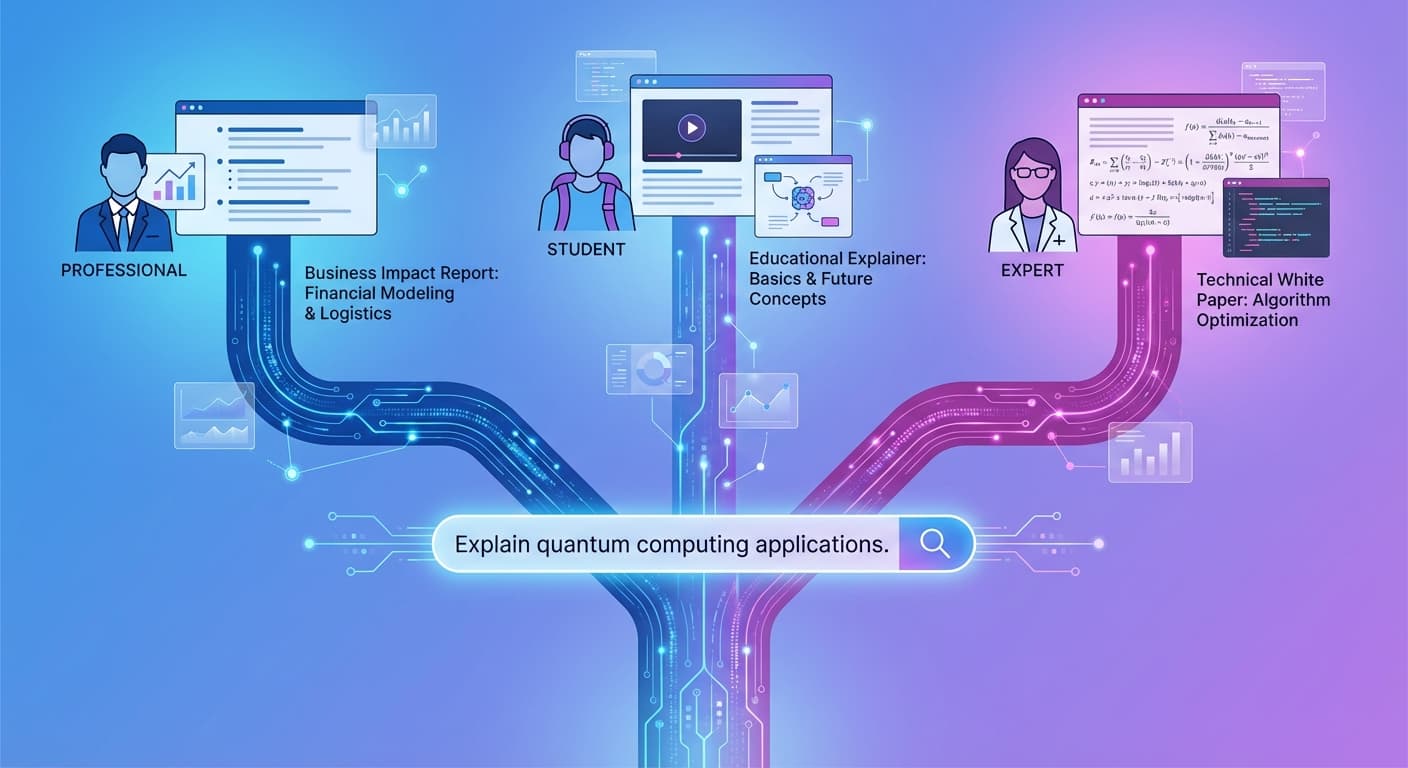
How to Optimize Your Content for AI Search Hyper-Personalization: Adapting to Context-Driven Results
Imagine asking ChatGPT "What's the best investment strategy?" and getting completely different answers based on whether you're a 25-year-old tech worker or a 55-year-old approaching retirement. Welcome to 2026, where AI search engines don't just understand queries—they understand you. With over 75% of AI search results now tailored to individual user context and search history, content creators face an entirely new challenge: how do you optimize for search engines that serve different answers to different people?
The New Reality of Hyper-Personalized AI Search
AI search has evolved far beyond simple keyword matching. Today's leading AI engines—ChatGPT, Perplexity, Claude, and Gemini—analyze dozens of contextual factors to personalize every response:
This shift means the same piece of content might be surfaced for dramatically different user contexts, requiring a fundamental rethink of content optimization strategies.
Understanding Multi-Context Content Opportunities
The Beginner-Expert Spectrum
Consider a blog post about cryptocurrency investing. In 2026, AI engines will surface this content differently:
For crypto beginners: AI emphasizes basic definitions, risk warnings, and beginner-friendly platforms
For experienced traders: AI highlights advanced strategies, technical analysis, and market timing insights
For institutional investors: AI focuses on regulatory compliance, portfolio allocation, and risk management
This creates an opportunity: content that successfully addresses multiple expertise levels gets cited across various user contexts, dramatically increasing visibility.
Geographic and Cultural Adaptation
AI search engines now consider cultural context when serving results. A content piece about "work-life balance" might be cited differently for:
Strategies for Multi-Context Content Optimization
1. Create Layered Content Architecture
Structure your content to serve multiple user contexts simultaneously:
Use Progressive Disclosure:
Example Structure:
markdown
Quick Overview (for busy users)
Detailed Explanation (for learners)
Expert Insights (for professionals)
2. Optimize for Intent Clusters, Not Just Keywords
Instead of targeting single keywords, optimize for related intent clusters that serve different user contexts:
Traditional approach: Target "email marketing"
Multi-context approach: Address:
3. Include Context-Sensitive Examples
Provide multiple examples that resonate with different user backgrounds:
4. Address Temporal Context
AI engines consider when users are searching and their urgency level:
Quick-reference sections for urgent needs:
Comprehensive guides for research mode:
Technical Implementation for Multi-Context SEO
Semantic Richness Across Contexts
Enhance your content's semantic profile to match various user intents:
Conversational Adaptability
Optimize for different conversation styles AI engines might adopt:
Formal contexts: Professional language, citations, authoritative tone
Casual contexts: Conversational language, analogies, accessible explanations
Technical contexts: Precise terminology, detailed specifications, expert assumptions
Authority Signals for Different Audiences
Establish credibility across multiple contexts:
While optimizing content for multiple contexts might seem overwhelming, tools like Citescope Ai can help analyze how well your content performs across different user scenarios through its comprehensive GEO Score analysis.
Measuring Multi-Context Performance
Track Context-Specific Citations
Monitor how your content gets cited across different user contexts:
Analyze User Journey Patterns
Understand how different users interact with your content:
Content Gap Analysis
Identify opportunities for better multi-context coverage:
Future-Proofing Your Multi-Context Strategy
Emerging Personalization Factors
AI search personalization continues evolving. Prepare for:
Dynamic Content Adaptation
The future of content optimization includes:
How Citescope Ai Helps Navigate Multi-Context Optimization
Optimizing for AI search hyper-personalization requires sophisticated analysis across multiple dimensions. Citescope Ai's GEO Score evaluates your content across five critical areas that directly impact multi-context performance:
The AI Rewriter feature specifically optimizes your content structure and language to perform better across multiple user contexts, while the Citation Tracker helps you understand which contexts are driving the most valuable citations from ChatGPT, Perplexity, Claude, and Gemini.
Ready to Optimize for AI Search Hyper-Personalization?
As AI search engines become increasingly sophisticated in their personalization capabilities, content creators who adapt their optimization strategies will gain a significant competitive advantage. The shift toward context-driven results isn't just a trend—it's the new foundation of AI search.
Citescope Ai helps you navigate this complex landscape with tools designed specifically for the era of hyper-personalized AI search. Our GEO Score analysis, AI Rewriter, and Citation Tracker work together to ensure your content performs across multiple user contexts and search scenarios.
Start optimizing for the future of AI search today. Try Citescope Ai's free tier with 3 content optimizations per month, or upgrade to Pro for unlimited access to advanced multi-context optimization features. Your content's visibility in an increasingly personalized AI search landscape depends on adapting now.
Start Your Free Trial and discover how your content performs across different AI search contexts.


