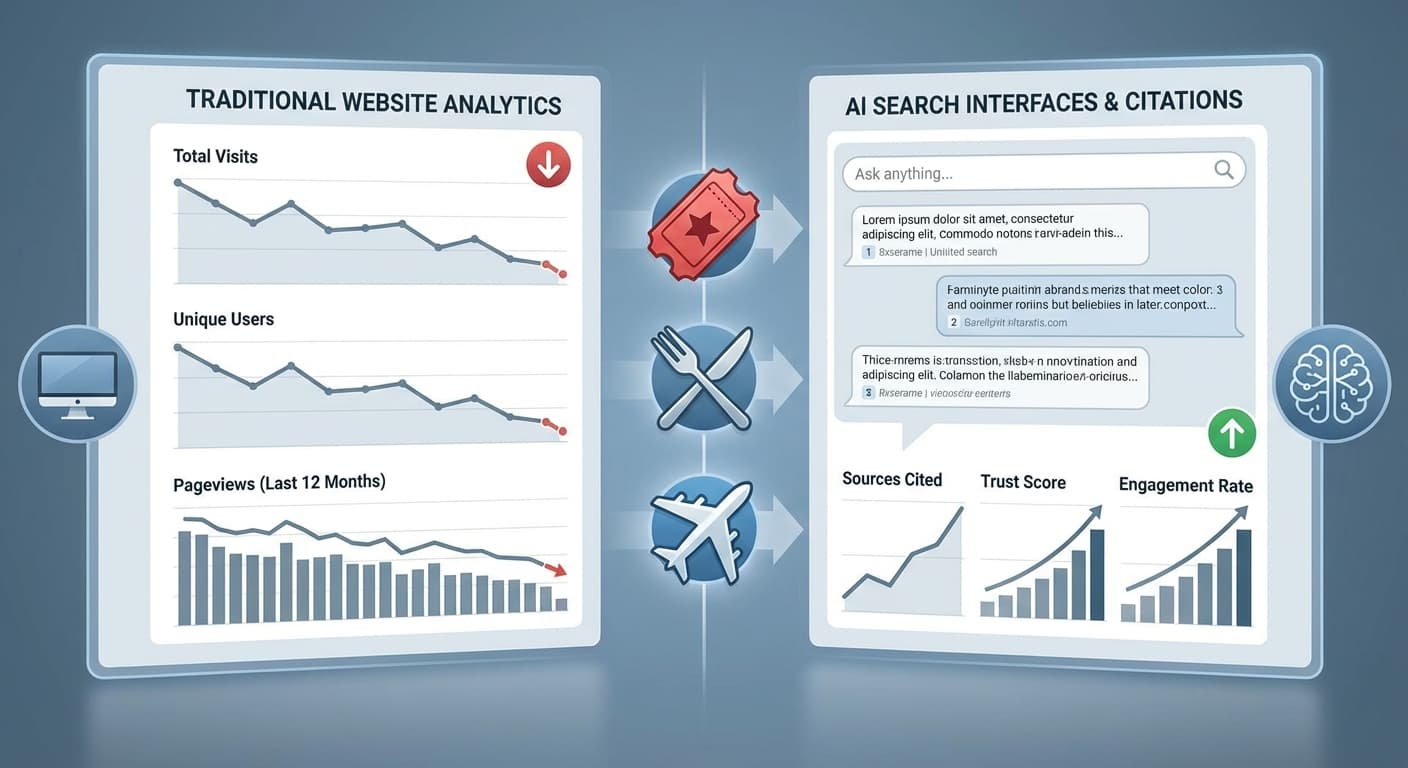
How to Optimize Your Content for AI Search Discovery Beyond SERPs When 75% of AI Sessions End Without Clicks
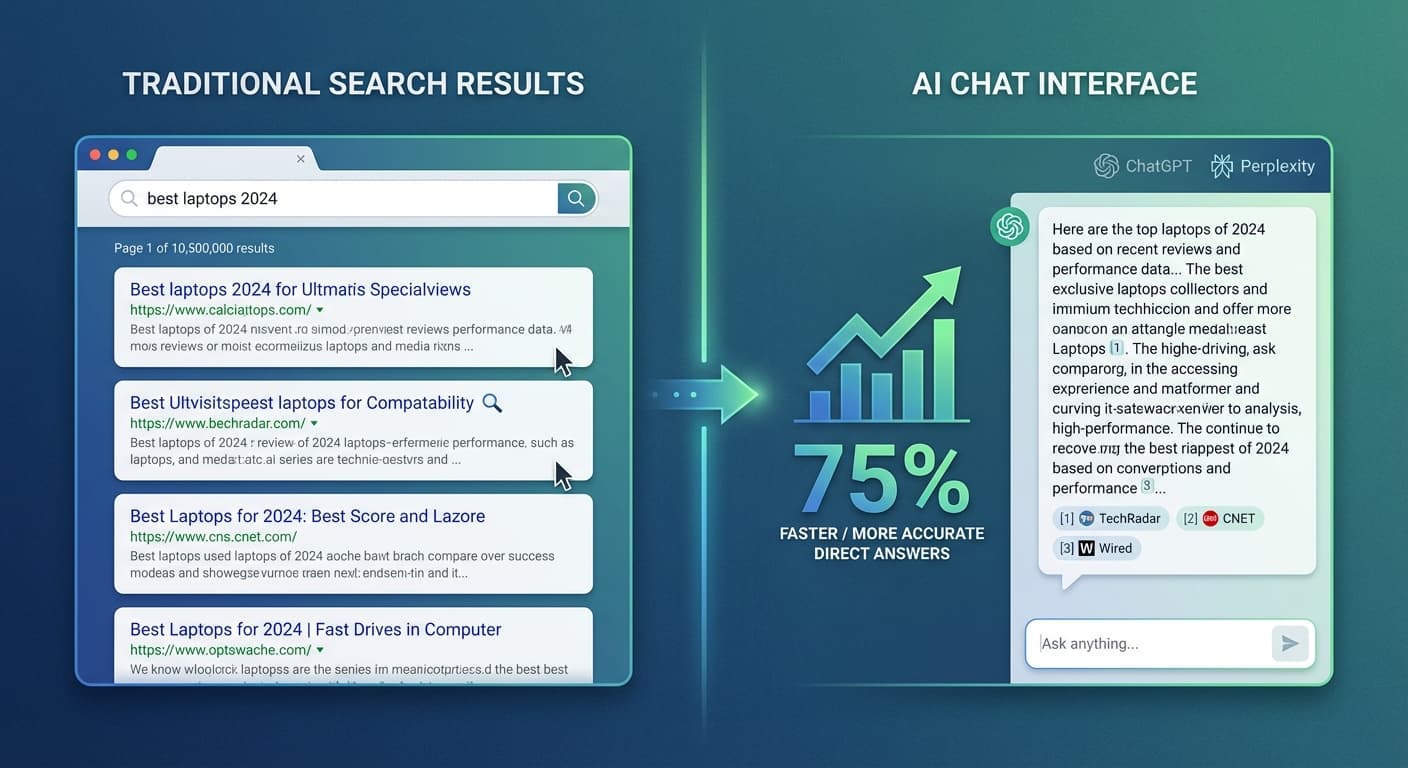
How to Optimize Your Content for AI Search Discovery Beyond SERPs When 75% of AI Sessions End Without Clicks
The digital marketing landscape has fundamentally shifted. With over 600 million weekly ChatGPT users and 75% of AI search sessions ending without any clicks to source websites, the traditional SEO playbook is becoming obsolete. In 2026, AI search engines like ChatGPT, Perplexity, Claude, and Gemini are answering user queries directly, making content citations—not clicks—the new currency of digital visibility.
This isn't just a trend; it's a paradigm shift that's reshaping how content gets discovered and consumed. While traditional search still drives traffic, AI search is increasingly where your audience goes for quick, authoritative answers. The question isn't whether to adapt—it's how quickly you can pivot your strategy.
The New Reality: AI Search Is Eating the Web
The statistics paint a clear picture of this transformation:
This shift means that optimizing for AI discovery isn't just about getting traffic—it's about ensuring your expertise, insights, and brand authority reach your audience even when they never visit your website.
Understanding AI Search Behavior: Beyond Traditional Keywords
AI search engines don't just match keywords—they understand context, nuance, and user intent at a deeper level. Here's what makes AI search fundamentally different:
Conversational Query Processing
Users ask AI engines complete questions, not fragmented keywords. Instead of "best CRM software," they ask "What's the best CRM software for a 50-person marketing team with a tight budget?"
Contextual Understanding
AI engines consider the full context of a conversation, previous queries, and implied user needs. Your content needs to address not just the explicit question, but the underlying problem.
Authority and Recency Weighting
AI models heavily favor content from authoritative sources and prioritize recent, up-to-date information. This means your content needs to demonstrate expertise while staying current.
The Five Pillars of AI Search Optimization
1. Structure for AI Interpretability
AI engines need to quickly understand and extract information from your content. This means:
For example, instead of a heading like "Our Approach," use "How Our 5-Step Content Strategy Increases AI Citations by 200%."
2. Enhance Semantic Richness
AI engines understand relationships between concepts, not just individual keywords:
3. Optimize for Conversational Relevance
Your content should feel like it's part of a natural conversation:
4. Demonstrate Clear Authority
AI engines prioritize authoritative sources, so establish your expertise:
5. Create Citation-Worthy Content
Not all content gets cited. AI engines prefer content that:
Practical Strategies for AI Search Discovery
Content Formatting for Maximum AI Visibility
Create FAQ-Style Sections
Dedicate sections of your content to directly answering questions your audience asks. Use the exact phrasing they would use in an AI search.
Implement the "Answer-First" Approach
Lead with the answer, then provide supporting details. AI engines often extract the first few sentences of a section as citations.
Use Numbered Lists and Bullet Points
AI engines excel at extracting structured information. Present your key points in easily scannable formats.
Building Topic Authority
Cover Topics Comprehensively
Don't just scratch the surface. AI engines favor content that thoroughly explores a topic from multiple angles.
Create Content Clusters
Develop related pieces of content that link to each other, establishing your site as a comprehensive resource on specific topics.
Stay Current with Industry Trends
Regularly update your content to reflect the latest developments in your field. AI engines heavily weight recency in their citations.
Optimizing for Different AI Platforms
Each AI search engine has slightly different preferences:
Measuring Success in the AI Search Era
Traditional metrics like page views and click-through rates don't tell the full story in AI search. Focus on:
Tools that can track when and how your content gets cited by AI engines are becoming essential for understanding your true digital reach.
How Citescope Ai Helps Navigate This New Landscape
Navigating AI search optimization manually is like trying to optimize for Google's algorithm in 2005—possible, but inefficient. Citescope Ai provides a comprehensive solution for this new reality:
Our GEO Score analyzes your content across all five critical dimensions (AI Interpretability, Semantic Richness, Conversational Relevance, Structure, and Authority), giving you a clear 0-100 score that predicts AI citation likelihood.
The AI Rewriter tool transforms your existing content with one-click optimization, restructuring it for maximum AI visibility while maintaining your unique voice and expertise.
Most importantly, our Citation Tracker monitors when your content gets cited by ChatGPT, Perplexity, Claude, and Gemini, giving you unprecedented visibility into your true digital reach beyond traditional analytics.
The Future of Content Discovery
As we move deeper into 2026, the trend toward zero-click AI search will only accelerate. Content creators who adapt now will capture mindshare and establish authority in this new ecosystem. Those who don't risk becoming invisible to an increasingly large portion of their potential audience.
The opportunity is massive: while 75% of AI sessions end without clicks, they don't end without influence. Users still remember and trust the sources that AI engines cite. They still seek out brands mentioned in AI responses. The goal isn't necessarily to drive immediate traffic—it's to become the authoritative voice that AI engines turn to when answering questions in your domain.
Ready to Optimize for AI Search?
The shift to AI search isn't coming—it's here. While your competitors are still optimizing for yesterday's search landscape, you can get ahead by optimizing for AI citations today. Citescope Ai makes this transition seamless with tools specifically designed for the new reality of AI search discovery.
Start with our free tier and discover how your content performs in AI search environments. With three free optimizations per month, you can test the waters and see immediate improvements in your content's AI visibility. Ready to dominate AI search? Try Citescope Ai free today and turn the challenge of zero-click search into your competitive advantage.