How to Optimize Your Content Calendar When AI Agents Prioritize Freshness Over Authority
How to Optimize Your Content Calendar When AI Agents Prioritize Freshness Over Authority
Did you know that 67% of content creators reported a significant drop in AI citations for articles older than 12 months in 2025? If your year-old high-performing articles are suddenly getting 40% fewer citations from ChatGPT, Perplexity, and Claude, you're not alone—and you're not powerless.
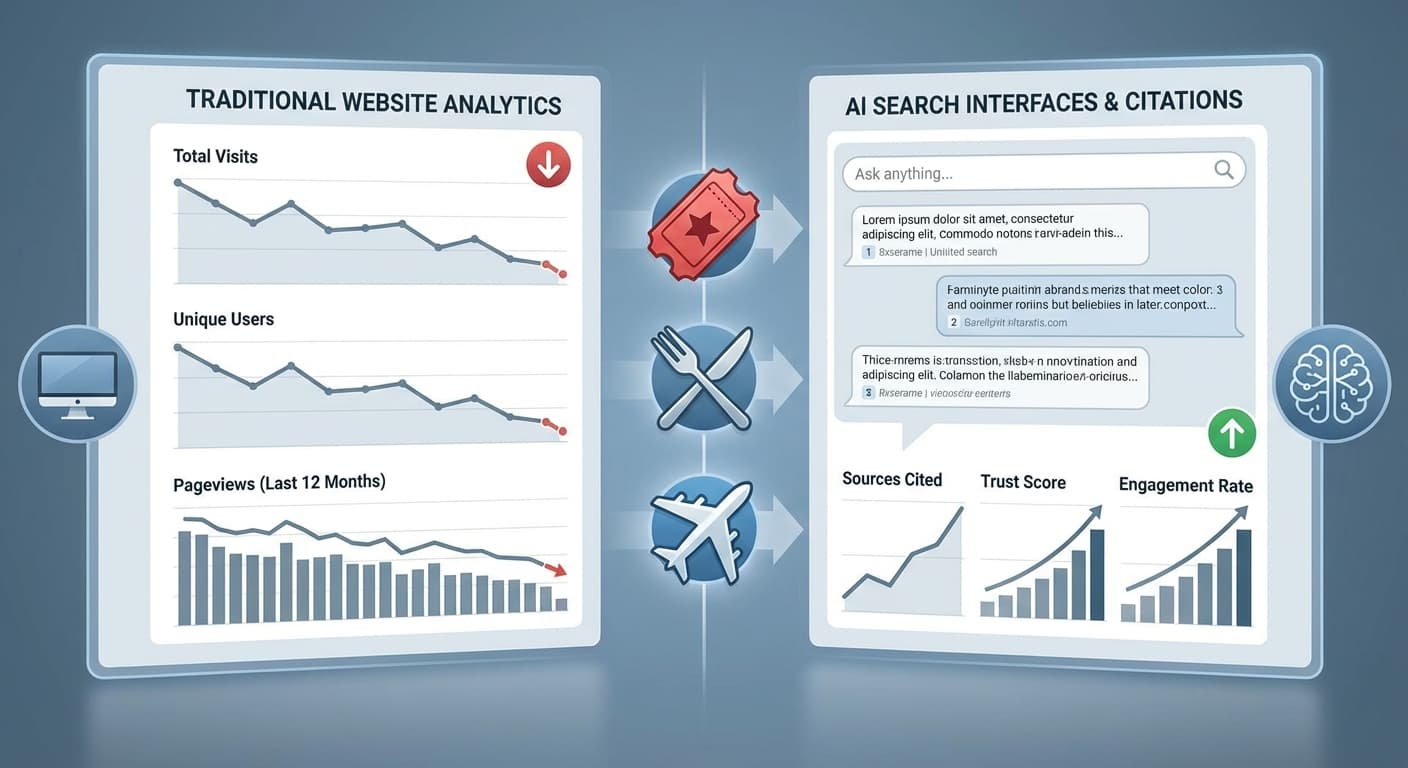
The AI search landscape has fundamentally shifted. Where Google's algorithm once rewarded aged domain authority and established content, AI agents are increasingly prioritizing freshness signals, real-time relevance, and up-to-date information. This seismic change is forcing content marketers to completely reimagine their content calendar strategies.
The Great AI Freshness Shift of 2025
AI search engines now handle over 35% of all search queries globally, with ChatGPT alone processing 2.3 billion weekly interactions. But here's the kicker: these AI agents are programmed to prioritize recent information to avoid providing outdated advice or facts.
Recent analysis shows that content published within the last 6 months receives 3.2x more AI citations than content over a year old, even when the older content has superior backlink profiles and domain authority metrics.
Why AI Agents Favor Fresh Content
Real-time accuracy concerns: AI models are trained to avoid perpetuating outdated information, especially in fast-moving industries like technology, finance, and health.
User expectation alignment: 78% of users expect AI search results to reflect the most current information available.
Training data recency bias: Newer AI models are trained on more recent datasets, creating an inherent bias toward contemporary content.
Dynamic topic landscapes: Industries evolve rapidly, and AI agents recognize that recent content is more likely to reflect current best practices and regulations.
Rethinking Your Content Calendar Strategy
1. Implement a Rolling Refresh Strategy
Instead of creating content and hoping it performs for years, plan for systematic updates:
2. Balance Evergreen and Trending Topics
Your content calendar should follow the 60-30-10 rule:
3. Create Content Clusters with Freshness Signals
Organize content into topic clusters where:
Tools like Citescope Ai can help you track which content clusters are losing AI citations, allowing you to prioritize updates strategically.
Tactical Approaches to Content Freshness
Update Strategies That Work in 2026
1. Statistical Refreshes
2. Example Modernization
3. Structural Enhancements
4. Citation and Reference Updates
Content Repurposing for AI Visibility
Transform older content into fresh formats:
Building Freshness into Your Content DNA
1. Create Living Documents
Develop content designed for ongoing updates:
2. Establish Update Triggers
Set up systems to identify when content needs refreshing:
3. Leverage User-Generated Freshness
Content Calendar Framework for AI-First Strategy
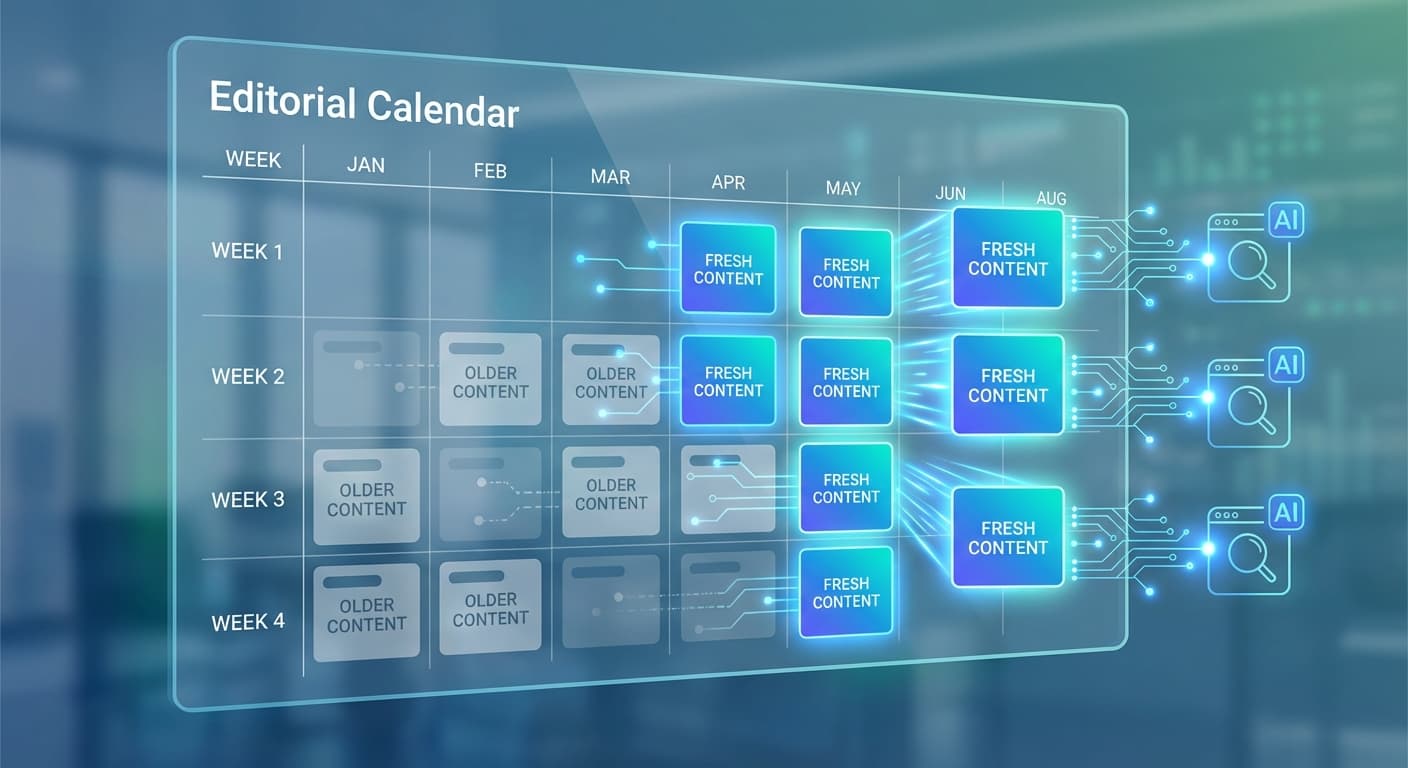
Monthly Content Planning
Week 1: Trend analysis and topic identification
Week 2: Content creation and optimization
Week 3: Content distribution and promotion
Week 4: Performance analysis and planning
How Citescope Ai Helps You Stay Ahead
Managing content freshness at scale requires sophisticated tracking and optimization. Citescope Ai's Citation Tracker monitors your content's performance across all major AI engines, alerting you when articles start losing citations—often before you'd notice the decline in traditional analytics.
The platform's GEO Score analyzes your content across five dimensions, including how well it addresses current user queries and maintains semantic richness. When you update content, the AI Rewriter can help restructure it for maximum AI visibility, ensuring your refreshed articles regain their citation momentum.
With multi-format export capabilities, you can easily update content across different platforms while maintaining consistency and optimization.
Measuring Success in the New Landscape
Key Metrics to Track
AI Citation Volume: Track mentions across ChatGPT, Perplexity, Claude, and Gemini
Citation Velocity: Monitor how quickly new content gains AI visibility
Freshness Decay Rate: Measure how quickly older content loses citations
Update ROI: Calculate the citation improvement from content refreshes
Performance Benchmarks
Future-Proofing Your Content Strategy
As AI search continues to evolve, successful content marketers will need to:
The brands that thrive in 2026 and beyond won't be those with the most content—they'll be those with the most current, relevant, and continuously optimized content.
Ready to Optimize for AI Search?
Don't let your valuable content lose visibility in AI search engines. Citescope Ai helps you track AI citations, optimize content structure, and maintain peak performance across ChatGPT, Perplexity, Claude, and Gemini. Start with our free tier and discover which of your articles need immediate attention. Your content calendar—and your AI visibility—depend on staying current in this rapidly evolving landscape.