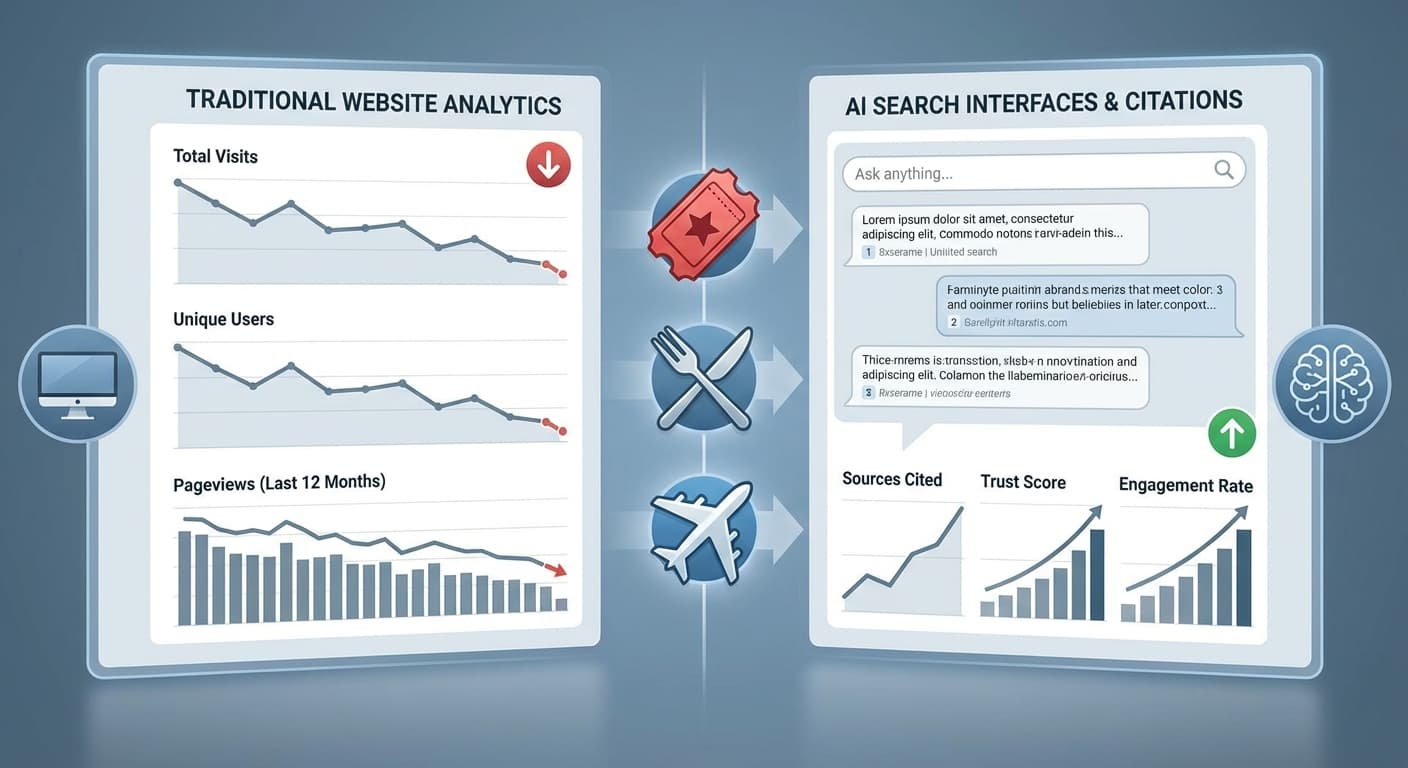
How to Optimize Your Business for AI Search Multimodal Query Integration: Mastering Visual and Voice Search for 40% of Commercial Intent
How to Optimize Your Business for AI Search Multimodal Query Integration: Mastering Visual and Voice Search for 40% of Commercial Intent
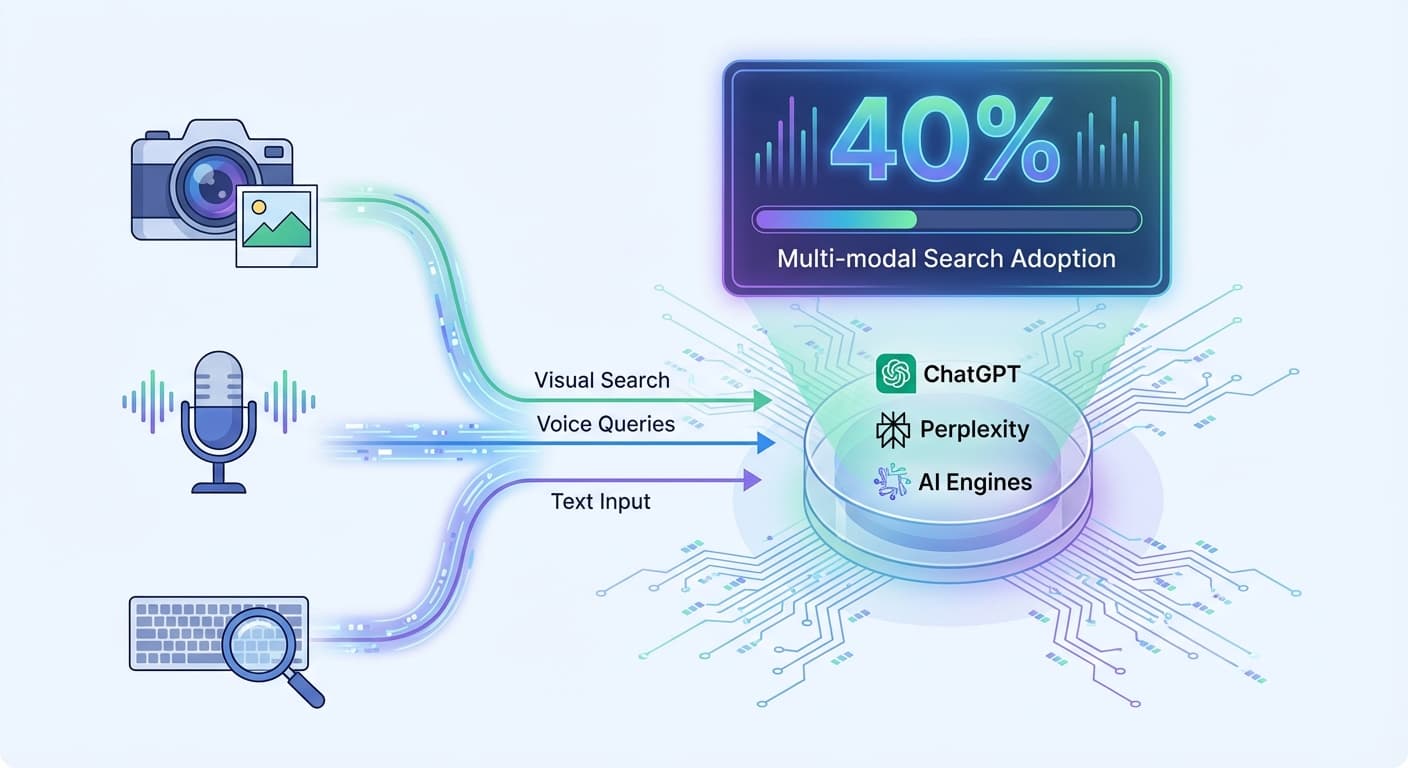
Visual and voice searches now represent a staggering 40% of all commercial intent queries in 2025, yet most businesses are still optimizing content as if it's 2020. While you're perfecting your keyword density, your competitors are capturing customers through AI-powered image recognition, voice search optimization, and multimodal content strategies that speak directly to how modern consumers actually search.
The shift is undeniable: ChatGPT's latest multimodal capabilities process over 2 billion visual queries monthly, Perplexity's image search has grown 350% year-over-year, and voice commerce is projected to hit $80 billion by the end of 2025. Yet 73% of businesses admit their content structure actively blocks AI engines from extracting and citing their visual and video content.
If your business isn't optimized for multimodal AI search, you're invisible to nearly half of today's commercial searches.
The Multimodal Search Revolution: Why Traditional SEO Falls Short
The rise of multimodal AI search represents a fundamental shift in how consumers discover and evaluate businesses. Unlike traditional text-based queries, multimodal searches combine visual, voice, and text inputs to create richer, more contextual search experiences.
Current Multimodal Search Statistics (2025-2026):
The Citation Extraction Problem
The biggest challenge isn't just creating visual and voice-friendly content—it's structuring that content so AI engines can extract, understand, and cite it effectively. Most businesses create videos and images but fail to provide the semantic context AI engines need to surface their content in relevant searches.
Common content structure issues include:
Essential Strategies for Multimodal AI Optimization
1. Implement Comprehensive Visual Content Structure
Your visual content needs to speak AI's language. This means going beyond basic alt text to create rich, contextual descriptions that help AI engines understand not just what's in your images, but why it matters to searchers.
Best practices for visual optimization:
2. Optimize Video Content for AI Extraction
Video content offers massive opportunities for AI citation, but only if it's properly structured. AI engines are increasingly sophisticated at extracting insights from video content, but they need your help to understand context and relevance.
Video optimization essentials:
3. Master Voice Search Optimization
Voice searches are fundamentally different from text searches—they're longer, more conversational, and often location-specific. Your content needs to match these natural language patterns.
Voice search optimization tactics:
4. Create AI-Readable Multimodal Content Architecture
The key to multimodal success is creating content where text, images, videos, and audio work together to tell a cohesive story that AI engines can understand and extract from.
Architecture best practices:
Industry-Specific Multimodal Strategies
E-commerce and Retail
Professional Services
Healthcare and Wellness
Technical Implementation for Maximum AI Visibility
Schema Markup for Multimodal Content
Proper schema markup is crucial for helping AI engines understand and categorize your multimodal content. Focus on:
Content Delivery and Performance
AI engines prioritize fast-loading, accessible content. Ensure your multimodal content doesn't sacrifice performance:
Measuring Multimodal AI Search Success
Tracking multimodal optimization requires new metrics beyond traditional SEO KPIs:
Key metrics to monitor:
Advanced Analytics Setup
Implement tracking that captures the full multimodal customer journey:
How Citescope Ai Helps Optimize Multimodal Content
Optimizing for multimodal AI search requires sophisticated analysis and continuous monitoring across multiple content formats. Citescope Ai's GEO Score analyzes your content's multimodal optimization potential across five critical dimensions, identifying exactly where your visual, voice, and text content may be failing to capture AI citations.
The platform's AI Rewriter doesn't just optimize text—it provides recommendations for improving the semantic richness and contextual relevance of your entire multimodal content ecosystem. With Citation Tracker, you can monitor when AI engines like ChatGPT's vision capabilities or Perplexity's multimodal search cite your visual and video content, giving you unprecedented insight into your multimodal search performance.
Common Multimodal Optimization Mistakes to Avoid
Content Silos
Creating visual, audio, and text content in isolation without connecting them thematically or structurally.
Over-Optimization
Stuffing keywords into image alt text or video descriptions in ways that feel unnatural to AI engines.
Neglecting Mobile Experience
Optimizing for desktop multimodal experiences while ignoring mobile-first AI search behavior.
Inconsistent Messaging
Using different terminology or positioning across visual, voice, and text content within the same topic area.
The Future of Multimodal AI Search
As we move through 2026, expect even more sophisticated multimodal integration. AI engines are developing capabilities to understand complex relationships between visual, audio, and text content, making cohesive multimodal strategies not just beneficial but essential for business visibility.
Emerging trends include:
Ready to Optimize for AI Search?
Multimodal AI search optimization represents one of the biggest opportunities in digital marketing today, but it requires a strategic, data-driven approach. Citescope Ai provides the tools and insights you need to ensure your content performs across all AI search formats—from traditional text queries to visual and voice searches.
Start optimizing your multimodal content strategy today with Citescope Ai's free tier, which includes 3 content optimizations per month. Discover how your current content scores on AI interpretability and get specific recommendations for improving your multimodal search visibility. Your competitors are already adapting to the 40% of commercial searches you might be missing—make sure you're not left behind.