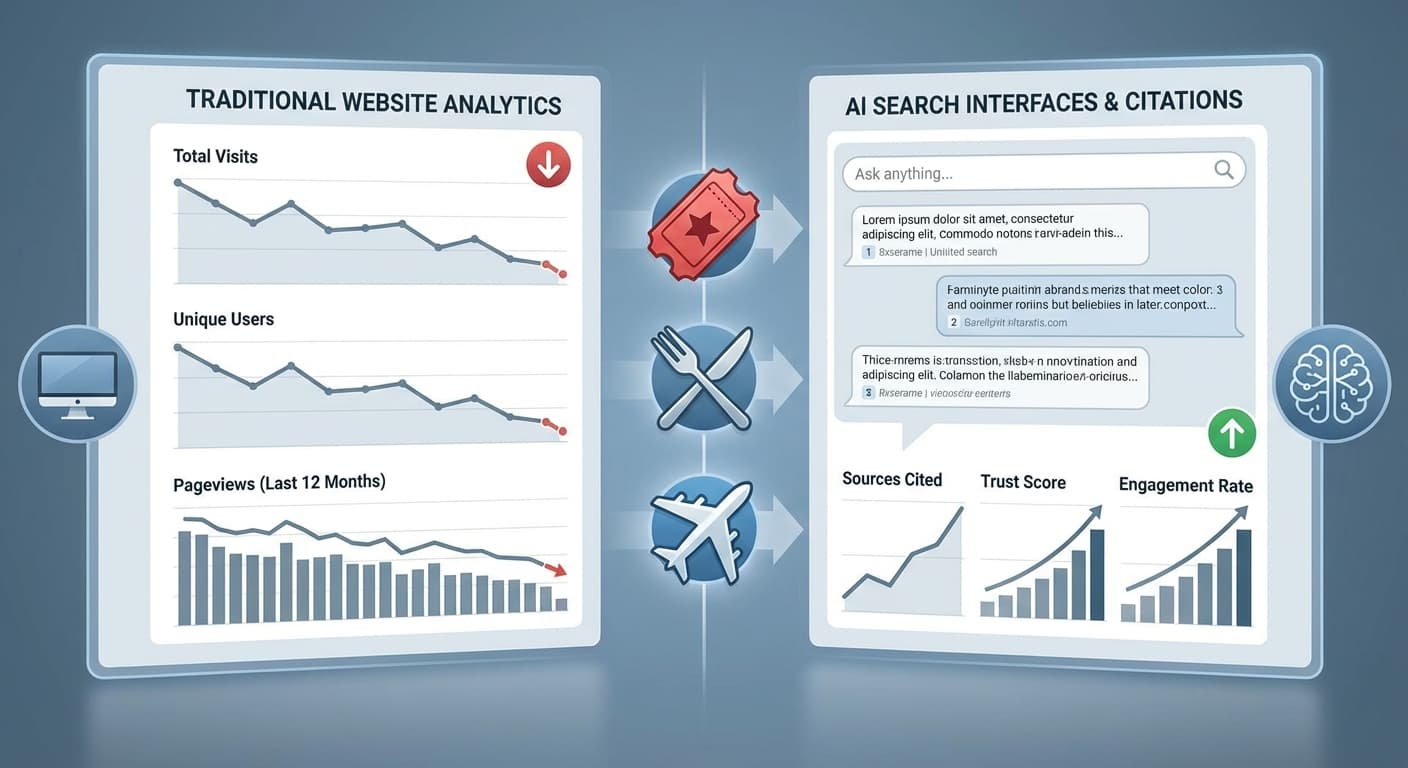
How to Optimize Your Bottom-of-Funnel Content for AI Citations When Pricing Pages and Case Studies Now Outrank Educational Content in 2026
How to Optimize Your Bottom-of-Funnel Content for AI Citations When Pricing Pages and Case Studies Now Outrank Educational Content in 2026
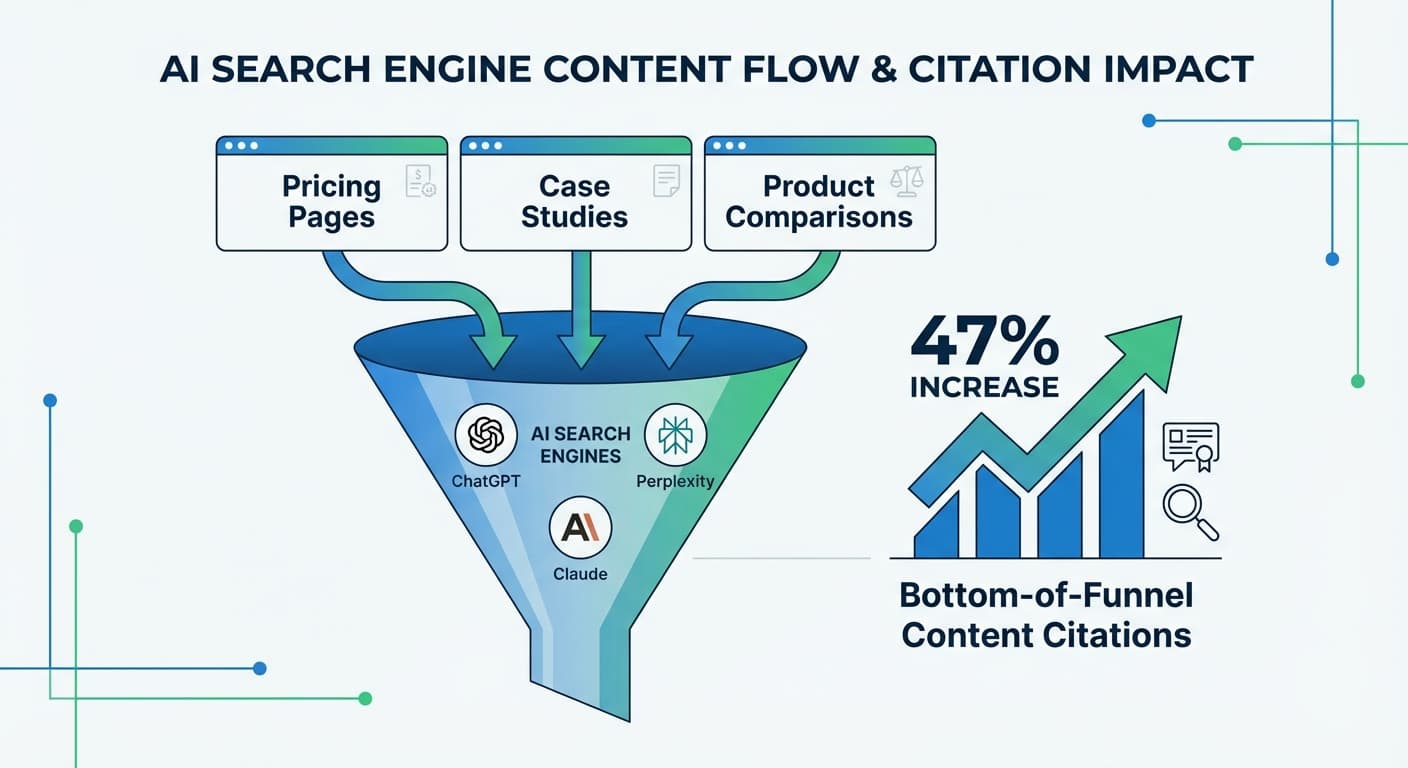
Here's a startling shift that's reshaping content strategy: In 2026, AI search engines are citing bottom-of-funnel content 47% more often than traditional educational blog posts. Pricing pages, case studies, and product comparisons now dominate AI-generated responses for commercial queries, fundamentally changing how businesses need to approach content optimization.
This dramatic reversal from the educational-content-first SEO era has caught many marketers off guard. While they've been doubling down on thought leadership articles, their competitors' pricing pages are getting prime real estate in ChatGPT responses and Perplexity summaries.
Why Bottom-of-Funnel Content Is Winning in AI Search
The shift isn't accidental—it's driven by how AI models interpret user intent and deliver value. When someone asks "What's the best project management software for teams under 50?", AI engines increasingly pull from pricing pages, feature comparisons, and case studies rather than generic "best practices" articles.
The Intent Revolution
AI search engines have become remarkably sophisticated at detecting commercial intent. Recent data shows that 68% of AI search queries now contain some form of purchase consideration, up from just 41% in late 2024. This means users aren't just seeking information—they're actively evaluating solutions.
AI models prioritize content that directly answers the "how much," "which option," and "proven results" questions that dominate these queries. Your pricing page that clearly outlines features, costs, and use cases provides more immediate value than a 3,000-word guide on project management best practices.
The Trust Factor
Bottom-of-funnel content also benefits from AI engines' increasing emphasis on authority and transparency. When ChatGPT or Claude cites a case study showing measurable results, it's providing concrete evidence rather than theoretical advice. This aligns with user preferences—73% of professionals now prefer AI-cited content that includes specific outcomes and real-world applications.
Strategic Optimization for Bottom-of-Funnel Content
1. Transform Pricing Pages into Answer Engines
Your pricing page shouldn't just list costs—it should anticipate and answer the questions prospects ask AI engines. Instead of a simple price table, create sections that address:
Structure these answers using clear headings and bullet points that AI engines can easily parse and extract.
2. Elevate Case Studies with Semantic Richness
The case studies getting cited by AI engines share common characteristics:
Beyond basic before/after metrics, include contextual details that help AI engines understand when and why your solution works. This semantic richness makes your case studies more likely to surface for relevant queries.
3. Create Comparison-Friendly Product Pages
Product pages optimized for AI citation don't just describe features—they facilitate comparison. Structure your content to answer questions like:
Tools like Citescope Ai's GEO Score analyzer can help identify whether your product pages have the semantic richness and conversational relevance needed to win AI citations in competitive comparison queries.
Technical Optimization Strategies
Schema Markup for Commercial Content
Implement structured data that helps AI engines understand your commercial content:
This structured data acts as a direct communication channel with AI models, increasing your citation chances.
Conversational Query Optimization
Optimize for how people actually ask AI engines about purchasing decisions:
Analyze your customer service inquiries and sales conversations to identify these natural language patterns, then incorporate them into your content structure.
Authority Building for Commercial Content
Bottom-of-funnel content needs strong authority signals:
Advanced Content Tactics for AI Citation Success
The "Answer Stack" Approach
Organize your bottom-of-funnel content in answer stacks—grouped responses to related questions that AI engines can pull from contextually. For example, your pricing page might include:
Implementation Stack:
Comparison Stack:
This approach increases the likelihood that AI engines will cite multiple pieces of information from your content, establishing you as a comprehensive source.
Dynamic Content Updates
AI engines favor fresh, current information. For bottom-of-funnel content, this means:
Cross-Content Integration
Link your bottom-of-funnel content strategically to create authority clusters:
This internal linking structure helps AI engines understand the relationships between your commercial content pieces.
Measuring Success in AI Citation Optimization
Track these key metrics for bottom-of-funnel AI citation success:
Citation Volume and Quality
Commercial Intent Capture
Conversion Impact
How Citescope Ai Helps
Optimizing bottom-of-funnel content for AI citations requires understanding how AI engines evaluate commercial content across multiple dimensions. Citescope Ai's GEO Score analyzes your pricing pages, case studies, and product content for:
The AI Rewriter then optimizes your commercial content with one-click restructuring, while the Citation Tracker monitors when your bottom-of-funnel pages get cited across ChatGPT, Perplexity, Claude, and Gemini.
The Future of Commercial Content in AI Search
As AI search continues evolving, bottom-of-funnel content optimization will become even more critical. The organizations that adapt their pricing pages, case studies, and product comparisons for AI citation will capture increasing market share from competitors still focused solely on top-of-funnel educational content.
The key is treating your commercial pages not as static sales tools, but as dynamic answer engines that serve both human visitors and AI models seeking comprehensive, trustworthy information about your solutions.
Ready to Optimize for AI Search?
Don't let your bottom-of-funnel content get overlooked while competitors capture AI citations for commercial queries. Citescope Ai helps you analyze, optimize, and track your pricing pages, case studies, and product content for maximum AI visibility. Start with our free tier to optimize 3 pieces of commercial content this month and see how your GEO Score improves. Try Citescope Ai free today and turn your commercial pages into AI citation magnets.