How to Optimize Long-Tail Conversational Queries for AI Search Engines in 2026

How to Optimize Long-Tail Conversational Queries for AI Search Engines in 2026
Did you know that 67% of all AI search queries in 2026 are now full questions or conversational phrases rather than traditional keywords? As ChatGPT processes over 500 million weekly queries and Perplexity handles 100 million monthly searches, the way people interact with search has fundamentally shifted. Instead of typing "best pizza NYC," users now ask "What's the best pizza place in New York City for a romantic date night?"
This evolution represents one of the biggest opportunities—and challenges—for content creators today.
The Death of Traditional Keyword Optimization
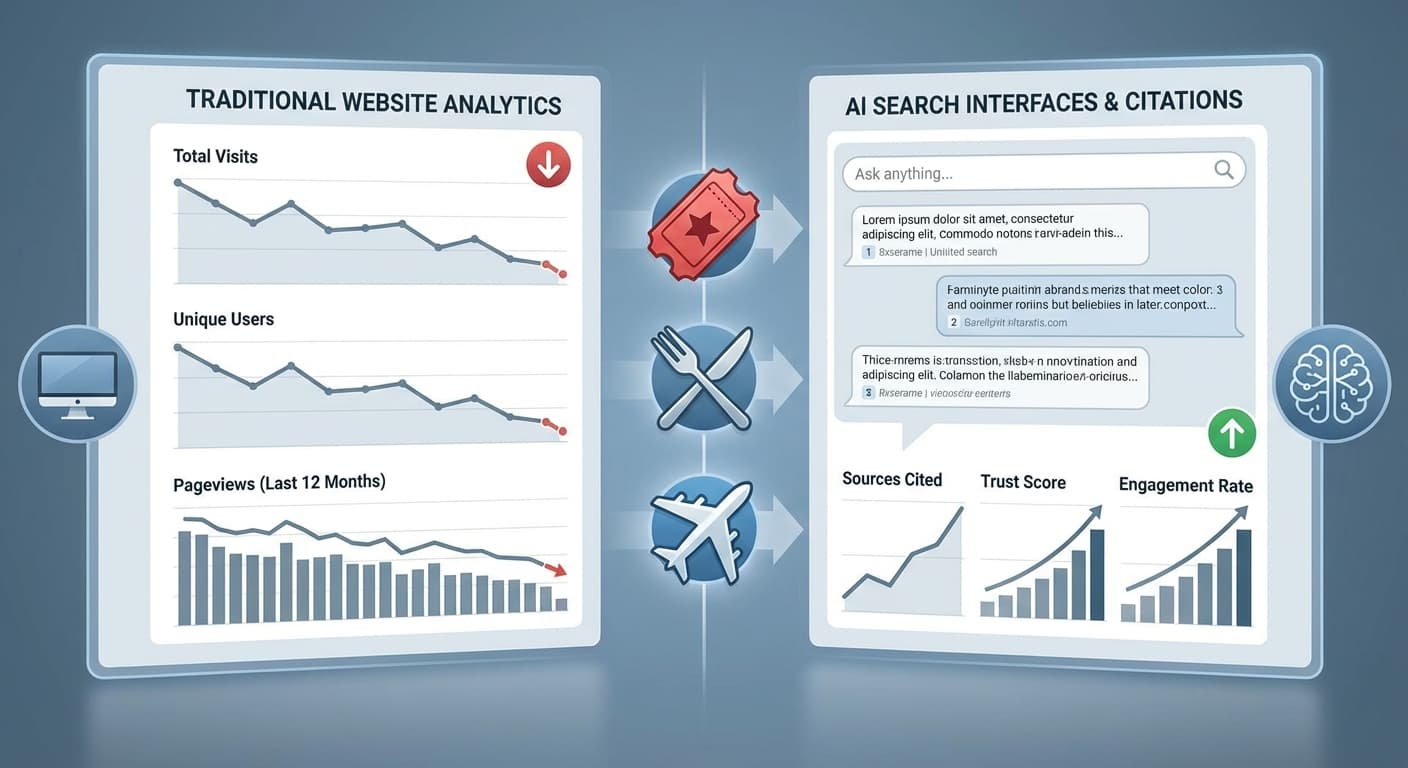
The rigid keyword-stuffing strategies that dominated SEO for decades are becoming obsolete in the AI search era. Traditional search engines rewarded pages that matched exact keyword phrases, but AI engines like ChatGPT, Perplexity, Claude, and Gemini understand context, intent, and nuance.
Consider these statistics from 2025-2026:
This shift means your content strategy must evolve beyond traditional keyword optimization to embrace conversational query optimization.
Understanding Long-Tail Conversational Queries
What Makes a Query "Conversational"?
Conversational queries mirror how people naturally speak and think. They include:
Examples of Traditional vs. Conversational Queries
Traditional Keywords:
Conversational Queries:
The conversational versions provide AI engines with crucial context that helps them deliver more precise, helpful answers.
Why AI Engines Prefer Conversational Content
AI search engines excel at understanding and processing natural language because they're trained on conversational data. When your content mirrors how people naturally ask questions, you increase your chances of being cited because:
1. Enhanced Semantic Understanding
AI engines analyze the relationship between concepts, not just keyword matches. Content that addresses the full context of a question performs better than content optimized for isolated keywords.
2. Intent Alignment
Conversational queries reveal user intent more clearly. AI engines can better match content to what users actually want to know.
3. Comprehensive Answers
Users asking detailed questions expect thorough answers. AI engines favor content that provides complete, contextual responses over keyword-heavy snippets.
Strategies for Optimizing Long-Tail Conversational Queries
1. Research Real Questions Your Audience Asks
Start by identifying the actual questions your target audience poses:
2. Create Question-Based Content Structure
Organize your content around specific questions rather than broad topics:
Instead of: "Email Marketing Best Practices"
Try: "How Can Small Businesses Create Email Campaigns That Actually Get Opened?"
Use H2 and H3 headings that directly address questions:
3. Write in Natural, Conversational Language
AI engines respond well to content that sounds human and conversational:
4. Provide Contextual, Comprehensive Answers
Long-tail conversational queries often include important qualifiers. Address these specifically:
Query: "What's the best project management tool for creative agencies with remote teams?"
Your content should address:
5. Use Schema Markup for Question-Answer Pairs
Implement FAQ schema markup to help AI engines understand your Q&A content structure:
html
<script type="application/ld+json">
{
"@context": "https://schema.org",
"@type": "FAQPage",
"mainEntity": [{
"@type": "Question",
"name": "How do I choose the right CRM for a small business?",
"acceptedAnswer": {
"@type": "Answer",
"text": "When selecting a CRM for a small business..."
}
}]
}
</script>
6. Optimize for Featured Snippets and AI Citations
Structure your answers to be easily extractable:
AI engines often cite content that provides clear, well-structured answers that can stand alone.
Common Mistakes to Avoid
1. Keyword Stuffing in Conversational Content
Don't force traditional keywords into natural language. "Best running shoes for women with best features and best prices" sounds robotic and hurts your AI visibility.
2. Ignoring Search Intent Variations
The same topic can have multiple conversational query variations. Create content that addresses different angles and intent levels.
3. Creating Surface-Level Answers
Conversational queries often indicate users want detailed, thorough information. Don't provide shallow answers to complex questions.
4. Forgetting Mobile Optimization
78% of AI search queries happen on mobile devices. Ensure your conversational content is easily readable on smaller screens.
Measuring Success with Conversational Query Optimization
Track these metrics to measure your progress:
Tools like Citescope Ai can help you monitor these metrics by tracking when your content gets cited across multiple AI engines and providing insights into how well your content performs for conversational queries.
How Citescope Ai Helps Optimize for Conversational Queries
Optimizing for long-tail conversational queries requires understanding how AI engines interpret and rank content. Citescope Ai's GEO Score analyzes your content across five critical dimensions, including AI Interpretability and Conversational Relevance, giving you a clear picture of how well your content will perform for natural language queries.
The platform's AI Rewriter can transform traditional keyword-focused content into conversation-optimized versions with one click, while the Citation Tracker shows you exactly when and how often ChatGPT, Perplexity, Claude, and Gemini cite your content for various query types.
With multi-format export options, you can easily implement optimized content across your website, ensuring maximum visibility in the AI search landscape.
The Future of Conversational Search Optimization
As we move deeper into 2026, conversational queries will only become more sophisticated. AI engines are developing better understanding of context, emotion, and nuanced intent. Content creators who master conversational optimization now will have a significant advantage as this trend accelerates.
The key is to think like your audience: What would they naturally ask about your topic? How would they phrase their questions? What context and qualifiers matter to them?
By answering these questions through well-structured, conversational content, you'll not only improve your AI search visibility but also create more valuable, user-friendly experiences for your audience.
Ready to Optimize for AI Search?
Transitioning from traditional keyword optimization to conversational query optimization can seem daunting, but you don't have to do it alone. Citescope Ai provides the tools and insights you need to understand how AI engines view your content and optimize it for maximum visibility.
Start with our free tier and analyze up to 3 pieces of content per month. See how your current content scores across our five GEO dimensions and get actionable recommendations for improvement. Try Citescope Ai today and start capturing the growing audience of users who search conversationally.