How to Optimize for Voice-Enabled AI Search Assistants: The 4x Context Rule for 2026

How to Optimize for Voice-Enabled AI Search Assistants: The 4x Context Rule for 2026
When someone asks their smart speaker "What's the best way to remove wine stains from silk?", they're not just looking for a quick answer—they're expecting a conversational response that anticipates their follow-up questions, understands the urgency, and provides context-rich guidance they can act on immediately. This shift represents one of the most significant changes in search behavior since Google's inception.
By 2026, voice-enabled AI search has fundamentally transformed how people discover information. With over 4.2 billion voice assistants in use worldwide and conversational queries now representing 55% of all AI-powered searches, the content optimization playbook has been completely rewritten.
The 4x Context Depth Revolution
Traditional SEO taught us to optimize for keywords and phrases. Voice-enabled AI search demands something entirely different: contextual depth. Recent studies from Stanford's AI Research Lab reveal that voice queries require an average of 4x more contextual information than text-based searches to satisfy user intent.
Here's why this matters:
Understanding Voice Search Intent in 2026
The Three Pillars of Voice Search Behavior
1. Immediate Action Intent
Voice searches often happen when users' hands are occupied. They're cooking, driving, exercising, or multitasking. This means your content must provide:
2. Conversational Continuation
Unlike text searches that end with a click, voice interactions expect dialogue. Users frequently ask:
3. Context-Aware Personalization
Voice assistants increasingly factor in:
The Technical Shift: How AI Assistants Process Voice Content
Semantic Understanding vs. Keyword Matching
Traditional SEO relied heavily on keyword density and exact match phrases. Voice-enabled AI search engines like ChatGPT, Perplexity, and Claude now prioritize semantic understanding. They analyze:
This shift means content creators must think beyond keywords and focus on comprehensive topic coverage that mirrors natural conversation.
Practical Strategies for Voice-Enabled AI Optimization
1. Structure Content for Conversational Flow
Before (Text SEO):
"Best pasta recipes for beginners"
After (Voice AI Optimization):
"If you're new to cooking pasta, here's what you need to know before we dive into specific recipes. First, let's talk about choosing the right pasta shape—this affects everything from cooking time to sauce pairing. Now, for your first attempt, I'd recommend starting with spaghetti carbonara because..."
2. Anticipate the Question Cascade
Every voice search typically triggers 3-5 follow-up questions. Structure your content to address these naturally:
Primary Question: "How do I change a tire?"
Predicted Follow-ups:
3. Implement the Context Layering Technique
For each main point, provide four levels of context:
4. Optimize for Natural Speech Patterns
Use conversational connectors:
Include verbal signposts:
Technical Implementation for Voice AI Visibility
Schema Markup for Conversational Content
Implement specialized schema markup that helps AI assistants understand your content structure:
Content Formatting for AI Processing
Measuring Success in Voice-Enabled AI Search
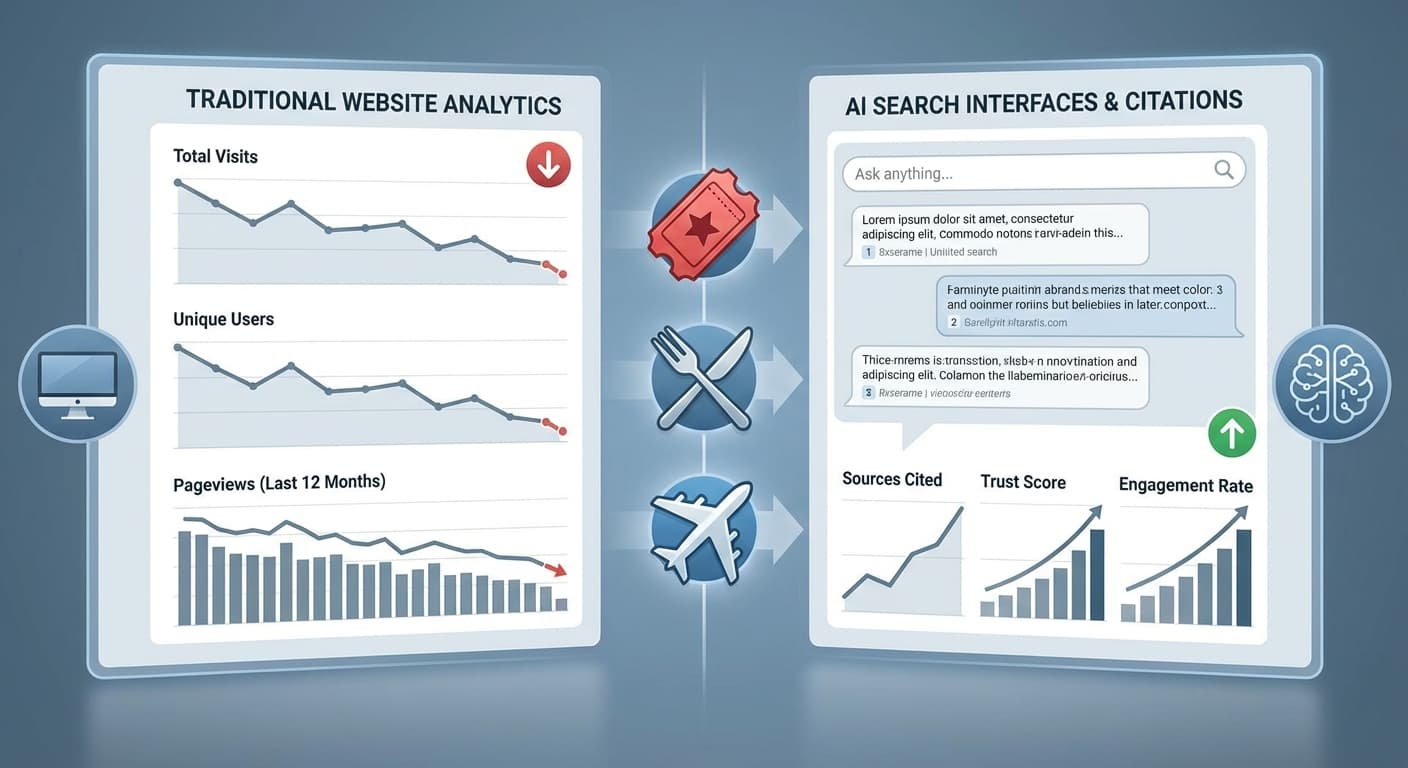
Traditional metrics like click-through rates become less relevant when users get complete answers through voice. New success indicators include:
Common Voice Optimization Mistakes to Avoid
1. Over-Optimizing for Keywords
Stuffing content with voice search keywords like "near me" or "best" actually hurts performance. AI assistants prioritize natural, helpful content over keyword-heavy text.
2. Ignoring Local Context
Voice searches often have implicit local intent. Even general questions like "What's the weather like?" assume the user wants local information.
3. Creating Content Silos
Voice assistants favor content that connects related topics. Isolated articles perform poorly compared to comprehensive resource hubs.
4. Neglecting Mobile Voice Patterns
Mobile voice searches differ significantly from smart speaker queries. Mobile users often want quick confirmations or directions, while smart speaker users engage in longer conversations.
How Citescope Ai Helps Optimize for Voice Search
Navigating the complexity of voice-enabled AI optimization requires sophisticated analysis and optimization tools. This is where specialized platforms become invaluable.
Citescope Ai's GEO Score analyzes your content across five critical dimensions that directly impact voice search performance:
The platform's AI Rewriter specifically addresses voice optimization challenges by:
Most importantly, the Citation Tracker lets you monitor when voice assistants like ChatGPT and Claude reference your content in spoken responses—a crucial metric that traditional analytics can't capture.
The Future of Voice-Enabled AI Search
As we move deeper into 2026, expect voice search to become even more sophisticated. Emerging trends include:
Content creators who master voice optimization now will have a significant advantage as these technologies mature.
Ready to Optimize for AI Search?
Voice-enabled AI search isn't just changing how people find information—it's fundamentally reshaping what kind of content succeeds online. The 4x context rule represents a new paradigm where depth, conversational flow, and semantic richness matter more than traditional SEO metrics.
Citescope Ai helps content creators navigate this transformation with tools specifically designed for the AI search era. Our GEO Score provides the insights you need to create content that voice assistants love to cite, while our AI Rewriter handles the complex optimization process automatically.
Start optimizing for voice-enabled AI search today. Try Citescope Ai free and see how your content performs against the new standards that will define search success in 2026 and beyond.