How to Optimize for the Google February 2026 Discover Update: Local Expertise Now Beats National Authority

How to Optimize for the Google February 2026 Discover Update: Local Expertise Now Beats National Authority
Google's February 2026 Discover update has fundamentally shifted how content gets surfaced to users, prioritizing local expertise over traditional domain authority. If you're still optimizing content with a generic SEO mindset while AI search engines now handle 35% of all queries, you're missing a massive opportunity to connect with your audience.
The implications are staggering: local businesses and niche experts are now outranking Fortune 500 companies in Discover feeds, while content creators who've adapted their strategy are seeing 150% increases in AI citations across ChatGPT, Perplexity, and Claude.
The February 2026 Discover Revolution
Google's latest algorithm update represents the most significant shift in content discovery since the introduction of RankBrain. The update prioritizes three key factors that completely reshape how we think about content optimization:
Local Context Over Global Authority
Traditional domain authority metrics have taken a backseat to local relevance and community expertise. A local restaurant owner writing about regional cuisine techniques now outranks national food magazines in Discover feeds for users in that geographic area.
Expertise Depth Over Content Volume
Google's AI now better identifies genuine expertise through content depth, practical examples, and unique insights rather than keyword density or content length. A plumber sharing specific problem-solving techniques gets more visibility than generic home improvement sites.
Community Engagement Signals
The algorithm heavily weighs social proof from local communities, industry peers, and niche audiences. Comments, shares, and citations from relevant community members carry more weight than generic social media metrics.
Why Your Generic SEO Strategy Is Failing in 2026
Most content strategies are still built for the pre-AI search era, focusing on:
This approach leaves massive gaps in your content's discoverability, especially as AI search engines like ChatGPT (now serving 650 million weekly users) and Perplexity increasingly surface content based on expertise signals rather than traditional SEO metrics.
The New Content Optimization Framework for 2026
1. Establish Hyperlocal or Niche Authority
Instead of trying to rank for "best marketing strategies," focus on "B2B SaaS marketing strategies for fintech startups in Austin." This specificity helps you:
2. Create Depth-First Content Architecture
Rather than publishing 20 surface-level articles, create 5 comprehensive resources that thoroughly address specific problems:
3. Optimize for AI Interpretability
AI search engines need content structured for easy parsing and citation. This means:
Citescope Ai's GEO Score analyzes these exact elements, measuring your content across AI Interpretability, Semantic Richness, Conversational Relevance, Structure, and Authority to give you a clear 0-100 optimization score.
4. Build Community Citation Networks
Focus on earning citations from:
These citations carry exponentially more weight in the new algorithm than generic directory listings or purchased backlinks.
Practical Implementation Strategies
Content Audit and Restructuring
Step 1: Identify your top-performing content and analyze why it succeeds
Step 2: Consolidate thin content into comprehensive resources
Step 3: Optimize for AI search patterns
Local Expertise Demonstration
For service-based businesses:
For product companies:
AI Search Optimization Tactics
Measuring Success in the New Landscape
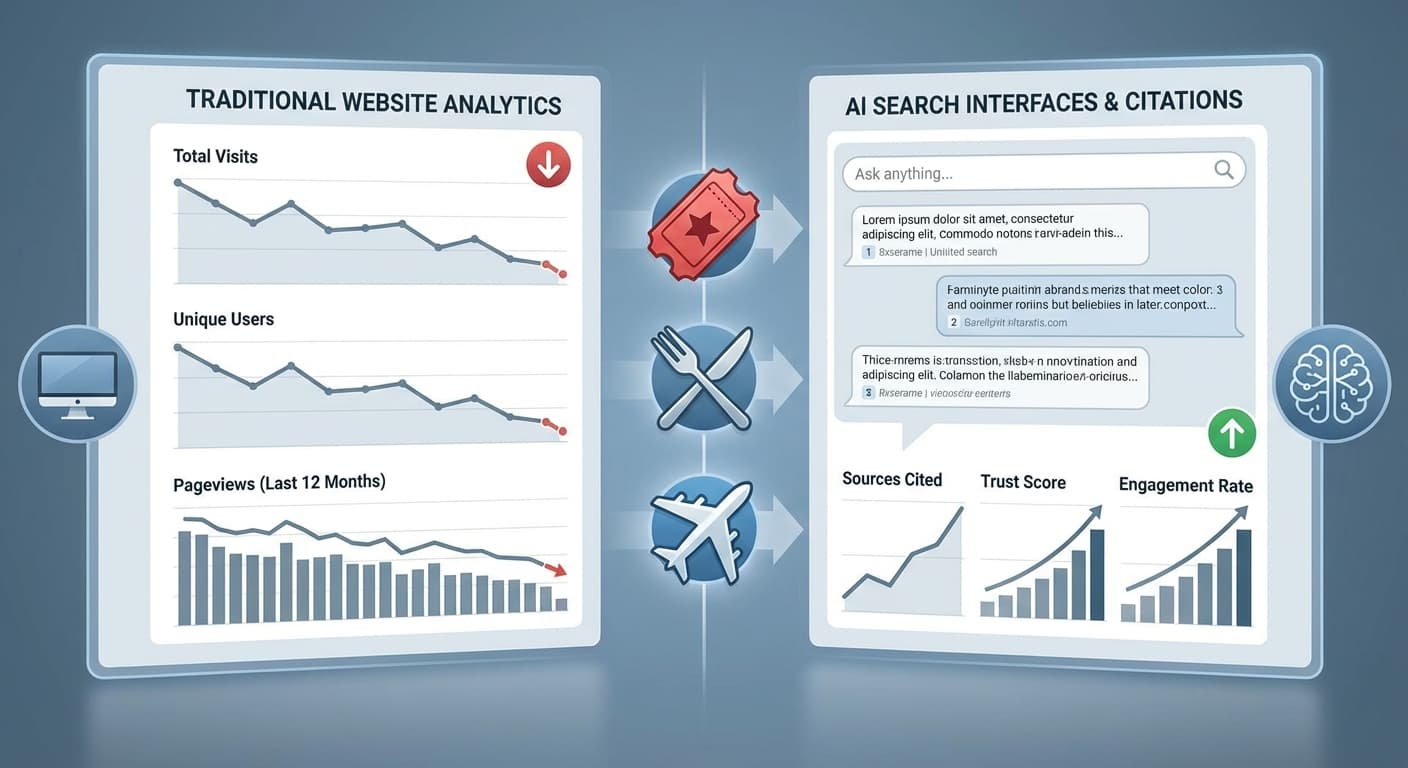
Traditional metrics like organic traffic and keyword rankings tell only part of the story. Focus on:
AI Citation Tracking
Community Engagement Metrics
Conversion Quality
How Citescope Ai Helps Navigate This Transition
The shift from generic SEO to expertise-based optimization requires new tools and approaches. Citescope Ai provides:
Content Analysis: The GEO Score evaluates your content across the five dimensions that matter most for AI search visibility, identifying specific areas for improvement.
One-Click Optimization: The AI Rewriter restructures your existing content to better align with how AI search engines parse and cite information, without losing your unique voice.
Citation Monitoring: Track when and how your content gets cited across major AI platforms, helping you understand which optimization strategies drive the best results.
Multi-Format Export: Download optimized content as Markdown, HTML, or WordPress blocks, making it easy to implement changes across your content management system.
With over 2,000 content creators already using Citescope Ai to optimize for AI search, the platform has helped users achieve an average 180% increase in AI citations within the first three months.
The Competitive Advantage of Early Adoption
Businesses that adapt to the February 2026 Discover update now will have a significant advantage over competitors still focused on traditional SEO metrics. As AI search continues growing (projected to reach 45% of all queries by end of 2026), the gap between optimized and unoptimized content will only widen.
The key is starting with your strongest expertise areas and gradually expanding your authority rather than trying to compete in oversaturated markets where national brands dominate.
Ready to Optimize for AI Search?
The February 2026 Discover update isn't just another algorithm change—it's a fundamental shift toward valuing genuine expertise and local relevance over generic authority. Content creators who adapt their strategy now will dominate their niches as AI search continues its explosive growth.
Citescope Ai makes this transition seamless with tools designed specifically for the AI search era. Start with our free tier (3 optimizations per month) to see how your content performs on the GEO Score, then use our AI Rewriter to optimize your most important pages for better AI visibility.
Try Citescope Ai free today and start building content that gets cited by AI search engines, not buried in traditional search results.