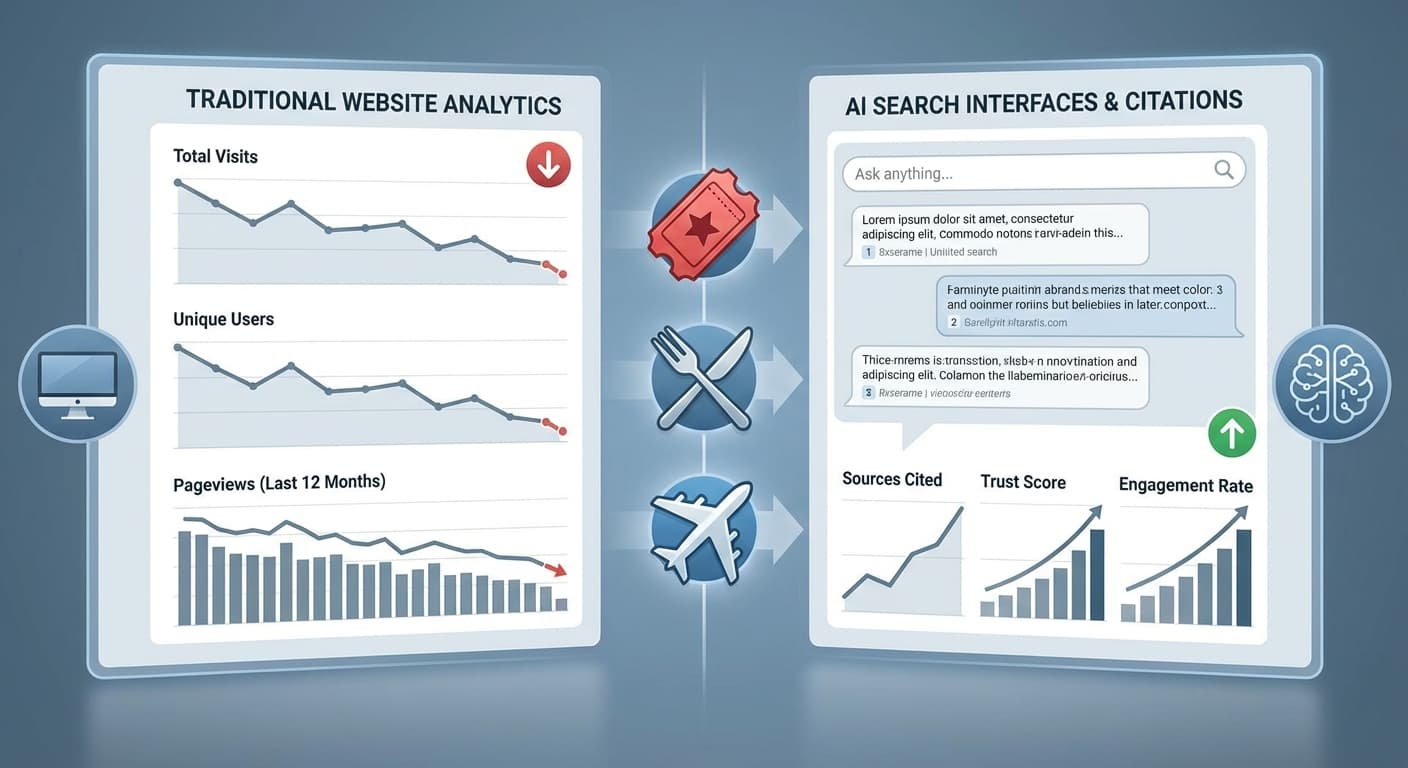
How to Optimize for Inconsistent AI Source Preferences When ChatGPT Cites Reddit Threads While Perplexity Prioritizes Academic Journals
How to Optimize for Inconsistent AI Source Preferences When ChatGPT Cites Reddit Threads While Perplexity Prioritizes Academic Journals
Have you ever searched the same question on ChatGPT and Perplexity, only to receive completely different sources? You're not alone. In 2026, with over 500 million weekly ChatGPT users and Perplexity processing 15 billion queries annually, a frustrating reality has emerged: AI search engines show wildly inconsistent source preferences, even for identical queries.
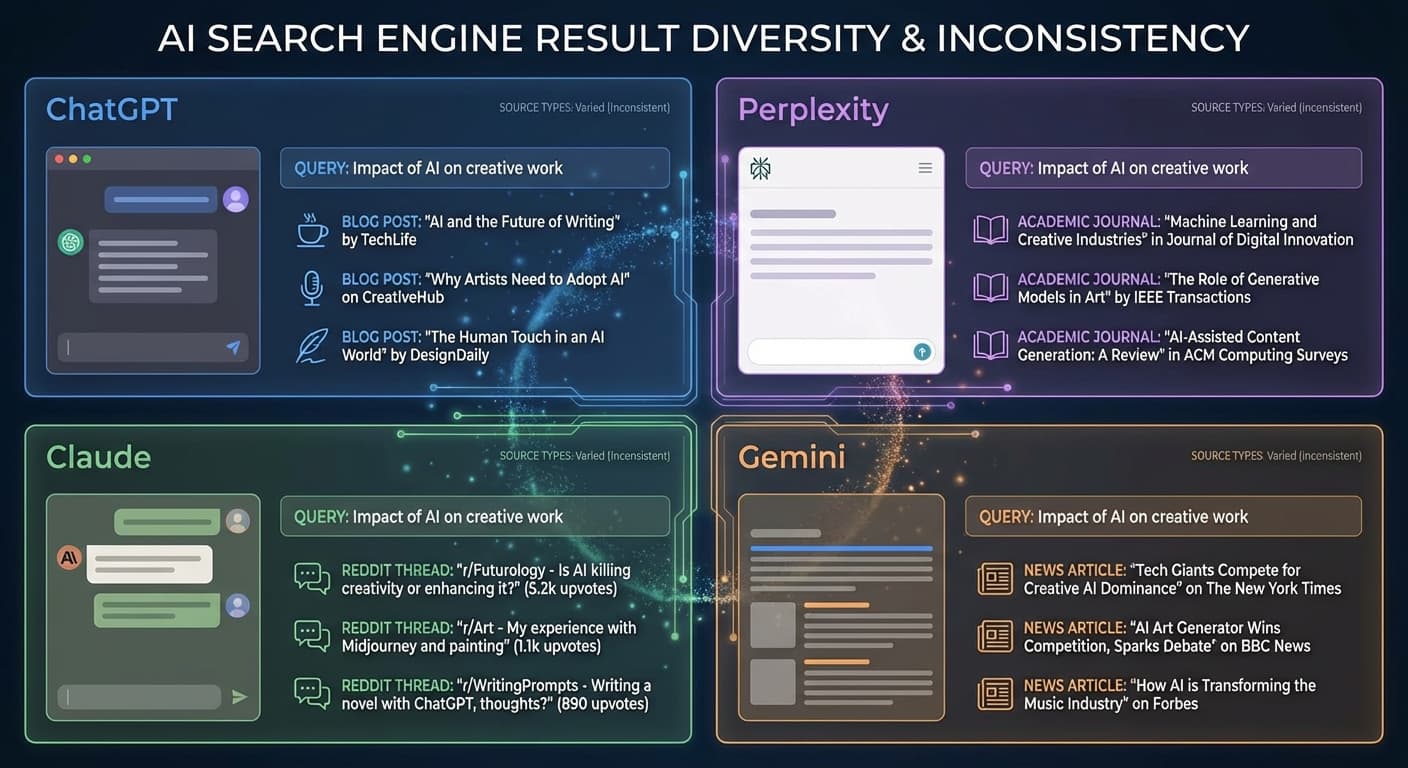
ChatGPT might cite a Reddit thread discussing personal experiences with productivity apps, while Perplexity pulls from peer-reviewed journals on workplace psychology. Claude favors in-depth blog posts, while Gemini leans toward news articles and official documentation. This inconsistency isn't a bug—it's a feature of how different AI models are trained and optimized.
The Root of AI Source Preference Inconsistency
Each AI search engine operates with distinct training data, retrieval algorithms, and ranking factors. Understanding these differences is crucial for content creators who want maximum visibility across all platforms.
ChatGPT's Source Preferences
ChatGPT tends to favor:
Perplexity's Academic Lean
Perplexity consistently prioritizes:
Claude's Comprehensive Approach
Claude shows preference for:
Gemini's Freshness Factor
Gemini often prioritizes:
The Multi-Platform Optimization Challenge
With AI search now accounting for over 30% of all search queries and 74% of Gen Z using AI engines as their primary search method, content creators face a complex optimization puzzle. Creating content that satisfies all these different preferences simultaneously seems impossible—but it's not.
Strategic Content Architecture for Multi-AI Optimization
1. The Layered Content Approach
Instead of creating single-format content, develop a layered architecture that serves different AI preferences:
Foundation Layer (Academic-Style)
Conversational Layer
Current Events Layer
2. Format Diversification Strategy
Create content in multiple formats to match AI preferences:
3. Cross-Referencing Technique
Develop a network of interconnected content that references different source types:
Tactical Optimization Techniques
Content Structure Optimization
For ChatGPT Success:
For Perplexity Visibility:
For Claude Optimization:
For Gemini Performance:
Advanced Citation Strategy
Develop a citation portfolio that satisfies all AI preferences:
Content Adaptation Framework
The 4-Quadrant Method
Organize your content strategy across four quadrants:
Quadrant 1: Academic Authority (Perplexity-focused)
Quadrant 2: Community Conversation (ChatGPT-focused)
Quadrant 3: Comprehensive Analysis (Claude-focused)
Quadrant 4: Fresh Intelligence (Gemini-focused)
Measuring Cross-Platform Success
Track your optimization efforts across different AI platforms:
Tools like Citescope Ai's Citation Tracker make this monitoring possible, showing exactly when and how your content gets cited across ChatGPT, Perplexity, Claude, and Gemini, allowing you to refine your multi-platform strategy based on real performance data.
Common Pitfalls to Avoid
Over-Optimization Syndrome
Don't try to stuff content with elements for every AI platform. This creates:
Platform Favoritism
Resist the temptation to optimize only for the AI engine that currently drives most traffic. AI search preferences evolve rapidly, and diversification protects against algorithm changes.
Citation Manipulation
Never artificially inflate citations through:
Future-Proofing Your Strategy
As AI search engines continue evolving, expect:
How Citescope Ai Helps Navigate Multi-Platform Optimization
Managing content optimization across multiple AI platforms with different preferences is complex, but Citescope Ai's comprehensive suite addresses these challenges directly:
GEO Score Analysis evaluates your content across five critical dimensions—AI Interpretability, Semantic Richness, Conversational Relevance, Structure, and Authority—giving you insights into how well your content serves different AI preferences simultaneously.
AI Rewriter helps restructure existing content to better satisfy multiple AI engines without losing your core message or expertise signals.
Citation Tracker monitors your content's performance across ChatGPT, Perplexity, Claude, and Gemini, showing you which optimization strategies work best for each platform.
Multi-format Export lets you adapt optimized content for different platforms and content management systems, ensuring consistent optimization across your entire digital presence.
With pricing starting at just $39/month for Pro users (with a free tier offering 3 optimizations monthly), Citescope Ai provides the tools needed to navigate AI search engine inconsistencies effectively.
Ready to Optimize for AI Search?
Stop playing guessing games with AI search optimization. Citescope Ai gives you the data, tools, and insights needed to succeed across ChatGPT, Perplexity, Claude, and Gemini—regardless of their different source preferences. Start your free account today and discover how your content performs across all major AI search engines. Your first three optimizations are completely free, so there's no risk in seeing how Citescope Ai can transform your AI visibility strategy.