How to Optimize for Generative Engine Optimization When AI Query Fan-Out Creates Multi-Dimensional Topic Clusters Your Keyword Strategy Can't Capture

How to Optimize for Generative Engine Optimization When AI Query Fan-Out Creates Multi-Dimensional Topic Clusters Your Keyword Strategy Can't Capture
Imagine this: You've meticulously optimized your content for "email marketing automation," tracking every keyword variation and search volume metric. Yet when users ask ChatGPT "How can I nurture leads while traveling for work?", your perfectly keyword-optimized content gets overlooked for a competitor's article that never mentions your target keywords but captures the underlying intent.
Welcome to the reality of AI search in 2026, where traditional keyword strategies collide with the complex world of query fan-out and multi-dimensional topic clustering.
The Death of Linear Keyword Thinking
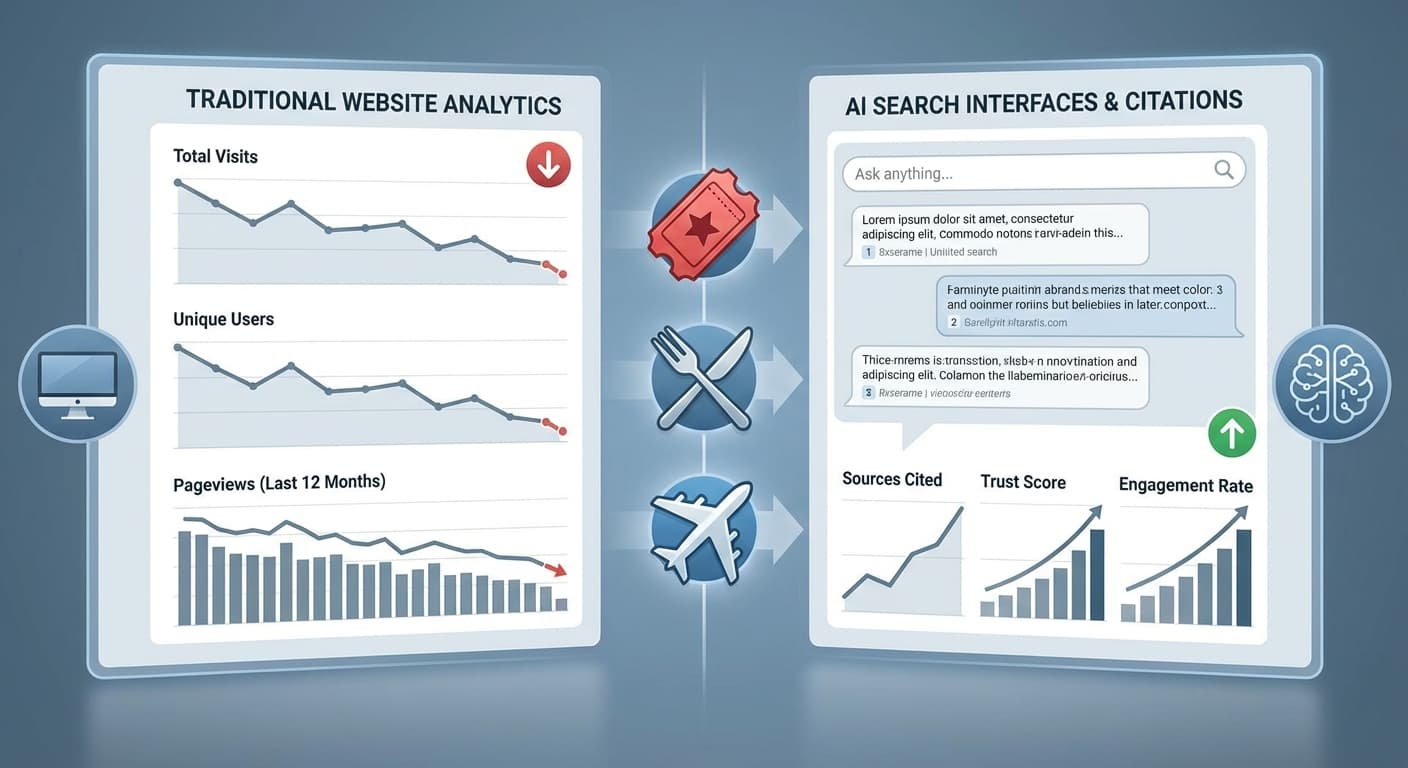
With over 500 million weekly ChatGPT users and AI search now capturing 35% of all online queries, we're witnessing a fundamental shift in how information gets discovered. Unlike traditional search engines that match keywords to content, AI engines interpret user intent and fan out single queries into multiple related topic clusters.
Consider a user asking: "Best practices for remote team productivity." An AI engine doesn't just look for those exact keywords. Instead, it fans out the query across interconnected topics:
Your traditional keyword strategy focused on "remote team productivity" misses 80% of the contextual connections AI engines make when answering this query.
Understanding AI Query Fan-Out
Query fan-out occurs when AI engines decompose a single question into multiple semantic dimensions, then reassemble information from various sources to provide comprehensive answers. This process creates what we call "multi-dimensional topic clusters" – interconnected webs of related concepts that extend far beyond your original keyword focus.
The Three Layers of AI Topic Clustering
Layer 1: Direct Semantic Matches
These are your traditional keywords and close synonyms. If someone searches for "content marketing," AI engines will prioritize content explicitly about content marketing.
Layer 2: Contextual Associations
AI engines understand that "content marketing" connects to lead generation, brand awareness, SEO, social media, email marketing, and customer journey mapping – even when these terms aren't explicitly mentioned in the query.
Layer 3: Intent-Based Connections
This is where it gets interesting. AI engines recognize that someone asking about content marketing might actually need information about team collaboration tools, budget allocation, or performance measurement – topics that seem unrelated but serve the user's underlying goals.
Why Traditional Keyword Research Falls Short
The problem with conventional keyword strategies in the AI search era isn't that they're wrong – it's that they're incomplete. Here's what's happening:
Keyword Tools Miss Conversational Context
Traditional tools like Ahrefs or SEMrush analyze search volume for specific terms, but they can't predict how AI engines will interpret conversational queries. When someone asks Claude "Help me improve my team's quarterly planning process," they might get answers that draw from content about:
None of these might contain your target keyword "quarterly planning," yet they're all relevant to the user's intent.
Static Keywords vs. Dynamic Intent
AI engines excel at understanding dynamic intent – the evolving, context-dependent needs behind user queries. A single user might ask about "increasing website traffic" in the morning and "team productivity tools" in the afternoon, but AI engines recognize these as potentially related queries if the user runs a marketing agency.
Your static keyword lists can't capture these dynamic, personalized connections.
The Multi-Dimensional Optimization Approach
To succeed in this new landscape, you need to think beyond keywords and start optimizing for topic ecosystems. Here's how:
1. Map Your Content's Conceptual Neighborhood
Instead of focusing solely on your primary keyword, identify the broader conceptual ecosystem your content inhabits. For each piece of content, ask:
For example, if you're writing about "email marketing automation," your conceptual neighborhood might include:
2. Create Content That Answers the Unasked Questions
AI engines reward content that anticipates and addresses related questions users haven't explicitly asked. When someone searches for "social media marketing tips," they often need information about:
By naturally incorporating these connected topics, your content becomes more valuable to both users and AI engines.
3. Use Semantic Signals, Not Just Keywords
AI engines understand meaning, not just word matching. Instead of stuffing keywords, focus on semantic signals:
Strong Semantic Signals:
Weak Semantic Signals:
For instance, rather than mentioning "content marketing" 15 times, create content that demonstrates content marketing principles through examples, case studies, and actionable frameworks.
4. Structure Content for AI Interpretability
AI engines favor content they can easily parse and understand. This means:
Tools like Citescope Ai's GEO Score analyze these structural elements, measuring how well AI engines can interpret and utilize your content across five key dimensions.
Advanced Strategies for Multi-Dimensional Optimization
Topic Bridging
Create content that serves as bridges between seemingly unrelated topics. For example, an article about "remote work productivity" could bridge to "cybersecurity best practices" by discussing secure collaboration tools – capturing queries from both audiences.
Intent Layering
Structure your content to serve multiple user intents simultaneously. A comprehensive guide might serve:
Contextual Depth
Instead of creating multiple thin pieces of content around related keywords, develop comprehensive resources that thoroughly explore entire topic ecosystems. AI engines increasingly favor authoritative, in-depth content over keyword-optimized but shallow articles.
How Citescope Ai Helps Navigate Multi-Dimensional Optimization
While the concept of multi-dimensional topic clusters might seem overwhelming, modern GEO tools are evolving to help content creators navigate this complexity. Citescope Ai's platform addresses these challenges through:
AI Interpretability Analysis: The GEO Score evaluates how well AI engines can understand and utilize your content, going beyond traditional keyword density to measure semantic richness and structural clarity.
One-Click Optimization: The AI Rewriter restructures existing content to better capture multi-dimensional topic clusters, identifying opportunities to strengthen semantic connections and improve conversational relevance.
Citation Tracking Across Engines: Monitor when your content gets cited by ChatGPT, Perplexity, Claude, and Gemini to understand which topic clusters are driving AI visibility.
Measuring Success in the Multi-Dimensional Era
Traditional metrics like keyword rankings become less relevant when AI engines synthesize information from multiple sources. Instead, focus on:
Citation Frequency
Track how often AI engines reference your content when answering related queries, even when your target keywords aren't explicitly mentioned.
Topic Coverage Breadth
Measure how many related topic clusters your content appears in, indicating strong semantic associations.
Intent Satisfaction
Analyze whether users find complete answers in AI responses that cite your content, suggesting comprehensive topic coverage.
Cross-Engine Visibility
Monitor citations across different AI platforms, as each may interpret topic relationships slightly differently.
The Future of Content Discovery
As AI search continues evolving, the gap between keyword-optimized and intent-optimized content will only widen. By 2027, experts predict that 60% of content discovery will happen through conversational AI interfaces that prioritize understanding over keyword matching.
Content creators who adapt to multi-dimensional optimization now will have a significant advantage as traditional SEO tactics become less effective. The key is shifting from "What keywords should I target?" to "What conceptual ecosystem does my audience navigate, and how can I provide value across that entire landscape?"
Ready to Optimize for AI Search?
Navigating multi-dimensional topic clusters and AI query fan-out doesn't have to be overwhelming. Citescope Ai provides the tools and insights you need to optimize content for the AI search era, with features designed specifically for generative engine optimization.
From analyzing your content's AI interpretability to tracking citations across multiple AI platforms, Citescope Ai helps you move beyond traditional keyword strategies and embrace the future of content discovery.
Ready to see how your content performs in AI search engines? Start your free trial today and discover how multi-dimensional optimization can transform your content's visibility in the AI-driven search landscape.