How to Optimize for Gemini's Zero Web Search Triggering on Recommendation Prompts When Your Listicle Traffic Just Disappeared

How to Optimize for Gemini's Zero Web Search Triggering on Recommendation Prompts When Your Listicle Traffic Just Disappeared
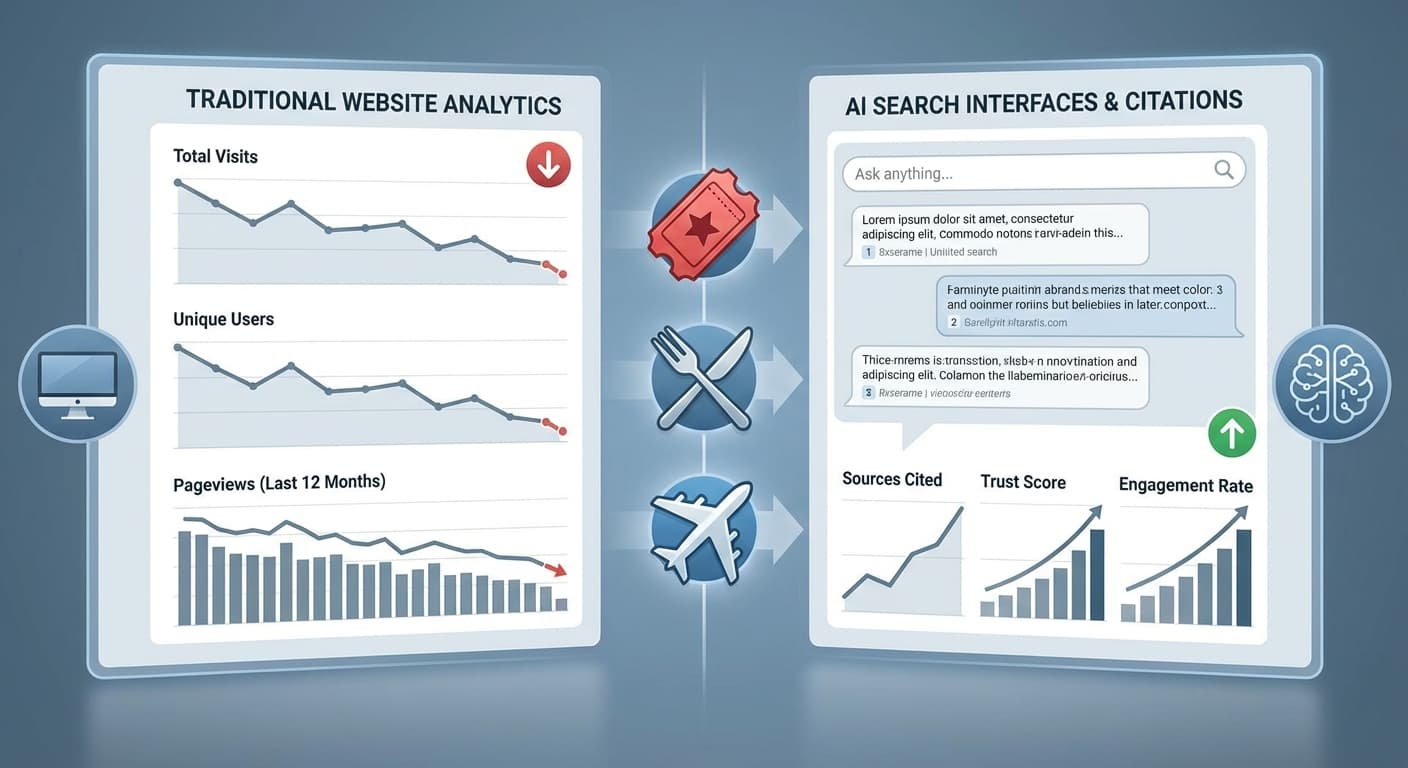
If you've noticed your listicle traffic plummeting by 40-60% since late 2025, you're not alone. Google's Gemini has fundamentally changed how AI handles recommendation queries, and many content creators are scrambling to understand why their "10 Best" and "Top 15" articles have vanished from AI search results.
The culprit? Gemini's new zero web search triggering system that activates when users ask for recommendations, lists, or comparisons. Instead of crawling the web for fresh listicles, Gemini now relies heavily on its training data and internal knowledge base, effectively cutting out most traditional list-based content from visibility.
Understanding Gemini's Zero Web Search Revolution
In 2026, AI search behavior has shifted dramatically. While ChatGPT processes over 2.5 billion queries monthly and Perplexity handles 800+ million searches, Gemini has taken a different approach with recommendation prompts. When users ask questions like:
Gemini increasingly bypasses web search entirely, drawing from its training data instead. This zero web search triggering means your carefully crafted listicles might never get the chance to compete.
Why Traditional Listicles Are Failing
The shift isn't just about technical changes—it's about user behavior evolution. Gen Z users, who now represent 45% of AI search queries, prefer conversational, contextual recommendations over generic "best of" lists. They want:
Traditional listicles often fail these criteria because they're:
The New Rules for AI-Visible Recommendation Content
1. Transform Lists into Contextual Frameworks
Instead of "10 Best Email Marketing Tools," create content like "How to Choose Email Marketing Software: A Decision Framework for 2026." This approach:
2. Embed Conversational Triggers
AI models respond better to content that anticipates follow-up questions. Structure your recommendations with:
Question-Answer Patterns:
Scenario-Based Recommendations:
3. Create Multi-Dimensional Value Propositions
Modern AI search engines analyze content across multiple dimensions. Your recommendation content needs to demonstrate:
Practical Optimization Strategies for 2026
Strategy 1: The Hybrid Approach
Combine traditional list structure with conversational depth:
markdown
Email Marketing Platforms: Finding Your Perfect Match
For Growing E-commerce Brands
Why this matters: E-commerce brands need advanced segmentation...
Top recommendation: Platform X because...
When to consider alternatives: If your average order value...
For B2B Service Companies
Why this matters: B2B cycles require nurture sequences...
Top recommendation: Platform Y because...
Budget considerations: Starting at $X/month...
Strategy 2: The Problem-Solution Matrix
Organize recommendations around specific problems rather than arbitrary rankings:
H2: Solving Email Deliverability Issues
H2: Maximizing Automation Without Losing Personalization
Strategy 3: Current Event Integration
Gemini heavily weights recent, relevant information. Always include:
For example: "With iOS 18's enhanced privacy controls launching in late 2025, email marketing platforms have adapted their tracking capabilities..."
Technical Implementation for AI Visibility
Schema Markup for Recommendations
Implement structured data that AI models can easily parse:
{
"@type": "ItemList",
"name": "Best Email Marketing Platforms 2026",
"itemListElement": [{
"@type": "ListItem",
"position": 1,
"item": {
"name": "Platform Name",
"description": "Detailed use case description",
"bestForUseCase": "E-commerce brands with high volume"
}
}]
}
Content Depth Optimization
Gemini's zero web search triggering often occurs when it believes it has sufficient information internally. Combat this by providing:
Semantic Enhancement Techniques
Use related terms and concepts naturally throughout your content:
Measuring Success in the New Landscape
Key Metrics for 2026
AI Citation Tracking:
Engagement Quality:
Search Performance:
How Citescope Ai Helps Navigate This Shift
While understanding these changes is crucial, implementing them at scale can be overwhelming. Citescope Ai's GEO Score analyzes your recommendation content across the five dimensions that matter most to AI models: AI Interpretability, Semantic Richness, Conversational Relevance, Structure, and Authority.
The platform's AI Rewriter can transform your existing listicles into AI-friendly recommendation frameworks with a single click, while the Citation Tracker shows you exactly when and how your optimized content gets referenced by Gemini, ChatGPT, Perplexity, and Claude.
For content creators managing dozens of recommendation articles, this visibility into AI citation patterns is invaluable for understanding what works and what needs improvement.
Advanced Tactics for Competitive Advantage
The Authority Stack Method
Build content authority through:
Cross-Format Optimization
Create recommendation content in multiple formats:
Community Validation
Leverage user-generated content:
Future-Proofing Your Recommendation Strategy
As AI search continues evolving, successful content creators are those who:
The disappearance of listicle traffic isn't the end—it's an opportunity to create more valuable, AI-optimized recommendation content that truly serves your audience's needs.
Ready to Optimize for AI Search?
Don't let your recommendation content get lost in the zero web search shuffle. Citescope Ai helps you understand exactly how AI models interpret your content and provides the tools to optimize for maximum visibility across ChatGPT, Perplexity, Claude, and Gemini.
Start with our free tier to analyze 3 pieces of content this month, or upgrade to Pro for unlimited optimizations and comprehensive citation tracking. Your audience is asking AI for recommendations—make sure your content is part of the conversation.