How to Optimize for Entity Clarity and Brand Canonicalization When AI Search Engines Ignore Your Business
How to Optimize for Entity Clarity and Brand Canonicalization When AI Search Engines Ignore Your Business
Did you know that 47% of businesses reported their competitors getting cited by AI search engines like ChatGPT and Perplexity more frequently than they do, despite offering similar or better products? The culprit isn't your content quality—it's entity confusion.
In 2026, AI search engines process over 2.4 billion queries monthly, and they're increasingly sophisticated at understanding entities—people, places, organizations, and concepts. But here's the problem: if your business entity isn't clearly defined across the web's structured data sources, AI engines will default to citing competitors with cleaner, more canonical entity definitions.
The Entity Recognition Crisis Facing Businesses in 2026
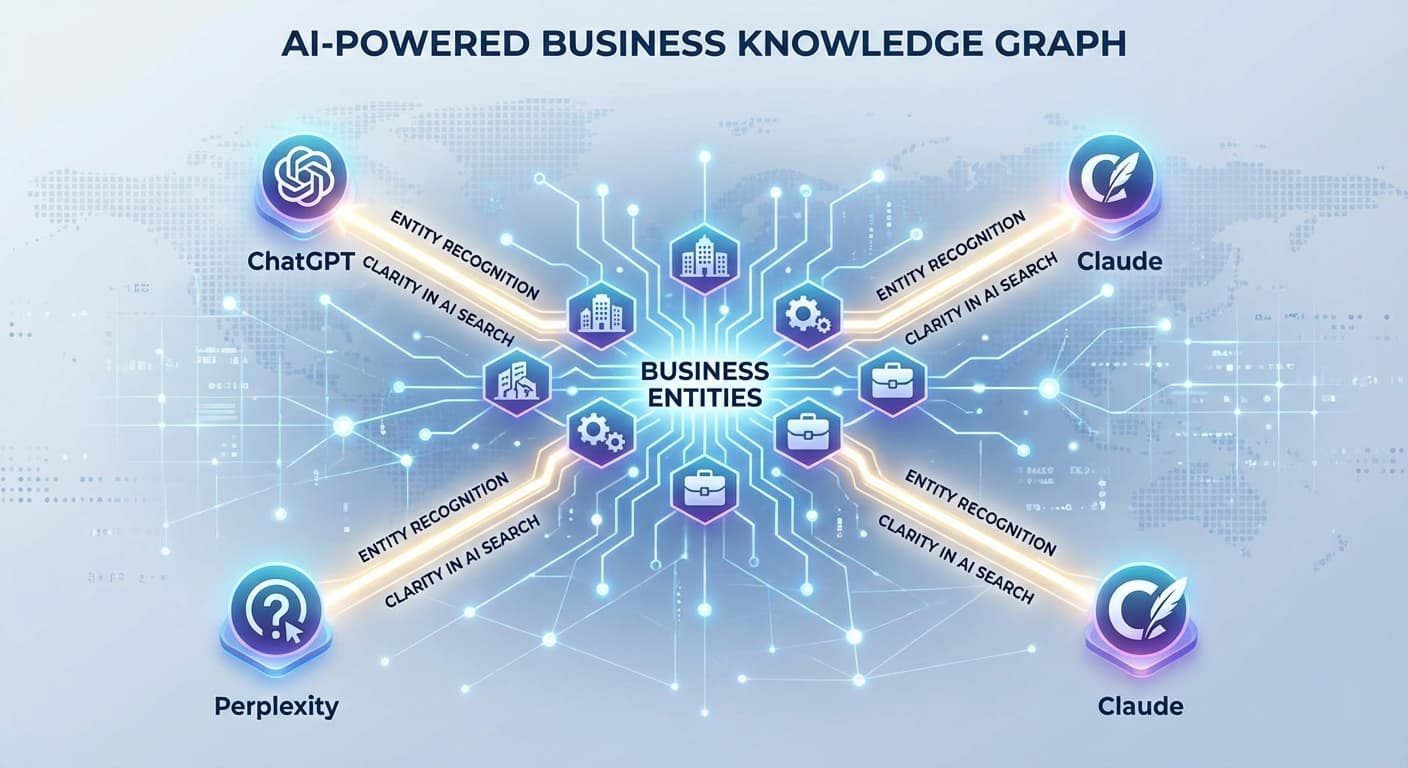
AI search engines like ChatGPT, Perplexity, Claude, and Gemini don't just read your website—they construct comprehensive entity graphs by connecting information across hundreds of data sources. When your business entity is poorly defined or conflicts with competitor information, AI engines make split-second decisions about which source to trust.
Consider this scenario: Two marketing agencies offer identical services. Agency A has consistent NAP (Name, Address, Phone) data across 50+ directories, structured JSON-LD markup, and clear Wikipedia mentions. Agency B has inconsistent business names across platforms, missing schema markup, and conflicting location data. When someone asks ChatGPT "Which marketing agencies specialize in B2B lead generation?", Agency A gets cited while Agency B remains invisible.
Understanding Entity Clarity in AI Search
What Makes an Entity "Clear" to AI?
Entity clarity refers to how consistently and comprehensively your business is defined across the web's data ecosystem. AI search engines evaluate entity clarity through several factors:
The Brand Canonicalization Challenge
Brand canonicalization is the process of establishing your business as the definitive, authoritative version of your entity. When multiple businesses have similar names or operate in the same space, AI engines must decide which is the "canonical" or primary entity to cite.
For example, if there are three "Digital Marketing Solutions" companies in different cities, the AI needs clear signals to distinguish between them and understand which one to recommend for specific queries.
8 Strategies to Optimize Entity Clarity and Beat Competitors
1. Audit Your Current Entity Footprint
Before optimizing, understand how AI engines currently perceive your business:
2. Standardize Your Business Information Everywhere
Create a master entity document with:
Then ensure this exact information appears across:
3. Implement Comprehensive Schema Markup
Schema markup is crucial for entity recognition. Implement these schema types:
4. Build Entity-Rich Content Hubs
Create dedicated pages that establish your expertise in specific areas:
5. Leverage Knowledge Graph Optimization
To compete with established players, you need presence in major knowledge sources:
6. Monitor and Respond to Entity Conflicts
Set up monitoring for:
When you find conflicts, take immediate action to correct them through proper channels.
7. Create Unique Entity Identifiers
Develop distinctive elements that help AI engines differentiate your business:
8. Build High-Authority Backlinks with Entity Context
Not all backlinks help with entity clarity. Focus on:
Measuring Entity Clarity Success
Track these metrics to measure improvement:
Common Entity Optimization Mistakes to Avoid
1. Inconsistent Business Names
Using different variations of your business name across platforms confuses AI engines. Stick to one official version.
2. Neglecting Long-Tail Entity Queries
Optimize for specific questions people ask about your industry, not just your brand name.
3. Ignoring Negative Entity Associations
Monitor what AI engines say about your business and address any negative or incorrect information promptly.
4. Over-Optimizing Schema Markup
Use schema markup appropriately—excessive or incorrect markup can hurt rather than help.
How Citescope Ai Helps with Entity Optimization
Optimizing for entity clarity requires understanding how AI search engines interpret your content. Citescope Ai's GEO Score analyzes your content across five dimensions, including AI Interpretability and Authority—two crucial factors for entity recognition.
The platform's Citation Tracker shows you exactly when and how ChatGPT, Perplexity, Claude, and Gemini mention your business, helping you identify entity optimization opportunities. Plus, the AI Rewriter can restructure your content to include better entity signals and schema-friendly formatting.
Advanced Entity Strategies for 2026
Semantic Entity Clustering
Group related content around your main business entity to create semantic authority. This helps AI engines understand the breadth of your expertise.
Multi-Modal Entity Optimization
Optimize images, videos, and other media with proper metadata that reinforces your entity identity.
Conversational Entity Responses
Structure content to directly answer questions AI engines are likely to ask about your business type.
Ready to Optimize for AI Search?
Entity clarity isn't just about technical SEO—it's about ensuring AI search engines understand and trust your business enough to cite you over competitors. With AI now powering 35% of all search queries and growing rapidly, businesses that master entity optimization will dominate their industries.
Citescope Ai makes entity optimization simple with tools that analyze how AI engines perceive your content and provide one-click optimizations for better visibility. Start your free trial today and see how your content performs across ChatGPT, Perplexity, Claude, and Gemini—then optimize it for maximum citations and business growth.


