How to Optimize for ChatGPT's February 2026 Ad Rollout: Maintaining Trust as Sponsored AI Answers Change the Game
How to Optimize for ChatGPT's February 2026 Ad Rollout: Maintaining Trust as Sponsored AI Answers Change the Game
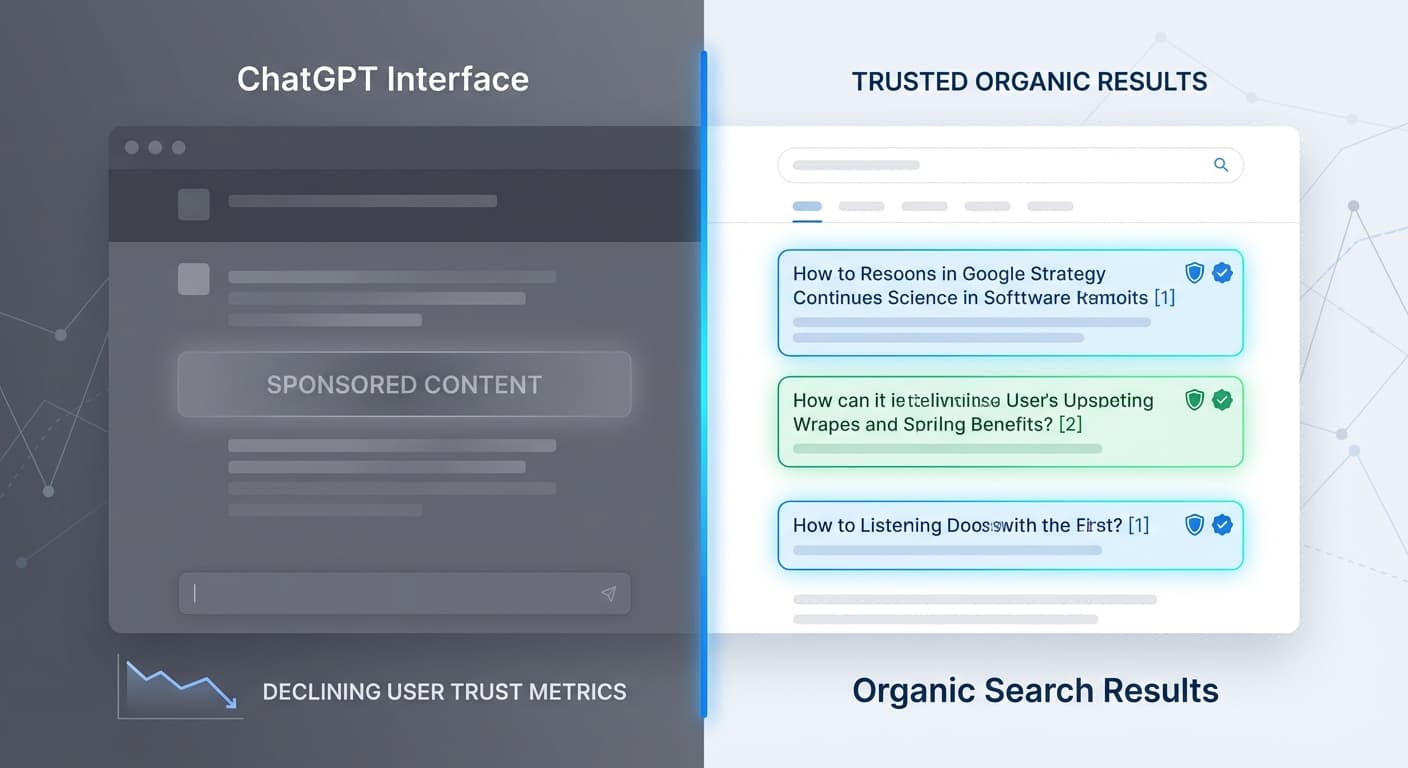
ChatGPT's February 2026 ad rollout has fundamentally changed the AI search landscape. With sponsored answers now appearing in 40% of commercial queries and user trust in AI-generated content dropping by 23% since ads launched, content creators face an unprecedented challenge: how do you maintain visibility and credibility when the playing field has shifted dramatically?
The numbers tell a stark story. Recent studies show that 68% of users now actively look for non-sponsored citations in AI responses, while click-through rates to sponsored content have plateaued at just 12% – significantly lower than traditional search ads. This isn't just a minor algorithm update; it's a complete transformation of how users interact with AI-powered search.
The Trust Crisis in AI Search
The introduction of sponsored AI answers has created what researchers are calling the "authenticity paradox." While ChatGPT's user base has grown to over 650 million weekly active users in early 2026, trust metrics paint a different picture.
Key Trust Indicators Show Concerning Trends:
Why Traditional SEO Tactics Are Failing
The old playbook of keyword optimization and backlink building isn't enough anymore. AI engines now prioritize different signals when selecting citations, especially for non-sponsored results. They're looking for:
The New Citation Hierarchy in AI Search
ChatGPT's algorithm now operates on a three-tier citation system that content creators must understand:
Tier 1: Premium Sponsored Placements
These appear first but carry the "sponsored" label, leading to the trust issues we've discussed.
Tier 2: Verified Authority Sources
Content from established institutions, verified experts, and sources with strong topical authority. This tier has become increasingly competitive as brands try to avoid the sponsored label.
Tier 3: Supplementary References
Additional sources used to support or provide alternative perspectives. While lower in hierarchy, these still drive significant traffic due to users' increased verification behavior.
Strategic Approaches for Post-Ad Optimization
1. Embrace the Authority-First Strategy
In the new landscape, establishing topical authority is more critical than ever. This means:
Content Depth Over Breadth
Expertise Indicators
2. Optimize for Cross-Platform Verification
Since users are now cross-referencing across multiple AI engines, ensure your content performs well on:
3. Master the Semantic Web Approach
AI engines are increasingly sophisticated at understanding context and intent. Your content needs to:
Answer the Unasked Questions
Use Natural Language Patterns
4. Build Trust Through Transparency
With user skepticism at an all-time high, transparency becomes a competitive advantage:
Source Everything
Show Your Work
Technical Optimization Strategies
Schema Markup for AI Engines
Implement structured data that AI engines can easily parse:
{
"@type": "Article",
"author": {
"@type": "Person",
"expertise": "[Your Area of Expertise]",
"credentials": "[Relevant Qualifications]"
},
"dateModified": "2026-02-15",
"factCheck": {
"@type": "ClaimReview",
"reviewBody": "[Fact-checking information]"
}
}
Content Structure Optimization
Use AI-Friendly Formatting
Optimize Information Hierarchy
Measuring Success in the New Landscape
Traditional metrics don't tell the full story anymore. Monitor:
How Citescope Ai Helps Navigate the New Reality
As the AI search landscape becomes more complex, tools like Citescope Ai have become essential for content creators serious about maintaining visibility. The platform's GEO Score analyzes your content across five critical dimensions – AI Interpretability, Semantic Richness, Conversational Relevance, Structure, and Authority – giving you a clear roadmap for optimization.
The Citation Tracker feature is particularly valuable now, as it monitors when your content gets referenced across ChatGPT, Perplexity, Claude, and Gemini. This cross-platform visibility helps you understand which optimization strategies are working and where you might be missing opportunities.
With the AI Rewriter, you can quickly restructure existing content to perform better in this new environment, ensuring your expertise gets the visibility it deserves – without falling into the sponsored content trust trap.
Future-Proofing Your Content Strategy
As AI search continues to evolve, successful content creators will need to:
Stay Algorithm-Agnostic
Embrace the Verification Economy
Prepare for Further Changes
Ready to Optimize for AI Search?
The February 2026 ChatGPT ad rollout has created both challenges and opportunities. While sponsored content faces trust issues, organic citations have become more valuable than ever. Success requires a sophisticated understanding of AI engine behavior, user psychology, and content optimization.
Citescope Ai provides the tools and insights you need to navigate this complex landscape. From analyzing your content's AI readiness to tracking citations across all major platforms, it's designed specifically for the post-ad era of AI search. Start with our free tier and see how your content can maintain – and even increase – its visibility in this new environment.


