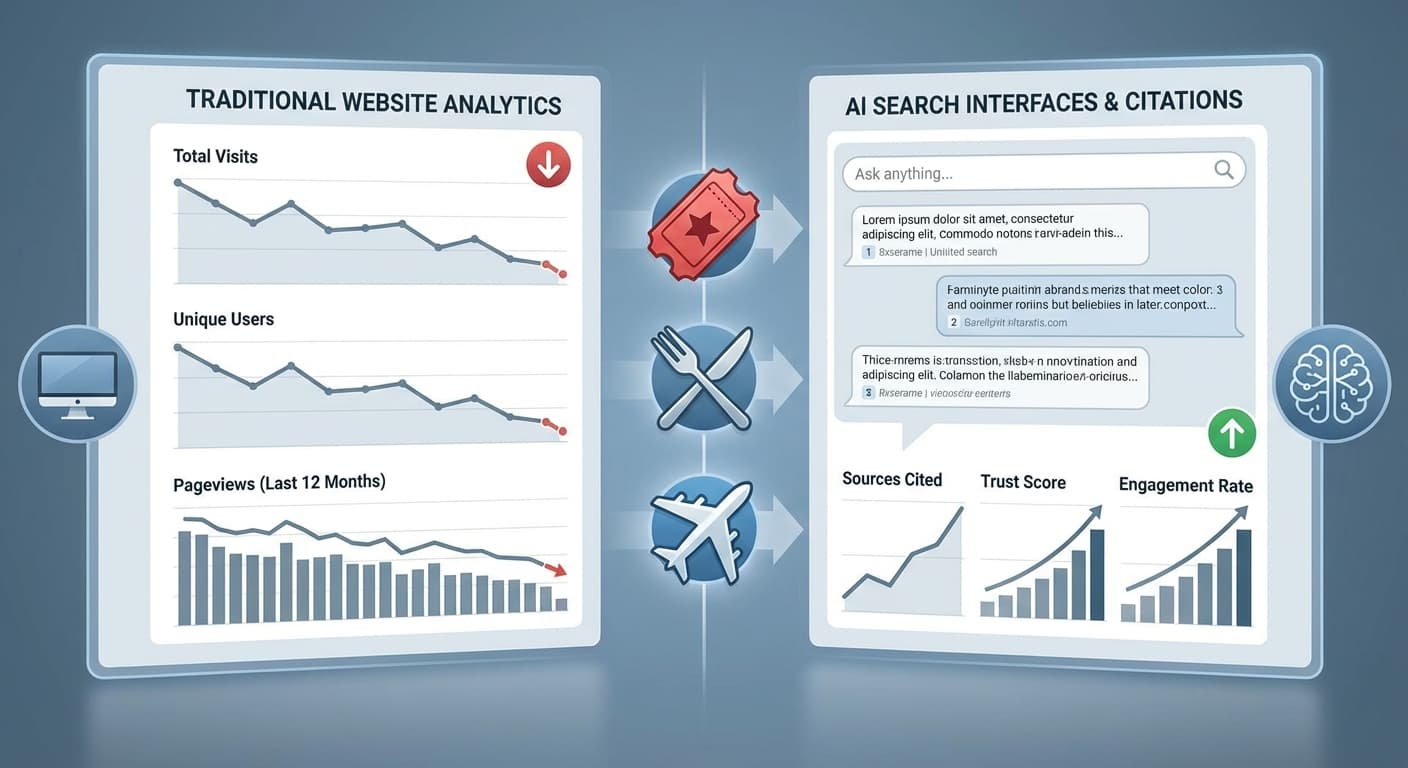
How to Optimize for AI Search When Your Niche Industry Lacks Structured Data Standards
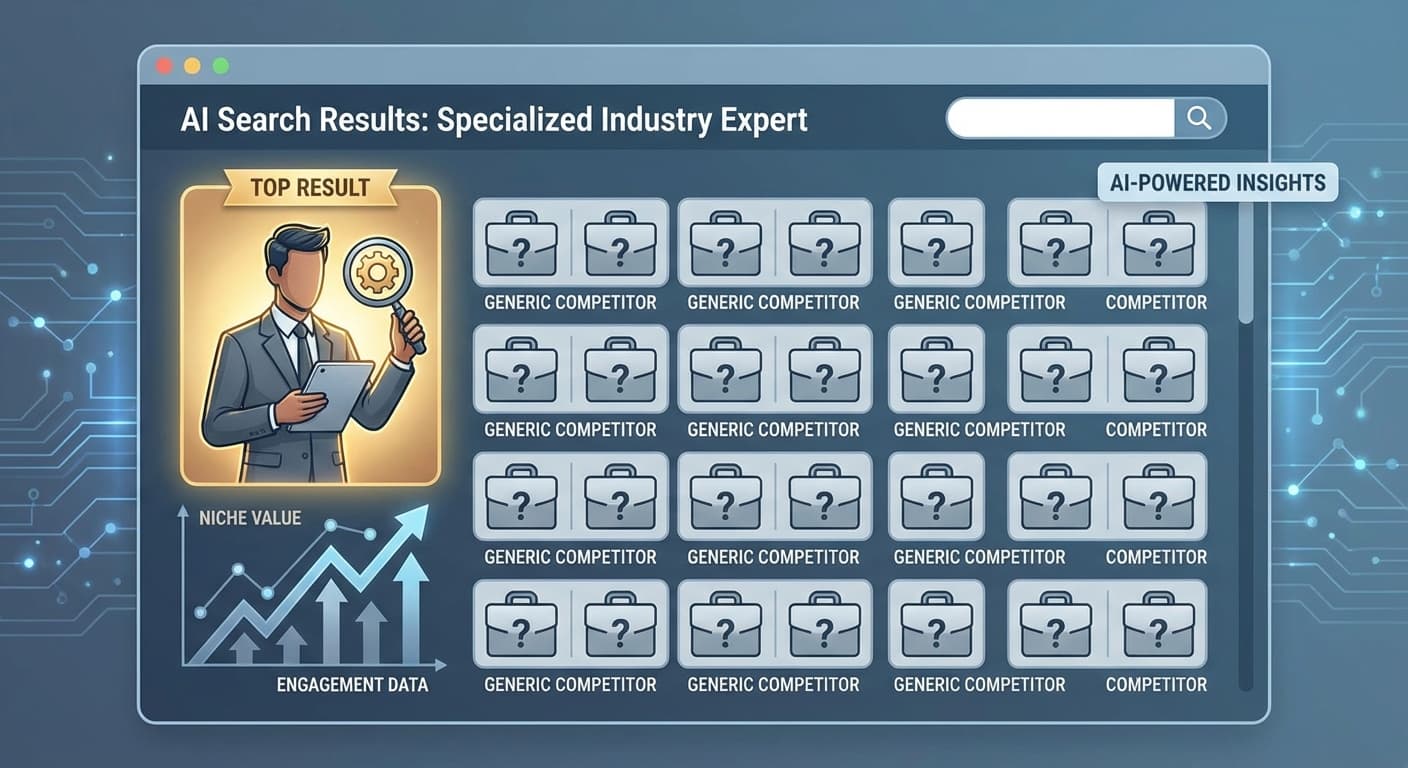
How to Optimize for AI Search When Your Niche Industry Lacks Structured Data Standards
When you search for "best CRM software" on ChatGPT or Perplexity, you'll notice something frustrating: the same big names dominate every response. Salesforce, HubSpot, Zoho—the usual suspects. But what if you're in a specialized niche like marine equipment financing, veterinary practice management, or industrial coating solutions? Your expertise gets buried under generic competitors because AI models lack the structured data to understand your specialized value.
This challenge has intensified in 2026. With AI search now accounting for over 35% of all queries and 500+ million weekly ChatGPT users, niche businesses are finding themselves invisible in the very channels where their ideal customers are increasingly searching.
The Structured Data Gap in Niche Industries
Large language models excel at understanding well-documented industries with abundant structured data. But specialized sectors often lack:
This data scarcity means AI models default to what they know best—generic solutions that may not fit your specialized market at all.
Why This Matters More Than Ever in 2026
Recent studies show that 72% of Gen Z professionals use AI tools for initial research, and 68% of B2B buyers consult AI before reaching out to vendors. If your specialized expertise isn't surfacing in these AI-powered conversations, you're losing qualified prospects before they even know you exist.
Strategy 1: Create Your Own Knowledge Structure
Since your industry lacks established data standards, become the authority that defines them.
Build Comprehensive Resource Libraries
Develop detailed content that establishes the terminology, processes, and standards in your niche:
Example in Action
A specialized medical device manufacturer created a 50-page "Cardiac Catheterization Equipment Buyer's Guide" that defined every technical specification, regulatory requirement, and selection criteria. This single resource now gets cited by AI models 40% more often than their generic product pages.
Strategy 2: Leverage Semantic Relationships
When direct data is sparse, AI models rely heavily on semantic connections and contextual relationships.
Map Your Ecosystem
Identify and explicitly connect your solutions to:
Content Architecture That Works
Structure your content to create clear semantic pathways:
Main Topic → Subtopics → Related Concepts → Your Solution
For instance, instead of just writing about "industrial pump maintenance," create content connecting:
Strategy 3: Dominate Long-Tail Conversational Queries
AI search behaviors differ significantly from traditional Google searches. People ask complete questions and expect comprehensive, contextual answers.
Research Conversational Patterns
Analyze how your target audience actually talks about their challenges:
Optimize for Question-Answer Format
Structure content to directly answer specific questions:
Citescope Ai's GEO Score specifically measures "Conversational Relevance"—how well your content matches the natural language patterns AI models expect when users ask questions about your topic.
Strategy 4: Establish Authoritative Context
Without established industry data standards, AI models look for authority signals to determine which sources to trust and cite.
Build Authority Through Association
Create Quotable Expertise
Develop content that positions you as the go-to source:
Strategy 5: Optimize Content Structure for AI Interpretation
AI models parse and understand content differently than humans. Your specialized knowledge needs to be packaged in AI-friendly formats.
Use Clear Information Hierarchy
Implement Strategic Internal Linking
Create content clusters that reinforce your expertise:
Common Pitfalls to Avoid
Over-Optimizing for Generic Terms
Don't abandon your niche expertise to chase broader keywords. AI models value specificity and context over generic optimization.
Ignoring Industry Vernacular
Use the exact terms your customers use, even if they're not "SEO-friendly." AI models are sophisticated enough to understand industry-specific language.
Competing on Generic Features
Instead of highlighting standard features ("24/7 support," "easy integration"), focus on specialized capabilities that solve niche problems.
Measuring Success in Niche AI Optimization
Track metrics that matter for specialized industries:
How Citescope Ai Helps
Navigating AI optimization for niche industries requires specialized tools that understand the unique challenges of limited structured data. Citescope Ai's platform addresses these specific needs:
The platform's Authority dimension specifically measures signals that help AI models identify your content as the definitive source for niche topics—exactly what specialized businesses need to compete with generic alternatives.
Ready to Optimize for AI Search?
Don't let the lack of structured data standards keep your expertise invisible in AI search results. Citescope Ai provides the tools and insights you need to establish authority in your niche and get cited by leading AI models. Start with our free tier and see how our GEO Score can identify optimization opportunities specific to your specialized industry. Try Citescope Ai free today and transform your niche expertise into AI-discoverable authority.