GEO Strategy

How to Optimize for AI Search When Personalization Creates Different Results for Every User
March 28, 20266 min read
How to Optimize for AI Search When Personalization Creates Different Results for Every User

How to Optimize for AI Search When Personalization Creates Different Results for Every User

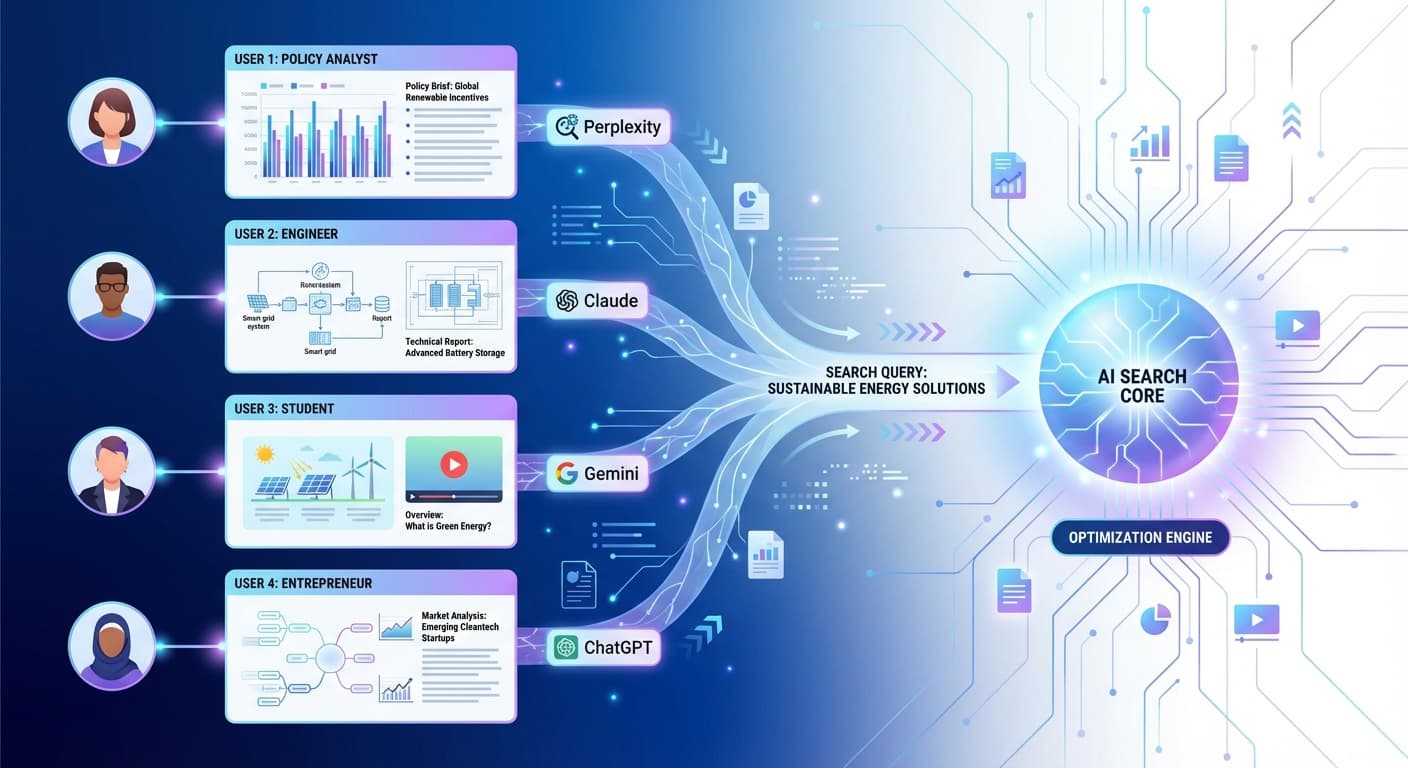
AI search engines now serve over 30% of all queries globally, but here's the challenge keeping marketers awake at night: no two users see the same results anymore. While traditional SEO relied on universal rankings and predictable A/B testing, AI search engines like ChatGPT, Perplexity, Claude, and Gemini create hyper-personalized responses that make conventional optimization strategies obsolete.

The Personalization Problem That's Breaking Traditional SEO

In 2025-2026, AI search personalization has reached unprecedented sophistication. These systems now consider:

  • Conversation history and context: Previous queries shape every subsequent response

  • User expertise level: The same question gets vastly different answers for beginners vs. experts

  • Geographic and cultural context: Location, language preferences, and cultural nuances influence results

  • Real-time behavioral signals: Time of day, device type, and browsing patterns affect content selection

  • Semantic user profiling: AI engines build detailed understanding of individual information needs
  • This means your content might be the top citation for one user while being completely invisible to another asking the identical question. Traditional A/B testing frameworks that rely on consistent baseline conditions simply can't function in this environment.

    Why Standard A/B Testing Fails in AI Search

    Conventional A/B testing assumes two fundamental conditions that no longer exist:

    1. Consistent Search Results


    Traditional SEO testing compared how different content versions performed against the same search results. But when AI engines personalize every response, there's no "same" baseline to test against.

    2. Measurable Traffic Patterns


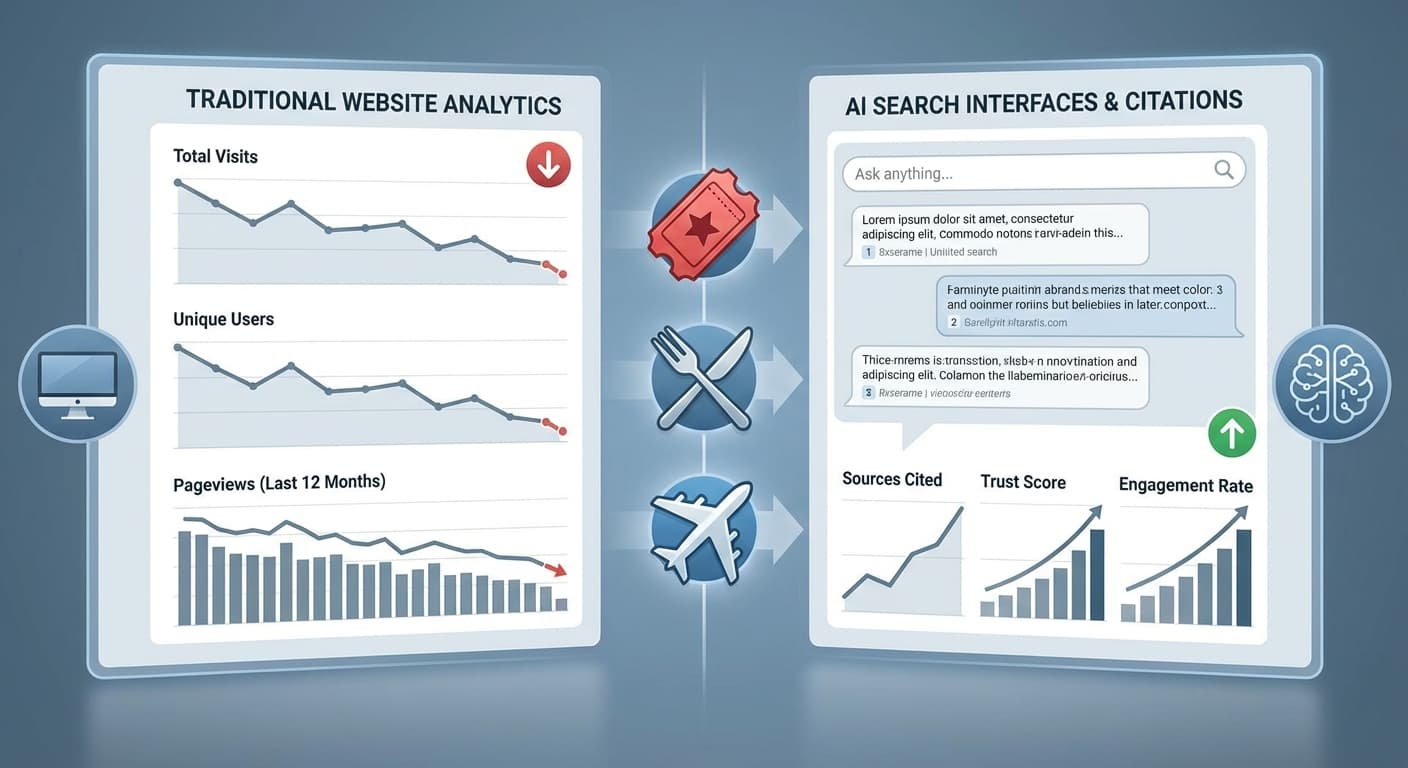
    A/B testing relied on analyzing traffic, click-through rates, and conversion data. AI search citations don't generate traditional traffic patterns—users get answers directly without clicking through.

    3. Controllable Variables


    Classic testing isolated specific variables (headlines, meta descriptions, content structure). AI personalization introduces dozens of uncontrollable variables that influence every result.

    The New Framework: Probabilistic Optimization for AI Search

    Instead of seeking universal optimization, successful content creators in 2026 are adopting probabilistic optimization strategies that maximize citation probability across diverse user contexts.

    1. Multi-Dimensional Content Architecture

    Create content that serves multiple expertise levels and contexts simultaneously:

  • Layered explanations: Start with basic concepts, then dive deeper

  • Multiple entry points: Include various ways to understand the same information

  • Context-agnostic examples: Use examples that resonate across different backgrounds

  • Progressive disclosure: Structure information so AI can extract relevant portions for different users
  • 2. Semantic Diversity Optimization

    Rather than targeting single keywords, optimize for semantic diversity:

  • Synonym clusters: Include natural variations of key terms

  • Related concept mapping: Cover adjacent topics that AI engines associate

  • Question format variations: Address the same topic through different question structures

  • Cross-domain connections: Link your expertise to multiple industry applications
  • 3. Authority Signal Amplification

    Since personalization algorithms heavily weight authority signals, focus on:

  • Comprehensive coverage: Become the definitive source on specific topics

  • Cross-platform consistency: Maintain consistent expertise signals across channels

  • Citation network building: Create content that naturally gets referenced by other authoritative sources

  • Temporal authority: Regularly update content to maintain freshness signals
  • Measurement Strategies That Actually Work

    Since traditional metrics fail, adopt these AI search-specific measurement approaches:

    1. Citation Pattern Analysis


    Track citation patterns across different AI engines and user contexts:

  • Cross-platform citation tracking: Monitor mentions across ChatGPT, Perplexity, Claude, and Gemini

  • Contextual citation analysis: Understand which content gets cited for different query types

  • Temporal citation patterns: Identify when your content gets referenced most frequently
  • 2. Semantic Coverage Mapping


    Measure how comprehensively you cover semantic territories:

  • Topic cluster penetration: Track citation rates across related topic areas

  • Query variation coverage: Analyze how many different ways your content gets discovered

  • Expertise level distribution: Monitor citations across beginner, intermediate, and expert contexts
  • 3. Competitive Context Analysis


    Understand your citation performance relative to alternatives:

  • Citation share tracking: Monitor your percentage of total citations in your topic area

  • Co-citation analysis: Track which sources get cited alongside yours

  • Authority progression: Measure how your citation authority evolves over time
  • Practical Implementation Strategies

    Content Structure for Maximum AI Visibility

    1. The Pyramid Approach

  • Lead with core insights that work for any user level

  • Layer detailed explanations beneath

  • Include practical applications at multiple complexity levels
  • 2. Multi-Format Optimization

  • Create definitive long-form content as your authority anchor

  • Break down concepts into digestible sections

  • Include visual elements that AI can describe and reference
  • 3. Context-Rich Metadata

  • Use descriptive headings that AI engines can easily parse

  • Include explicit expertise indicators ("beginner guide," "advanced strategies")

  • Add temporal context ("updated for 2026 trends")
  • Testing in the Age of Personalization

    Portfolio Testing Approach
    Instead of A/B testing individual pieces, test content portfolios:

  • Create multiple content pieces targeting the same topic from different angles

  • Monitor which pieces get cited in different contexts

  • Identify patterns in what works across user segments
  • Temporal Analysis
    Since you can't control user variables, control time variables:

  • Track citation patterns over extended periods

  • Analyze seasonal and cyclical trends in AI citations

  • Monitor how algorithm updates affect citation patterns
  • How Citescope Ai Helps Navigate AI Personalization

    While personalization makes optimization complex, the right tools can help you succeed. Citescope Ai's comprehensive platform addresses these challenges through:

  • GEO Score Analysis: Evaluates your content across five critical dimensions that AI engines use for personalized ranking

  • Multi-Engine Citation Tracking: Monitors how your content performs across ChatGPT, Perplexity, Claude, and Gemini's different personalization algorithms

  • AI Rewriter Tool: Optimizes content structure to maximize citation probability across diverse user contexts

  • Semantic Optimization: Helps identify content gaps and opportunities for broader semantic coverage
  • Future-Proofing Your AI Search Strategy

    As AI personalization becomes even more sophisticated, focus on these enduring principles:

    1. Comprehensive Authority Building


    Become the definitive source in your niche by:
  • Covering topics exhaustively from multiple angles

  • Maintaining content freshness and accuracy

  • Building cross-platform authority signals
  • 2. Adaptive Content Creation


    Develop content that naturally adapts to different contexts:
  • Use modular content structures AI engines can easily parse

  • Include multiple explanation frameworks for the same concepts

  • Create content that answers questions at various specificity levels
  • 3. Continuous Optimization


    Since AI algorithms constantly evolve, maintain an optimization mindset:
  • Regularly audit and update existing content

  • Monitor citation patterns and adjust strategies accordingly

  • Stay informed about AI search engine updates and changes
  • Ready to Optimize for AI Search?

    Personalized AI search doesn't have to break your optimization strategy—it just requires new approaches and better tools. Citescope Ai provides the comprehensive platform you need to track, optimize, and succeed in the age of AI personalization.

    Start with our free tier to analyze your content's GEO Score and see how it performs across different AI engines. With three free optimizations per month, you can begin implementing these strategies immediately and measure their impact on your AI search citations.

    Start your free Citescope Ai account today and turn AI personalization from a challenge into your competitive advantage.

    AI Search OptimizationPersonalized SearchA/B TestingContent StrategySEO Evolution

    Track your AI visibility

    See how your content appears across ChatGPT, Perplexity, Claude, and more.

    Start for Free