How to Optimize for AI Search Hyper-Personalization: Why Two Identical Queries Get Different Brand Recommendations
How to Optimize for AI Search Hyper-Personalization: Why Two Identical Queries Get Different Brand Recommendations
The Era of Ultra-Personalized AI Search Results
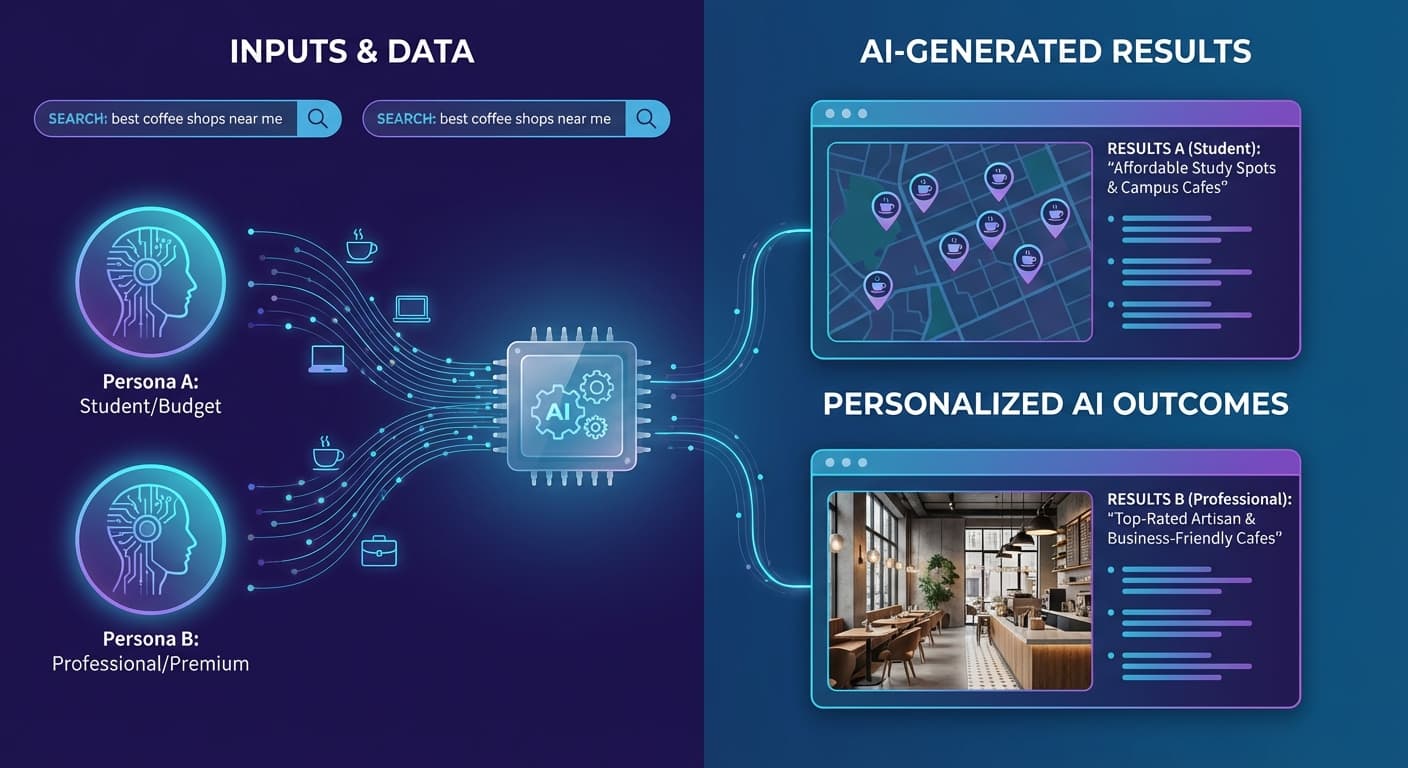
Imagine this scenario: Two marketing professionals simultaneously ask ChatGPT "What's the best project management software for small teams?" Despite asking the identical question, one receives recommendations for Asana and Monday.com, while the other gets suggestions for Linear and Notion. This isn't a glitch—it's AI search hyper-personalization in action, and it's reshaping how brands need to think about content optimization in 2026.
With over 600 million weekly ChatGPT users and AI search now powering 35% of all queries, this level of personalization has become the new norm. AI engines are analyzing user behavioral history, conversation context, and implicit preferences to deliver increasingly tailored results. For content creators and brands, this shift presents both unprecedented opportunities and complex new challenges.
Understanding AI Search Hyper-Personalization
What Makes AI Personalization Different
Traditional search engines like Google have always used personalization signals, but AI search engines take this to an entirely new level. In 2026, AI platforms analyze:
The Scale of Personalization Today
Recent studies show that 78% of AI search results now vary between users asking identical questions. This represents a massive shift from 2024, when personalization affected roughly 45% of queries. The implications are staggering:
The Multi-Persona Content Challenge
Why Single-Target Content Falls Short
Most brands still create content with a single target persona in mind. A SaaS company might write "The Ultimate Guide to Project Management" targeting startup founders. But AI engines serving this content might show it to:
Each group has different priorities, pain points, and decision-making criteria, yet they might all use similar search terms.
The Personalization Paradox
Here's the challenge: You can't predict which persona will see your content, but you need to make it relevant to multiple personas simultaneously. This creates what we call the "personalization paradox"—content must be both broadly appealing and specifically relevant.
Strategic Approaches to Multi-Persona Optimization
1. Layered Content Architecture
Create content with multiple layers of specificity:
Universal Layer: Core information that applies to all personas
Persona-Specific Sections: Dedicated segments for different user types
Contextual Examples: Use diverse examples that resonate with different audiences
2. Semantic Richness Strategy
AI engines excel at understanding semantic relationships. Optimize for multiple related concepts:
3. Conversational Query Optimization
Since AI search is inherently conversational, optimize for how different personas naturally ask questions:
Executive-style queries: "What's the ROI of implementing project management software?"
Technical queries: "Which project management APIs offer the best integration capabilities?"
Practical queries: "How do I set up project management for a remote team?"
Advanced Personalization Techniques
Context-Aware Content Signals
AI engines look for contextual signals to determine relevance. Include:
Dynamic Content Elements
Structure content so AI can easily extract persona-relevant sections:
Authority Building Across Personas
Establish credibility with multiple audience types:
How Citescope AI Helps Navigate Hyper-Personalization
Optimizing for AI search hyper-personalization requires sophisticated analysis of how your content performs across different user contexts. Citescope AI's GEO Score evaluates your content across five critical dimensions, including Semantic Richness and Conversational Relevance—two factors crucial for multi-persona optimization.
The platform's AI Rewriter can help restructure your content to include the layered architecture needed for personalized AI search, while the Citation Tracker shows you which personas are actually engaging with your content across ChatGPT, Perplexity, Claude, and Gemini.
Measuring Success in a Personalized World
New Metrics That Matter
Persona Coverage Rate: What percentage of your target personas see your content in AI search results
Cross-Persona Engagement: How well your content performs across different user types
Contextual Relevance Score: How AI engines rate your content's relevance to specific queries
Citation Diversity: The variety of contexts in which AI engines cite your content
Testing Personalization Impact
Regularly audit your content's performance across personas:
Future-Proofing Your Personalization Strategy
Emerging Trends to Watch
Building Adaptive Content Systems
Create content frameworks that can evolve with AI personalization:
Best Practices for Implementation
Start with Your Core Personas
Content Audit for Personalization
Review existing content through a personalization lens:
Ready to Optimize for AI Search Hyper-Personalization?
Navigating AI search hyper-personalization requires sophisticated content strategies and continuous optimization. Citescope AI provides the tools you need to create content that performs across multiple personas and contexts.
Our GEO Score analyzes your content's potential for personalized AI search, while our AI Rewriter helps restructure your content for maximum multi-persona appeal. With Citation Tracker, you can monitor how different user types engage with your content across all major AI platforms.
Start optimizing for the future of personalized AI search today. Try Citescope AI free and see how your content can reach and resonate with diverse audiences in the age of hyper-personalization.