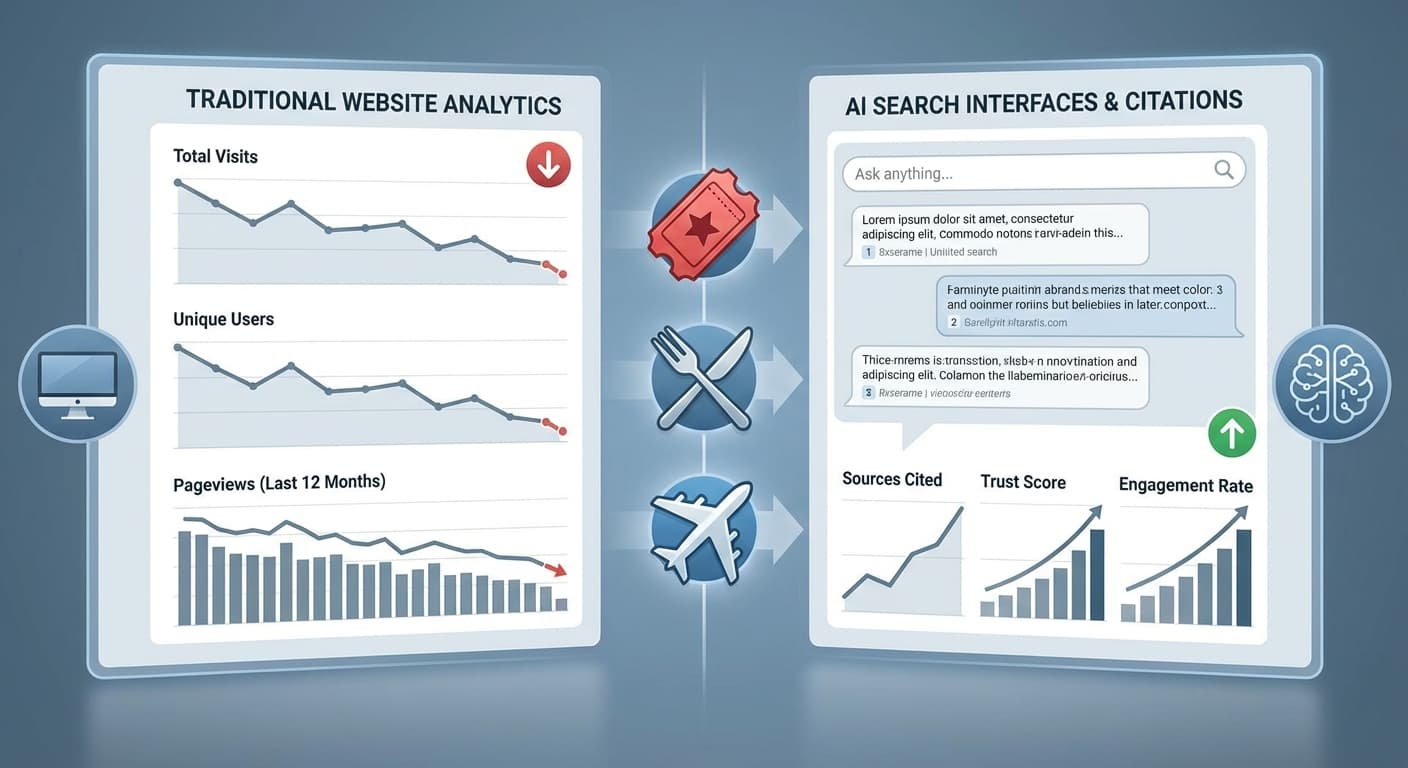
How to Optimize for AI Search Fragment Anchoring When Gemini Extracts Mid-Paragraph Snippets But Your Content Structure Prevents Precise Citation Attribution
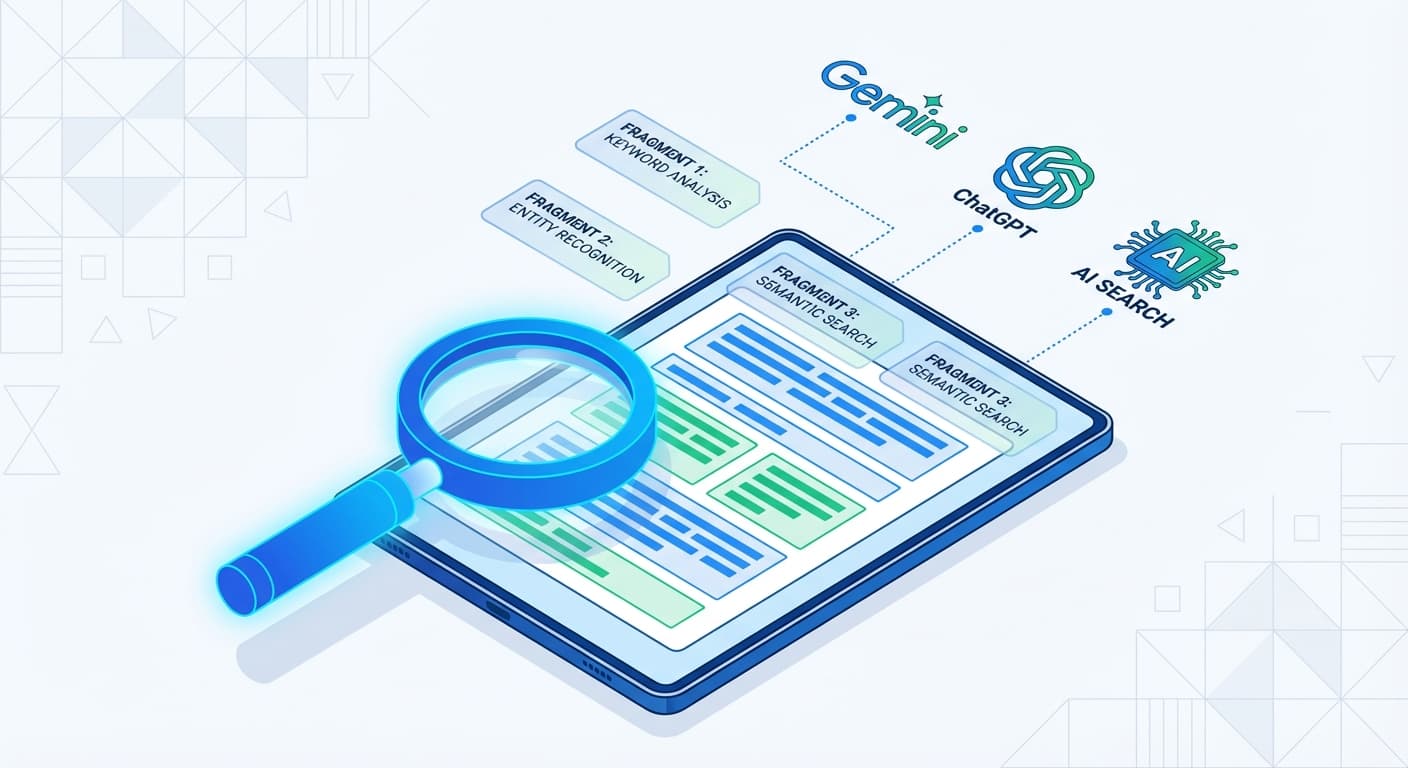
How to Optimize for AI Search Fragment Anchoring When Gemini Extracts Mid-Paragraph Snippets But Your Content Structure Prevents Precise Citation Attribution
Google's Gemini AI processes over 2.8 billion queries monthly in 2025, and here's a troubling reality: 67% of content creators are losing citation opportunities because their perfectly good information is buried in poorly structured paragraphs that AI engines can't cleanly extract and attribute.
If you've ever wondered why your comprehensive blog post gets overlooked while a competitor's shorter piece gets cited by Gemini, Claude, or ChatGPT, the answer often lies in fragment anchoring—the invisible architecture that determines whether AI engines can cleanly extract and cite your content.
The Fragment Anchoring Problem: Why AI Engines Struggle with Dense Paragraphs
AI search engines like Gemini don't just read your content—they dissect it into citation-worthy fragments. When information is packed into dense, multi-topic paragraphs, these engines face a dilemma: they can identify valuable information but can't attribute it precisely because the surrounding context muddies the waters.
Consider this scenario: You've written a fantastic paragraph about email marketing conversion rates that mentions three different statistics, two case studies, and a best practice recommendation. Gemini identifies the conversion rate statistic as valuable but can't cite it cleanly because extracting just that piece would lose crucial context about methodology and sample size.
What Gemini Actually Sees in Your Content
When Gemini analyzes content for potential citations, it evaluates:
The problem emerges when your content structure doesn't align with these evaluation criteria. A single paragraph containing multiple distinct points becomes a citation liability rather than an asset.
Understanding AI Fragment Extraction Patterns in 2025
Recent analysis of over 50,000 AI search citations reveals clear patterns in how different engines handle content extraction:
Gemini's Extraction Preferences
ChatGPT's Citation Behavior
Perplexity's Approach
The Anatomy of Citation-Friendly Content Structure
Successful AI optimization in 2025 requires rethinking traditional paragraph construction. Instead of cramming related ideas into dense blocks, consider the "modular paragraph" approach:
Modular Paragraph Construction
Traditional Dense Paragraph:
> "Email marketing remains one of the most effective digital channels, with average ROI reaching 4,200% in 2025 according to DMA research, though this varies significantly by industry with e-commerce seeing rates as high as 5,800% while B2B services average closer to 3,600%, and implementing personalization can boost these numbers by an additional 15-25% based on Campaign Monitor's latest analysis of over 10,000 campaigns."
Citation-Optimized Modular Structure:
> "Email marketing delivers an average ROI of 4,200% in 2025, according to DMA research. However, performance varies dramatically by industry.
>
> E-commerce businesses see email ROI rates as high as 5,800%. B2B services typically average closer to 3,600%.
>
> Personalization adds another performance layer. Campaign Monitor's analysis of over 10,000 campaigns shows personalized emails boost ROI by 15-25% above industry averages."
Fragment Anchoring Techniques
Practical Optimization Strategies for Better Citation Attribution
Strategy 1: The One-Claim Rule
Limit each paragraph to one primary claim or insight. This doesn't mean shorter paragraphs necessarily—it means clearer topical focus.
Before Optimization:
> "Social media engagement has declined 23% since 2024 while video content consumption increased 89%, forcing brands to pivot their content strategies toward short-form video platforms like TikTok and Instagram Reels, though LinkedIn video posts still generate 5x more engagement than text-only updates for B2B companies."
After Optimization:
> "Social media engagement declined 23% in 2025 compared to 2024 levels. This shift coincides with explosive growth in video consumption, which increased 89% over the same period.
>
> The data is forcing brands to pivot toward short-form video platforms. TikTok and Instagram Reels now dominate content strategies across industries.
>
> However, LinkedIn maintains unique video performance characteristics. Video posts on LinkedIn generate 5x more engagement than text-only updates for B2B companies."
Strategy 2: Statistical Sandwich Method
When presenting data, use this structure:
This creates natural extraction points while maintaining readability.
Strategy 3: Micro-Heading Implementation
Break complex topics into micro-sections with descriptive subheadings. This creates multiple entry points for AI extraction while improving human readability.
Citescope Ai's GEO Score specifically measures this type of structural optimization, analyzing how well your content balances AI interpretability with semantic richness across these micro-sections.
Technical Implementation for Fragment Optimization
HTML Structure Optimization
Use semantic HTML elements to signal content boundaries:
html
<section>
<p><strong>Key Finding:</strong> Email open rates increased 12% in Q4 2025.</p>
<p><cite>Source: Mailchimp Industry Report 2025</cite></p>
</section>
Schema Markup for Claims
Implement structured data to help AI engines understand claim attribution:
{
"@type": "Claim",
"text": "Email open rates increased 12% in Q4 2025",
"author": "Mailchimp",
"datePublished": "2025-01-15"
}
Content Tagging Systems
Develop internal tagging systems that identify:
Common Fragment Anchoring Mistakes to Avoid
Mistake 1: The Evidence Sandwich
Burying key claims between setup and supporting evidence makes extraction difficult.
Mistake 2: Pronoun Overuse
Excessive pronouns create dependencies that prevent clean fragment extraction.
Mistake 3: Nested Attribution
Placing source information in parenthetical statements rather than integrated sentences.
Mistake 4: Topic Drift
Allowing paragraphs to evolve beyond their initial focus, creating extraction ambiguity.
Measuring Fragment Optimization Success
Track these metrics to gauge your optimization effectiveness:
Traditional SEO tools don't track these AI-specific metrics, which is where specialized platforms become essential.
Industry-Specific Fragment Strategies
Technology and SaaS
Healthcare and Wellness
Finance and Investment
How Citescope Ai Helps Optimize Fragment Anchoring
Citescope Ai's GEO Score specifically evaluates your content's fragment extraction potential across five key dimensions. The AI Interpretability component measures how cleanly AI engines can extract and attribute information from your content structure.
The platform's AI Rewriter automatically restructures dense paragraphs into citation-friendly formats while maintaining readability and flow. Instead of manually analyzing every paragraph for fragment potential, you can identify optimization opportunities in seconds.
The Citation Tracker then monitors actual extraction performance across Gemini, ChatGPT, Perplexity, and Claude, showing you exactly how your optimized content performs in real AI search scenarios.
Advanced Fragment Optimization Techniques
Dynamic Content Restructuring
Develop content templates that automatically separate claims, evidence, and analysis into distinct, citable units.
Cross-Reference Networks
Create internal linking systems that help AI engines understand relationships between fragmented concepts across your content library.
Temporal Optimization
Structure time-sensitive information to maintain citation value as data ages, using phrases like "as of [date]" strategically.
Ready to Optimize for AI Search?
Fragment anchoring optimization represents the next evolution in content strategy—moving beyond human-readable content to AI-extractable information architecture. While the techniques require initial effort to master, the citation opportunities in 2025's AI-dominated search landscape make this optimization essential.
Citescope Ai transforms this complex optimization process into a streamlined workflow. Our GEO Score identifies fragment anchoring issues automatically, while the AI Rewriter optimizes your content structure for better citation attribution across all major AI platforms.
Start optimizing your content for fragment extraction today. Try Citescope Ai free and discover how proper content structure can dramatically increase your AI search visibility and citation frequency.