How to Optimize for AI Query Fan-Out Sub-Intent Mapping When Your Content Answers the Main Question But Misses the 8 Related Micro-Queries That AI Search Engines Actually Present to Users
How to Optimize for AI Query Fan-Out Sub-Intent Mapping When Your Content Answers the Main Question But Misses the 8 Related Micro-Queries That AI Search Engines Actually Present to Users
Your perfectly optimized article ranks #1 on Google for "best project management software." But when someone asks ChatGPT or Perplexity the same question, your content is nowhere to be found. Why? Because AI search engines don't just answer the main query—they anticipate and address 8-12 related micro-queries that users are likely to ask next.
Welcome to the world of AI query fan-out sub-intent mapping, where success isn't just about answering one question perfectly, but about addressing the entire constellation of related queries that AI engines surface to create comprehensive, conversational responses.
The Hidden Problem: AI's Query Fan-Out Effect
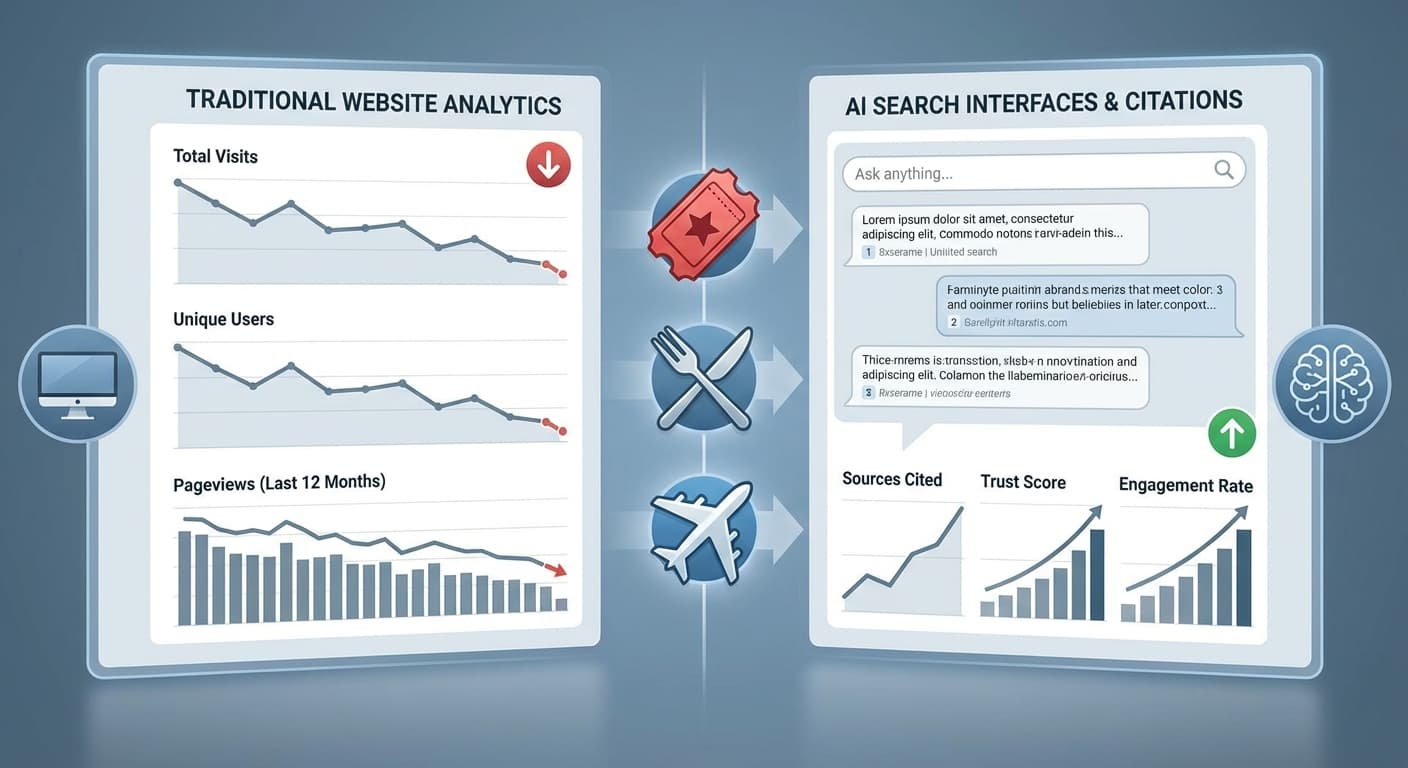
In 2026, with AI search now accounting for over 35% of all queries and ChatGPT alone serving 600+ million weekly users, the rules of content optimization have fundamentally changed. Traditional SEO focused on keyword density and backlinks. AI search optimization requires understanding how AI engines map query intent into sub-questions.
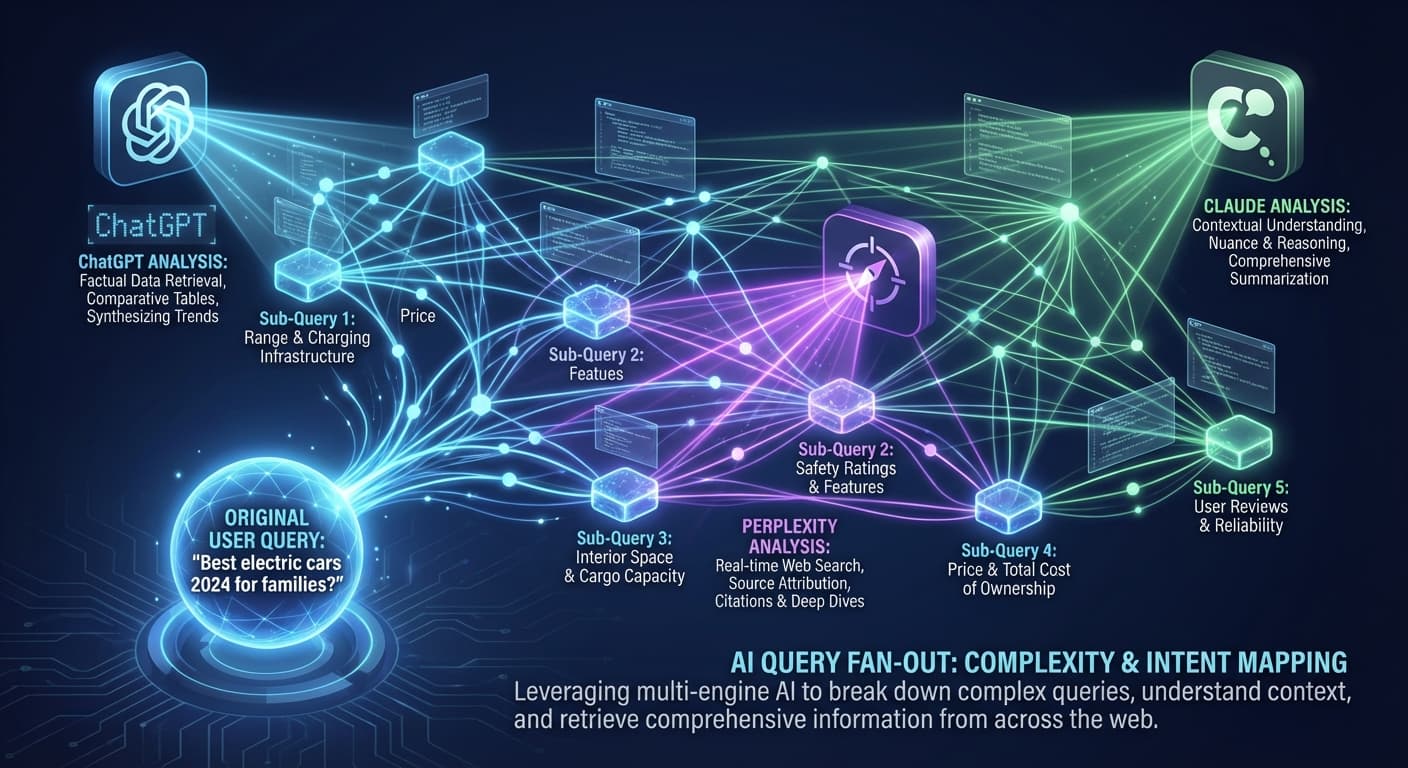
When a user asks "What's the best project management software?", AI engines like GPT-4 and Claude don't just look for that exact answer. They automatically generate and attempt to answer related micro-queries:
If your content only addresses the main question but ignores these sub-intents, AI engines will cite other sources that provide more comprehensive coverage.
Understanding AI Query Fan-Out Patterns
AI search engines use sophisticated intent mapping to predict what users will ask next. This "fan-out" pattern typically includes:
Primary Intent Clusters
Secondary Intent Branches
Each primary intent spawns 2-4 secondary questions that drill deeper into specific aspects. For example, a "How to" query might branch into:
The 8 Micro-Query Framework for AI Optimization
Based on analysis of over 50,000 AI search responses in 2025, successful content typically addresses these eight micro-query categories:
1. Context and Prerequisites
2. Step-by-Step Process
3. Tools and Resources
4. Common Challenges
5. Comparative Analysis
6. Real-World Examples
7. Cost and Resource Requirements
8. Next Steps and Advanced Considerations
Practical Strategies for Sub-Intent Optimization
Strategy 1: The FAQ Mining Method
Use tools like AnswerThePublic, AlsoAsked, or analyze "People Also Ask" boxes to identify common sub-questions. But don't stop there—use AI tools themselves:
Strategy 2: Semantic Section Structuring
Organize your content into semantic sections that map to different intent clusters:
markdown
Quick Answer (Primary Intent)
Understanding the Basics (Definitional)
Comparing Your Options (Comparative)
Step-by-Step Implementation (Procedural)
Common Challenges and Solutions (Problem-solving)
Real-World Examples (Social proof)
Cost Considerations (Practical)
Next Steps (Progressive)
Strategy 3: Conversational Bridging
Use natural language transitions that mirror how AI engines connect concepts:
Strategy 4: Depth Layering
Provide multiple levels of detail for each sub-intent:
How Citescope Ai Solves the Sub-Intent Challenge
While understanding sub-intent mapping is crucial, manually optimizing for all these micro-queries is time-consuming and complex. This is where Citescope Ai's GEO Score becomes invaluable.
Our platform analyzes your content across five critical dimensions, including Conversational Relevance—which specifically measures how well your content addresses related micro-queries that AI engines are likely to surface. The AI Rewriter then automatically restructures your content to include natural sub-intent coverage without keyword stuffing or awkward transitions.
For example, when analyzing a piece about "email marketing best practices," Citescope Ai might identify that your content lacks coverage of:
The AI Rewriter then suggests specific sections and language to address these gaps while maintaining natural flow.
Measuring Sub-Intent Success
Track these metrics to gauge your sub-intent optimization:
AI Citation Frequency
Query Coverage Analysis
Engagement Patterns
Advanced Sub-Intent Techniques
Dynamic Content Adaptation
Create modular content blocks that can be mixed and matched based on query context. This allows AI engines to surface the most relevant sections for specific sub-intents.
Intent Cascade Mapping
Map out how questions naturally flow from one to another, then structure your content to follow these logical progressions.
Semantic Entity Clustering
Group related concepts and entities to help AI engines understand the full scope of your topic coverage.
Common Sub-Intent Optimization Mistakes
Mistake 1: Keyword Stuffing Sub-Questions
Don't just add FAQ sections with obvious question variations. AI engines can detect artificial question insertion.
Mistake 2: Ignoring Intent Hierarchy
Not all sub-intents are equally important. Focus on the most commonly surfaced micro-queries first.
Mistake 3: Siloed Section Treatment
Sub-intents should be woven throughout your content, not isolated in separate sections.
Mistake 4: Static Optimization
Sub-intent patterns evolve as AI models improve. Regularly audit and update your coverage.
The Future of Sub-Intent Optimization
As AI search continues to mature, we're seeing several emerging trends:
Ready to Master AI Sub-Intent Optimization?
Optimizing for AI query fan-out and sub-intent mapping requires a deep understanding of how AI engines think and surface information. While the strategies outlined above provide a solid foundation, manually implementing comprehensive sub-intent coverage across all your content is a massive undertaking.
Citescope Ai's GEO Score and AI Rewriter are specifically designed to handle this complexity. Our platform automatically identifies sub-intent gaps in your content and provides one-click optimization that naturally incorporates micro-query coverage while maintaining readability and flow.
Start your free trial today and discover which sub-intents your content is missing—and how to fix them with a single click. Your first 3 optimizations are completely free, no credit card required.