How to Optimize for AI Agent Autonomous Decision Layers: Winning When AI Chooses Service Providers Behind the Scenes
Imagine asking an AI agent to "book me a reliable plumber for tomorrow morning" and receiving a single recommendation—no comparison chart, no list of alternatives, just one choice. This isn't science fiction; it's happening right now in 2025. AI agents are increasingly making autonomous decisions about service providers, cutting through the traditional comparison phase entirely.
According to recent industry research, over 40% of AI-powered service recommendations now operate through autonomous decision layers, where the AI selects providers based on complex algorithmic assessments without presenting users with multiple options to compare. For service providers, this represents both a massive opportunity and a critical challenge.
The Rise of Autonomous AI Decision Making
In 2025, AI agents have evolved far beyond simple search interfaces. They're becoming trusted decision-makers, handling everything from restaurant reservations to contractor selections. This shift is driven by several key factors:
User Preference for Simplicity
Decision fatigue reduction: Users increasingly prefer AI agents that make informed decisions rather than presenting endless optionsTrust in AI recommendations: 68% of consumers now trust AI agents to make service selections on their behalf (up from 34% in 2024)Time efficiency: Autonomous decisions reduce selection time by an average of 73%Advanced AI Capabilities
Multi-dimensional analysis: AI agents now evaluate hundreds of factors simultaneouslyReal-time data integration: Live reviews, availability, pricing, and performance metricsContextual understanding: AI considers user preferences, location, timing, and specific requirementsHow Autonomous Decision Layers Work
To optimize effectively, you need to understand the mechanics behind AI agent decision-making:
The Invisible Evaluation Process
Query Analysis: The AI interprets user intent and requirementsProvider Identification: Systems scan available service providersMulti-Factor Scoring: Each provider receives scores across multiple dimensionsContextual Filtering: Results are filtered based on user-specific factorsConfidence Assessment: The AI evaluates its certainty in the recommendationSingle Selection: Only providers meeting high confidence thresholds are presentedKey Decision Factors
AI agents typically evaluate providers based on:
Authority and credibility signalsSemantic relevance to user queriesReal-time availability and responsivenessPerformance consistency across multiple data sourcesContextual appropriateness for specific requestsStrategies for Autonomous AI Optimization
1. Build Comprehensive Digital Authority
Since users won't see comparison lists, your digital presence must unambiguously signal trustworthiness:
Content Authority:
Create detailed service pages that answer specific questions AI agents askPublish case studies demonstrating expertise and resultsMaintain active, informative blog content addressing common customer concernsTechnical Authority:
Ensure fast website loading speeds (under 2 seconds)Implement structured data markup for all service offeringsMaintain consistent NAP (Name, Address, Phone) information across platforms2. Optimize for Semantic Understanding
AI agents rely heavily on semantic analysis to match providers with user needs:
Natural Language Optimization:
Use conversational language that mirrors how people actually speakInclude common question formats in your content ("How much does...", "What's the best way to...")Address specific use cases and scenarios in detailContextual Relevance:
Create location-specific content for local servicesAddress seasonal or time-sensitive considerationsInclude information about your ideal customer scenarios3. Establish Multi-Platform Consistency
AI agents pull data from numerous sources simultaneously:
Platform Alignment:
Ensure consistent messaging across your website, social profiles, and directory listingsMaintain up-to-date information on Google Business Profile, industry directories, and review sitesSynchronize service descriptions, pricing information, and availability across all platformsReview Management:
Actively encourage satisfied customers to leave detailed reviewsRespond professionally to all reviews, demonstrating engagementAddress negative feedback promptly and constructively4. Enhance Real-Time Responsiveness
Autonomous AI systems heavily weight responsiveness:
Availability Signals:
Implement real-time booking systems or clear availability indicatorsMaintain active chat features or quick response contact methodsUpdate business hours and service availability regularlyResponse Time Optimization:
Set up automated acknowledgment systems for inquiriesEstablish clear response time expectationsUse scheduling tools that integrate with AI systemsAdvanced Optimization Techniques
Content Structuring for AI Analysis
To help tools like Citescope Ai's GEO Score analyzer identify optimization opportunities, structure your content with:
Clear service hierarchies using proper heading structuresFAQ sections that directly address common queriesProcess explanations that help AI understand your methodologyOutcome descriptions that clearly state what customers can expectPerformance Monitoring and Adjustment
Since autonomous decisions happen invisibly, monitoring becomes crucial:
Key Metrics to Track:
Direct referral traffic from AI platformsBranded search query increasesConversion rates from AI-referred trafficCustomer acquisition costs from different sourcesAdjustment Strategies:
Regular content audits to ensure AI interpretabilityA/B testing of different content approachesMonitoring competitor positioning and adjusting accordinglyThe Competitive Landscape in 2025
The autonomous decision layer creates a winner-take-most scenario:
First Position Advantage
When AI agents make single recommendations:
The chosen provider receives 100% of that opportunitySecond-place providers receive zero visibilityMarket share can shift rapidly based on AI preferencesQuality Threshold Effects
AI systems increasingly use confidence thresholds:
Providers below certain quality scores may never be recommendedSmall improvements in optimization can yield disproportionate resultsConsistency across all ranking factors becomes criticalHow Citescope Ai Helps Navigate Autonomous AI Decisions
Optimizing for invisible AI decision-making requires sophisticated analysis tools. Citescope Ai's GEO Score feature evaluates your content across five critical dimensions that directly impact autonomous AI selection:
AI Interpretability: How easily AI systems can understand and categorize your contentSemantic Richness: The depth of meaning and context in your service descriptionsConversational Relevance: How well your content matches natural language queriesStructure: The logical organization that helps AI systems parse your informationAuthority: The credibility signals that influence AI confidence levelsThe platform's Citation Tracker also monitors when your content gets selected by major AI agents, providing insights into which optimization strategies are working in real-world autonomous decision scenarios.
Future-Proofing Your Autonomous AI Strategy
As AI decision-making becomes more sophisticated:
Emerging Trends to Monitor
Personalization depth: AI agents are incorporating increasingly specific user preferencesReal-time integration: More dynamic factors affecting decisionsCross-platform synthesis: AI systems pulling from broader data sourcesPreparation Strategies
Invest in comprehensive content that addresses edge casesBuild systems that can adapt quickly to changing AI preferencesDevelop direct relationships with customers to reduce dependency on AI intermediariesMeasuring Success in the Autonomous Era
New Success Metrics
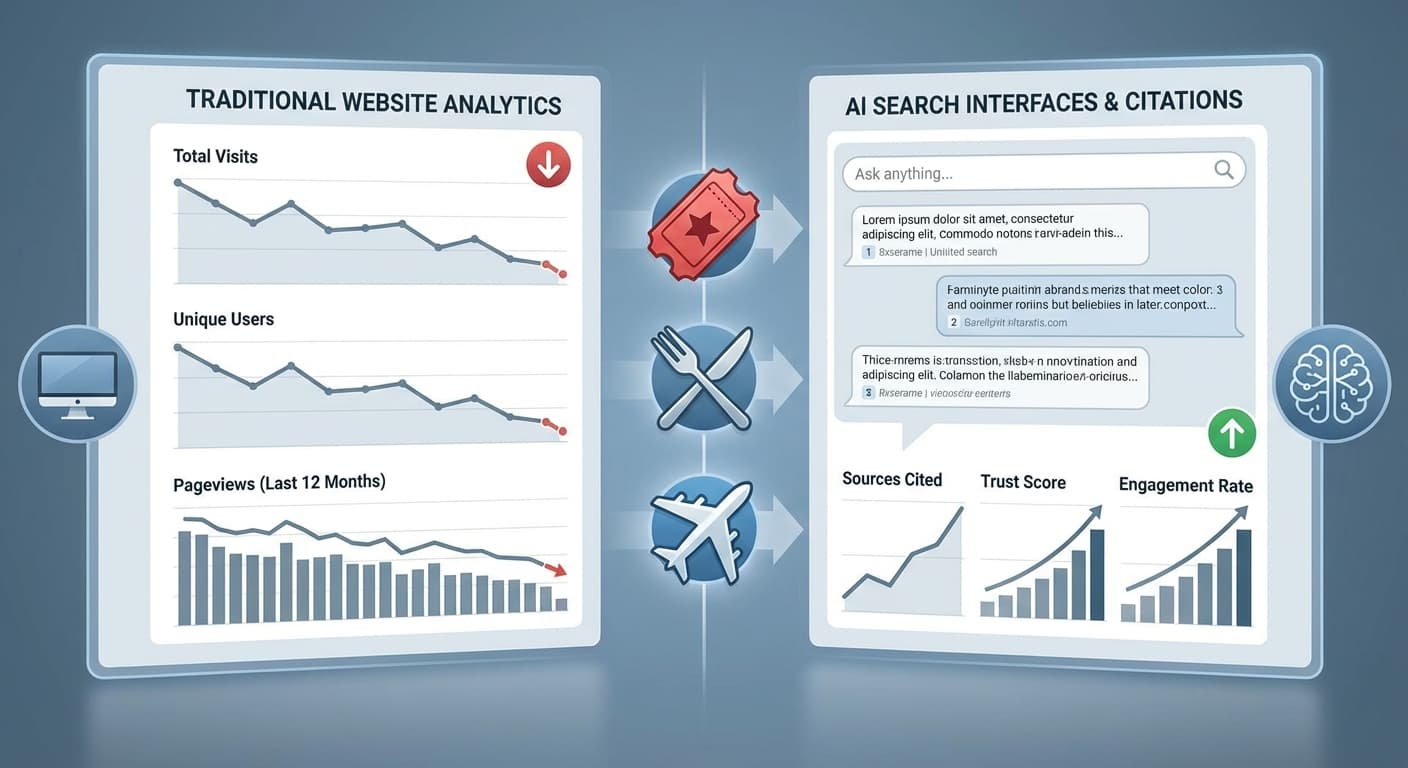
Traditional SEO metrics become less relevant when AI makes autonomous decisions:
Direct Impact Metrics:
AI-referred conversion ratesCustomer lifetime value from AI-sourced leadsBrand mention frequency in AI responsesIndirect Indicators:
Increased branded search volumeImproved customer retention ratesHigher average transaction valuesOptimization Feedback Loops
Create systems to understand what's working:
Survey AI-referred customers about their experienceTrack patterns in successful AI-generated leadsMonitor changes in recommendation frequencyReady to Optimize for AI Search?
As AI agents increasingly make autonomous service provider selections, traditional SEO strategies are no longer sufficient. You need tools designed specifically for the AI-first search landscape. Citescope Ai helps you understand how AI systems interpret your content, track your visibility across major AI platforms, and optimize your digital presence for autonomous decision-making.
Start with our free tier to analyze your content's GEO Score and discover optimization opportunities. With AI agents handling more decisions every day, the time to optimize is now—before your competitors gain an insurmountable advantage in the autonomous decision layer.