How to Optimize Content for AI Search Without Losing Traditional SEO Traffic
How to Optimize Content for AI Search Without Losing Traditional SEO Traffic
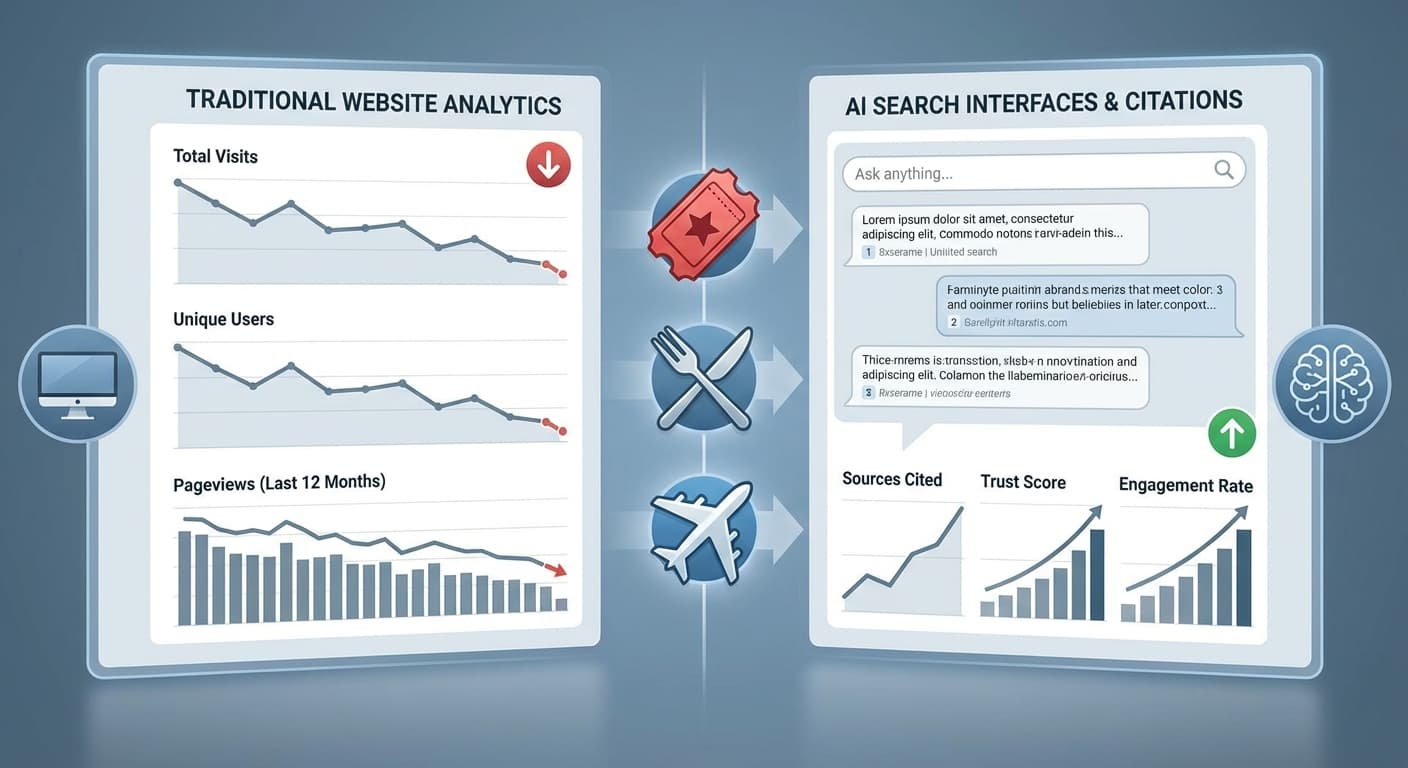
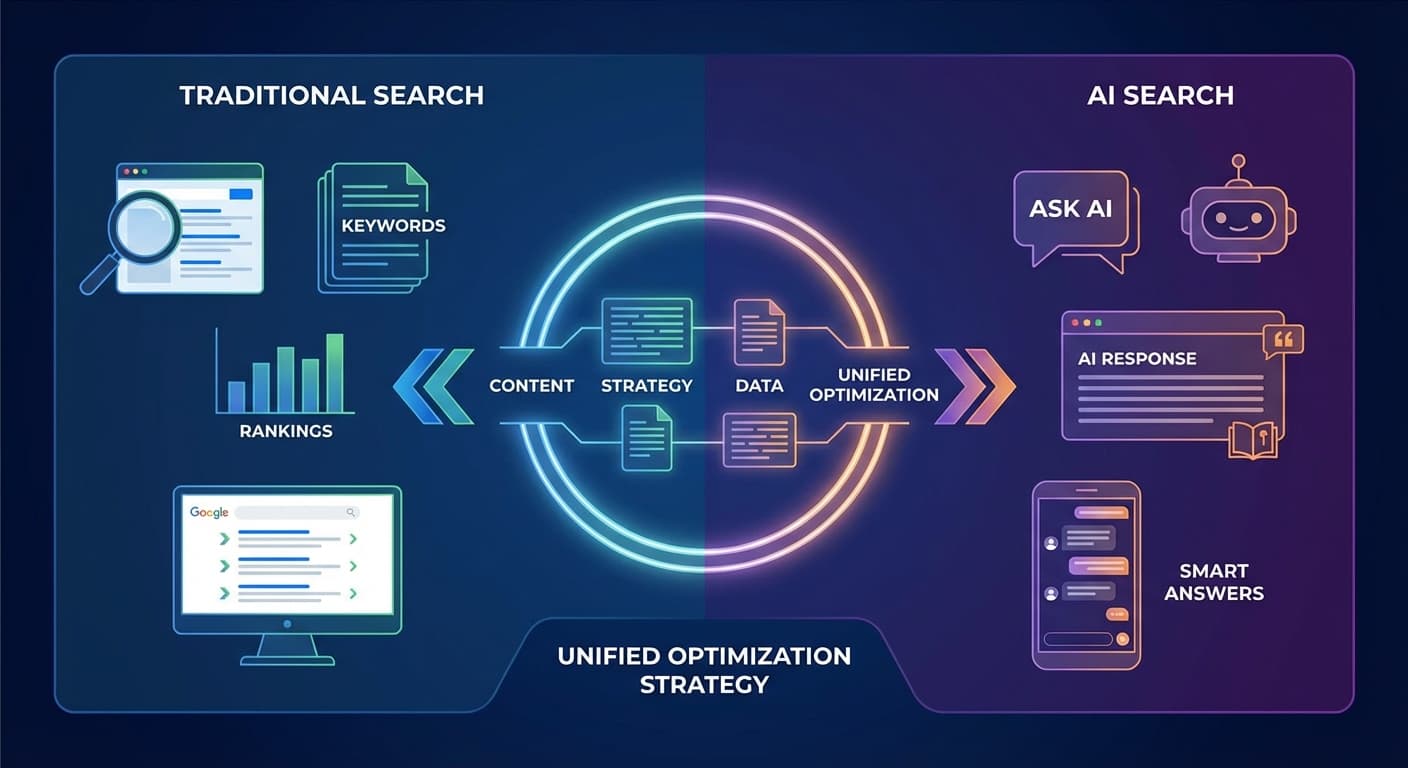
In 2026, the search landscape has fundamentally shifted. With AI-powered search engines handling over 40% of all queries and ChatGPT alone serving 600+ million weekly users, content creators face a critical challenge: how do you optimize for AI-generated answers while maintaining your hard-earned Google rankings?
The answer isn't choosing one over the other—it's mastering both.
The Dual Search Reality of 2026
Today's content creators must navigate two distinct but interconnected search ecosystems:
Traditional Search Engines (Google, Bing):
AI Search Engines (ChatGPT, Perplexity, Claude, Gemini):
The good news? Many optimization strategies benefit both ecosystems. The key is understanding where they align and where they diverge.
Core Principles That Work for Both Systems
1. Create Comprehensive, Authoritative Content
Both Google's algorithms and AI models favor content that demonstrates expertise and covers topics thoroughly. However, the execution differs:
For Traditional SEO:
For AI Search:
2. Master the Art of Question-Based Content
AI search engines excel at answering specific questions. Traditional search engines increasingly favor content that addresses user intent.
Effective Approach:
3. Optimize Content Structure for Multiple Formats
Your content needs to perform in traditional SERPs and as source material for AI-generated responses.
Dual-Purpose Structure:
Specific Strategies for AI Search Optimization
Write for Conversational Queries
AI search queries tend to be more conversational and longer than traditional searches. Instead of "best CRM software," users ask "What's the best CRM software for a small marketing agency with 10 employees?"
Implementation:
Provide Clear, Citable Facts
AI engines need content they can confidently cite. This means:
Structure for Featured Snippets
Content that wins featured snippets often gets cited by AI engines. Target these formats:
Maintaining Traditional SEO Strength
Don't Abandon Keyword Strategy
While AI search is more semantic, traditional search engines still rely heavily on keywords.
Balanced Approach:
Technical SEO Remains Critical
AI engines may not directly consider technical factors, but they often crawl content that ranks well in traditional search.
Essential Technical Elements:
Build Authority Through Links
Backlinks remain crucial for traditional search rankings and can indirectly boost AI citations by increasing content visibility.
Link Building for 2026:
Content Formats That Excel in Both Systems
Ultimate Guides and Comprehensive Resources
Long-form, comprehensive content performs well in both traditional and AI search because:
FAQ-Style Content
FAQ sections are goldmines for both search types:
Data-Driven Articles
Content with original research, statistics, and data visualization:
Measuring Success Across Both Channels
Tracking performance requires monitoring both traditional SEO metrics and AI citation metrics:
Traditional SEO Metrics:
AI Search Metrics:
Tools like Citescope can help track when your content gets cited across multiple AI platforms while providing actionable insights for optimization.
Common Pitfalls to Avoid
Over-Optimizing for Keywords
Keyword stuffing hurts both traditional and AI search performance. Focus on natural language that serves your audience.
Neglecting Content Quality
AI engines are particularly good at identifying thin, low-quality content. Prioritize depth, accuracy, and usefulness.
Ignoring User Intent
Both traditional and AI search prioritize content that matches user intent. Always ask: "What is someone really looking for when they search this?"
Forgetting to Update Content
AI engines favor current information. Regularly update statistics, examples, and recommendations to maintain relevance.
How Citescope Helps Bridge Traditional and AI Search
Optimizing for both traditional and AI search can be complex, but tools like Citescope simplify the process. Citescope's GEO Score analyzes your content across five dimensions that impact AI visibility: AI Interpretability, Semantic Richness, Conversational Relevance, Structure, and Authority.
The platform's AI Rewriter can optimize your existing content with one click, ensuring it performs well in both traditional search results and AI-generated answers. Plus, the Citation Tracker lets you monitor when your content gets referenced by ChatGPT, Perplexity, Claude, and Gemini, providing valuable insights into your AI search performance.
The Future-Proof Content Strategy
As we move further into 2026 and beyond, the most successful content creators will be those who master the dual optimization approach. This means:
The search landscape will continue evolving, but content that genuinely helps people will always find its audience—whether through Google's search results or ChatGPT's citations.
Ready to Optimize for AI Search?
Mastering both traditional SEO and AI search optimization doesn't have to be overwhelming. Citescope helps content creators optimize their content for maximum visibility across all search platforms while tracking real-world citation performance. Start with our free tier and optimize up to 3 pieces of content monthly, or upgrade to Pro for unlimited optimizations and advanced analytics. Ready to future-proof your content strategy? Try Citescope today.