How to Optimize Blog Content for AI Overview Citations as Search Traffic Drops 40%
How to Optimize Blog Content for AI Overview Citations as Search Traffic Drops 40%
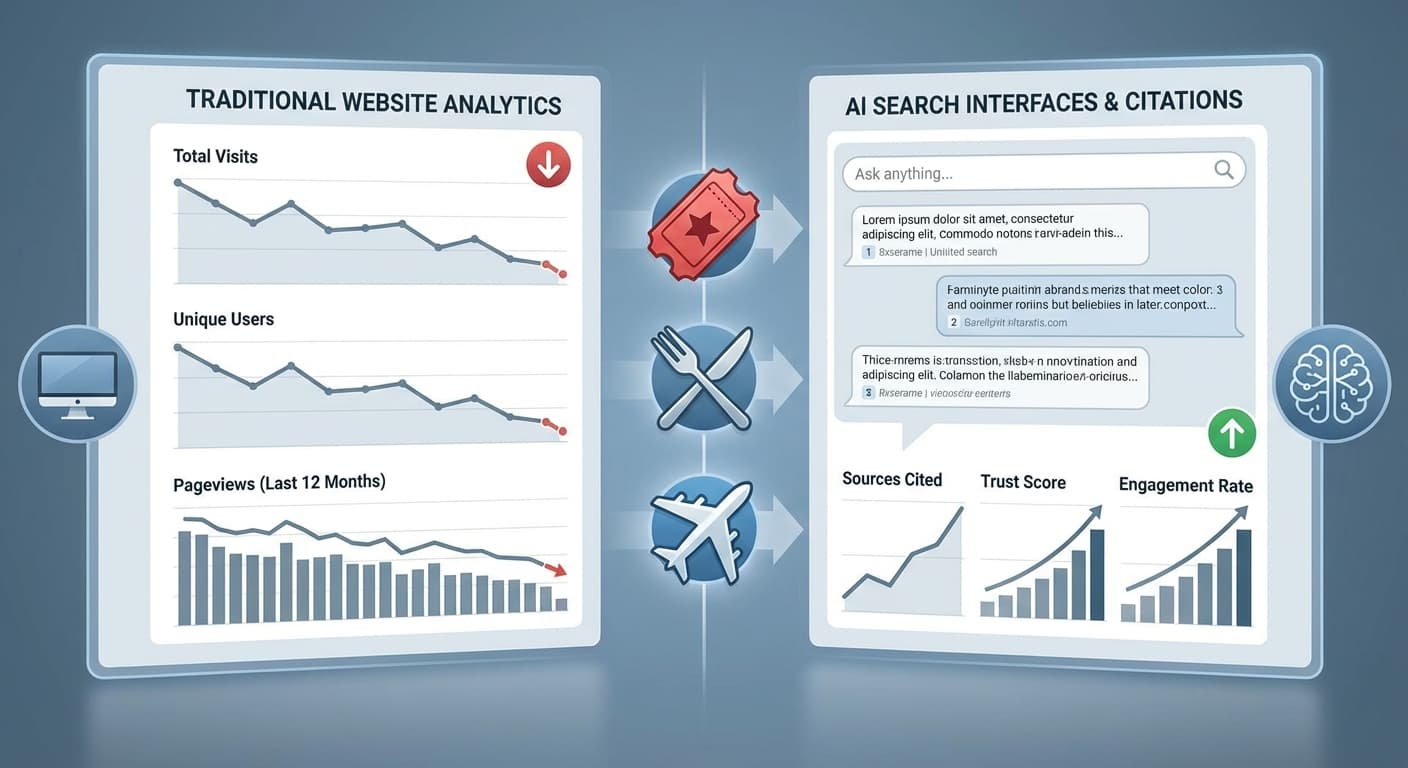
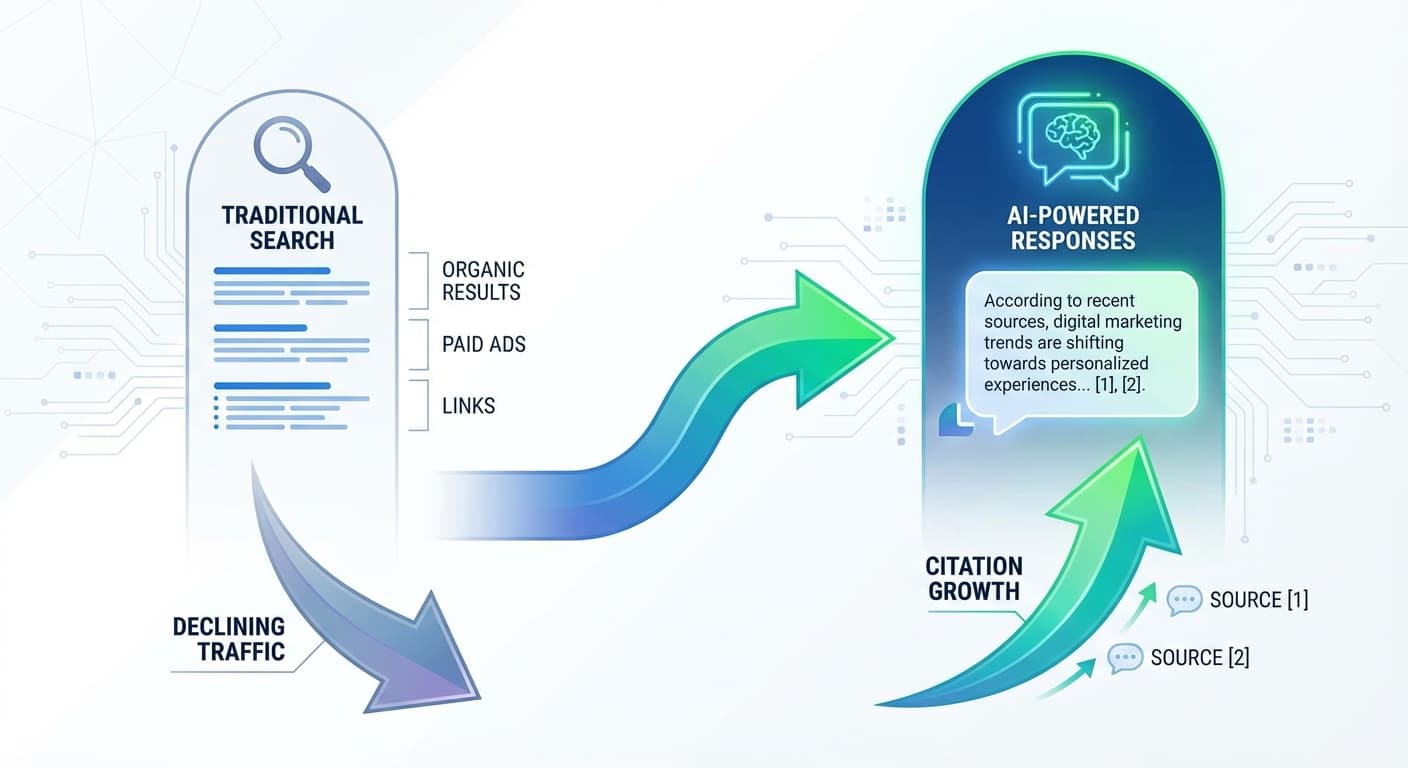
Traditional search is dying, and content creators are feeling the pain. With organic search referral traffic plummeting by 40% across major websites in 2025, the writing is on the wall: AI-powered search engines like ChatGPT, Perplexity, Claude, and Google's AI Overviews are fundamentally reshaping how people discover content.
But here's the opportunity hidden in this disruption: while click-through rates are dropping, citation rates in AI responses are skyrocketing. Smart content creators who pivot now to optimize for AI citations rather than traditional SEO clicks are seeing their authority and reach expand exponentially.
The New Reality: Why Traditional SEO Is Failing
The numbers paint a stark picture. In 2025, AI-powered search now accounts for over 35% of all online queries, with ChatGPT alone serving 600+ million weekly users. Meanwhile, Google's traditional blue links are getting pushed below AI Overviews on 73% of search results pages.
This shift means:
But it also creates unprecedented opportunities for thought leadership and brand authority through AI citations.
Understanding AI Overview Citations: The New Currency of Authority
AI Overviews and chatbot responses don't just generate answers from thin air—they cite credible sources to support their claims. When your content gets cited in an AI response, you're essentially getting endorsed as an authoritative source to potentially millions of users.
What Makes Content Citation-Worthy?
AI models look for specific signals when determining which sources to cite:
Factual Accuracy and Recency
Structural Clarity
Semantic Richness
Authority Indicators
8 Proven Strategies to Get Your Content Cited in AI Overviews
1. Write Definitional Content That Answers Core Questions
AI engines frequently cite sources that provide clear, authoritative definitions of concepts. Create content that answers fundamental questions in your niche:
Structure these answers with clear topic sentences followed by supporting details. AI models love content that directly answers user queries with precision.
2. Use Data-Driven Claims with Proper Attribution
Statistics and research findings are citation gold mines. When you include specific data points, always:
Example: "According to a 2025 Content Marketing Institute study, 68% of B2B marketers report increased engagement when optimizing content for AI search engines."
3. Create Comprehensive Topic Clusters
Instead of writing standalone posts, develop comprehensive topic clusters that cover subjects from multiple angles. This semantic richness helps AI models understand your expertise and increases citation likelihood.
For a topic like "email marketing," create supporting content about:
4. Optimize for Conversational Queries
People interact with AI search engines conversationally. Optimize your content for natural language queries:
5. Structure Content for AI Parsing
Make your content easy for AI models to understand and extract information from:
Use Clear Hierarchies
Implement Structured Data
Create Scannable Formats
6. Focus on E-A-T (Expertise, Authoritativeness, Trustworthiness)
AI models increasingly factor in content quality signals:
7. Optimize Content Freshness and Relevance
AI engines prioritize recent, up-to-date information. Implement a content maintenance strategy:
8. Build Topical Authority Through Consistency
Consistently publishing high-quality content in your niche signals expertise to AI models. Develop a content calendar that:
Measuring Success in the AI Citation Era
Traditional metrics like page views and bounce rate tell only part of the story. Track these AI-era metrics instead:
Citation Tracking
Brand Authority Metrics
Indirect Traffic Indicators
How Citescope Helps Content Creators Thrive in the AI Era
While optimizing for AI citations requires a strategic approach, tools like Citescope can accelerate your success. The platform's GEO Score analyzes your content across five critical dimensions—AI Interpretability, Semantic Richness, Conversational Relevance, Structure, and Authority—giving you a clear roadmap for optimization.
The AI Rewriter feature can transform existing content with one click, restructuring it for better AI visibility while maintaining your unique voice. Plus, the Citation Tracker monitors when your content gets cited across ChatGPT, Perplexity, Claude, and Gemini, so you can measure your progress and identify your most citation-worthy content.
The Future of Content Strategy: Embrace the Citation Economy
The shift from clicks to citations isn't just a temporary trend—it's a fundamental evolution in how information spreads online. Content creators who adapt now will build sustainable competitive advantages:
Start by auditing your existing content through an AI citation lens. Which pieces provide clear, authoritative answers to common questions? Which need updating with current data and sources? Which could benefit from better structure and formatting?
Ready to Optimize for AI Search?
The era of AI citations is here, and the content creators who master this new landscape will dominate their industries. Don't wait for your competitors to figure it out first.
Citescope makes it easy to transform your content strategy for the AI age. Our GEO Score shows you exactly how to improve your content for better AI visibility, while our Citation Tracker proves your progress with real citation data. Start with our free tier—three optimizations per month to test the waters—and discover how AI-optimized content can restore and amplify your reach.
Try Citescope free today and turn the AI search revolution into your competitive advantage.