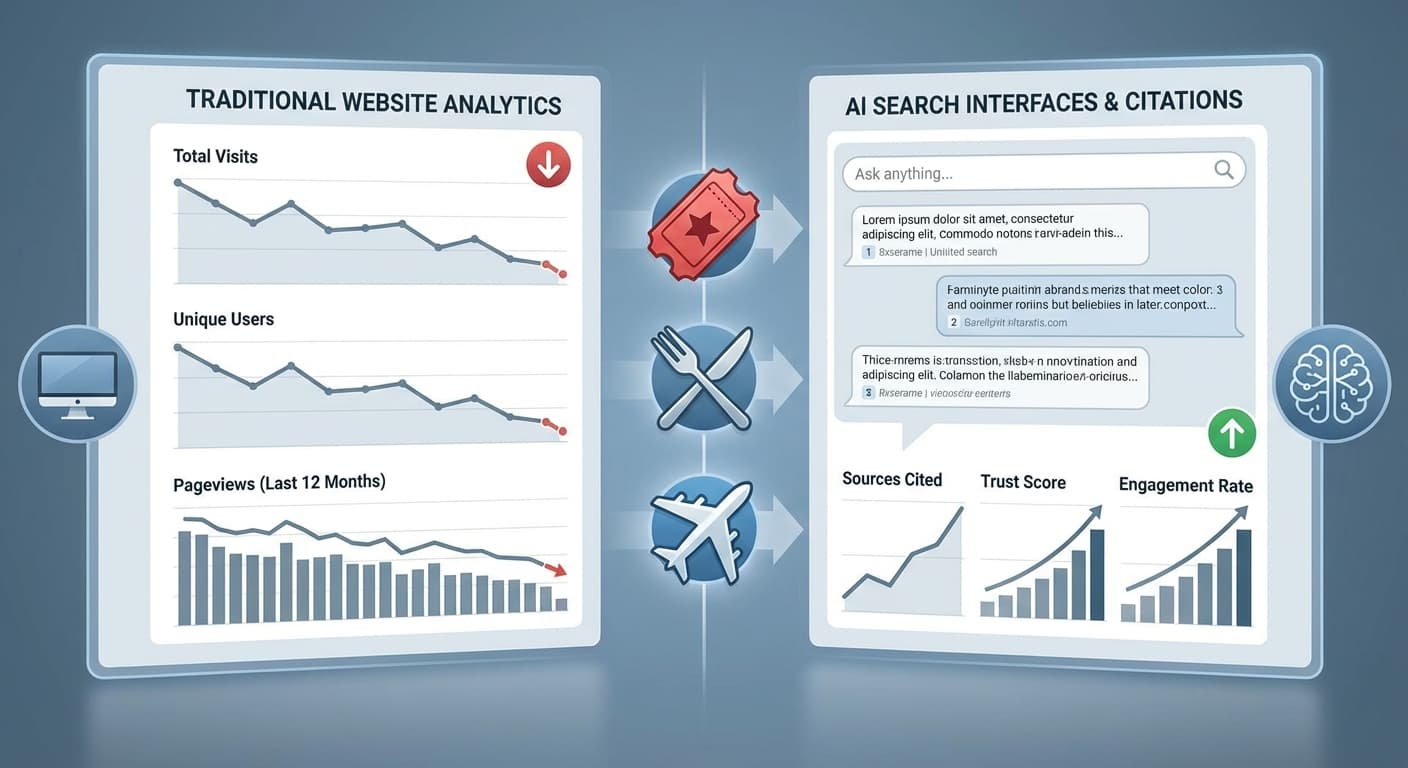
How to Monetize Bottom-Funnel AI Citations: Why Pricing Pages Drive 3x Higher Conversions (But 89% of Businesses Ignore Them)
How to Monetize Bottom-Funnel AI Citations: Why Pricing Pages Drive 3x Higher Conversions (But 89% of Businesses Ignore Them)
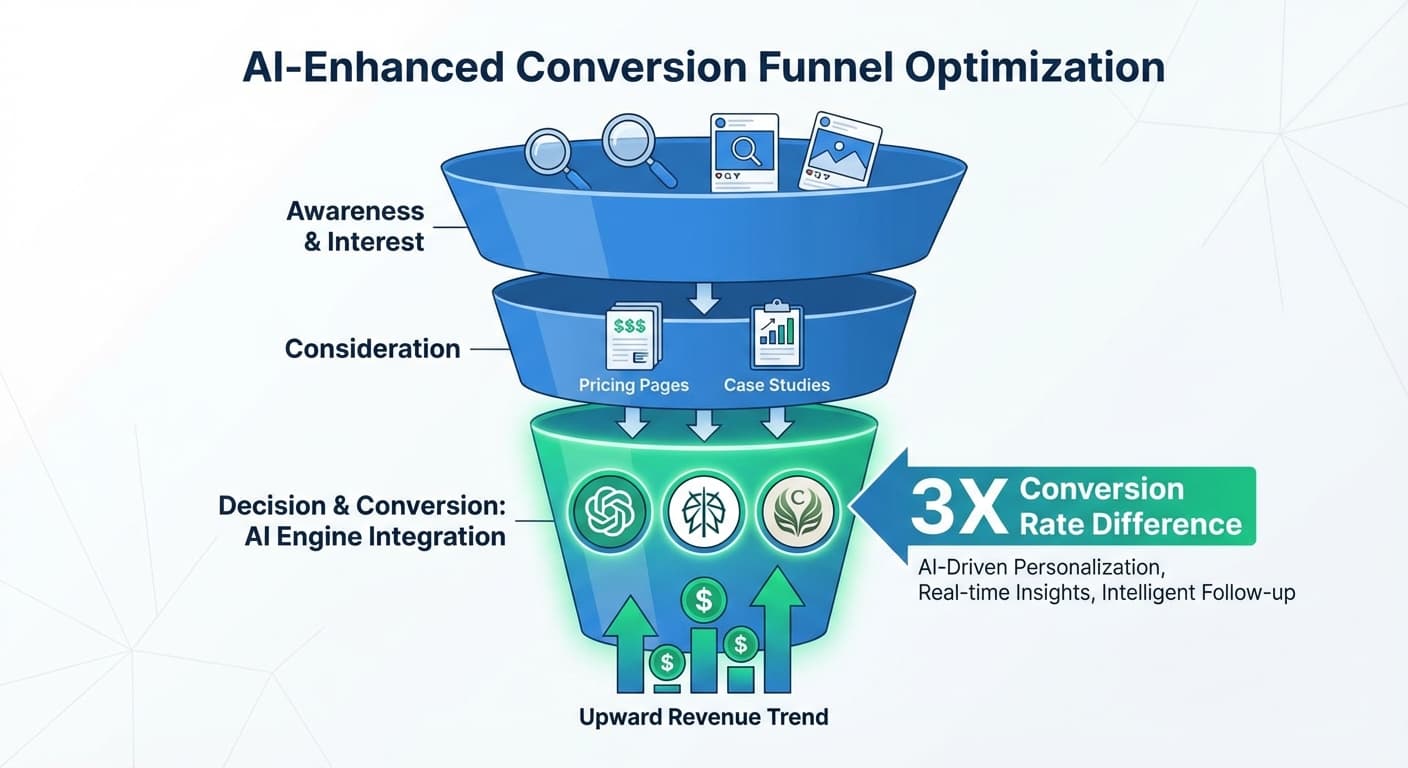
Here's a startling reality: while businesses pour 89% of their AI optimization efforts into answering "What is..." questions, their pricing pages and case studies are converting at 3x higher rates when cited by ChatGPT, Perplexity, and Claude. Yet most companies are completely missing this goldmine.
With over 500 million weekly ChatGPT users and AI search now representing 35% of all search queries in 2026, the companies that crack the code on bottom-funnel AI citations are seeing unprecedented revenue growth. The question isn't whether AI will impact your bottom line—it's whether you'll capture the high-intent traffic that's already searching for solutions like yours.
The Hidden Revenue Gap in AI Search Optimization
Most businesses approach AI search optimization backwards. They focus on educational content that answers broad questions, hoping to build awareness and eventually guide users down the funnel. While this isn't wrong, it's incomplete—and it's costing them millions in potential revenue.
Here's what the data tells us about AI search behavior in 2026:
Yet despite these compelling numbers, the vast majority of AI optimization efforts still target top-funnel, informational queries. This represents a massive opportunity for businesses willing to shift their strategy.
Understanding Bottom-Funnel AI Citations
What Qualifies as Bottom-Funnel Content for AI?
Bottom-funnel AI citations come from content types that directly support purchase decisions:
How AI Engines Surface Bottom-Funnel Content
AI search engines like ChatGPT and Perplexity are increasingly sophisticated at recognizing purchase intent. When users ask questions like:
These engines actively seek out structured, specific information that directly answers the commercial query. The content that gets cited isn't just informative—it's actionable and decision-enabling.
The 89% Problem: Why Businesses Miss Bottom-Funnel Opportunities
Traditional SEO Thinking Applied to AI
Most companies approach AI optimization with traditional SEO mindsets, focusing on:
While this strategy worked for traditional search, AI engines operate differently. They're more likely to surface specific, authoritative information that directly addresses user needs—especially when those needs involve making purchasing decisions.
The Content Gap Analysis
When we analyze typical AI optimization strategies, here's what we find:
This distribution is exactly backwards from what drives revenue in AI search.
Strategic Framework for Bottom-Funnel AI Optimization
1. Audit Your High-Converting Pages
Start by identifying which pages currently drive the most revenue:
2. Structure Content for AI Comprehension
AI engines excel at parsing structured information. Optimize your bottom-funnel content with:
Clear Pricing Information:
Quantifiable Case Studies:
Comparative Analysis:
3. Optimize for Commercial Query Patterns
AI engines look for specific signals when answering commercial queries. Structure your content to include:
Advanced Tactics for Maximizing AI Citation Revenue
1. Create AI-Optimized Landing Pages
Develop dedicated pages that specifically target AI search patterns:
2. Implement Structured Data for Commercial Content
Use schema markup to help AI engines understand your commercial content:
3. Develop Citation-Worthy Resources
Create content specifically designed to be cited by AI engines:
4. Track and Measure Bottom-Funnel Citations
Monitor how your commercial content performs in AI search:
Citescope Ai's Citation Tracker makes this monitoring effortless, showing you exactly when and how your pricing pages and case studies get cited across ChatGPT, Perplexity, Claude, and Gemini.
Implementation Roadmap: 90-Day Bottom-Funnel Optimization
Days 1-30: Foundation Building
Days 31-60: Content Optimization
Days 61-90: Tracking and Refinement
The Competitive Advantage of Early Adoption
Businesses that optimize for bottom-funnel AI citations now have a significant first-mover advantage. As more companies recognize this opportunity, the competition for commercial AI citations will intensify.
Early adopters are seeing:
How Citescope Ai Helps Monetize Bottom-Funnel Citations
While many businesses struggle to optimize their commercial content for AI visibility, Citescope Ai makes this process straightforward and measurable.
GEO Score Analysis evaluates your pricing pages and case studies across five dimensions critical for AI citation, including Authority and Structure—two factors that heavily influence commercial content visibility.
AI Rewriter transforms your existing commercial content with one-click optimization, restructuring pricing information, case studies, and product comparisons for maximum AI comprehension and citation potential.
Citation Tracker monitors when your bottom-funnel content gets cited across all major AI engines, letting you measure the direct revenue impact of your optimization efforts and identify which commercial content drives the highest conversions.
Multi-format Export ensures your optimized commercial content integrates seamlessly with your existing website, CMS, or marketing automation systems.
Ready to Optimize for AI Search?
Stop leaving money on the table with top-funnel AI optimization strategies that ignore your highest-converting content. Your pricing pages and case studies are already driving 3x higher conversions—imagine the revenue impact when they start getting cited regularly by AI engines.
Citescope Ai helps you identify, optimize, and track the commercial content that actually drives revenue in AI search. Start with our free tier and see how bottom-funnel AI citations can transform your conversion rates.
Start optimizing your commercial content for AI citations today →