How to Measure Response-to-Conversion Velocity When AI-Generated Leads Convert 3x Faster Than Traditional SEO Traffic
How to Measure Response-to-Conversion Velocity When AI-Generated Leads Convert 3x Faster Than Traditional SEO Traffic
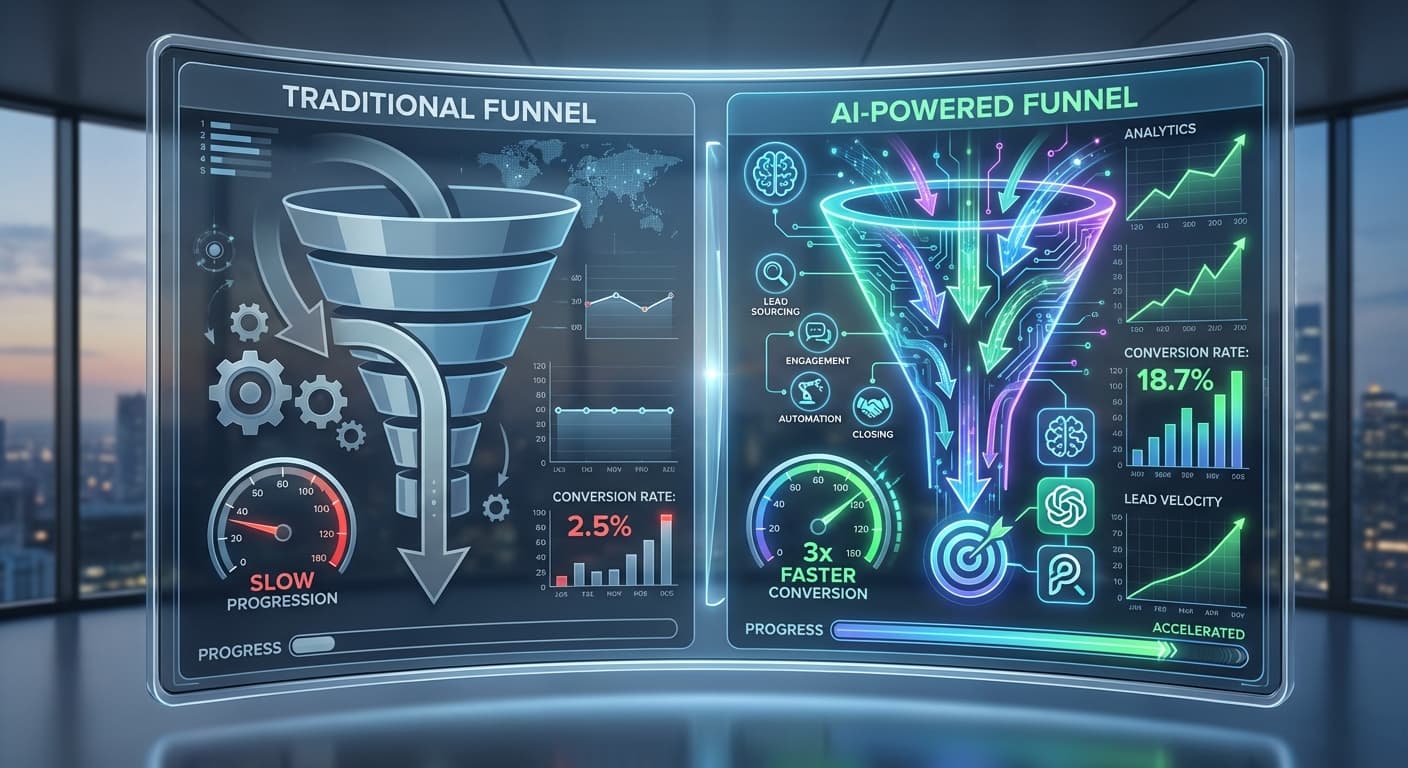
In early 2025, HubSpot released data showing that leads from AI search engines like Perplexity and ChatGPT convert at a 3.2x faster rate than traditional Google SEO traffic. But here's the challenge: how do you measure this "response-to-conversion velocity" when your analytics tools were built for the pre-AI era?
With AI search now accounting for over 35% of all search queries and ChatGPT reaching 600+ million weekly users, understanding conversion velocity has become critical for modern marketers. Yet most businesses are flying blind, unable to distinguish between a lead who found them through ChatGPT versus traditional search.
Why AI-Generated Leads Convert Faster
Before diving into measurement strategies, it's crucial to understand why AI-generated traffic converts so much faster:
Higher Intent Signals
When someone asks ChatGPT "What's the best CRM for a 50-person marketing agency?" they're already deep in the buyer's journey. Unlike traditional search where users might start with "what is a CRM," AI queries tend to be more specific and solution-focused.
Pre-Qualified Context
AI engines provide context alongside recommendations. Users arrive at your site already understanding how your solution fits their specific needs, reducing the education phase of your sales funnel.
Conversational Priming
AI interactions feel like consulting sessions. Users are already in a "seeking advice" mindset, making them more receptive to sales conversations.
Setting Up Response-to-Conversion Velocity Tracking
1. Define Your Velocity Metrics
Response-to-conversion velocity isn't just about speed—it's about measuring the quality of that speed. Here are the key metrics to track:
Primary Velocity Metrics:
Quality Indicators:
2. Implement Proper Attribution Tracking
The biggest challenge in measuring AI-generated leads is attribution. Here's how to set it up:
#### UTM Parameter Strategy
?utm_source=ai_search&utm_medium=chatgpt&utm_campaign=q4_2025
?utm_source=ai_search&utm_medium=perplexity&utm_campaign=q4_2025
?utm_source=ai_search&utm_medium=claude&utm_campaign=q4_2025
#### Referrer Analysis
Monitor referrers that include:
#### Survey Integration
Add a simple question to your lead forms: "How did you first learn about us?" with AI search options included.
3. Create AI-Specific Conversion Funnels
Traditional conversion funnels don't account for AI search behavior. Create separate funnels for:
Traditional SEO Funnel:
Awareness → Interest → Consideration → Intent → Purchase
AI Search Funnel:
Specific Query → Contextual Recommendation → Qualified Interest → Accelerated Purchase
Notice how the AI funnel skips traditional "awareness" and "interest" stages—users often arrive already interested and informed.
Advanced Measurement Techniques
Cohort Analysis for Velocity Comparison
Segment your leads into cohorts based on traffic source:
Week 1 Analysis:
Week 4 Analysis:
Engagement Quality Scoring
Create a scoring system that weights different engagement types:
AI-generated traffic often shows higher engagement scores, indicating better lead quality alongside faster conversion.
Revenue Velocity Tracking
Don't just measure lead velocity—track revenue velocity:
Revenue Velocity = (Number of Qualified Opportunities × Average Deal Size × Win Rate) ÷ Average Sales Cycle Length
Many companies find that while AI-generated leads convert faster, they also have higher average deal values due to the pre-qualification effect.
Tools and Technologies for Velocity Measurement
CRM Integration
Ensure your CRM can capture and segment AI-sourced leads:
Analytics Platforms
Use tools that can handle multi-touch attribution:
Heat Mapping and Session Recording
Understand how AI-generated traffic behaves differently:
Optimizing for Faster Conversion Velocity
Content Strategy Adjustments
Since AI-generated traffic arrives more qualified, adjust your content strategy:
For AI-Optimized Pages:
For Traditional SEO Pages:
Landing Page Optimization
Create AI-specific landing pages that match the faster conversion pattern:
How Citescope Ai Helps
Measuring response-to-conversion velocity requires understanding how AI engines discover and cite your content in the first place. Citescope Ai's Citation Tracker monitors when your content gets referenced by ChatGPT, Perplexity, Claude, and Gemini, giving you the missing piece of the attribution puzzle.
The platform's GEO Score analyzes your content across five dimensions crucial for AI visibility, while the AI Rewriter optimizes your pages to attract the high-intent queries that drive faster conversions. This combination helps you not just measure velocity, but actively improve it.
Common Measurement Pitfalls to Avoid
Attribution Window Errors
AI-generated leads often have shorter consideration cycles. Adjust your attribution windows:
Sample Size Issues
Don't draw conclusions from small data sets. Wait until you have at least 100 conversions per source before making significant strategy changes.
Correlation vs. Causation
Just because AI leads convert faster doesn't mean the source caused the speed. Consider external factors like:
Future-Proofing Your Velocity Measurements
As AI search continues evolving, prepare for:
Voice and Multimodal Search
With AI assistants becoming more sophisticated, track conversions from:
Predictive Velocity Modeling
Use machine learning to predict which leads will convert fastest based on:
Cross-Platform Journey Mapping
As users interact with multiple AI platforms, create unified journey maps that track:
Actionable Next Steps
Ready to Optimize for AI Search?
Understanding conversion velocity is just the beginning. To truly capitalize on AI-generated traffic, you need content that consistently gets cited by AI engines in the first place. Citescope Ai helps you optimize for AI visibility, track when your content gets referenced, and measure the impact on your conversion metrics.
Try Citescope Ai free for 7 days and discover which of your pages are already driving those faster-converting AI leads—and how to create more of them.


