GEO Strategy

How to Measure AI Share of Voice: Beyond Traditional Ranking Tools in the Era of Citation-Based AI Search
March 20, 20267 min read
How to Measure AI Share of Voice: Beyond Traditional Ranking Tools in the Era of Citation-Based AI Search

How to Measure AI Share of Voice: Beyond Traditional Ranking Tools in the Era of Citation-Based AI Search

With AI search now capturing over 35% of all queries in early 2026, traditional SEO metrics like keyword rankings and click-through rates are becoming obsolete. The real battle for visibility now happens in ChatGPT responses, Perplexity summaries, and Google's AI-generated overviews—spaces where being "cited" matters more than ranking #1.

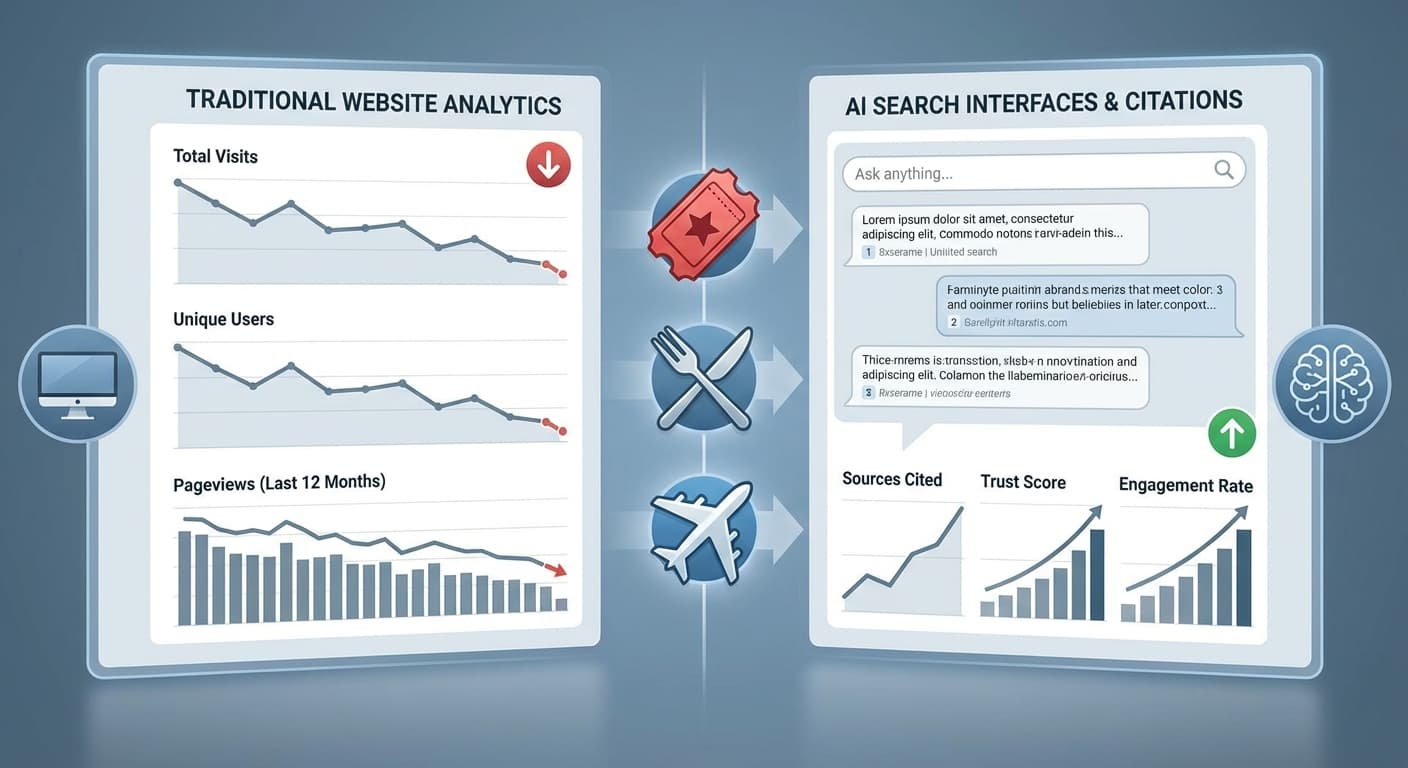
Yet most businesses are flying blind. Traditional tools like SEMrush and Ahrefs excel at tracking Google rankings but can't tell you when ChatGPT cites your content or how often Perplexity references your expertise. This creates a massive gap in understanding your true AI share of voice.

The Citation Economy: Why AI Share of Voice Matters More Than Ever

In 2026, share of voice isn't about owning the first three organic results anymore. It's about becoming the authoritative source that AI engines consistently cite across thousands of conversational queries.

Consider this: When someone asks ChatGPT "What are the best project management practices for remote teams?" or queries Perplexity about "sustainable marketing strategies," these AI systems scan thousands of sources to synthesize responses. The content that gets cited builds brand authority, drives referral traffic, and positions companies as thought leaders in ways traditional SEO never could.

The Problem with Traditional Metrics

Traditional ranking tools measure:

  • Keyword positions in Google SERPs

  • Search volume and competition

  • Backlink profiles and domain authority

  • Click-through rates from search results
  • But they can't track:

  • Citation frequency across AI platforms

  • Content influence on AI-generated responses

  • Share of voice in conversational search results

  • Attribution patterns in AI summaries
  • Understanding AI Share of Voice: What to Measure

    1. Citation Frequency Across Platforms

    Your AI share of voice starts with tracking how often your content gets cited by major AI search engines. This includes:

  • Direct citations: When AI engines explicitly reference your content with attribution

  • Indirect influence: When your content shapes responses without direct citation

  • Competitive citations: How often competitors get cited for similar topics
  • 2. Topic Authority Distribution

    Track which topics and keywords trigger citations of your content. This helps identify:

  • Your strongest content pillars in AI search

  • Gaps where competitors dominate citations

  • Emerging topics where you can build authority
  • 3. Platform-Specific Performance

    Different AI engines have different citation patterns:

  • ChatGPT: Tends to cite recent, conversational content

  • Perplexity: Favors well-structured, data-rich sources

  • Google AI Overviews: Prioritizes authoritative domains with strong E-A-T signals

  • Claude: Values nuanced, contextually rich content
  • Manual Monitoring Methods: The DIY Approach

    Query-Based Testing

    Create a systematic testing protocol:

  • Develop a query bank: Compile 50-100 questions related to your expertise areas

  • Test across platforms: Run identical queries on ChatGPT, Perplexity, Gemini, and Google AI

  • Document citations: Track when and how your content appears in responses

  • Analyze patterns: Identify which content types and topics generate the most citations
  • Competitive Analysis Framework

    Monitor competitor citations by:

  • Testing industry-specific queries monthly

  • Tracking which competitors get cited most frequently

  • Analyzing the content characteristics of highly-cited pieces

  • Identifying citation gaps you can fill
  • Content Performance Mapping

    For each piece of content, track:

  • Citation rate: Percentage of relevant queries that cite your content

  • Attribution quality: Whether citations include proper source attribution

  • Response prominence: Position and context of citations within AI responses

  • Cross-platform consistency: Whether citations appear across multiple AI engines
  • Automated Solutions: Tools and Platforms

    Third-Party Monitoring Services

    Several specialized tools have emerged to track AI citations:

  • Real-time monitoring: Services that continuously query AI engines

  • Competitive benchmarking: Platforms comparing your citation frequency to competitors

  • Topic clustering: Tools that identify citation patterns by subject area

  • Attribution analysis: Services tracking how your content influences AI responses
  • Building Internal Tracking Systems

    For larger organizations, consider developing:

  • API integration: Automated querying systems for supported platforms

  • Content mapping: Databases linking your content to citation instances

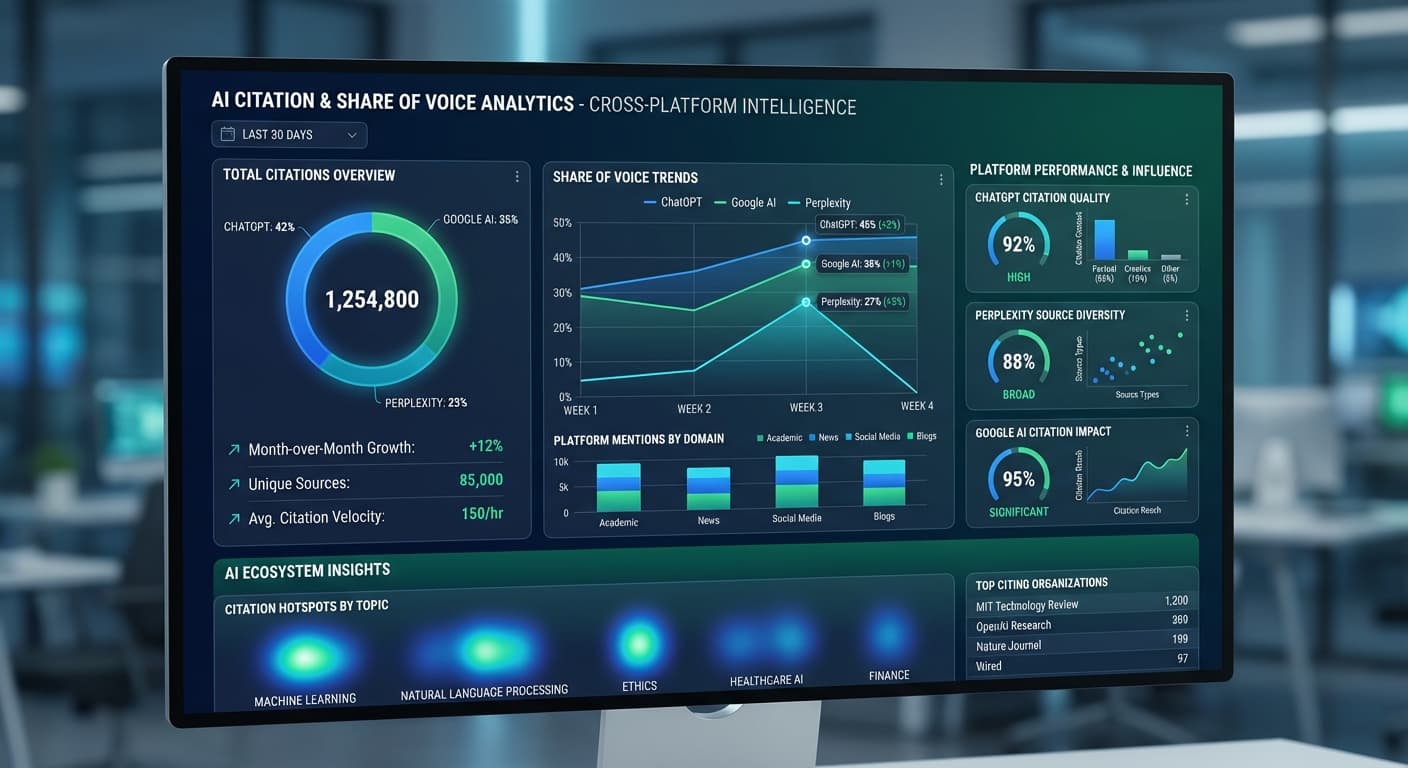
  • Performance dashboards: Real-time visibility into AI share of voice metrics

  • Alert systems: Notifications when citation patterns change significantly
  • Measuring Competitive Share of Voice

    Benchmarking Methodologies

  • Topic-based analysis: Compare citation rates for specific subject areas

  • Query volume weighting: Account for the popularity of different search queries

  • Attribution quality scoring: Evaluate the prominence and context of citations

  • Platform diversification: Measure share across multiple AI engines
  • Key Performance Indicators

  • Citation share percentage: Your citations divided by total citations in your category

  • Topic dominance score: Percentage of queries where you're the primary cited source

  • Competitive gap analysis: Areas where competitors significantly outperform you

  • Growth velocity: Month-over-month changes in citation frequency
  • Turning Data Into Actionable Insights

    Content Strategy Optimization

    Use AI share of voice data to:

  • Identify high-performing content formats that generate consistent citations

  • Optimize underperforming content by studying successful citation patterns

  • Develop new content targeting citation gaps in your industry

  • Improve content structure to better align with AI engine preferences
  • Resource Allocation Decisions

  • Budget distribution: Invest more in content areas with high citation potential

  • Team focus: Prioritize topics where you can realistically compete for citations

  • Platform strategy: Concentrate efforts on AI engines most relevant to your audience

  • Competitive response: Address areas where competitors dominate citations
  • The Future of AI Share of Voice Measurement

    Emerging Metrics

    As AI search evolves, new measurement categories are emerging:

  • Conversation thread influence: How your content shapes extended AI conversations

  • Cross-query consistency: Whether citations appear across related queries

  • User satisfaction correlation: Connecting citations to user engagement metrics

  • Brand mention sentiment: The context and tone of AI-generated references
  • Technical Developments

    Expect advances in:

  • Real-time tracking capabilities across more AI platforms

  • Natural language processing for better citation analysis

  • Predictive modeling for future citation opportunities

  • Integration tools connecting AI metrics to traditional SEO platforms
  • How Citescope Ai Helps

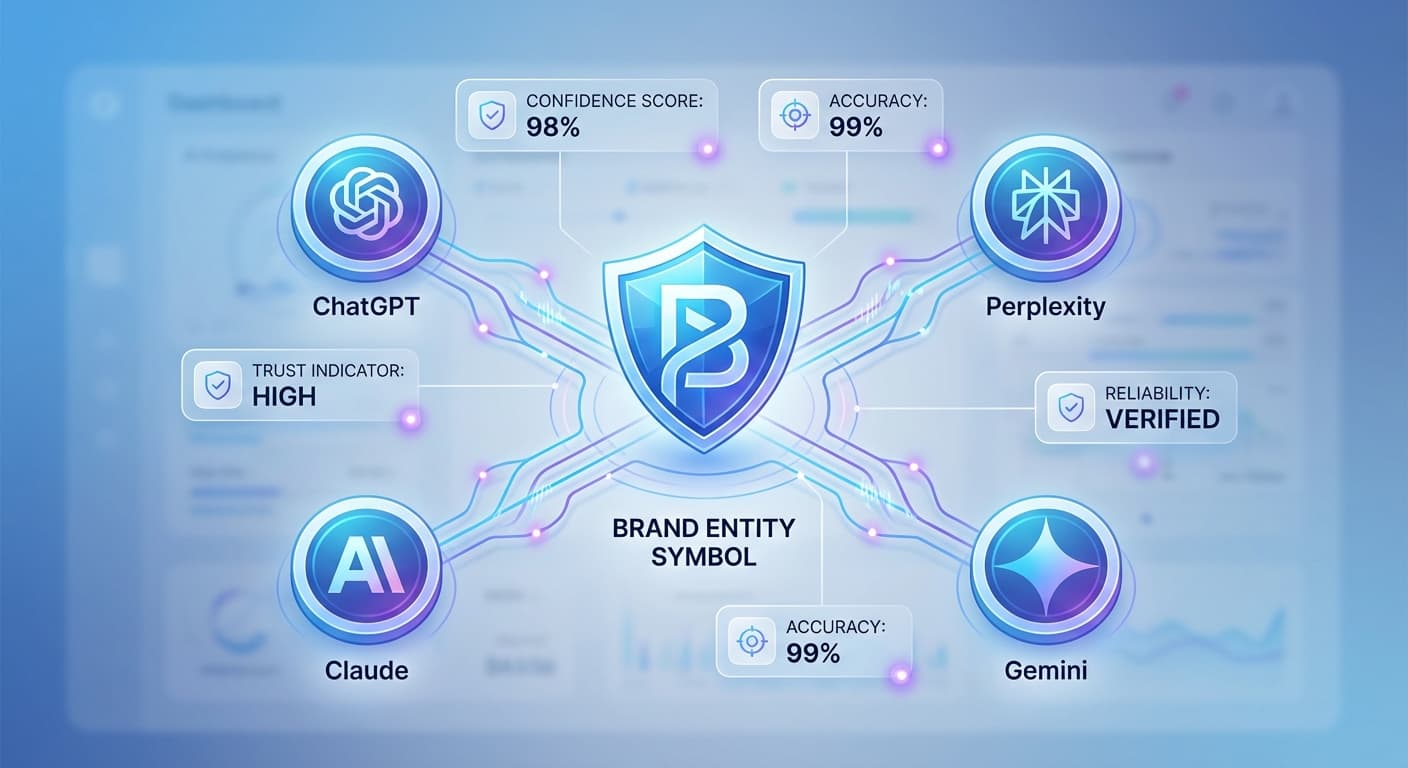
    While manual monitoring provides insights, it's time-intensive and limited in scale. Citescope Ai addresses these challenges with comprehensive citation tracking across ChatGPT, Perplexity, Claude, and Gemini. Our Citation Tracker monitors when your content gets referenced, providing real-time visibility into your AI share of voice.

    The platform's GEO Score analyzes your content across five dimensions that influence AI citations: AI Interpretability, Semantic Richness, Conversational Relevance, Structure, and Authority. This gives you a clear roadmap for optimization. When combined with our AI Rewriter, you can instantly optimize content for better citation performance across all major AI search engines.

    Ready to Optimize for AI Search?

    Traditional ranking tools can't measure what matters most in 2026: your share of voice in AI-generated responses. As conversational search continues to grow, understanding and optimizing your citation frequency becomes critical for maintaining visibility and authority.

    Citescope Ai provides the comprehensive AI citation tracking and content optimization tools you need to compete effectively in the citation economy. Start with our free tier to track your first citations and optimize up to 3 pieces of content monthly. Ready to see how your content performs in AI search? Start your free trial today and discover your true AI share of voice.
    AI share of voicecitation trackingAI SEO metricsconversational searchAI search optimization

    Track your AI visibility

    See how your content appears across ChatGPT, Perplexity, Claude, and more.

    Start for Free