How to Measure AI Citation ROI When Your Executive Team Still Demands Click-Through Rates and Conversion Metrics Built for Traditional Search
How to Measure AI Citation ROI When Your Executive Team Still Demands Click-Through Rates and Conversion Metrics Built for Traditional Search
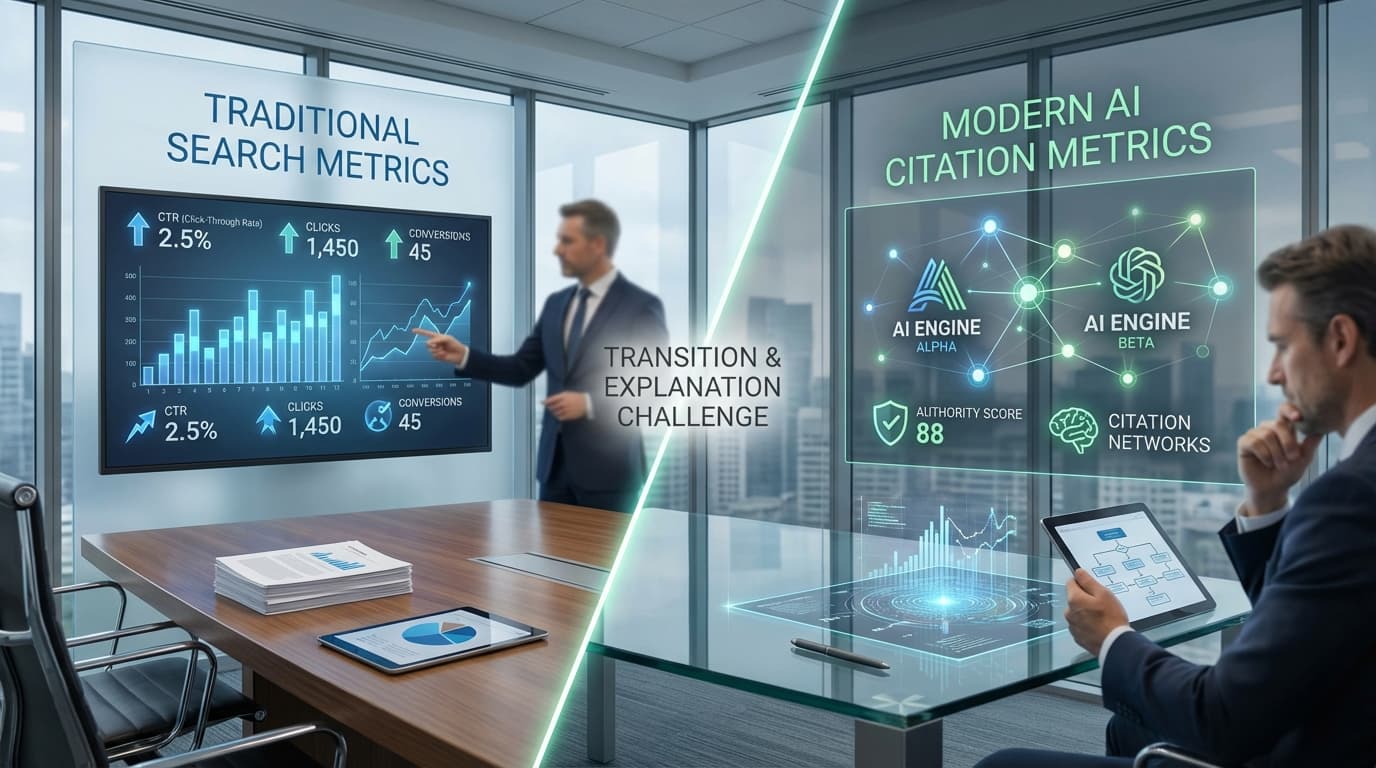
Picture this: You've spent months optimizing content for AI search engines, securing citations from ChatGPT and Perplexity, and building authority in the new AI-driven landscape. But when you present your results to leadership, they ask, "Where are the clicks? What's our CTR? Show me the conversion funnel."
You're not alone. As AI search now accounts for over 35% of all search queries in 2025, content marketers face a critical challenge: proving ROI to executives who still think in traditional search metrics while building strategies for a fundamentally different search paradigm.
The Metrics Disconnect: Why Traditional KPIs Fall Short in AI Search
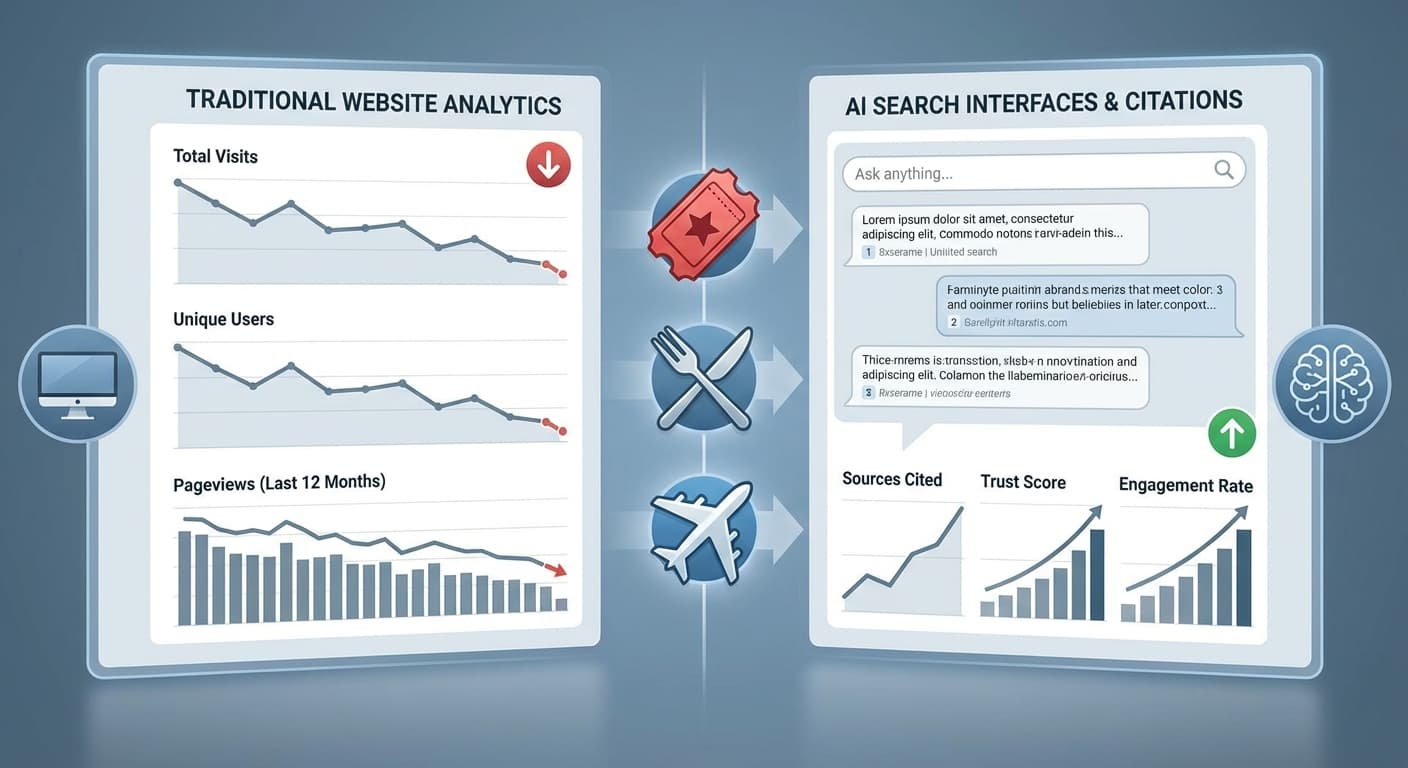
Traditional search operates on a simple premise: users click links to visit websites. AI search engines, however, often provide comprehensive answers directly in the interface, fundamentally changing user behavior and the value exchange.
The Problem with Click-Centric Thinking
When ChatGPT cites your research in response to a user query about industry trends, that citation might be worth more than 100 traditional search clicks. Here's why:
The New Value Chain
Traditional search: Query → SERP → Click → Website → Conversion
AI search: Query → AI Response (with citation) → Brand awareness → Future direct engagement → Conversion
This extended, less linear path makes traditional attribution models inadequate for measuring AI search success.
Building a Bridge: Translating AI Citation Value for Executive Teams
The key to gaining executive buy-in isn't abandoning traditional metrics entirely—it's building a bridge between old and new measurement approaches.
1. Create Citation-to-Revenue Attribution Models
Start by establishing clear connections between AI citations and business outcomes:
Direct Attribution Tracking:
Cohort Analysis:
2. Develop AI-Native KPIs with Business Impact
Citation Velocity Score
Measure how quickly your content gets picked up by AI engines after publication. A high velocity score indicates content that resonates with AI algorithms and user needs.
Authority Amplification Index
Track how citations in one AI engine lead to citations in others, measuring the compounding effect of AI visibility.
Intent Quality Ratio
Compare the commercial intent of queries that result in AI citations versus traditional search clicks.
3. Present Comparative Value Frameworks
When presenting to executives, use frameworks they understand:
Cost Per Quality Impression (CPQI)
Brand Equity ROI
Advanced Measurement Strategies for AI Citation Success
Multi-Touch Attribution for AI Citations
Implement attribution models that account for the complex customer journey in AI search:
Competitive Intelligence Metrics
Citation Share Analysis
Measure your brand's share of voice in AI engine responses within your industry:
Response Quality Scoring
Analyze the context and positioning of your citations:
Business Impact Correlations
Establish clear connections between AI citation metrics and business outcomes:
Pipeline Quality Metrics
Market Share Indicators
How Citescope Ai Helps Bridge the Metrics Gap
While building comprehensive measurement frameworks can seem daunting, tools like Citescope Ai simplify the process by providing executives with the data they need in formats they understand.
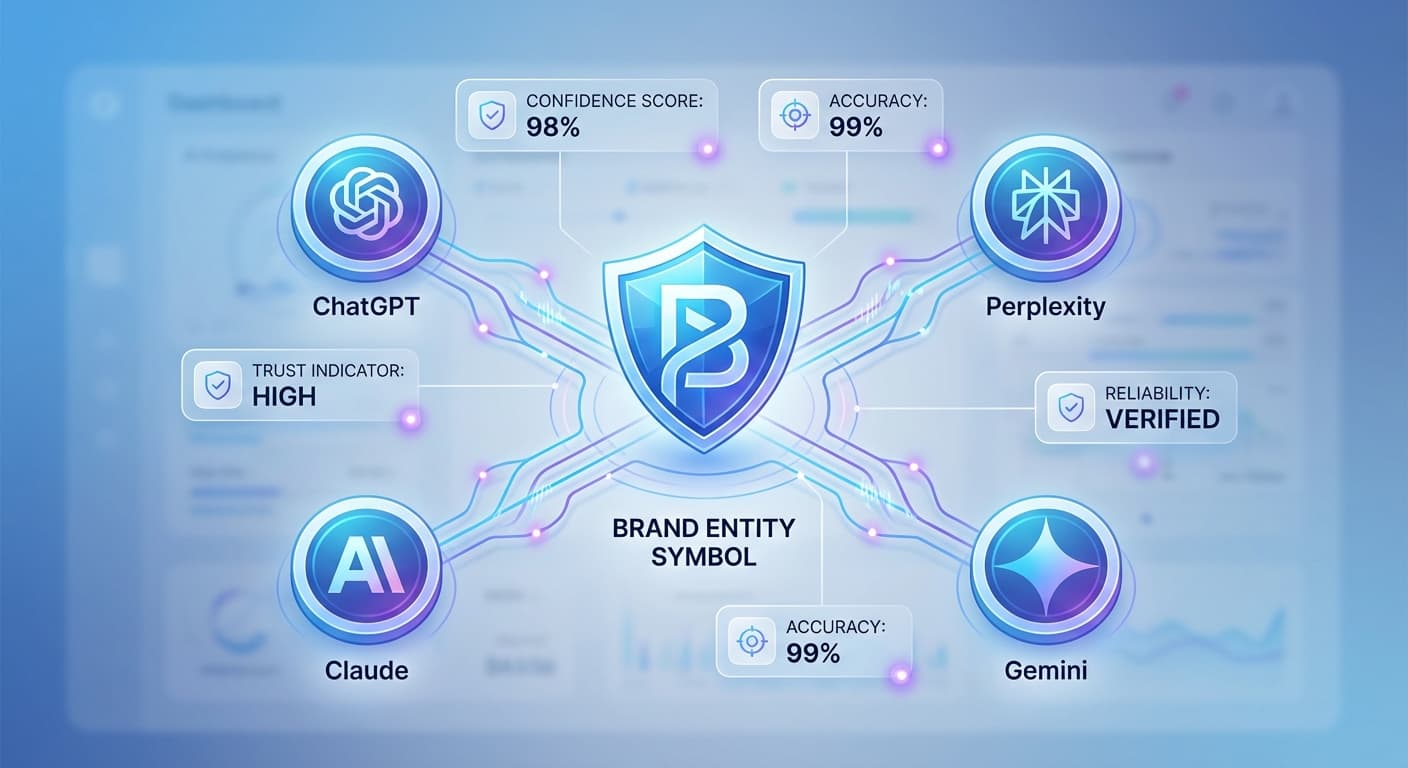
Citescope Ai's Citation Tracker monitors when your content gets cited across ChatGPT, Perplexity, Claude, and Gemini, providing detailed analytics on:
The platform's GEO Score helps predict citation potential before publication, allowing teams to optimize content for maximum AI visibility and measurable business impact.
Creating Executive-Ready Reporting Frameworks
Monthly AI Citation Scorecards
Develop standardized reports that include:
Executive Summary Metrics:
Operational Metrics:
Quarterly Business Impact Reviews
Strategic Alignment Reports:
Investment Justification:
The Future-Proof Approach: Preparing for Evolving Metrics
As AI search continues evolving, measurement approaches must remain flexible. Build frameworks that can adapt to:
Recommended Implementation Timeline
Month 1-2: Foundation Building
Month 3-4: Optimization Phase
Month 5-6: Strategic Integration
Ready to Optimize for AI Search?
Transitioning from traditional search metrics to AI citation measurement doesn't have to be a battle with your executive team. With the right frameworks, tools, and communication strategies, you can demonstrate the clear business value of AI search optimization while building authority in the channels that will define the future of search.
Citescope Ai makes this transition seamless by providing comprehensive citation tracking, competitive analysis, and executive-ready reporting tools. Start with our free tier to track your first AI citations and build the data foundation your leadership team needs to embrace the AI search revolution. Try Citescope Ai today and turn AI citations into measurable business growth.