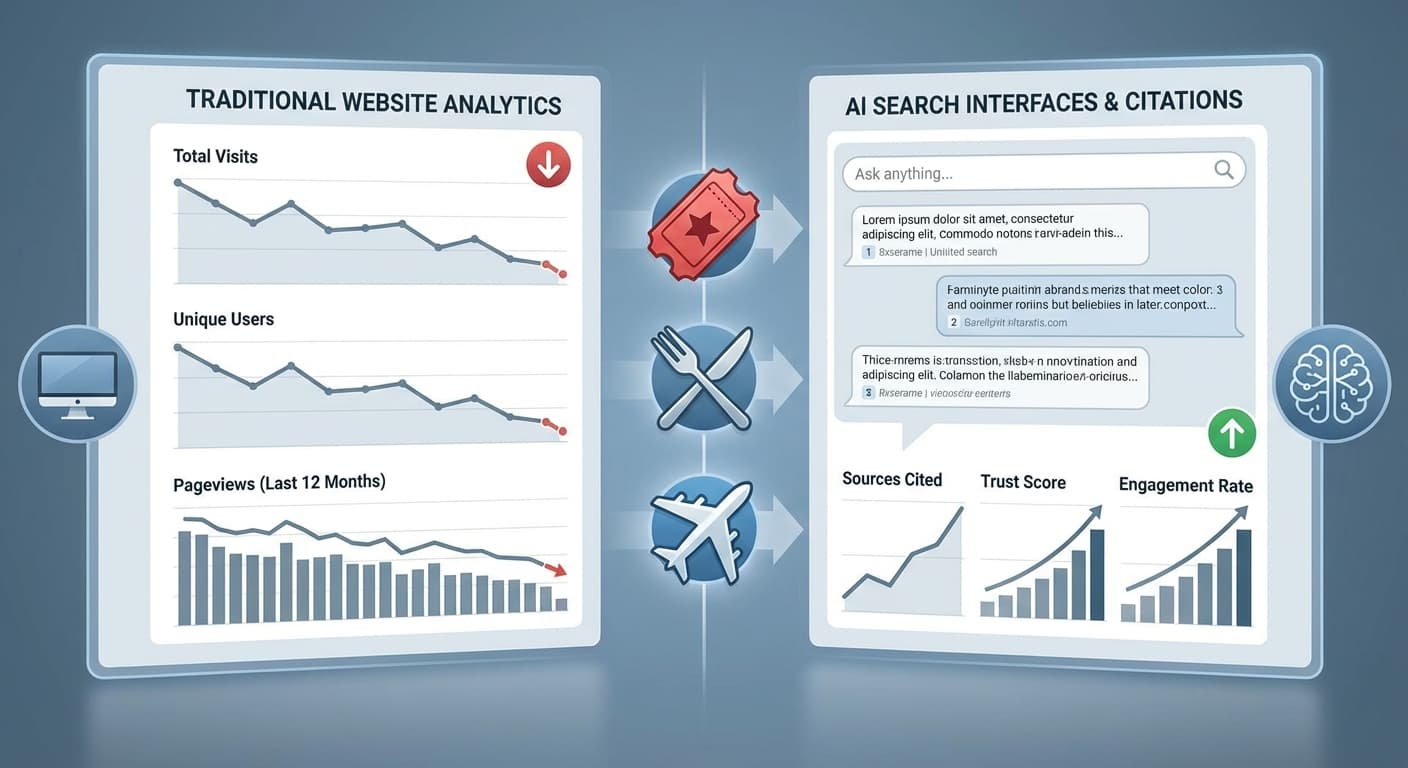
How to Get Your Content Featured in AI-Powered Search Results Without Losing Traffic to Zero-Click Answers

How to Get Your Content Featured in AI-Powered Search Results Without Losing Traffic to Zero-Click Answers
With AI search engines now handling over 35% of all online queries in 2026, content creators face a paradox: getting featured in AI results means higher visibility, but it often leads to zero-click answers that keep users from visiting your site. It's like being the star of a movie trailer that gives away the entire plot.
The good news? Smart content creators are finding ways to leverage AI visibility while still driving meaningful traffic to their websites. Let's explore how you can master this balance.
The AI Search Revolution is Here (And It's Massive)
The numbers don't lie. ChatGPT now serves over 600 million weekly users, while Perplexity processes 100+ million monthly searches. Google's AI Overviews appear in 70% of search results, and 74% of Gen Z users prefer AI-powered search over traditional engines.
But here's the challenge: when Claude perfectly answers "What is compound interest?" with a complete explanation, why would users click through to your financial blog? This zero-click phenomenon has content creators worried about losing hard-earned organic traffic.
Understanding Zero-Click AI Answers
Zero-click answers occur when AI engines provide complete responses without users needing to visit the source. Unlike traditional search snippets that offer previews, AI responses often feel comprehensive enough to satisfy user intent immediately.
Common Zero-Click Scenarios:
The Strategic Approach: Teaser + Deep Value
The secret isn't avoiding AI search engines—it's strategically structuring your content to get featured while compelling users to visit your site for the full experience.
1. Create Compelling Content Hooks
Structure your content so the most valuable insights require the full article. For example:
2. Use the "Iceberg Strategy"
Make your introduction comprehensive enough to satisfy AI engines while hinting at deeper insights below the surface:
"Content marketing generates 3x more leads than paid search at 62% less cost. But the real game-changer isn't just creating more content—it's the psychological timing strategy that increased our client's conversion rates by 340%. Here's the framework we use..."
3. Include Actionable Elements That Require Context
AI engines excel at sharing concepts but struggle with personalized implementation. Include elements like:
Content Structure Techniques That Drive Clicks
The "Preview + Promise" Method
Structure your content to give AI engines enough to feature you while promising additional value:
Example for a productivity article:
Layer Your Value Propositions
Use Strategic Content Gaps
Create intentional gaps in your AI-accessible content that naturally lead to your full article:
Optimizing for Both AI Visibility AND Click-Through
1. Craft AI-Friendly Summaries with Teasers
Your first 150-200 words should:
2. Structure for Scannable Value
Use formatting that works well in AI responses while encouraging deeper engagement:
3. Include Exclusive Resources
Offer downloadable resources, templates, or tools that require visiting your site:
Advanced Strategies for AI-Era Content Marketing
The "Conversation Continuation" Approach
Structure content as if you're continuing a conversation AI started:
Create "Implementation Roadmaps"
AI engines can explain concepts, but they can't provide personalized roadmaps. Create detailed, step-by-step implementation guides with:
Use Data Storytelling
While AI can cite statistics, it can't tell compelling data stories. Structure your content around:
Many successful content creators are using tools like Citescope to optimize their content for AI visibility while maintaining traffic-driving appeal. Citescope's GEO Score analyzes content across five dimensions—AI Interpretability, Semantic Richness, Conversational Relevance, Structure, and Authority—helping creators find the sweet spot between AI optimization and user engagement.
Measuring Success in the AI Search Era
New Metrics to Track
Tools and Monitoring
Track your AI search performance using:
The Future of AI-Optimized Content
As AI search engines become more sophisticated, expect to see:
The content creators who thrive will be those who view AI engines not as traffic thieves, but as powerful distribution channels that can amplify their expertise to millions of users.
How Citescope Helps Navigate This Balance
Optimizing for AI visibility while maintaining traffic requires precise content analysis and optimization. Citescope's platform addresses this challenge directly:
With features designed specifically for the AI search era, Citescope helps content creators find the perfect balance between AI optimization and traffic generation.
Ready to Optimize for AI Search?
The future belongs to content creators who can harness AI search engines as distribution channels while still driving meaningful traffic to their sites. Don't let the fear of zero-click answers hold you back from AI optimization—instead, learn to structure content that gets featured AND gets clicked.
Start optimizing your content for AI search engines today. Try Citescope free and discover how to boost your AI visibility while maintaining your traffic. Get your first GEO Score analysis and see exactly how AI-friendly your content is—no credit card required.