GEO Strategy

How to Get Featured in AI Search Answers and Recover Traffic Lost to Google's AI Overviews
January 17, 20268 min read
How to Get Featured in AI Search Answers and Recover Traffic Lost to Google's AI Overviews

How to Get Featured in AI Search Answers and Recover Traffic Lost to Google's AI Overviews

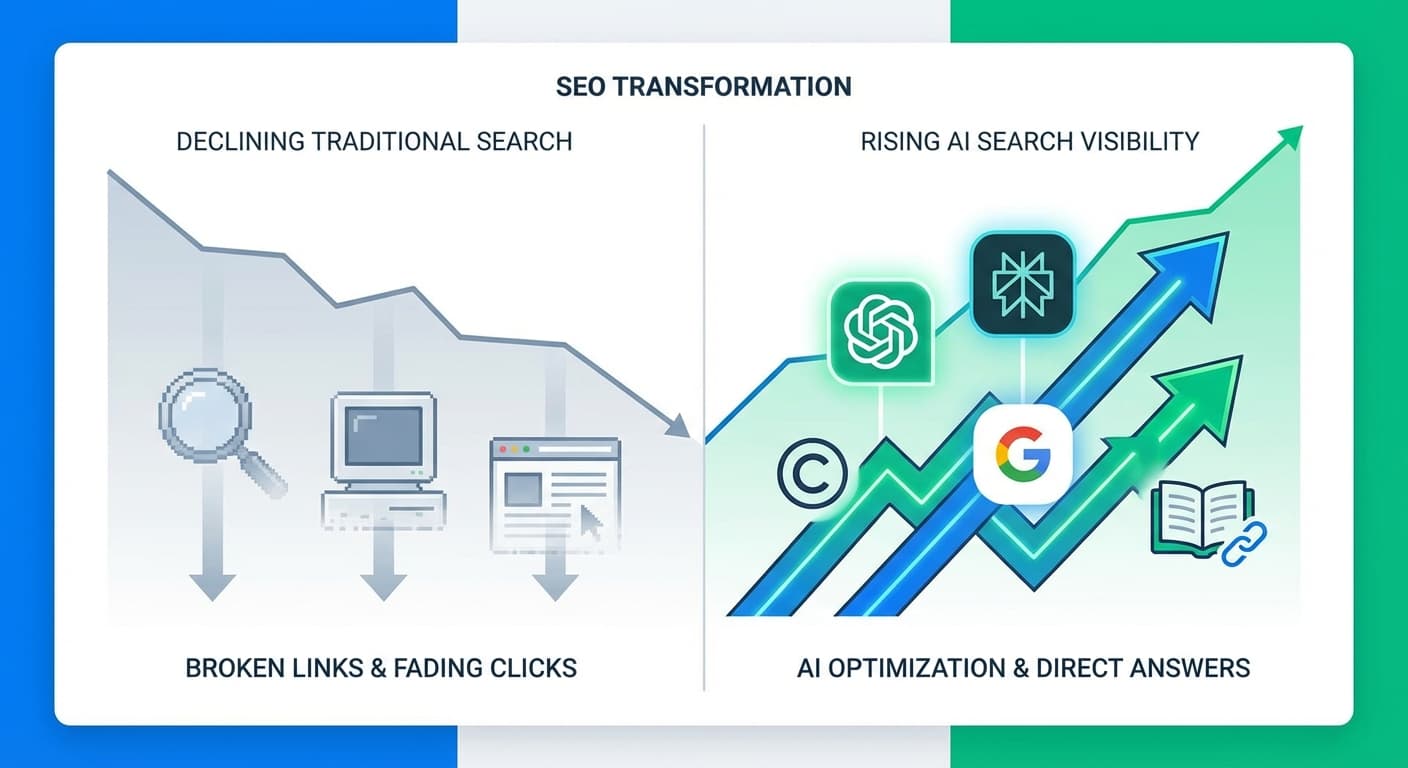
By 2026, AI-powered search results have fundamentally changed the digital marketing landscape. Google's AI Overviews now appear in 65% of search results, while AI search engines like ChatGPT, Perplexity, and Claude handle over 35% of all information-seeking queries. For content creators and businesses, this shift represents both a challenge and an unprecedented opportunity.

The sobering reality? Traditional organic traffic has declined by an average of 25-40% since AI Overviews became standard, according to recent studies by search marketing firms. But here's the silver lining: content that gets featured in AI search answers often sees traffic increases of 150-300% as users seek out the original sources.

The question isn't whether AI search will dominate—it already has. The question is: how do you position your content to be the authoritative source that AI engines cite and recommend?

Understanding the AI Search Revolution in 2026

AI search engines don't just crawl and index content like traditional search engines. They actively interpret, synthesize, and cite information to provide direct answers to user queries. This means:

  • 70% of Gen Z users now start their research with AI tools rather than Google

  • ChatGPT processes over 500 million queries weekly, with most seeking immediate, synthesized answers

  • Perplexity has become the go-to research tool for professionals, handling 200+ million monthly searches

  • Google's AI Overviews now pull from an average of 3-5 sources per answer, creating new citation opportunities
  • The shift represents a move from "finding information" to "getting answers." Users no longer want to click through multiple results—they want AI to synthesize the best information and present it directly.

    Why Traditional SEO Falls Short in the AI Era

    Traditional SEO optimized for human readers scanning search results. AI search optimization requires a fundamentally different approach:

    The Old Way vs. The AI Way

    Traditional SEO focused on:

  • Keyword density and placement

  • Meta descriptions for click-through rates

  • Backlink authority

  • Page load speed and technical factors
  • AI search optimization prioritizes:

  • Semantic clarity and natural language patterns

  • Structured information that AI can easily parse

  • Authoritative, fact-dense content with clear sources

  • Conversational tone that matches AI response patterns

  • Comprehensive topic coverage rather than keyword stuffing
  • 7 Proven Strategies to Get Featured in AI Search Answers

    1. Structure Content for AI Comprehension

    AI engines excel at parsing well-structured content. Use:

  • Clear headings and subheadings (H2, H3) that directly answer questions

  • Numbered lists and bullet points for step-by-step processes

  • Definition formats ("X is..." or "X refers to...")

  • Comparison structures ("Unlike X, Y does...")
  • Example: Instead of burying your main point in paragraph three, lead with: "Content marketing ROI in 2026 averages 300% for B2B companies, driven primarily by AI search visibility and long-form educational content."

    2. Answer Questions Directly and Comprehensively

    AI engines prioritize content that provides complete answers. Research shows that featured content typically:

  • Answers the primary question within the first 150 words

  • Addresses related questions users might have

  • Provides context and background for complex topics

  • Includes specific examples and data points
  • 3. Use Natural Language and Conversational Tone

    AI models are trained on conversational text. Content that mirrors natural speech patterns gets higher "AI readability" scores:

  • Write how you would explain the topic to a colleague

  • Use "you" and "your" to create direct engagement

  • Include transitional phrases like "However," "Additionally," "In contrast"

  • Break up long sentences into digestible chunks
  • 4. Incorporate Rich, Factual Data

    AI engines love citing content with:

  • Recent statistics and studies (always current year or previous year)

  • Specific numbers and percentages

  • Named sources and citations

  • Industry benchmarks and comparisons
  • Tools like Citescope's GEO Score analyzer can help identify whether your content has sufficient semantic richness and authority signals that AI engines prefer.

    5. Create Topic Clusters, Not Individual Pages

    AI search rewards comprehensive topic coverage. Instead of targeting single keywords:

  • Build content hubs around main topics

  • Interlink related articles within your site

  • Cover subtopics thoroughly rather than surface-level overviews

  • Update and expand existing content regularly
  • 6. Optimize for Voice and Conversational Queries

    With AI assistants handling more voice searches:

  • Include FAQ sections that mirror how people actually ask questions

  • Use question-based headings ("How do I...?", "What is...?", "Why does...?")

  • Write in second person ("you can," "your business will")

  • Include local and contextual information when relevant
  • 7. Build Topical Authority Through Consistent Publishing

    AI engines increasingly favor sources that demonstrate expertise across related topics:

  • Publish consistently on your core subject areas

  • Reference your own related content to show depth

  • Stay current with industry developments and trends

  • Engage with your audience through comments and social media
  • Technical Optimizations for AI Search Visibility

    Schema Markup for AI Understanding

    Implement structured data to help AI engines understand your content:

  • Article schema for blog posts and guides

  • FAQ schema for question-and-answer content

  • HowTo schema for step-by-step guides

  • Organization schema for author and company information
  • Content Formatting Best Practices

  • Use semantic HTML (proper heading hierarchy)

  • Include image alt text that describes content, not just images

  • Add table of contents for long-form content

  • Implement breadcrumb navigation to show content relationships
  • Measuring Your AI Search Success

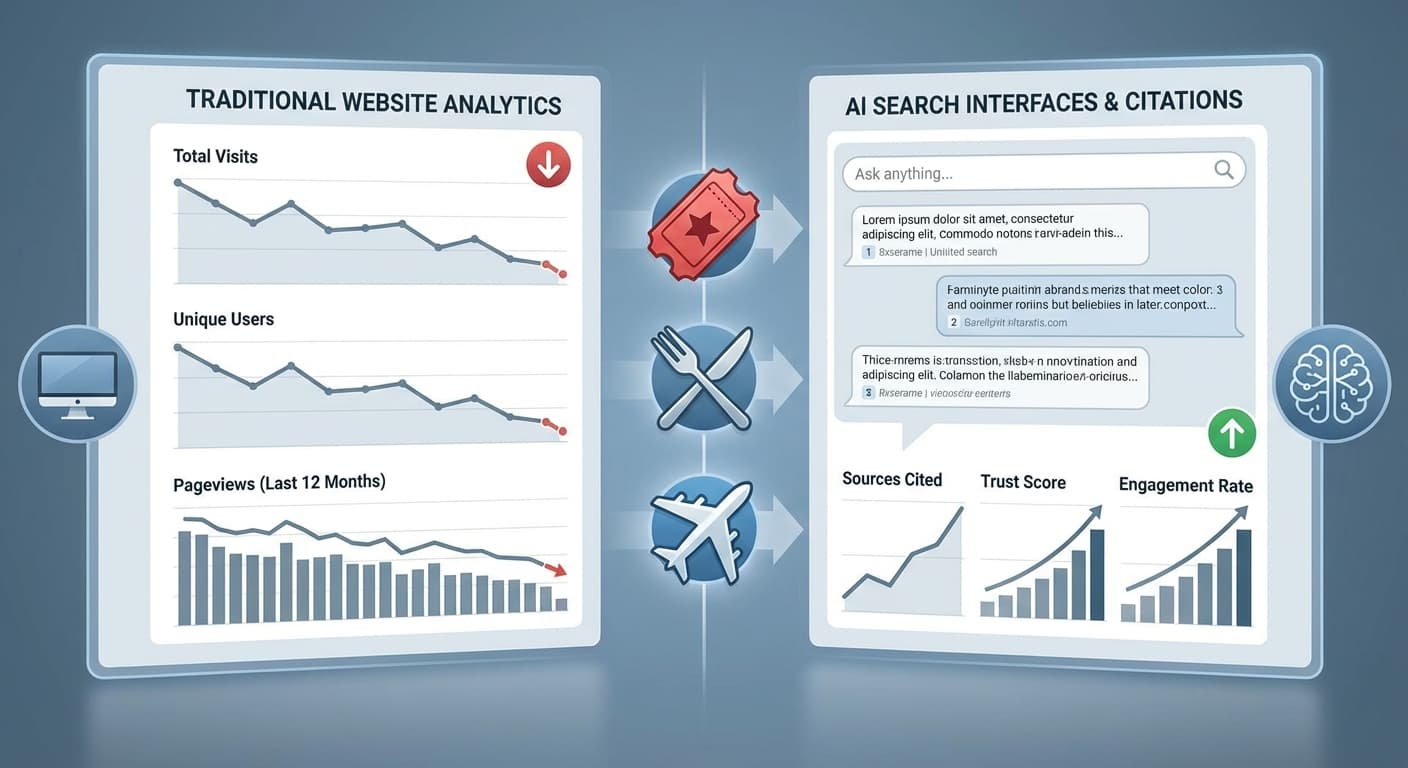
    Tracking AI search performance requires new metrics:

    Key Performance Indicators (KPIs)

  • Citation frequency in AI search results

  • Brand mention rate in AI-generated answers

  • Traffic from AI search referrals

  • Engagement metrics from AI-driven traffic

  • Position in AI search suggestions
  • Monitoring Tools and Techniques

  • Set up Google Alerts for your brand and key terms

  • Monitor ChatGPT, Perplexity, and Claude responses manually

  • Track referral traffic from AI platforms

  • Use specialized tools that monitor AI search citations
  • Common Mistakes That Hurt AI Search Visibility

    Content Issues


  • Over-optimizing for traditional keywords instead of natural language

  • Providing incomplete answers that force users to look elsewhere

  • Using overly technical jargon without explanation

  • Failing to update content with current information
  • Technical Problems


  • Poor site structure that confuses AI crawlers

  • Slow loading speeds that affect content accessibility

  • Missing or incorrect schema markup

  • Duplicate content across multiple pages
  • Industry-Specific Strategies

    For B2B Companies


  • Focus on educational content that solves business problems

  • Create comprehensive guides rather than promotional content

  • Include case studies and real examples

  • Target long-tail, problem-solving queries
  • For E-commerce Brands


  • Develop detailed product guides and comparisons

  • Create buying guides that AI can reference

  • Include technical specifications and feature explanations

  • Build category-level authority through comprehensive coverage
  • For Service Providers


  • Answer common client questions thoroughly

  • Create process explanations and methodology content

  • Include local information for location-based services

  • Showcase expertise through detailed case studies
  • How Citescope Helps You Dominate AI Search

    Optimizing for AI search requires understanding how AI engines interpret and evaluate content—something that's nearly impossible to do manually at scale.

    Citescope's GEO Score analyzes your content across five critical dimensions that AI search engines prioritize:

  • AI Interpretability: How easily can AI engines parse your content?

  • Semantic Richness: Does your content have the depth AI engines prefer?

  • Conversational Relevance: Is your tone aligned with AI response patterns?

  • Structure: Is your content formatted for optimal AI comprehension?

  • Authority: Do you have the credibility signals AI engines trust?
  • The AI Rewriter feature takes your existing content and restructures it specifically for AI visibility—transforming traditional SEO content into AI search-optimized material with a single click.

    Most importantly, Citation Tracker monitors when your content gets referenced by ChatGPT, Perplexity, Claude, and Gemini, giving you concrete data on your AI search performance and helping you identify which optimization strategies work best for your content.

    Future-Proofing Your Content Strategy

    As AI search continues to evolve, several trends will shape optimization strategies:

    Emerging Opportunities


  • Multimodal content (text + images + video) will become more important

  • Real-time information will be increasingly valued

  • Interactive content that AI can reference and cite

  • Community-generated content and user-generated insights
  • Staying Ahead


  • Monitor AI search trends monthly, not quarterly

  • Test new content formats as they emerge

  • Build relationships with AI-first publications and platforms

  • Invest in content quality over quantity
  • Ready to Optimize for AI Search?

    The shift to AI search represents the biggest change in digital marketing since the rise of Google. Companies that adapt their content strategy now will capture the majority of AI-driven traffic, while those that wait will find themselves increasingly invisible in the new search landscape.

    Citescope makes AI search optimization accessible and measurable. Our free tier includes 3 content optimizations per month—enough to test the waters and see immediate improvements in your AI search visibility.

    Start your free account today and discover how your content performs in the AI search era. With AI handling over one-third of all searches, there's never been a more critical time to ensure your content gets found, cited, and recommended by the search engines that matter most in 2026.

    [Get started with Citescope →](https://citescope.com)
    AI search optimizationGoogle AI Overviewscontent marketingSEO strategyAI citations

    Track your AI visibility

    See how your content appears across ChatGPT, Perplexity, Claude, and more.

    Start for Free