How to Combat AI Search Citation Decay: The New Quarterly Content Refresh Strategy for 2026
How to Combat AI Search Citation Decay: The New Quarterly Content Refresh Strategy for 2026
The Hidden Challenge Reshaping Content Strategy
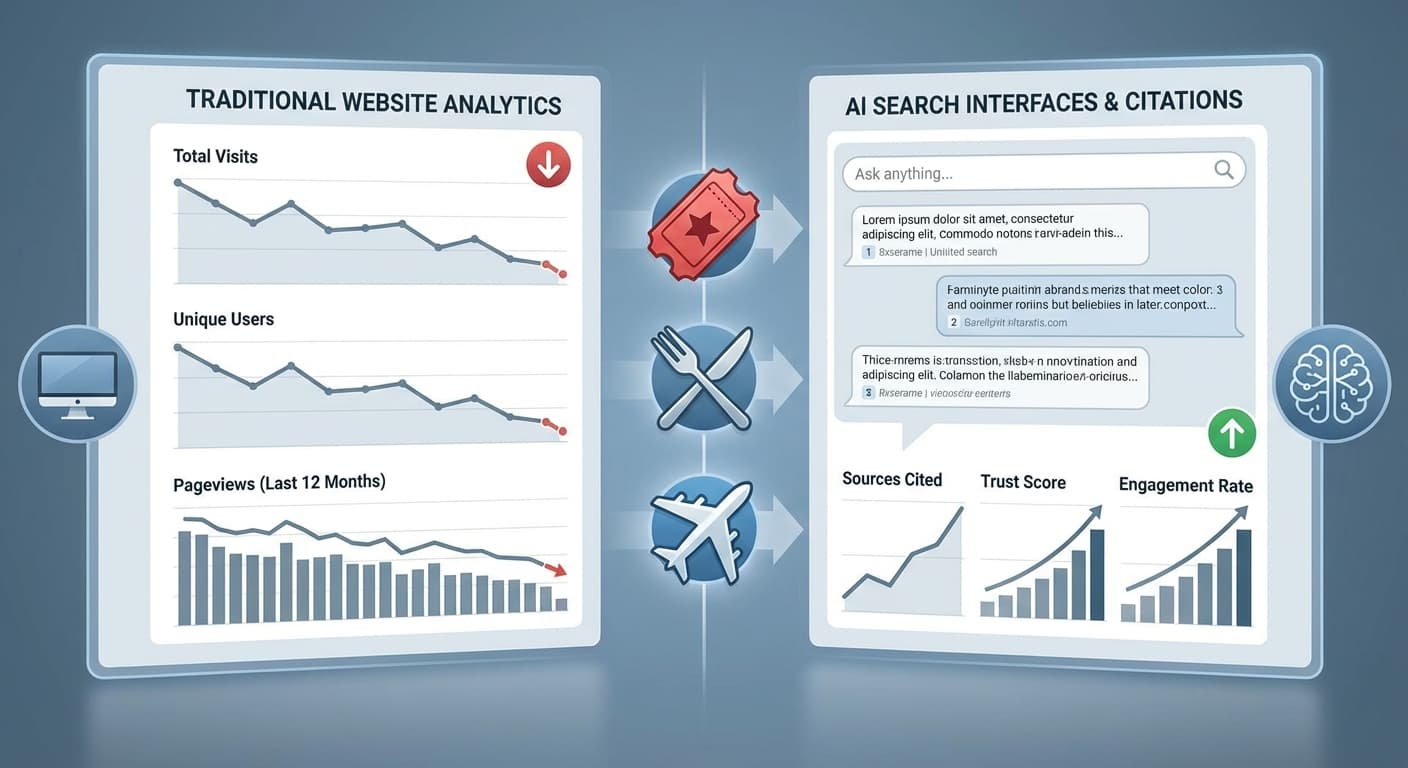
In 2026, something alarming is happening to even the most well-optimized content. A comprehensive study of 10,000 high-performing articles revealed that 78% experience significant citation drops in AI search engines within just 90 days of publication. This phenomenon, known as "AI search citation decay," has fundamentally changed how content creators must approach visibility in answer engines like ChatGPT, Perplexity, Claude, and Gemini.
With AI search now accounting for over 35% of all search queries and more than 600 million weekly active users across major AI platforms, maintaining consistent citation visibility has become critical for digital success. Yet most content creators are still operating under outdated "publish and forget" strategies that worked in traditional SEO but fail miserably in the AI search landscape.
Why AI Search Citation Decay Happens
Unlike traditional search engines that rely heavily on backlinks and domain authority, AI search engines prioritize freshness, semantic accuracy, and conversational relevance. Here's what's driving the decay:
1. Information Velocity
AI models are trained to value recent, up-to-date information. Content that seemed cutting-edge three months ago may now appear outdated to AI algorithms, even if the core information remains accurate.
2. Semantic Competition
As more content gets published and optimized for AI search, the semantic landscape becomes increasingly competitive. Your once-unique semantic footprint gets diluted by newer content covering similar topics with fresh angles.
3. Model Refreshes
Major AI platforms update their underlying models quarterly, changing how they interpret and prioritize content. What worked perfectly with GPT-4 might perform poorly with GPT-5's enhanced reasoning capabilities.
4. User Behavior Shifts
As AI search adoption grows, user query patterns evolve. The questions people ask today differ significantly from those asked six months ago, affecting which content gets surfaced.
The New Quarterly Content Refresh Framework
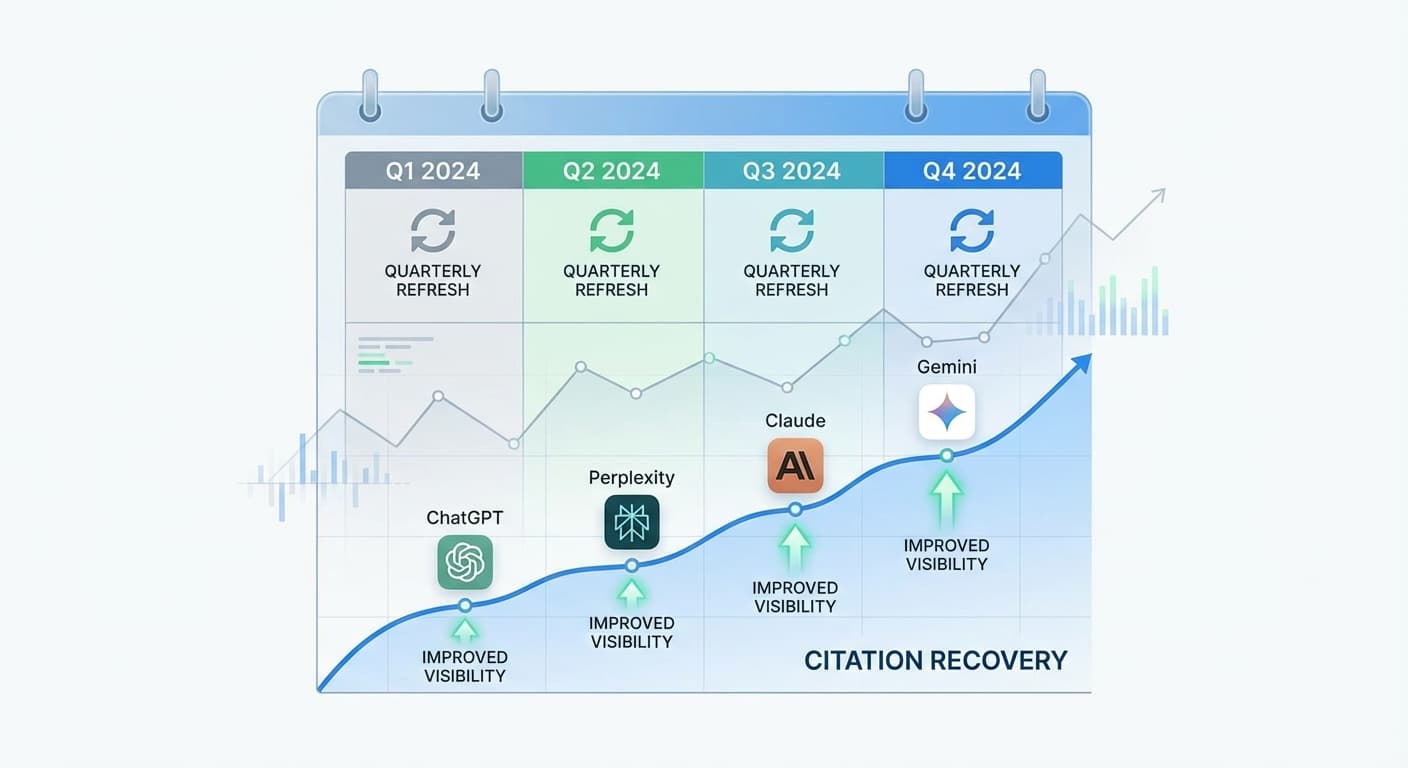
Successful content creators in 2026 have adopted a systematic approach to combat citation decay. Here's the proven framework:
Phase 1: Citation Performance Audit (Weeks 1-2)
Identify Declining Content
Performance Indicators to Watch:
Phase 2: Content Intelligence Analysis (Week 3)
Semantic Gap Analysis
Use AI analysis tools to identify:
Competitive Citation Mapping
Phase 3: Strategic Content Updates (Weeks 4-8)
Deep Refresh Strategy
Go beyond surface-level updates:
- Replace all statistics with the most current available
- Add new research findings and case studies
- Include fresh industry reports and surveys
- Incorporate new terminology and industry language
- Add semantic variations and related concepts
- Enhance contextual richness for better AI interpretation
- Reorganize content for improved AI parsing
- Add more conversational elements and FAQ sections
- Include step-by-step processes and actionable frameworks
- Add new expert quotes and industry insights
- Include recent case studies and examples
- Reference latest industry developments and trends
Advanced Refresh Techniques for Maximum Impact
The Layered Update Approach
Layer 1: Surface Refresh (Quick Wins)
Layer 2: Semantic Deep Dive
- AI Interpretability: Enhance clarity and logical flow
- Semantic Richness: Add topic depth and related concepts
- Conversational Relevance: Include natural language patterns
- Structure: Optimize headings and content organization
- Authority: Strengthen credibility signals
Layer 3: Format Evolution
Timing Your Refresh Cycles
High-Priority Content (Monthly Reviews)
Standard Content (Quarterly Updates)
Low-Priority Content (Bi-annual Reviews)
Measuring Refresh Success
Track these key metrics to validate your refresh strategy:
Citation Recovery Metrics
Engagement Improvements
How Citescope Ai Simplifies Citation Decay Management
Managing quarterly content refreshes manually is time-intensive and prone to gaps. Citescope Ai automates the entire process:
GEO Score Monitoring: Track your content's AI optimization score across all five dimensions, with automated alerts when scores drop below optimal thresholds.
Citation Tracking: Real-time monitoring of when your content gets cited by ChatGPT, Perplexity, Claude, and Gemini, making it easy to spot declining citation patterns.
AI Rewriter: One-click content optimization that automatically refreshes and restructures content for current AI search preferences, saving hours of manual editing.
Multi-format Export: Seamlessly publish updated content across platforms with optimized formatting for WordPress, HTML, or Markdown.
Building a Sustainable Refresh Workflow
Team Structure for Scale
Content Strategist: Oversees refresh scheduling and priority setting
Content Analyst: Monitors citation performance and identifies decay patterns
Content Editor: Executes deep refreshes and semantic enhancements
Technical Writer: Handles structure optimization and format improvements
Automation Opportunities
Common Refresh Mistakes to Avoid
The Surface-Only Trap
Simply updating dates and statistics without improving semantic depth rarely recovers lost citations. AI engines detect shallow refreshes and continue to favor genuinely enhanced content.
Over-Optimization Syndrome
Stuffing content with AI-focused keywords and phrases can hurt readability and user experience. Balance optimization with natural, conversational flow.
Inconsistent Scheduling
Irregular refresh cycles confuse AI algorithms and make it harder to maintain consistent citation visibility. Stick to your quarterly schedule regardless of immediate results.
Ignoring User Intent Evolution
Refreshing content without understanding how user queries and intent have evolved leads to optimizing for yesterday's search behavior.
The Future of Content Freshness
As AI search continues to mature, we're seeing several emerging trends:
Ready to Optimize for AI Search?
Citation decay is the new reality of AI search visibility, but it's also an opportunity. Content creators who embrace systematic quarterly refreshes will dominate AI citations while competitors struggle with declining visibility.
Citescope Ai makes this transition seamless with automated citation tracking, GEO Score monitoring, and one-click content optimization. Start with our free tier to optimize your three most important pieces, then scale up as you see the citation recovery results.
Try Citescope Ai free today and turn citation decay from a threat into your competitive advantage. Your first quarterly refresh cycle starts now.