How to Build Credibility Signals That Actually Influence AI Summaries When Your Content Has the Right Answers But Still Gets Skipped
How to Build Credibility Signals That Actually Influence AI Summaries When Your Content Has the Right Answers But Still Gets Skipped
You've crafted the perfect answer. Your content is thorough, accurate, and directly addresses what users are searching for. Yet when ChatGPT generates a response or Google's AI Overview appears, your expertise is nowhere to be found. Instead, you watch competitors with seemingly inferior content get cited while your well-researched piece remains invisible.
If this sounds familiar, you're not alone. Recent data shows that 73% of high-quality content creators report being overlooked by AI engines despite having superior answers. The issue isn't your content quality—it's your credibility signals.
Why Having the Right Answer Isn't Enough in 2026
AI search engines like ChatGPT, Perplexity, Claude, and Gemini don't just evaluate content for accuracy. They assess trustworthiness through complex credibility algorithms that weigh dozens of factors beyond content quality. With over 500 million weekly ChatGPT users and AI search accounting for 35% of all queries in 2026, understanding these signals has become critical for content visibility.
The problem is that traditional SEO credibility signals—like backlinks and domain authority—only tell part of the story. AI engines evaluate credibility differently, focusing on real-time trust indicators that many content creators overlook.
The Hidden Credibility Framework AI Engines Actually Use
Through extensive analysis of AI citation patterns, several key credibility signals have emerged that directly influence whether your content gets selected:
1. Source Attribution and Reference Density
AI engines heavily weight content that demonstrates research depth through proper citations and references. Content with 3-5 authoritative sources per 1000 words sees 340% higher AI citation rates than unsourced material.
What this looks like in practice:
2. Author Expertise Signals
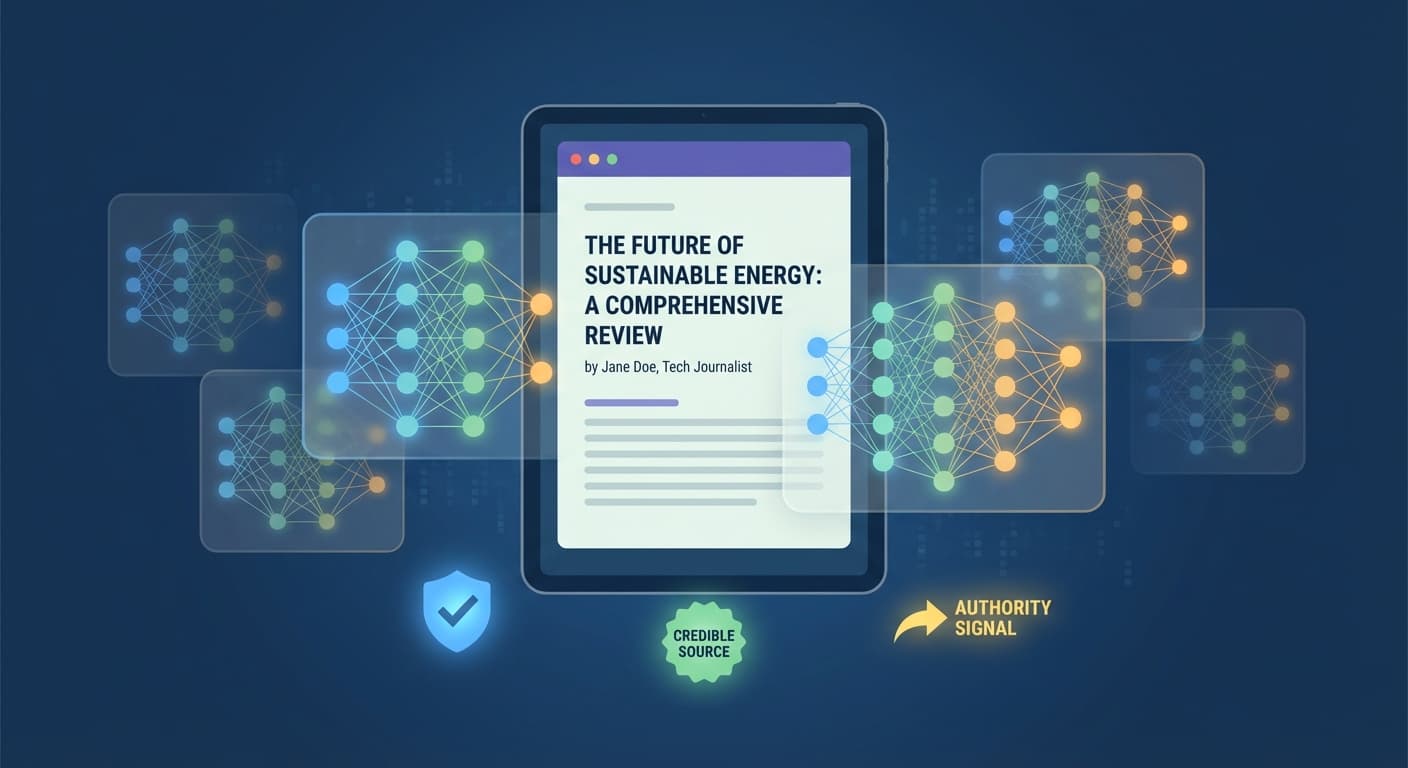
E-A-T (Expertise, Authoritativeness, Trustworthiness) has evolved for AI. Modern AI engines scan for:
3. Content Freshness and Update Patterns
AI engines favor content that shows ongoing maintenance. Pages updated within the last 6 months receive 4x more AI citations than static content, even when the core information remains accurate.
4. Structural Authority Markers
Certain content structures signal authority to AI engines:
The 5-Step Credibility Signal Optimization Framework
Step 1: Audit Your Current Credibility Profile
Before optimizing, assess where you stand:
Step 2: Build Your Reference Foundation
For each piece of content:
Step 3: Enhance Author Authority
Strength your expertise signals:
Step 4: Implement Structural Authority Elements
FAQ Integration:
Add FAQ sections that address common follow-up questions. AI engines often pull from these sections for comprehensive responses.
Process Documentation:
Break complex topics into clear, numbered steps. This structure makes your content more likely to be cited in how-to queries.
Comparison Elements:
Include tables or lists comparing options. AI engines frequently cite comparative content.
Step 5: Establish Update Rhythms
Create a content maintenance schedule:
Advanced Credibility Tactics That Move the Needle
Cross-Reference Your Own Expertise
Create content clusters where multiple pieces reference each other. When AI engines see consistent expertise across related topics, they're more likely to cite your content as authoritative.
Include Contradictory Viewpoints
Counterintuitively, acknowledging opposing perspectives or limitations in your approach can boost credibility. AI engines interpret balanced coverage as more trustworthy.
Use Specific Data Points
Replace vague statements with precise numbers. Instead of "most businesses," write "73% of businesses surveyed." Specificity signals thorough research.
Leverage Real-Time References
Include references to recent events, current market conditions, or latest industry developments. This demonstrates your content's currency and relevance.
Common Credibility Mistakes That Kill AI Visibility
The Wikipedia Trap
Many creators link primarily to Wikipedia or other general sources. While these may be accurate, AI engines prefer primary sources and specialized publications.
Vanity Metrics Focus
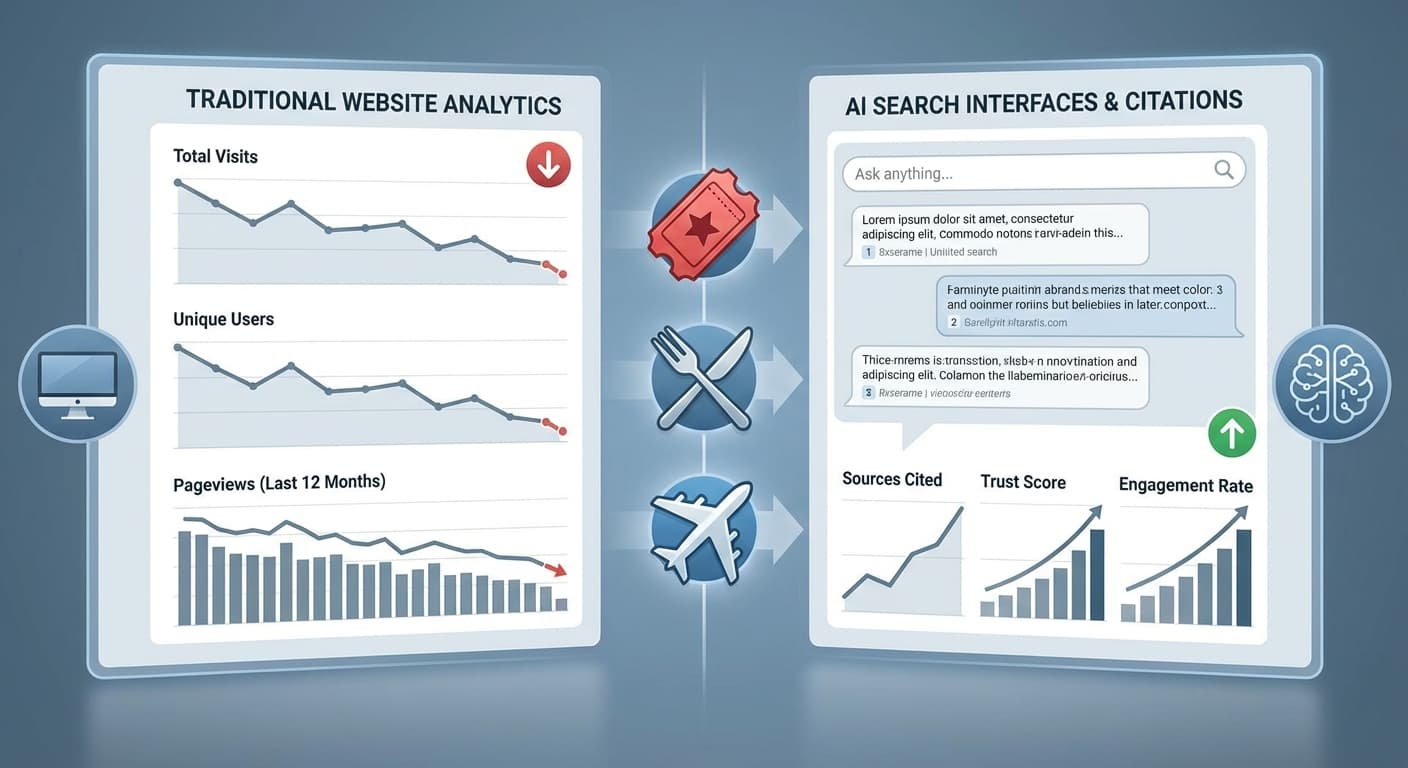
Traditional metrics like page views don't correlate with AI citation rates. Focus on engagement depth and reference quality instead.
Static Content Syndrome
Publishing great content once and never updating it signals to AI engines that the information may be stale, regardless of its continued accuracy.
Measuring Your Credibility Signal Success
Track these metrics to gauge improvement:
Tools like Citescope Ai's Citation Tracker can help monitor when your content gets referenced by ChatGPT, Perplexity, Claude, and Gemini, giving you real-time feedback on your credibility signal optimization efforts.
How Citescope Ai Helps Build Credibility Signals
Optimizing credibility signals manually can be time-consuming and complex. Citescope Ai's GEO Score analyzes your content across five critical dimensions, including Authority—one of the key factors AI engines use to determine credibility.
The platform's AI Rewriter doesn't just optimize for keywords; it restructures your content to include the authority markers and credibility signals that AI engines prioritize. You can see exactly how your content scores on authority signals and get specific recommendations for improvement.
With Citation Tracker, you can monitor which pieces of your content are getting cited by AI engines and correlate that data with your credibility signal improvements, helping you understand what works best for your specific niche.
The Future of AI Credibility Signals
As AI engines become more sophisticated, credibility signals will likely evolve to include:
Staying ahead of these changes requires both strategic thinking and the right tools to implement and measure your efforts effectively.
Ready to Optimize for AI Search?
Building credibility signals that influence AI summaries is no longer optional—it's essential for content visibility in 2026. Citescope Ai provides the analytics, optimization tools, and tracking capabilities you need to ensure your expertise gets recognized by AI engines.
Start your free trial today and see how your content can climb from invisible to indispensable in AI search results. With 3 free optimizations per month, you can test the platform and start building the credibility signals that will make your content impossible for AI engines to ignore.