How to Build an LLM Crawler Access Control Strategy When 33% of Websites Accidentally Block AI Bots and Lose All Visibility in ChatGPT and Perplexity Answer Results
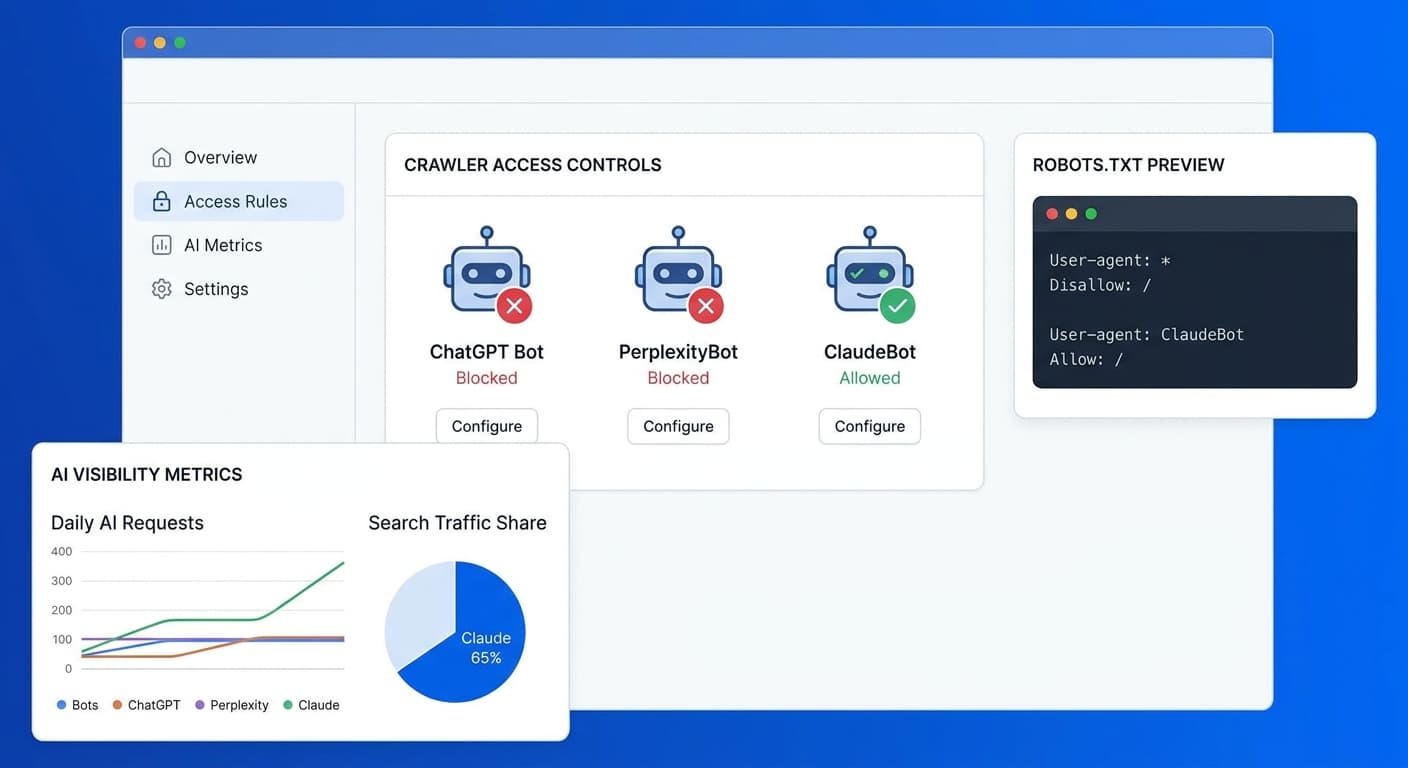
How to Build an LLM Crawler Access Control Strategy When 33% of Websites Accidentally Block AI Bots and Lose All Visibility in ChatGPT and Perplexity Answer Results
If your website isn't showing up in ChatGPT or Perplexity answers despite having great content, there's a shocking chance you're accidentally blocking the very bots that could make you visible to millions of AI users. Recent 2025 data reveals that 33% of websites are inadvertently blocking LLM crawlers, effectively making their content invisible to AI search engines that now process over 2.3 billion queries monthly.
With AI search accounting for 35% of all online queries in 2026 and ChatGPT alone serving 600 million weekly users, blocking these crawlers isn't just a technical oversight—it's a business catastrophe waiting to happen.
The Hidden Crisis: Why Websites Are Accidentally Blocking AI Visibility
The problem stems from outdated robots.txt files and overly aggressive bot blocking strategies designed for an era when only Google and Bing mattered. Many websites implemented broad bot-blocking rules years ago to prevent scraping, but these same rules now block legitimate LLM crawlers like:
A 2025 study by AI search analytics firm SearchLens found that websites blocking these crawlers saw a 67% decrease in AI-generated referral traffic compared to those with proper access controls.
Understanding LLM Crawler Behavior in 2026
Unlike traditional search engine crawlers that index pages for later retrieval, LLM crawlers have distinct characteristics:
Crawling Patterns
Key Differences from Traditional SEO
Building Your LLM Crawler Access Control Strategy
Step 1: Audit Your Current Bot Blocking Status
First, check if you're accidentally blocking AI crawlers:
Check your robots.txt file at yoursite.com/robots.txt
Look for these problematic entries:
User-agent: *
Disallow: /
Or overly broad blocks like:
User-agent: GPTBot
Disallow: /
Quick Audit Checklist:
Step 2: Create Selective Access Rules
Instead of blocking all bots or allowing unrestricted access, implement granular controls:
Example optimized robots.txt for AI visibility
Allow major AI crawlers
User-agent: GPTBot
Allow: /blog/
Allow: /resources/
Disallow: /admin/
Disallow: /private/
User-agent: PerplexityBot
Allow: /
Disallow: /admin/
Disallow: /user-data/
User-agent: ClaudeBot
Allow: /content/
Allow: /guides/
Disallow: /internal/
Block problematic scrapers while preserving AI access
User-agent: BadBot
Disallow: /
Step 3: Implement Rate Limiting Instead of Blocking
Rather than completely blocking bots, use rate limiting to prevent abuse while maintaining AI visibility:
Server-Level Rate Limiting:
CDN Configuration:
Step 4: Optimize Content Structure for AI Crawlers
Once you've ensured crawler access, optimize your content structure:
Essential Elements:
Tools like Citescope Ai can help you analyze your content's AI-readiness with its GEO Score, which evaluates content across five critical dimensions that AI engines prioritize when selecting sources for citations.
Advanced Access Control Strategies
Geographic and Temporal Controls
Time-Based Access:
Geographic Considerations:
Content Tier Strategy
Implement different access levels based on content value:
Tier 1 - Full Access:
Tier 2 - Restricted Access:
Tier 3 - No Access:
Monitoring and Measuring Success
Key Metrics to Track
Tools and Techniques
Server Log Analysis:
AI Search Testing:
Citescope Ai's Citation Tracker provides automated monitoring of when your content gets referenced across ChatGPT, Perplexity, Claude, and Gemini, giving you real-time insights into your AI visibility performance.
Common Mistakes to Avoid
Over-Blocking Legitimate Crawlers
Under-Protecting Sensitive Content
Ignoring Crawler Updates
Future-Proofing Your Strategy
As AI search continues evolving in 2026, consider these emerging trends:
Multi-Modal AI Search:
Real-Time Training Data:
Enhanced Attribution Requirements:
How Citescope Ai Helps
Building an effective LLM crawler access control strategy requires ongoing monitoring and optimization. Citescope Ai simplifies this process by:
With the free tier offering 3 optimizations per month, you can start improving your AI visibility immediately without upfront investment.
Ready to Optimize for AI Search?
Don't let poor crawler access controls make your content invisible to the 600 million weekly ChatGPT users and millions more across other AI platforms. With 35% of searches now happening through AI engines, proper LLM crawler access control isn't optional—it's essential for digital survival.
Start with Citescope Ai's free tier to audit your content's AI-readiness and track your visibility across major AI search engines. Get your GEO Score today and discover what's keeping your content from being cited by AI engines.
Try Citescope Ai Free - No credit card required.


