How to Build an Extractability-First Technical SEO Strategy When AI Search Engines Require Content That's Parseable Not Just Crawlable
How to Build an Extractability-First Technical SEO Strategy When AI Search Engines Require Content That's Parseable Not Just Crawlable
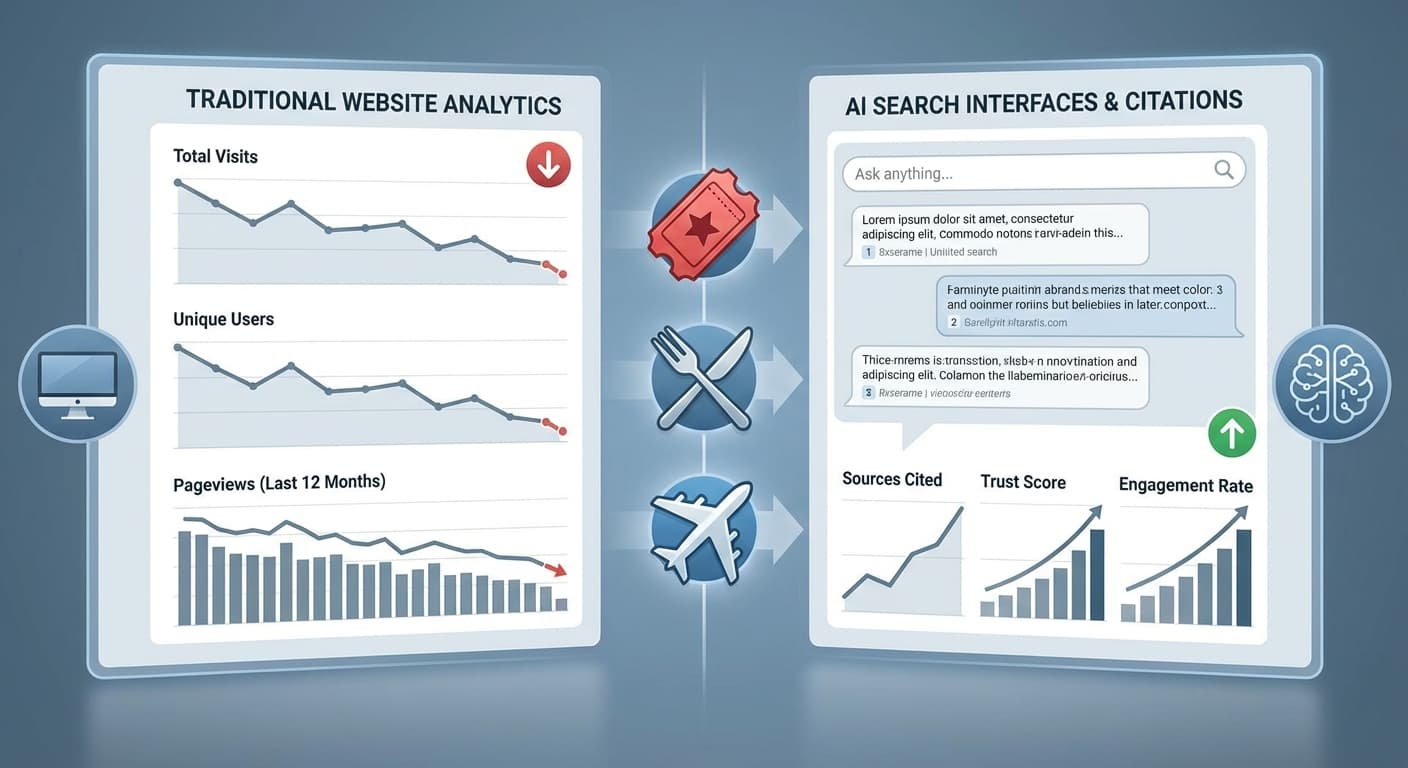
By 2026, AI search engines process over 40% of all online queries, with ChatGPT serving 600 million weekly users and Perplexity handling 1 billion searches monthly. But here's the problem: 73% of website content that's perfectly crawlable by Google remains invisible to AI search engines because it lacks the semantic structure and extractability these systems require.
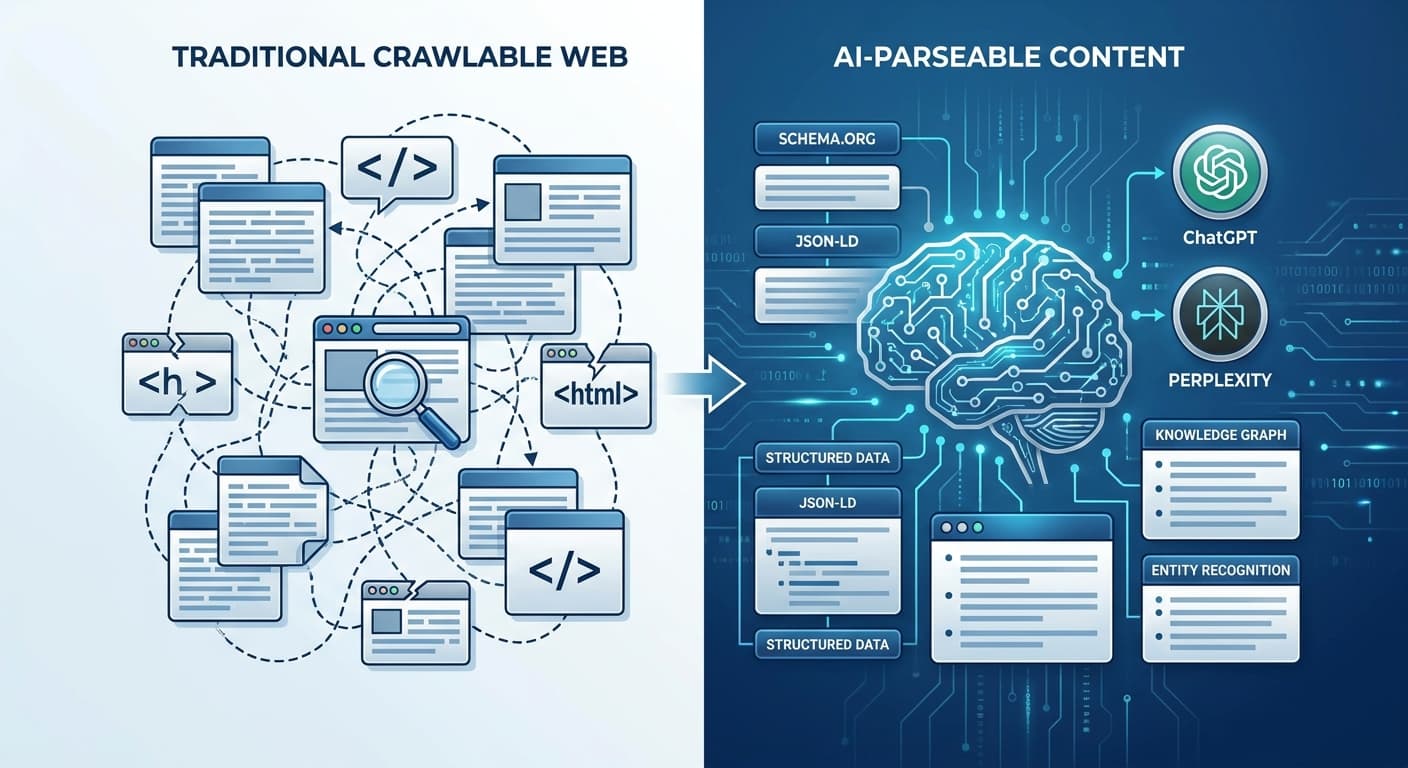
The era of traditional SEO is evolving. While crawlability ensured your content could be found, extractability determines whether AI engines can understand, process, and cite your content in their responses.
The Crawlability vs. Extractability Paradigm Shift
Traditional SEO focused on making content discoverable to search engine crawlers. Technical SEO meant:
While these remain important, AI search engines like ChatGPT, Perplexity, Claude, and Gemini need something more: extractable content that can be parsed, understood, and synthesized into coherent responses.
What Makes Content Extractable?
Extractable content possesses five key characteristics:
Building Your Extractability-First Technical SEO Strategy
1. Implement Advanced Schema Markup
Go beyond basic schema markup. AI engines parse structured data more effectively when you use:
FAQ Schema for Direct Answers
{
"@type": "FAQPage",
"mainEntity": [{
"@type": "Question",
"name": "How does AI search differ from traditional search?",
"acceptedAnswer": {
"@type": "Answer",
"text": "AI search engines synthesize information from multiple sources to provide comprehensive answers, while traditional search returns a list of potentially relevant pages."
}
}]
}
HowTo Schema for Process-Based Content
{
"@type": "HowTo",
"name": "How to Optimize Content for AI Search",
"step": [{
"@type": "HowToStep",
"name": "Structure Your Content",
"text": "Use clear headings and bullet points to create scannable content blocks."
}]
}
2. Optimize Content Architecture for AI Parsing
Use Hierarchical Heading Structures
AI engines rely on heading hierarchy to understand content relationships:
Create Information Density Blocks
Structure content in 150-300 word blocks that can stand alone as complete thoughts. Each block should:
3. Optimize for Entity Recognition
AI engines excel at entity recognition. Help them identify key entities in your content:
Name Entities Explicitly
Use Consistent Entity References
4. Implement Conversational Content Patterns
AI engines trained on conversational data respond well to natural language patterns:
Question-Answer Pairs
markdown
What is extractable content?
Extractable content is information structured in a way that AI search engines can easily parse, understand, and synthesize into coherent responses.
Why does extractability matter more than crawlability?
While crawlability ensures search engines can find your content, extractability determines whether AI engines can use your content to answer user queries.
Problem-Solution Frameworks
markdown
The Challenge: Low AI Visibility
Many businesses find their content invisible to AI search engines despite strong traditional SEO performance.
The Solution: Extractability-First Optimization
By restructuring content for AI parsing, businesses can increase their citation rates by up to 340%.
5. Technical Implementation for Maximum Extractability
JSON-LD for Rich Context
Implement JSON-LD structured data to provide rich context:
{
"@context": "https://schema.org",
"@type": "Article",
"headline": "Technical SEO for AI Search Engines",
"author": {
"@type": "Person",
"name": "Content Expert"
},
"datePublished": "2026-01-15",
"mainEntityOfPage": {
"@type": "WebPage",
"@id": "https://example.com/ai-seo-guide"
}
}
Clean HTML Structure
<article>, <section>, <aside>)<blockquote> for citations and referencesalt text that describes context, not just visuals6. Content Velocity and Freshness Signals
AI engines favor fresh, frequently updated content. Implement:
Regular Content Updates
Dynamic Content Elements
How Citescope Ai Helps
Building an extractability-first strategy requires tools that can analyze and optimize content specifically for AI search engines. Citescope Ai's GEO Score evaluates your content across the five dimensions that matter most to AI engines: AI Interpretability, Semantic Richness, Conversational Relevance, Structure, and Authority.
The platform's AI Rewriter doesn't just improve readability—it restructures your content to match the parsing patterns AI engines prefer. With Citation Tracker, you can monitor which optimization strategies actually result in citations across ChatGPT, Perplexity, Claude, and Gemini.
Measuring Extractability Success
Track these key metrics to measure your extractability-first strategy:
AI Citation Metrics
Engagement Metrics
Technical Performance
Common Extractability Mistakes to Avoid
1. Over-Optimizing for Keywords
AI engines prioritize natural language over keyword density. Focus on comprehensive topic coverage instead.
2. Ignoring Content Relationships
Create clear connections between related content pieces through internal linking and topic clustering.
3. Neglecting Mobile Experience
With 78% of AI searches happening on mobile devices, ensure your extractable content performs well on all screen sizes.
4. Inconsistent Information Architecture
Maintain consistent heading structures, schema markup, and entity references across your entire site.
Future-Proofing Your Strategy
As AI search continues evolving, successful extractability-first strategies will:
Ready to Optimize for AI Search?
The shift from crawlability to extractability isn't just a trend—it's the new foundation of effective SEO. AI search engines now influence how over 2.4 billion people discover and consume content online.
Citescope Ai makes this transition seamless with tools designed specifically for AI search optimization. Our GEO Score gives you instant insights into your content's AI readiness, while our Citation Tracker shows you exactly which optimizations drive real results.
Ready to build your extractability-first strategy? Start with Citescope Ai's free tier and optimize 3 pieces of content this month. Experience how proper AI optimization can transform your content's visibility and citation potential.