How to Build an AI Search Summary Fatigue Recovery Strategy When Zero-Click Resolutions Increase 44% But Brand Authority Metrics Show Your Complete Answers Are Training Users to Never Visit Your Website
How to Build an AI Search Summary Fatigue Recovery Strategy When Zero-Click Resolutions Increase 44% But Brand Authority Metrics Show Your Complete Answers Are Training Users to Never Visit Your Website
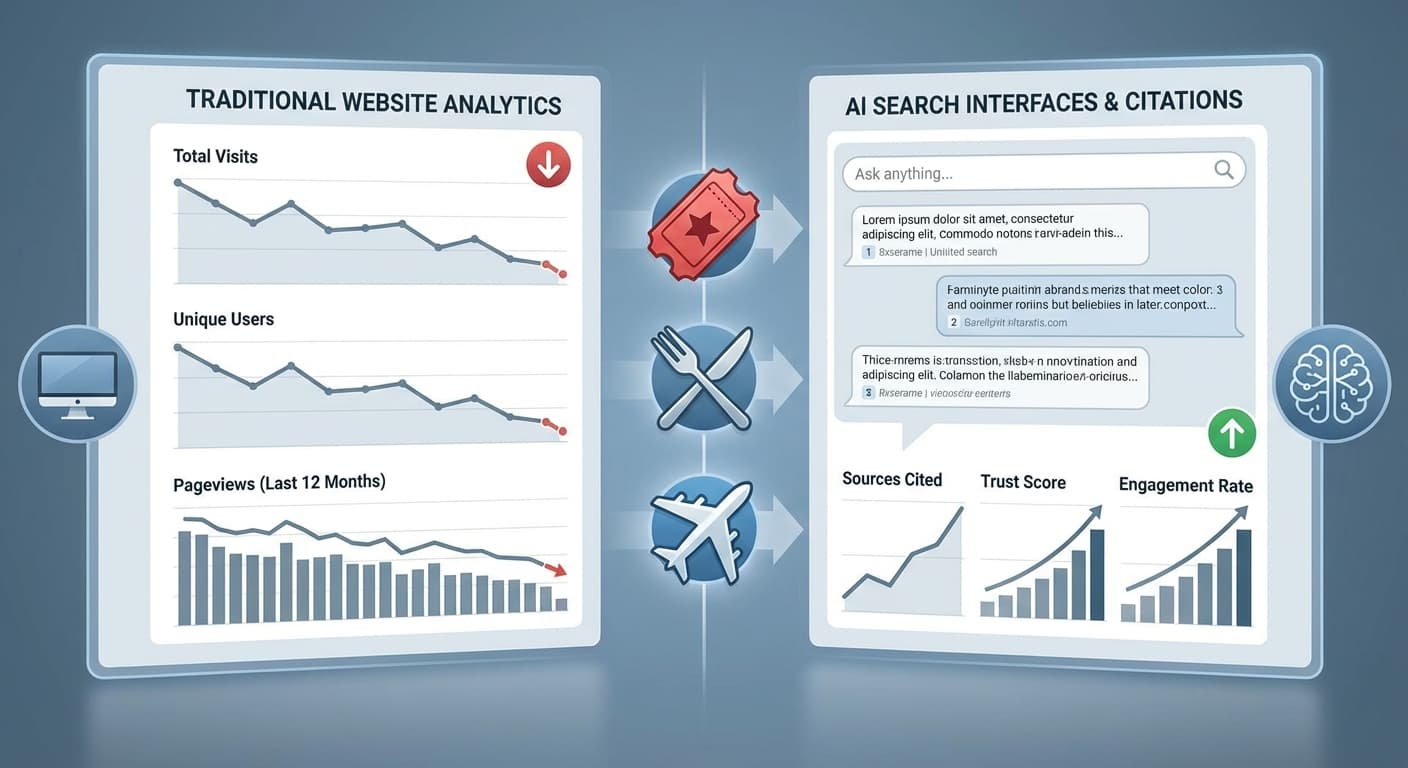
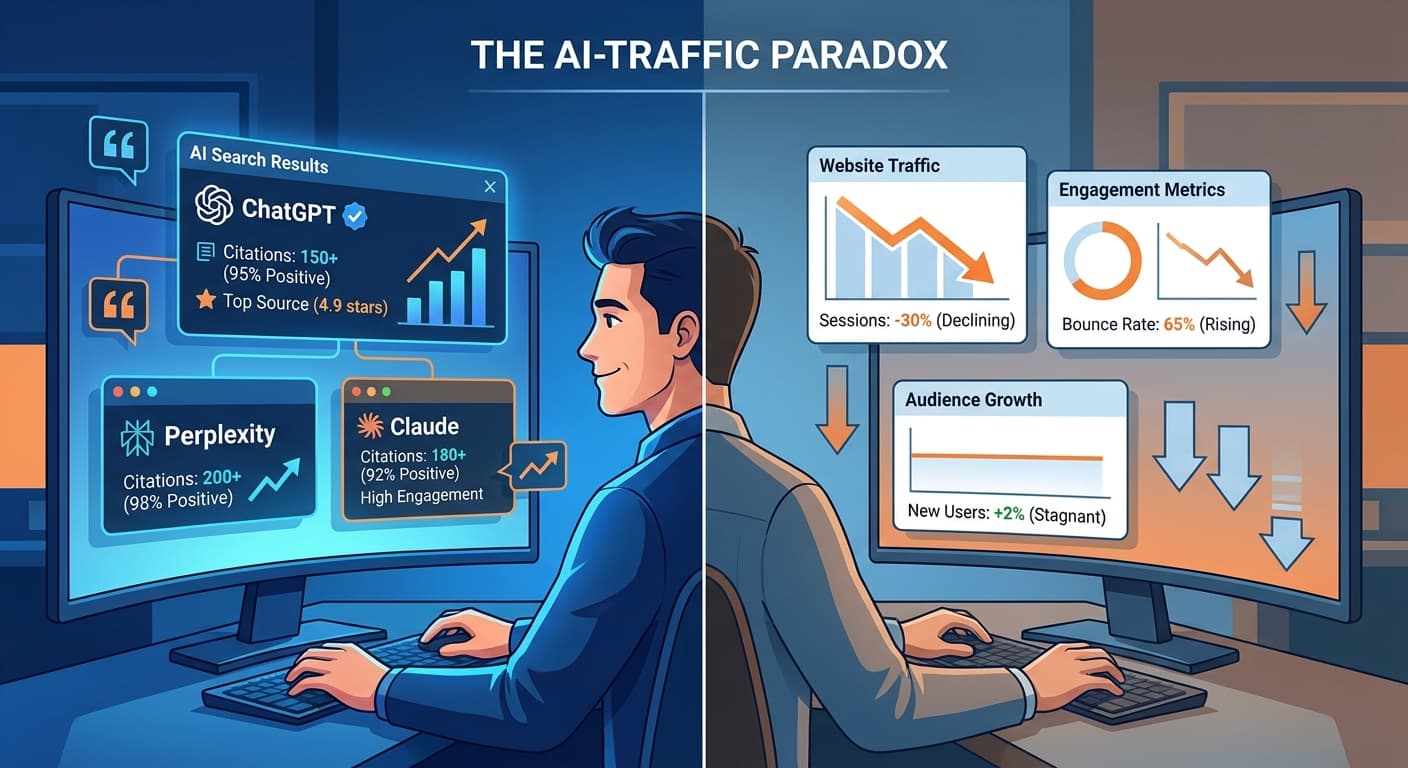
Picture this: Your content is performing brilliantly in AI search engines. ChatGPT cites your articles regularly, Perplexity features your insights in featured snippets, and Claude references your expertise in detailed responses. But here's the paradox keeping content marketers awake at night in 2026—while your brand authority metrics are soaring, your website traffic has plummeted by 60%.
You've created the perfect storm: AI engines love your comprehensive, well-structured content so much that users never need to click through to your site. Welcome to AI Search Summary Fatigue, the newest challenge facing content creators in an era where zero-click resolutions have surged 44% year-over-year.
The Zero-Click Paradox: When Success Becomes the Problem
The data tells a complex story. According to recent industry research, 73% of Gen Z users now rely on AI search engines for information gathering, with 68% never clicking through to source websites when AI provides "complete" answers. Meanwhile, brands report that while their content citation rates have increased 156% since 2024, direct website visits from search have dropped significantly.
This isn't just a traffic problem—it's a fundamental shift in how users consume information. AI engines have become so sophisticated at synthesizing and presenting information that they're inadvertently training users to expect instant, complete answers without source exploration.
The Three Symptoms of AI Search Summary Fatigue
1. High Citation, Low Traffic Syndrome
Your content gets referenced extensively across ChatGPT, Perplexity, Claude, and Gemini, but your Google Analytics shows declining organic traffic from these AI-powered searches.
2. Authority Without Engagement
Brand mention tracking shows increased visibility and positive sentiment, but website engagement metrics (time on site, pages per session, conversion rates) are dropping.
3. Complete Answer Trap
Your comprehensive, well-researched content provides such thorough answers that AI engines present them as standalone solutions, eliminating the need for users to visit your site for additional context.
Understanding the Psychology Behind Zero-Click Behavior
To build an effective recovery strategy, we need to understand why users have developed this behavior pattern. The rise of AI search has fundamentally altered information consumption habits:
The Strategic Framework: Moving Beyond Complete Answers
Building a recovery strategy requires a fundamental shift from creating "complete" content to creating "compelling continuation" content. Here's how to restructure your approach:
1. The Teaser-Value Method
Instead of providing exhaustive answers, structure your content to offer substantial value while creating natural curiosity gaps:
2. The Multi-Layer Content Architecture
Develop content that works on multiple levels:
Surface Layer: Provides immediate value for AI summarization
Depth Layer: Offers detailed implementation guides, tools, or resources
Interactive Layer: Includes calculators, assessments, or personalized recommendations that can't be replicated in AI summaries
3. The Authority Bridge Strategy
Position your content as the starting point, not the destination:
Tactical Implementation: Content Optimization Techniques
Content Structure Modifications
Before (Complete Answer Format):
"Email marketing ROI averages 36:1. To calculate ROI, divide revenue by cost, multiply by 100. Best practices include segmentation, personalization, and A/B testing."
After (Compelling Continuation Format):
"Email marketing delivers an average ROI of 36:1, but our analysis of 500+ campaigns reveals three hidden variables that can push this to 50:1 or higher. While basic ROI calculation (revenue/cost x 100) provides a starting point, sophisticated marketers use our Enhanced Email ROI Calculator to factor in customer lifetime value, attribution modeling, and engagement quality scores."
Strategic Content Gaps
Intentionally create valuable gaps that encourage click-through:
Interactive Elements That Can't Be Summarized
Incorporate elements that AI engines cannot replicate:
Advanced Recovery Techniques
The Episodic Content Strategy
Create content series where each piece provides value but builds toward a comprehensive understanding:
The Exclusive Insight Model
Develop proprietary research, data, or methodologies that can't be found elsewhere:
The Community-Driven Approach
Build engagement elements that require community participation:
How Citescope Ai Helps Navigate the Balance
While building your recovery strategy, you need tools that help you optimize for AI visibility without falling into the complete answer trap. Citescope Ai's GEO Score analyzes your content across five critical dimensions, helping you identify when your content provides too much closure versus appropriate continuation.
The platform's AI Rewriter can help you restructure existing content to maintain high citation potential while creating natural click-through opportunities. By tracking citations across ChatGPT, Perplexity, Claude, and Gemini, you can monitor which content formats generate engagement versus passive consumption.
Measuring Recovery Success
Key Performance Indicators
Track these metrics to gauge your recovery strategy effectiveness:
Engagement Quality Metrics:
Authority Balance Metrics:
Content Performance Metrics:
Optimization Cycles
Implement quarterly review cycles to refine your approach:
Future-Proofing Your Strategy
As AI search continues evolving, consider these emerging trends:
Building Long-Term Sustainable Growth
The goal isn't to fight AI search evolution but to evolve alongside it. Successful brands in 2026 create content that serves both AI engines and human users, providing immediate value while fostering deeper engagement.
Remember: AI search summary fatigue isn't just about recovering lost traffic—it's about building sustainable content strategies that create genuine value at every touchpoint. Your content should work as both a standalone resource and a gateway to deeper relationship building.
Ready to Optimize for AI Search?
Navigating the balance between AI visibility and website engagement requires sophisticated content optimization. Citescope Ai helps you analyze, optimize, and track your content across all major AI search engines while maintaining the strategic gaps that drive meaningful traffic.
With our GEO Score analysis, you can identify exactly which content elements encourage click-through versus complete consumption. Our AI Rewriter helps restructure existing content to maintain citation potential while creating natural continuation points.
Start your free trial today and discover how to build content that excels in AI search while driving genuine engagement with your brand. Get 3 free optimizations to test our platform and see the difference strategic content gaps can make for your traffic recovery.