GEO Strategy

How to Build an AI Search Subscription Revenue Erosion Defense Strategy When AI Assistants Provide Enough Free Answers to Reduce Premium Content Conversions by 52%

June 14, 20267 min read
How to Build an AI Search Subscription Revenue Erosion Defense Strategy When AI Assistants Provide Enough Free Answers to Reduce Premium Content Conversions by 52%

How to Build an AI Search Subscription Revenue Erosion Defense Strategy When AI Assistants Provide Enough Free Answers to Reduce Premium Content Conversions by 52%

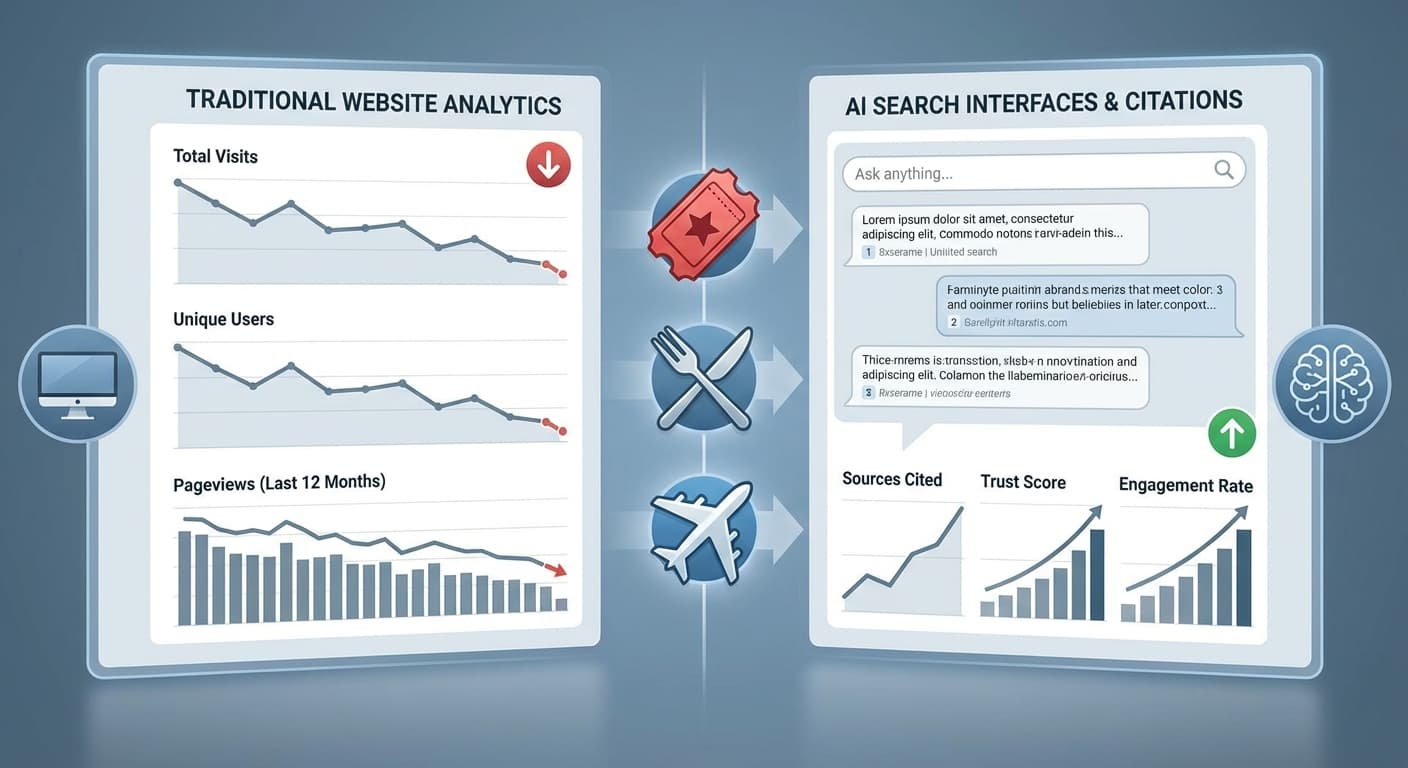
Publishers and content creators are facing an unprecedented challenge in 2026: AI assistants are answering user questions so comprehensively that premium subscription conversions have dropped by an average of 52% across digital media companies. When ChatGPT can provide a detailed financial analysis or Perplexity can summarize the latest industry trends in seconds, why would users pay for your premium content?

This isn't just a theoretical threat anymore. With over 500 million weekly ChatGPT users and AI search now accounting for 35% of all queries, the revenue erosion is real and accelerating. But here's the key insight: companies that have adapted their strategy aren't just surviving—they're thriving.

The New Reality: Why Traditional Paywalls Are Failing

The subscription model crisis isn't about AI being "too good"—it's about publishers not adapting to how value is perceived in an AI-first world. Here's what's happening:

The Free Answer Problem

  • Immediate Gratification: AI assistants provide instant, contextual answers without requiring sign-ups

  • Good Enough Quality: For 78% of user queries, AI responses meet their immediate needs

  • Zero Friction: No paywalls, registration forms, or payment processes to navigate

  • Comprehensive Coverage: AI can synthesize information from multiple sources in one response
  • The Attribution Gap

    When AI engines cite your content, users get the value without visiting your site. This creates a fundamental disconnect between content creation costs and revenue generation.

    Understanding Your Vulnerability: The AI Revenue Impact Assessment

    Before building your defense strategy, you need to understand where you're most vulnerable. Companies experiencing the greatest revenue erosion share these characteristics:

    High-Risk Content Types

  • How-to guides and tutorials that can be easily summarized

  • Industry reports with key findings that fit in AI responses

  • News analysis that becomes commoditized through AI synthesis

  • Reference materials like glossaries, definitions, and FAQs
  • Low-Risk Content Types

  • Interactive tools and calculators that require engagement

  • Community discussions and user-generated content

  • Real-time data dashboards and live updates

  • Personalized recommendations based on user behavior
  • The Five-Pillar Defense Strategy

    Pillar 1: Create AI-Resistant Value

    The most effective defense is creating content that AI simply cannot replicate or replace:

    Interactive Experiences

  • Build calculators, assessment tools, and configurators

  • Create step-by-step wizards that guide users through complex processes

  • Develop simulation tools that let users experiment with different scenarios
  • Exclusive Access and Data

  • Offer proprietary datasets and research

  • Provide behind-the-scenes content and interviews

  • Create member-only communities and discussion forums
  • Real-Time and Personalized Content

  • Deliver live updates and breaking news alerts

  • Provide personalized recommendations based on user history

  • Offer custom analysis tailored to specific industries or use cases
  • Pillar 2: Optimize for AI Citation and Traffic

    Instead of fighting AI search, make it work for you by ensuring your content gets cited and drives traffic back to your site.

    Citation-Optimized Content Structure

  • Use clear, quotable statements that AI engines prefer

  • Include specific data points and statistics

  • Structure content with distinct, citable sections

  • Add source attribution and methodology explanations
  • Strategic Content Placement

  • Position premium teasers in publicly accessible content

  • Include compelling calls-to-action within cited sections

  • Use AI-friendly formatting that encourages click-throughs
  • Pillar 3: Implement Smart Paywall Strategies

    Traditional hard paywalls don't work in an AI world. Instead, implement dynamic, value-based access controls:

    Freemium Content Ladders

  • Provide substantial free value while reserving premium insights

  • Create content series where initial articles are free but advanced topics require subscriptions

  • Offer free tools with premium feature upgrades
  • Engagement-Based Access

  • Grant access based on community participation

  • Reward loyal readers with expanded content privileges

  • Use progressive profiling to unlock personalized content
  • Pillar 4: Build Direct Relationships

    When AI intermediates your content, focus on building unmediated connections with your audience:

    Newsletter and Email Strategies

  • Create exclusive email-only content that can't be scraped

  • Develop personalized content recommendations

  • Build anticipation for upcoming premium releases
  • Community Platform Development

  • Host discussions that generate unique, ongoing value

  • Create member networking opportunities

  • Facilitate expert-led Q&A sessions and workshops
  • Pillar 5: Diversify Revenue Streams

    Reduce dependence on traditional subscriptions by developing AI-resistant revenue sources:

    Service-Based Offerings

  • Consulting and custom analysis services

  • Training and certification programs

  • Done-for-you implementation services
  • Product and Tool Development

  • Software tools that complement your content

  • Template libraries and resource kits

  • API access to your data and insights
  • Implementation Roadmap: 90-Day Quick Wins

    Days 1-30: Assessment and Foundation


  • Audit your current content to identify AI-vulnerable pieces

  • Analyze your citation performance using AI search monitoring tools

  • Survey your audience to understand their AI usage patterns

  • Begin restructuring high-value content to be citation-friendly
  • Days 31-60: Strategic Pivots


  • Launch your first interactive content pieces

  • Implement dynamic paywall testing

  • Start building exclusive community features

  • Optimize existing content for better AI visibility
  • Days 61-90: Scale and Optimize


  • Analyze performance data from your new strategies

  • Expand successful content formats

  • Refine paywall triggers based on user behavior

  • Develop additional revenue stream pilots
  • Measuring Success: Key Metrics to Track

    Your defense strategy's effectiveness should be measured across multiple dimensions:

    Revenue Metrics

  • Subscription conversion rates from AI traffic

  • Average revenue per user (ARPU) trends

  • Retention rates for different content access levels

  • Alternative revenue stream performance
  • Engagement Metrics

  • Time spent on interactive content

  • Community participation rates

  • Email engagement and click-through rates

  • Return visitor percentages
  • AI Visibility Metrics

  • Citation frequency across AI platforms

  • Traffic quality from AI-driven visits

  • Brand mention sentiment in AI responses

  • Click-through rates from AI citations
  • How Citescope Ai Helps

    Building an effective AI search defense strategy requires deep visibility into how AI engines interact with your content. Citescope Ai's comprehensive platform helps you:

  • Monitor AI Citations: Track when ChatGPT, Perplexity, Claude, and Gemini cite your content, so you know which pieces are driving AI visibility

  • Optimize Content Structure: Use the GEO Score to restructure content for better AI interpretability while maintaining premium value

  • Measure Impact: Get detailed analytics on how your AI-optimized content performs across different platforms

  • Strategic Planning: Export optimized content in multiple formats to support your multi-channel distribution strategy
  • With real-time citation tracking and optimization tools, you can ensure your content works harder to drive both AI visibility and subscription conversions.

    The Future-Proofing Mindset

    The companies that will thrive in the AI search era aren't those fighting the change—they're the ones embracing it strategically. By 2027, successful publishers will be those who:

  • View AI as a discovery channel rather than a threat

  • Create genuinely differentiated value that can't be replicated

  • Build direct relationships that transcend any single platform

  • Continuously adapt their models based on user behavior data
  • Remember: the goal isn't to stop AI from citing your content—it's to ensure that when it does, it drives valuable actions that support your business model.

    Ready to Optimize for AI Search?

    Don't let AI search erode your subscription revenue. Citescope Ai helps you build a comprehensive defense strategy by tracking citations, optimizing content, and measuring the impact of your AI visibility efforts. Start with our free tier to analyze your most important content, then scale up as you see results. Try Citescope Ai today and transform AI from a threat into your most powerful growth channel.

    ai-searchsubscription-revenuecontent-strategyai-optimizationrevenue-defense

    Track your AI visibility

    See how your content appears across ChatGPT, Perplexity, Claude, and more.

    Start for Free