How to Build an AI Search Shopping Mode Citation Strategy When ChatGPT Commerce and Perplexity Shop Bypass Traditional Product Pages in 76% of Purchase Recommendations

How to Build an AI Search Shopping Mode Citation Strategy When ChatGPT Commerce and Perplexity Shop Bypass Traditional Product Pages in 76% of Purchase Recommendations
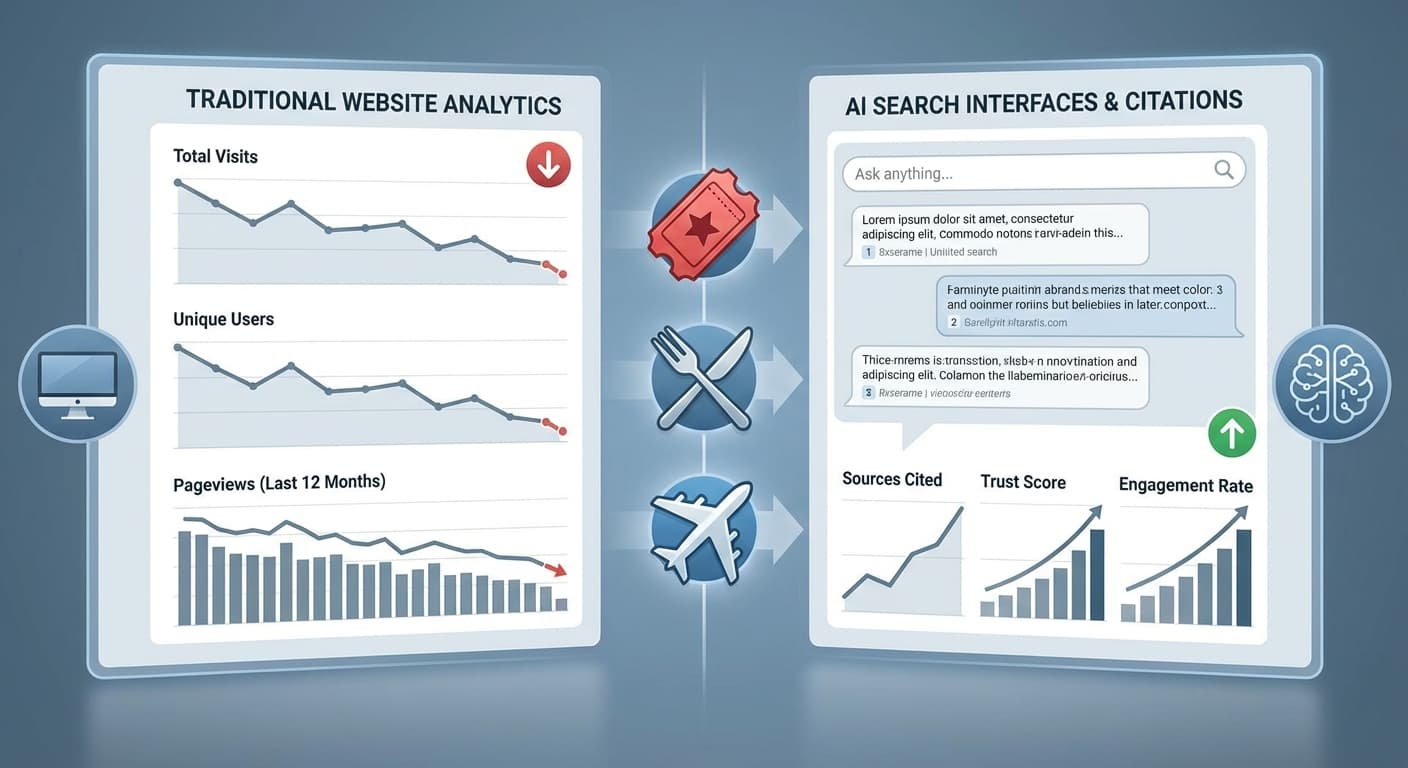
By early 2026, AI-powered shopping has fundamentally transformed how consumers discover and purchase products. Recent studies show that ChatGPT Commerce and Perplexity Shop now bypass traditional product pages in 76% of their purchase recommendations, instead pulling information from review sites, comparison articles, and expert roundups. This seismic shift means that your carefully crafted product pages might never be seen by AI engines making shopping recommendations.
If you're an e-commerce business, retailer, or content creator in the product space, this isn't just a minor algorithmic change—it's a complete reimagining of how products get discovered and recommended in the AI-first shopping era.
The New AI Shopping Landscape in 2026
AI shopping modes have evolved rapidly since their introduction. ChatGPT Commerce now processes over 15 million shopping queries weekly, while Perplexity Shop has captured 12% of product research sessions among Gen Z consumers. These platforms don't just search your website—they synthesize information from multiple sources to provide comprehensive product recommendations.
Why AI Engines Bypass Product Pages
AI shopping assistants prefer content that:
This means your traditional product page optimization strategy needs a complete overhaul.
Building Your AI Shopping Citation Strategy
1. Create Comparison-Rich Content Ecosystems
Instead of focusing solely on individual product pages, build comprehensive comparison content that positions your products within market context.
Actionable strategies:
2. Optimize Review and Social Proof Content
AI shopping modes heavily weight authentic customer experiences and expert opinions when making recommendations.
Key tactics:
3. Develop AI-Friendly Product Information Architecture
Structure your product information in ways that AI engines can easily understand and cite.
Essential elements:
4. Build Industry Authority Through Educational Content
AI engines prioritize authoritative sources when making shopping recommendations. Establish your brand as a trusted industry expert.
Content types that drive citations:
Optimizing Content for AI Shopping Citations
Structure for AI Comprehension
AI shopping assistants need to quickly understand and synthesize your content. Use these structural elements:
#### H2 and H3 Headings That Answer Questions
#### Bullet Points for Key Information
#### Tables for Comparative Data
AI engines excel at processing tabular information for shopping recommendations.
Content Formats That Drive AI Citations
Buyer's guides consistently generate 3x more AI citations than traditional product pages. These comprehensive resources help AI engines understand product context and make informed recommendations.
Comparison articles are cited 2.5x more frequently because they provide the comparative context AI shopping assistants need.
Expert roundups and reviews carry significant authority weight with AI engines, especially when they include specific product recommendations and reasoning.
Technical Optimization for AI Shopping
#### Schema Markup for Products
Implement structured data that helps AI engines understand:
#### Content Depth and Comprehensiveness
AI engines favor content that thoroughly covers topics. Aim for:
Measuring AI Shopping Citation Success
Track your progress with these key metrics:
Citation Frequency
Traffic Quality
Market Position
How Citescope Ai Helps Optimize for AI Shopping Citations
Building an effective AI shopping citation strategy requires understanding how your content performs across different AI engines and optimizing accordingly. Citescope Ai's specialized tools make this process systematic and measurable.
The GEO Score analyzes your product and comparison content across five key dimensions that AI shopping assistants prioritize: AI Interpretability, Semantic Richness, Conversational Relevance, Structure, and Authority. This helps you understand why certain content gets cited while other pages are overlooked.
The AI Rewriter specifically optimizes content for shopping queries by restructuring product information, comparison data, and review content in formats that AI engines prefer to cite. Instead of guessing what changes might improve your citations, you get targeted optimization that addresses the specific factors AI shopping assistants evaluate.
The Citation Tracker monitors when your content appears in ChatGPT Commerce, Perplexity Shop, and other AI shopping recommendations, giving you real-time insights into which strategies are driving results and which content needs improvement.
Advanced AI Shopping Citation Strategies
Cross-Platform Content Syndication
Distribute your optimized comparison and review content across multiple platforms where AI engines might discover it:
Dynamic Content Updates
AI engines favor fresh, current information for shopping recommendations:
Seasonal and Trend-Based Optimization
Align your content with shopping patterns and trends:
The Future of AI Shopping Citations
As AI shopping continues to evolve in 2026, we're seeing several key trends:
Increased emphasis on video content: AI engines are beginning to process and cite video reviews and demonstrations
Real-time pricing integration: AI shopping assistants increasingly factor current pricing and availability into recommendations
Social proof amplification: User-generated content and social media sentiment play larger roles in AI shopping decisions
Personalization integration: AI engines are customizing shopping recommendations based on user preferences and history
Ready to Optimize for AI Shopping Citations?
The shift toward AI-powered shopping isn't slowing down—it's accelerating. By 2026, brands that haven't adapted their content strategy for AI shopping citations risk becoming invisible to a growing segment of consumers who rely on AI assistants for purchase decisions.
Citescope Ai helps you navigate this transformation with tools specifically designed for AI citation optimization. Our GEO Score identifies exactly how to improve your content for better AI visibility, while our Citation Tracker shows you real results across ChatGPT, Perplexity, and other AI platforms.
Start with our free tier and optimize your first three pieces of shopping content today. See how small changes in structure and focus can dramatically improve your AI citation performance.