How to Build an AI Search ROI Measurement System When 43% of Marketers Optimize for AI Citations But Only 14% Can Prove Business Value to Stakeholders
How to Build an AI Search ROI Measurement System When 43% of Marketers Optimize for AI Citations But Only 14% Can Prove Business Value to Stakeholders
There's a massive disconnect happening in marketing departments across the world right now. While 43% of marketers are actively optimizing their content for AI citations in 2026, only 14% can actually demonstrate the business value of these efforts to their stakeholders. This gap isn't just embarrassing—it's career-threatening.
With AI search now accounting for over 30% of all search queries and platforms like ChatGPT serving 500+ million users weekly, the pressure to prove AI search ROI has never been higher. Yet most marketers are flying blind, unable to connect their AI optimization efforts to concrete business outcomes.
If you're among the 86% who can't prove AI search value, this guide will change that. Let's build a comprehensive ROI measurement system that turns AI citations into trackable business results.
Why AI Search ROI Measurement Matters More Than Ever in 2026
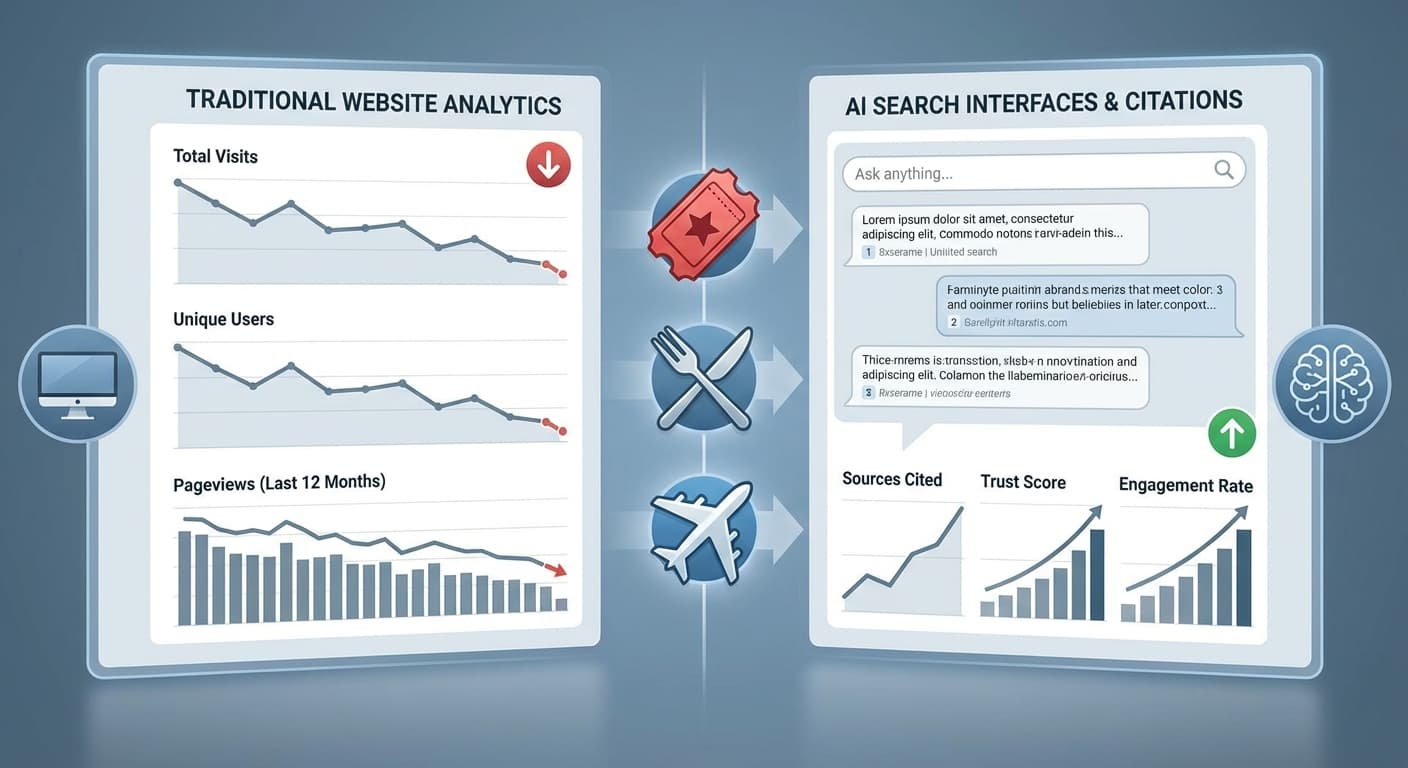
The stakes have fundamentally changed. With 70% of Gen Z now using AI tools for search and research, being invisible in AI results means being invisible to an entire generation of customers. But here's the problem: traditional SEO metrics don't translate to AI search performance.
Consider these critical differences:
The disconnect happens because most teams track vanity metrics ("We got cited 50 times this month!") without connecting them to revenue outcomes. Your CFO doesn't care about citations—they care about pipeline, conversion rates, and customer acquisition costs.
The 5-Layer AI Search ROI Framework
Building an effective measurement system requires tracking impact across five distinct layers. Each layer connects to the next, creating a clear path from AI citations to business value.
Layer 1: Citation Visibility Metrics
Start with the foundation—tracking when and how your content appears in AI responses:
Tools like Citescope Ai's Citation Tracker make this layer manageable by automatically monitoring citations across all major AI platforms, giving you real-time visibility into your AI search presence.
Layer 2: Engagement Quality Metrics
Not all citations are created equal. Track the quality and context of your AI mentions:
Layer 3: Traffic Attribution Metrics
This is where many measurement systems fail. You need to connect AI citations to actual website traffic:
Pro tip: Set up UTM parameters and custom Google Analytics events to track "AI-influenced" traffic. While AI platforms don't always provide direct referrals, users often search for your brand after seeing citations.
Layer 4: Lead Generation Metrics
Connect AI visibility to pipeline generation:
Layer 5: Revenue Attribution Metrics
The ultimate measurement—connecting AI citations to closed revenue:
Building Your Measurement Infrastructure
Creating this multi-layer system requires the right tools and processes. Here's your implementation roadmap:
Step 1: Set Up Citation Monitoring
Before you can measure ROI, you need to track citations consistently. Manual monitoring is impossible at scale—you need automated solutions that can:
Step 2: Create Attribution Models
Develop models that connect AI citations to business outcomes:
Time-Based Attribution: Track business metrics in the 7, 14, and 30 days following citation events. Look for patterns and correlations.
Multi-Touch Attribution: Recognize that customers may encounter your brand through AI citations multiple times before converting. Use analytics tools that support multi-touch attribution models.
Cohort Analysis: Compare the behavior and value of AI-influenced customers versus those acquired through traditional channels.
Step 3: Establish Baseline Metrics
Measure your current performance across all five layers before implementing optimization strategies. This baseline will help you demonstrate improvement over time.
Step 4: Set Up Automated Reporting
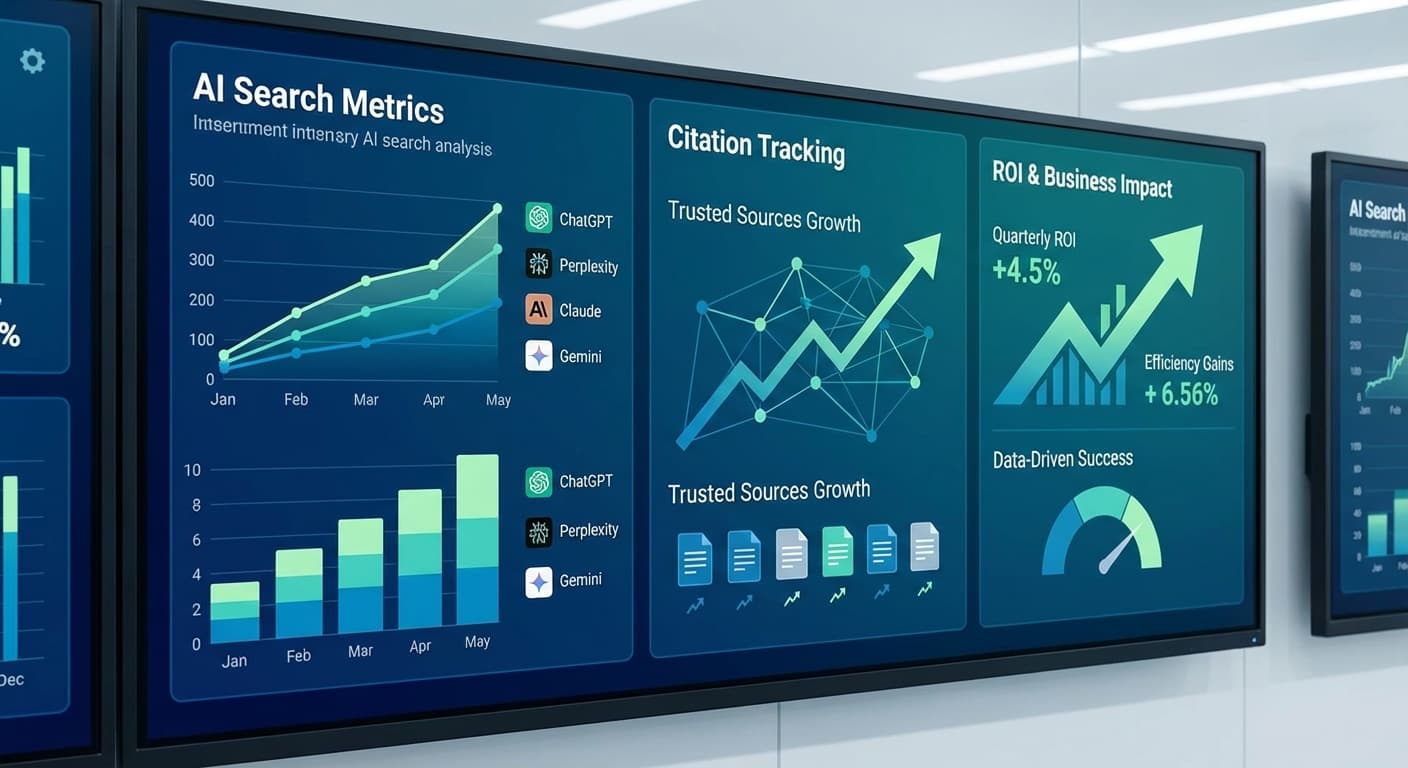
Create dashboards that automatically pull data from all measurement layers. Your reports should include:
Advanced ROI Calculation Strategies
Once your infrastructure is in place, you can calculate sophisticated ROI metrics that impress stakeholders:
Customer Lifetime Value (CLV) Attribution
Calculate the total value of customers acquired through AI search:
AI Search CLV = (Average Purchase Value × Purchase Frequency × Customer Lifespan) × AI Attribution Percentage
Cost Per Acquisition (CPA) Optimization
Compare your AI search CPA to other channels:
AI Search CPA = Total AI Optimization Investment ÷ Number of AI-Attributed Customers
Brand Authority Multiplier
Measure how AI citations improve your overall marketing effectiveness:
Common Measurement Pitfalls to Avoid
Based on data from hundreds of marketing teams, here are the most common mistakes:
Over-Attribution
Don't assume every business metric increase is AI-related. Use statistical significance testing and control groups when possible.
Under-Attribution
Conversely, don't ignore the indirect effects of AI citations. Brand awareness and trust building have long-term value that's harder to measure but equally important.
Vanity Metric Focus
Citations are meaningless without business impact. Always connect visibility metrics to revenue outcomes.
Short-Term Thinking
AI search authority builds over time. Don't expect immediate ROI—plan for 6-12 month measurement cycles.
How Citescope Ai Helps Build Your ROI System
While building a comprehensive ROI measurement system might seem overwhelming, the right tools make it manageable. Citescope Ai's platform addresses several key components:
The platform integrates with your existing analytics stack, making it easier to connect AI citations to downstream business outcomes.
Creating Stakeholder Buy-In
Once you have your measurement system in place, presenting results effectively is crucial:
For C-Suite Executives
Focus on revenue attribution and competitive advantage. Present AI search as a strategic moat that's becoming harder for competitors to replicate.
For Marketing Directors
Emphasize efficiency metrics—how AI citations improve the performance of your entire content marketing program.
For Sales Teams
Highlight how AI citations create warmer leads and shorter sales cycles. Share specific examples of deals influenced by AI discovery.
Ready to Optimize for AI Search?
Building an AI Search ROI measurement system isn't just about proving value to stakeholders—it's about unlocking a competitive advantage that 86% of your competitors haven't figured out yet. With the right measurement framework, you can demonstrate clear business value from your AI optimization efforts and secure the budget needed to dominate this emerging channel.
Citescope Ai makes this process significantly easier with automated citation tracking, content optimization, and performance analytics. Start with our free tier to track up to 3 content optimizations per month, or explore our Pro plan for comprehensive AI search intelligence.
Start your free trial today and join the 14% of marketers who can actually prove their AI search ROI.