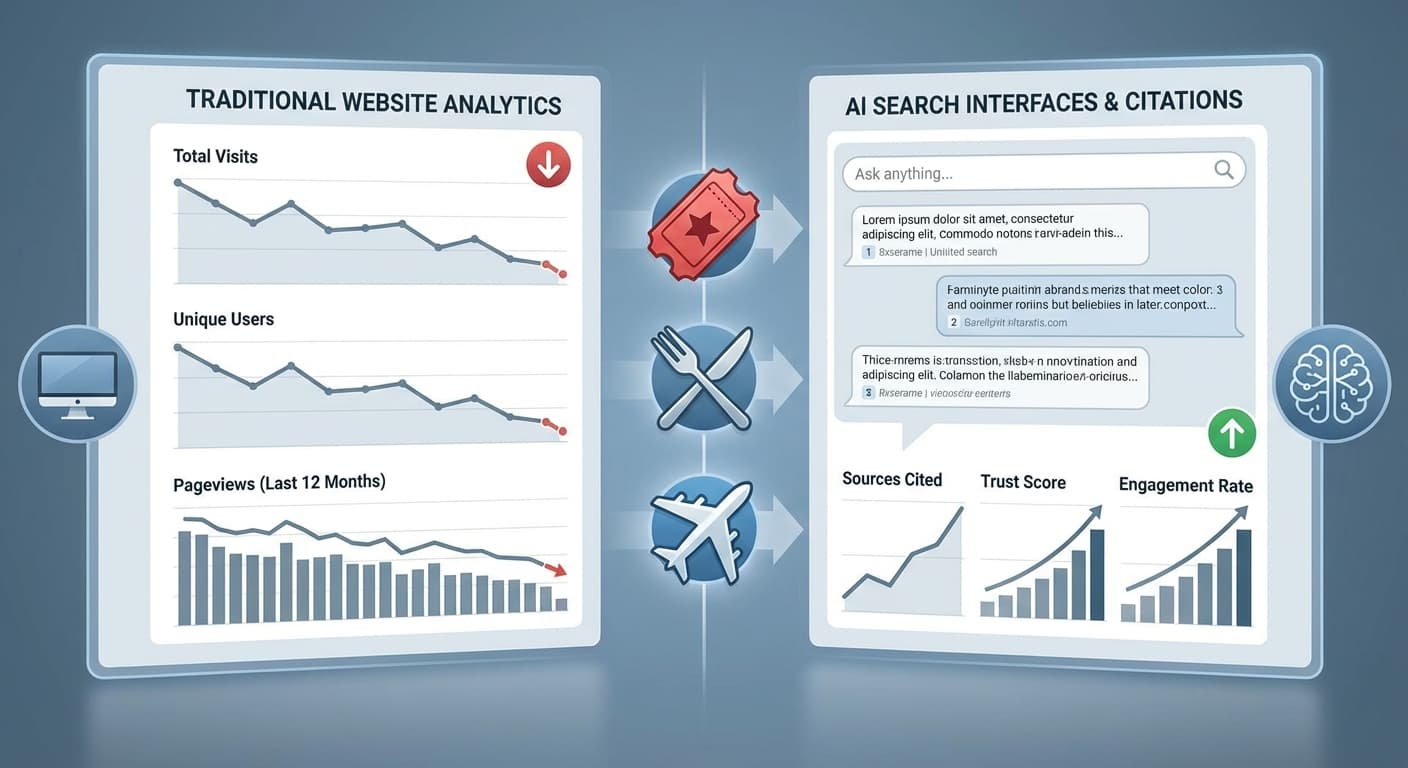
How to Build an AI Search Revenue Attribution Model When Agentic Commerce Transactions Happen Inside ChatGPT and Perplexity Without Users Ever Visiting Your Website
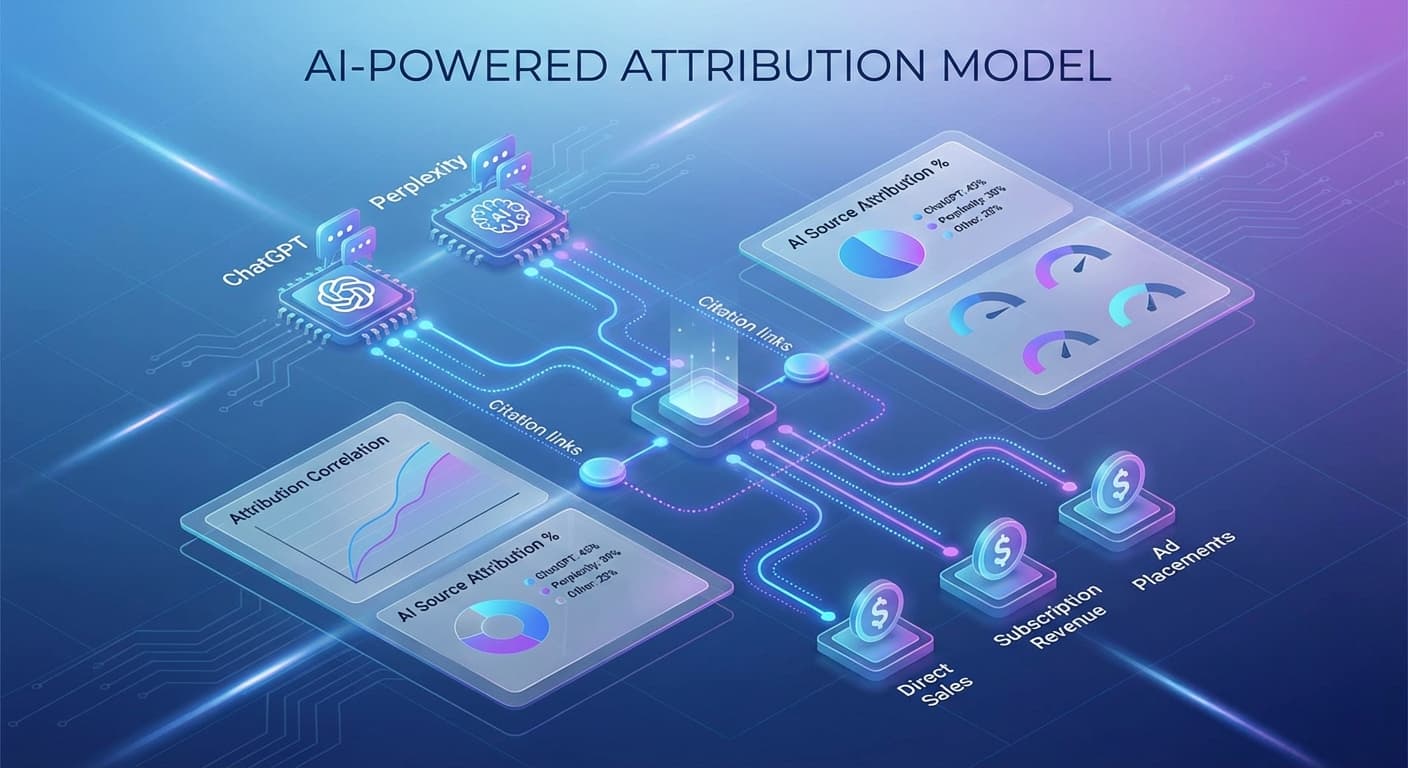
How to Build an AI Search Revenue Attribution Model When Agentic Commerce Transactions Happen Inside ChatGPT and Perplexity Without Users Ever Visiting Your Website
By 2026, something remarkable—and challenging—is happening in e-commerce. Nearly 35% of product research now starts with AI search engines, and increasingly, it's ending there too. Users are completing entire purchase journeys within ChatGPT's shopping features and Perplexity's integrated commerce tools without ever clicking through to brand websites. For businesses, this presents a critical question: how do you track and attribute revenue when the entire customer journey happens behind AI black boxes?
The New Reality of Agentic Commerce
Agentic commerce—where AI agents handle the complete buying process on behalf of users—has fundamentally disrupted traditional attribution models. When someone asks ChatGPT "buy me the best noise-canceling headphones under $200" and completes the purchase through integrated payment systems, conventional tracking methods fail entirely.
This shift is accelerating rapidly. Recent studies show that 42% of Gen Z consumers have made purchases through AI chat interfaces, while enterprise buyers are increasingly using AI agents for procurement decisions. The challenge? Most businesses are flying blind when it comes to understanding their role in these transactions.
Understanding AI-Native Attribution Challenges
Traditional attribution models rely on:
None of these work when transactions happen inside AI platforms. You're essentially trying to measure influence and conversion in a walled garden where you can't place pixels, track sessions, or even confirm when your brand was mentioned in the decision process.
The Attribution Gap
Consider this scenario: A user asks Perplexity "What's the best project management software for remote teams?" The AI cites your blog post about remote collaboration tools, recommends your software, and the user subscribes through Perplexity's integrated billing. Traditional analytics would show zero traffic, zero conversions, and zero revenue from that content piece—despite it being the primary driver of the sale.
Building Your AI Search Attribution Framework
1. Implement Citation Tracking as Your Foundation
The first step in AI attribution is understanding when and how your content gets cited. This becomes your primary signal for influence measurement.
Set up systematic citation monitoring:
Citation frequency often correlates strongly with downstream conversions, even when you can't directly track them. A content piece that gets cited 50 times per month likely drives more AI-mediated revenue than one cited 5 times.
2. Create AI-Specific Revenue Attribution Models
Model A: Citation-Weighted Attribution
Assign revenue weights based on citation patterns:
Model B: Intent-Proximity Attribution
Weight attribution based on how close citations appear to commercial intent:
3. Develop Proxy Metrics and Leading Indicators
Since direct attribution is impossible, focus on correlated metrics:
Brand Signal Tracking:
Indirect Traffic Patterns:
4. Implement Multi-Touch Attribution with AI Components
Expand traditional attribution models to include AI touchpoints:
Enhanced Customer Journey Mapping:
Assign attribution percentages across all touchpoints, including estimated AI influence based on citation data and market research.
Technical Implementation Strategies
1. UTM Parameter Innovation for AI
While traditional UTMs don't work in AI environments, you can prepare for when users do click through:
utm_source=ai-search&utm_medium=citation&utm_campaign=content-topic2. First-Party Data Collection Enhancement
Survey Integration:
Customer Interview Programs:
3. Revenue Correlation Analysis
Develop statistical models to identify AI attribution:
Revenue Correlation = f(Citation Frequency, Brand Mentions, Content Performance, Market Factors)
Key Variables to Track:
The key is finding content that significantly outperforms in AI citations can help identify potential revenue drivers, even without direct tracking.
4. Cohort-Based Attribution Analysis
Segment customers based on likely AI interaction:
High AI Probability Cohorts:
Attribution Methodology:
Advanced Attribution Techniques
Causal Inference Modeling
Use statistical techniques to estimate AI attribution:
Difference-in-Differences Analysis:
Regression Discontinuity:
Cross-Platform Attribution Matching
While perfect attribution is impossible, you can improve estimates:
Time-Based Correlation:
Geographic Attribution:
How Citescope Ai Helps Build Your Attribution Model
While building an AI search attribution model is complex, having the right tools makes it significantly more manageable. Citescope Ai's Citation Tracker provides the foundational data you need for AI attribution by monitoring when your content gets cited across ChatGPT, Perplexity, Claude, and Gemini in real-time.
The platform's comprehensive citation data includes context, frequency, and positioning information—exactly what you need to build correlation models between AI mentions and revenue. Combined with the GEO Score insights, you can identify which content pieces are most likely to drive AI-mediated conversions and optimize accordingly.
Measuring Success and Optimization
Key Performance Indicators for AI Attribution
Primary Metrics:
Secondary Metrics:
Continuous Improvement Framework
Future-Proofing Your Attribution Strategy
AI commerce will only grow more sophisticated. Prepare for:
Enhanced AI Integration:
Regulatory Considerations:
Ready to Optimize for AI Search?
Building an effective AI search attribution model starts with comprehensive citation tracking. Citescope Ai provides the data foundation you need to understand your AI influence and build accurate attribution models. With real-time citation monitoring across all major AI platforms, you can finally start measuring your invisible AI revenue.
Start your free trial today and get 3 content optimizations to improve your AI search visibility and attribution tracking.