How to Build an AI Search Referral Attribution Strategy When ChatGPT and Perplexity Drive 40% of Discovery But Analytics Platforms Still Can't Connect AI Assistant Traffic to Revenue
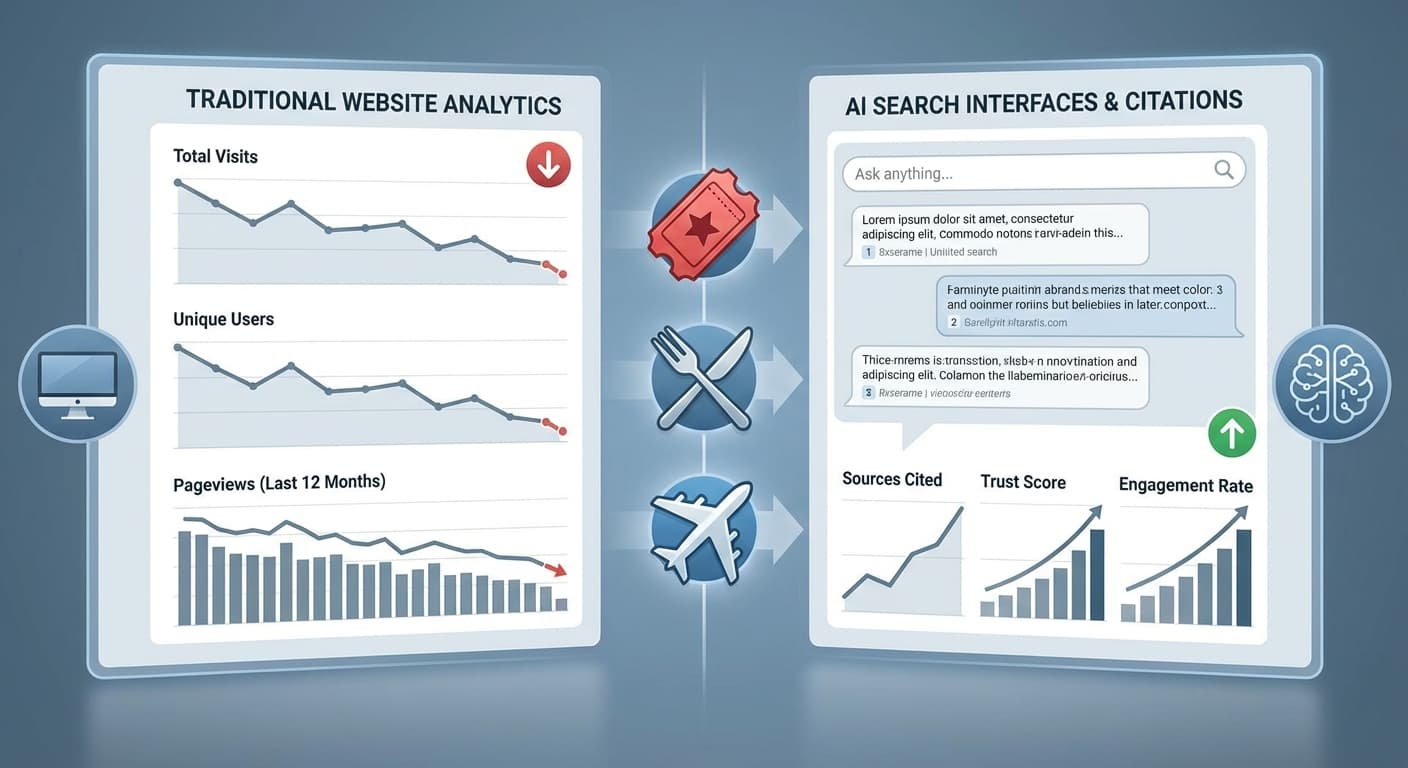
By early 2026, AI search engines are driving an unprecedented 40% of content discovery, yet most businesses are flying blind when it comes to measuring the revenue impact of their AI search visibility. While ChatGPT processes over 700 million weekly queries and Perplexity has become the go-to research tool for professionals, traditional analytics platforms like Google Analytics 4 still categorize most AI-driven traffic as "direct" or "unknown," creating a massive blind spot in attribution.
This disconnect presents both a challenge and an opportunity. Companies that crack the code on AI search attribution will gain a significant competitive advantage, while those that continue to rely solely on traditional SEO metrics will miss out on understanding their fastest-growing traffic source.
The AI Attribution Gap: Why Traditional Analytics Fall Short
The fundamental issue lies in how AI search engines interact with websites. Unlike traditional search engines that send users directly through trackable referral links, AI assistants often:
Extract and synthesize information without sending click-through trafficGenerate summaries that reduce the need for users to visit original sourcesProcess information in conversational contexts where traditional tracking breaks downCreate "dark social" scenarios where users share AI-generated insights without attributionThe Current State of AI Search Traffic Attribution
Recent studies from 2025 show that:
73% of businesses report significant "direct traffic" increases that correlate with AI search mentionsOnly 23% of companies can accurately attribute revenue to AI search visibility89% of marketers admit they're guessing at the ROI of their AI optimization effortsB2B companies see an average of 65% more qualified leads when mentioned in AI search results, but struggle to track the sourceBuilding Your AI Search Attribution Framework
1. Implement Multi-Touch Attribution Modeling
Traditional last-click attribution models completely miss the AI search contribution. Instead, implement a multi-touch approach that recognizes AI search as an awareness and consideration channel:
Set up custom attribution windows:
Extend your attribution window to 90-180 days to capture the longer AI-influenced buyer journeyCreate separate funnels for AI-influenced prospects vs. traditional search trafficTrack micro-conversions like email signups, content downloads, and demo requestsUse UTM parameter strategies:
Create specific UTM codes for content optimized for AI searchTrack performance of different content formats (structured data, FAQ sections, detailed explanations)Monitor which pages get cited most frequently by AI engines2. Deploy AI-Specific Tracking Methods
Citation monitoring: Tools like Citescope Ai can help you track when your content gets mentioned in ChatGPT, Perplexity, Claude, and Gemini responses, giving you visibility into your AI search presence that traditional analytics miss.
Branded search correlation analysis:
Monitor increases in branded search volume following AI search citationsTrack correlation between AI mentions and direct traffic spikesSet up Google Alerts and social listening for brand mentions in AI-generated contentSurvey-based attribution:
Add "How did you first hear about us?" questions to forms with AI search optionsConduct quarterly customer interviews about their discovery journeyTrack customer lifetime value by acquisition source, including AI search3. Create AI Search-Specific KPIs
Move beyond traditional metrics to measure what matters in AI search:
Content authority metrics:
Citation frequency across different AI platformsPosition in AI-generated responses (first mention vs. supporting source)Context quality (how accurately AI represents your information)Engagement depth indicators:
Time spent on site for AI-referred trafficPages per session for users who found you through AI searchConversion rate by traffic source (including estimated AI search traffic)Brand awareness lift:
Branded search volume changes following AI citationsSocial media mentions and engagement increasesDirect traffic growth correlated with AI search presenceAdvanced Attribution Strategies for 2026
Leverage First-Party Data Integration
Combine your CRM data with content performance metrics to create a more complete attribution picture:
Lead scoring enhancement: Add points for prospects who engage with AI-optimized contentCustomer journey mapping: Identify common paths from AI discovery to conversionRevenue correlation: Track which AI-cited content pieces correlate with highest-value customersImplement Probabilistic Attribution Models
When direct attribution isn't possible, use statistical models to estimate AI search impact:
Lift testing: Compare performance of AI-optimized content vs. traditional SEO contentMarket mix modeling: Include AI search visibility as a variable in your marketing effectiveness modelsCohort analysis: Track user behavior and value by estimated acquisition sourceBuild Cross-Platform Attribution
Create a unified view of your AI search performance across all platforms:
Data warehouse integration: Combine data from multiple sources (GA4, CRM, social media, PR tools)Custom dashboards: Build reporting that shows AI search impact alongside traditional channelsAutomated reporting: Set up alerts for significant changes in AI search visibility or correlated trafficTactical Implementation Steps
Week 1-2: Foundation Setup
Audit current attribution setup and identify gapsImplement extended attribution windows in your analytics platformSet up custom UTM parameters for AI-optimized contentBegin citation monitoring across AI platformsWeek 3-4: Data Collection Enhancement
Add AI search options to lead generation formsImplement branded search volume trackingSet up correlation analysis between content citations and traffic spikesCreate baseline metrics for AI search performanceMonth 2: Advanced Analytics
Build custom dashboards combining multiple data sourcesImplement probabilistic attribution modelsStart A/B testing AI-optimized vs. traditional contentLaunch customer survey program to capture attribution dataMonth 3+: Optimization and Scaling
Refine attribution models based on initial dataScale AI optimization efforts for high-performing content typesIntegrate AI search metrics into executive reportingDevelop predictive models for AI search ROIMeasuring Success: Key Metrics to Track
Primary Attribution Metrics
AI-influenced conversion rate: Percentage of conversions that can be traced to AI search touchpointsAttribution confidence score: How certain you are about each conversion's sourceCustomer lifetime value by source: Including estimated AI search attributionMulti-touch journey completions: Full funnel performance including AI touchpointsSecondary Performance Indicators
Content citation frequency: How often your content gets referenced by AI enginesBrand mention sentiment: Quality of AI-generated references to your brandCompetitive citation share: Your share of voice in AI search results vs. competitorsContent authority score: How authoritative AI engines consider your contentHow Citescope Ai Helps Solve the Attribution Challenge
While traditional analytics platforms struggle with AI search attribution, Citescope Ai bridges this gap by providing direct visibility into your AI search performance. The platform's Citation Tracker monitors when your content gets referenced by ChatGPT, Perplexity, Claude, and Gemini, giving you the missing piece of your attribution puzzle.
By combining Citescope Ai's citation data with your existing analytics, you can:
Correlate content citations with traffic spikes and conversionsIdentify which optimized content drives the most AI search visibilityTrack your competitive position in AI search resultsMeasure the ROI of your AI optimization efforts with greater accuracyThe Future of AI Search Attribution
As AI search continues to evolve, attribution methods will become more sophisticated. We're already seeing developments in:
AI platform APIs: Direct integration possibilities with major AI search enginesEnhanced tracking codes: New methods for following user journeys from AI to conversionPredictive attribution: Machine learning models that better estimate AI search impactCross-platform identity resolution: Better ways to track users across AI and traditional searchCompanies that build robust AI search attribution frameworks now will be best positioned to capitalize on these future developments.
Ready to Optimize for AI Search?
Don't let 40% of your content discovery go unmeasured. Citescope Ai helps you track citations across ChatGPT, Perplexity, Claude, and Gemini while optimizing your content for maximum AI search visibility. Start building better attribution today with our free tier—get 3 content optimizations and begin tracking your AI search presence immediately. Try Citescope Ai free and finally connect your AI search visibility to revenue.